
 Ask ChatGPT



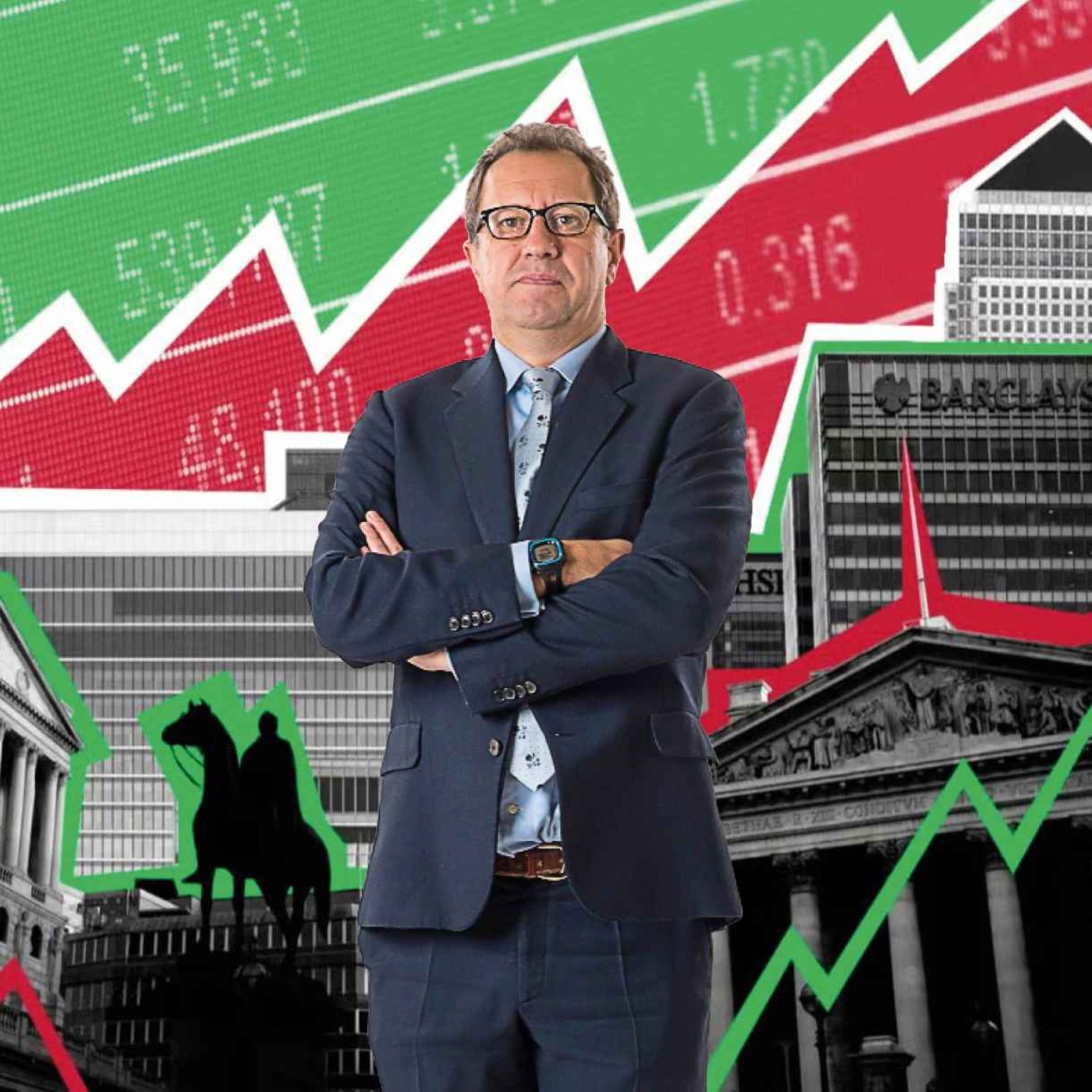
In this episode, hosted by Rachel Abbott, the London Standard's business editor Jonathan Prynn discusses the FTSE 100's remarkable rise, which recently surpassed the 8900 mark for the first time in history. The discussion explores the factors behind this surge, alongside an interview with award-winning author Frank Cottrell-Boyce about the upcoming London Book Fair.
Written by AI. May contain mistakes.

Get the gist, explore an idea or ask about something said.
 Claude
On The Standard, what are the key points of this episode?
Searching your listeningAutomatic transcript. May contain errors.
0:02Hi, it's Rachel Abbott. Welcome back to The Standard Podcast. Coming up, award-winning children's author and screenwriter Frank Cottrell-Boyce on this year's London Book Fair. Every technology has been scary. You know, film was going to kill theatre, television was going to kill film, it was going to kill books. Books can always survive. Books are always at the cutting edge of technology.
0:29But first, the London Standards' Jonathan Prynne has been reporting on this year's remarkable rise in the FTSE 100. or the FTSE, as it's affectionately known. The city's famous index of shares in leading British-listed companies has had a storming start to 2025, and on Monday popped over the 8 ,900 mark for the first time. Despite a wobble yesterday, today the index was on the rise again. Jonathan joins me now. Hi, Jonathan. Hi, Rachel, how are you? I'm good. Jonathan, why is this growth remarkable? Well, it sort of came from nowhere, in a way. the FTSE has been sort of treading water, really not going particularly strong, powerfully up or powerfully down, but just kind of dribbling along for several years.
1:17And then since Christmas, or since the new year, we've seen this very strong run. The market's up six or seven percent, five or 600 points put on to these incredibly high levels, unprecedented levels, 8 ,900. we saw briefly on Monday before it fell back a bit. Yeah, it's been a strong run. It's good for the city. I think it's brought a bit of cheer into the city after a bleak few years. As you say, it did wobble back a bit though. Is this due to a looming global trade war? Yes, exactly. So yesterday the market fell back about 120 points. Still very near all-time highs. But yeah, it was, as you say, it was the worries about what the fallout might be from this trade war if it really does explode what impact that might have on the global economy yeah it fell back a bit yesterday today it was up quite sharply again this morning but it's now now sort of lost most of those gains but nonetheless the FTSE is still very close to all-time highs and well above where it was at the start of the year so what has driven this sudden reappraisal of the UK in the London stock market yeah it's a good question I mean I think there's a number of a number of factors some of them slightly technical, but some of them sort of very broad, geopolitical things as well.
2:32One of the problems with London is that it's not been America. And America has been so strong. You think of the tech stocks, the Apples, the NVIDIAs, the Amazons, all these amazing American trillion dollar stocks have been on incredible runs over the last few years. And it's sort of dazzled investors, really. And they've all been pouring money into these companies. And the poor old London stock market, which was seen as slightly dull, old school kind of banks and mining companies and not very exciting utility companies, insurance companies, sort of rather got lost. But this year, the shine has come off those tech stocks a bit.
3:08Some of them have down very, very sharply. Nvidia down about 17%. Tesla down about 30%. And suddenly, investors have been looking for safer havens. And suddenly London, it may be a bit dull, but it's a place where companies are listed that make things or finance things and make good profits. So suddenly London is back in favour. And we need to talk about tariffs. We do need to talk about tariffs because that's been another huge factor. Now, the fact is that the tariffs are focused at the moment on Mexico, Canada and China, three of America's biggest trading partners. But America is also our biggest trading partner.
3:50And so far, at least, the European Union and the broader Europe has not been targeted. That may change, of course. But I think investors are hopeful that the UK may escape Trump's sort of ire and not be targeted with tariffs, which would be a huge thing for the UK. Obviously, they saw Trump and Starmer getting on well last week. Starmer and Trump talking about a possible comprehensive free trade deal between America and the UK. And that would be a real win for the UK. And I think investors are taking that on board and thinking, okay, you know, that could be really good for Britain. And we want to start putting our money there.
4:30So you touched on Starmer there. Have his comments surrounding Ukraine and Russia influenced the growth too? Yeah, I think there's definitely been a perception that Starmer has handled the UK crisis over the last few weeks pretty well. He obviously got on well with Trump the other day, but he was very swift in pulling together this response from European leaders after the awful meltdown that happened in the Oval Office with Zelensky and Trump and Vance. He has got quite a few admirers internationally now and puts the UK in quite a strong position as a kind of bridge between Europe and America.
5:05And that has definitely been noticed by international investors and definitely made some think that Britain is a reliable and good place to put their money. And you also mentioned earlier about this gloom lifting. What are analysts saying? Yeah, so, you know, commentators are still looking at the UK and thinking from a macroeconomic perspective, it's still not in a great place because inflation is higher than expected, proving difficult to get under control. And interest rates have stayed possibly higher for longer than expected. The public finances aren't in a great state, very, very stretched.
5:42Growth is still very, very slow. So none of that is particularly good. But in the individual companies, the high street banks, companies like AstraZeneca, big pharmaceuticals business, or defense contractors, BAE Systems, they are very much in demand. They're making good profits. Analysts are quite encouraged by the prospects of these big companies, They're global companies. And so I think that's sort of definitely ushering in a bit of a reappraisal of the UK. And hopefully that will follow through and we'll carry on having a good ride. And everyone benefits from higher share prices, not just people that invested in these companies directly, but pension funds.
6:24Most people have got a pension fund and it's good for the shares in those pensions. Looking ahead, could anything disrupt the recent increase? We have an approaching spring budget from Rachel Reeves. Yeah, well, markets are fickle, sadly, and what goes up and very easily come down at the moment is nothing I can see that's really going to disrupt or reverse this run of increases that we've seen since the start of the year. But you never know, you know, it only takes Trump to decide he's fed up with the UK after all, and we are going to be hit by tariffs, or as you mentioned we got the spring statement from Rachel Reeves coming up in a few weeks time now if she delivers a much bleaker picture of economic circumstances than the markets had previously sort of factored in that could result in a sell-off in shares very easily and we could see ourselves racing back down to a sort of 8 ,000 or below but you know the sun is out it's spring let's be hopeful let's be optimistic and hopefully the 9 ,000 barrier will be breached quite soon which will be again unprecedented territory for the footsie and let's hope british shares continue to be in fashion which they've not been for a long long time really since brexit and that yeah the good news continues
7:43let's go to a quick break in part two the award-winning children's author and screenwriter frank cottrell boyce on this year's london book fair we'll see you back here in just a moment
8:02Welcome back. Now, the London Book Fair returns to Olympia on the 11th of March, running through to the 13th. To get an early insight on what to expect from the largest gathering of the global publishing industry, we're joined by award-winning children's author, screenwriter Frank Cottrell-Boyce. You may know Frank for his debut children's novel, Millions, as well as Cosmic, Frames and the Astounding Broccoli Boy. Hi, Frank. Hey, how are you? I'm good. Thanks so much for joining us. To kick off, could you tell us about the London Book Fair? Who is it for? The London Book Fair. I love the London Book Fair because it's just this sort of swirl of synergy.
8:43There's publishers there and buyers there. I think if you're a writer especially, you kind of live such an isolated life. You certainly never ever meet other writers. So that's all kind of very exciting, I think. Frank, what are the most popular trends right now in publishing? Gosh, what's happening in fiction is romanticity. That's a big thing, isn't it? That's everybody's sort of into that at the moment. As a children's writer, there seems to be a lot of books around about dogs, a lot of books around about dogs, which I think is partly a post-COVID thing where everybody got a dog during COVID.
9:16On the positive and optimistic side in children's, there's a lot more diversity of every kind, you know neurodiversity ethnic diversity cultural diversity and that's a good thing as long as it can find its way onto the shelves that's a lovely answer for any new writers that are popping down to the fair next week what do you think publishers are looking for i think publishers i mean i know trends emerge out of the zeitgeist and people do sort of take in each other's washing a little bit but what you're always looking for is something new what you're always looking for is something fresh. When you open a book or you open a page, what you're hoping for is to meet a person, to meet the whole person.
9:54So even in like the most genre thing, the most genre thing, the thing that kind of makes it leap out is when you run into that thing that you know really means something to the writer. I've been reading the Titus, the 12, which is a YA, the kind of gothic-y thing. And it's really good. It's brilliantly put together. It's so good. But what makes it sing is it's set somewhere really specific. It's set in Tenby and it could be set anywhere. You know, it could be set in the Midwest. It could be set in Denmark. It's set in Tenby and it's very accurate about Tenby. And somehow that's the thing that makes it real because you know that there's somebody, there's a person there.
10:33And you're the children's author of the day on Thursday the 13th. Speaking on the main stage, tell us about that. I mean, I've obviously never done that before. It's definitely a once in a lifetime thing. I kind of don't really know what to expect I just think it's very exciting I'm the children's laureate at the moment and I've been up and down the country and I've seen lots of different settings and lots of things that would make your heart sing and lots of things that would make your heart sing so I think it would be great to be able to talk about that a little bit and to sort of connect because I've been out and about so much and because publishing can be a bit of a buggle that I think I'll be like that little door that opens down to the world that's what I'd like to be Frank, artificial intelligence progressed massively in 2024.
11:16Are you worried about AI in publishing? Are people you work with, such as publishers and fellow authors, worried? And if so, about what? I think it would be foolish not to worry, given that one of the founding fathers of AI is Elon Musk, who once said AI is like summoning the devil. He's obviously changed his mind now that he's trying to bite open AI. But I think everybody needs to be a little bit worried because it's a very powerful thing and you should always worry about powerful things. I think it will all play out in the end. every technology has been scary you know film was going to kill theater television was going to kill film it was going to kill books books can always survive books are always at the cutting edge of technology you know i've got a riff that i used to do about this that you know books are the first sort of reproduced standardized items bookshops are the first place that you could go in and browse books were the first sort of really big credit product because people went around selling the Encyclopedia Britannica.
12:17And of course, books were the first thing to have barcodes on them and books were the cutting edge that gave Amazon its flying start. So books will always survive, I think. Books will always be at the cutting edge of technology. But I do think we should be worried all the same. Do you think AI could write a better story? No. Richard Osman did a really, really interesting thing about this on his podcast where he got AI to write the Erwin chapter of a Stephen King book. And it wrote a very plausible opening to a Stephen King book. It was really good. And he said, so does that? He said, what is absolutely clear, though, is that it's been reading a lot of Stephen King and that it's cannibalizing a lot of Stephen King.
13:01And it's absolutely cut and dried that it's feeding off our work and that needs to be acknowledged. The question of copyrights, We all thought that had been settled in the fourth century by St. Columba at the Battle of Kuldrevener. We thought that was cut and dry to pick up your right thing. And I don't know how we've kind of let that slip by somehow, that it can learn from our work, quote our work, reorganize our work, and somehow we don't get a say in that. Frank, you have a new title coming out in May called The Blockbusters. Do you want to briefly tell us about that? I spent most of my life as a screenwriter.
13:37I have never written about making movies. And I just had one of those slappy forehead days when I thought, whoa, hang on. Why have I not done this? Because I love a movie set. You know, when people write about movies, and people have written books about movies, but they tend to be in a kind of an old street field, stars and directors and all that stuff. was like what's thrilling if you're on a film set, especially if you're a kid. And I speak as someone who's taken many of my children onto some of the most exciting film sets in the world. They're on the set of the first Harry Potter film and all they remember is what they ate.
14:09Because the catering is incredibly exciting. You're eating your lunch on a bus. It's amazing that you can go into makeup and say, can you make it look as though I've got wounds or I've lost all my teeth or I've lost an arm. and everything that the electricians do is amazing all those job titles you know dolly best boy grips drape master all the i mean these are just fantastic jobs that nobody talks about and a world that no one talks about a film set is a village full of skilled workers who've got skills that you never knew existed and it's such a thrilling place to hang out and so it always feels full of possibility because most of the time on a film set most people are just angry about doing nothing so that world i just thought i've got i've got to write about this i've never written about it
15:04that's the standard for all the latest news head to standard.co.uk if you'd like to get in touch with us drop us a line at podcasts at standard.co.uk this podcast returns tomorrow we'll see you then
15:20Thank you.
The London Standard’s business editor, Jonathan Prynn, joins us to discuss this year's remarkable rise in the FTSE 100. For an hour or so, the City’s famous index of shares in leading British listed companies grew for the first time in history, above the 8900 mark. So, what has driven this sudden reappraisal of the UK and the London stock market?
In part two, we’re joined by award-winning children’s author and screenwriter Frank Cottrell-Boyce to discuss this year’s London Book Fair, could AI write a better story?
Hosted on Acast. See acast.com/privacy for more information.


