
 Ask ChatGPT


 The Standard
7 Apr 2025 · 16m
Written by AI. May contain mistakes.

Get the gist, explore an idea or ask about something said.
 Claude
On The Standard, what are the key points of this episode?
Searching your listeningAutomatic transcript. May contain errors.
0:05Hi, I'm Suze Cooper and welcome back to The Standard Podcast. If you're new here, hit follow and give us a rating. Coming up, London's newest river crossing is open. I'm on the side of improved air quality. I'm on the side of vehicles moving faster. I'm on the side of reliable journeys. I'm on the side of cyclists for the first time ever, getting across this part of the river for free. We'll hear more from London Mayor Sir Sadiq Khan on the opening day of the Silvertown Tunnel.
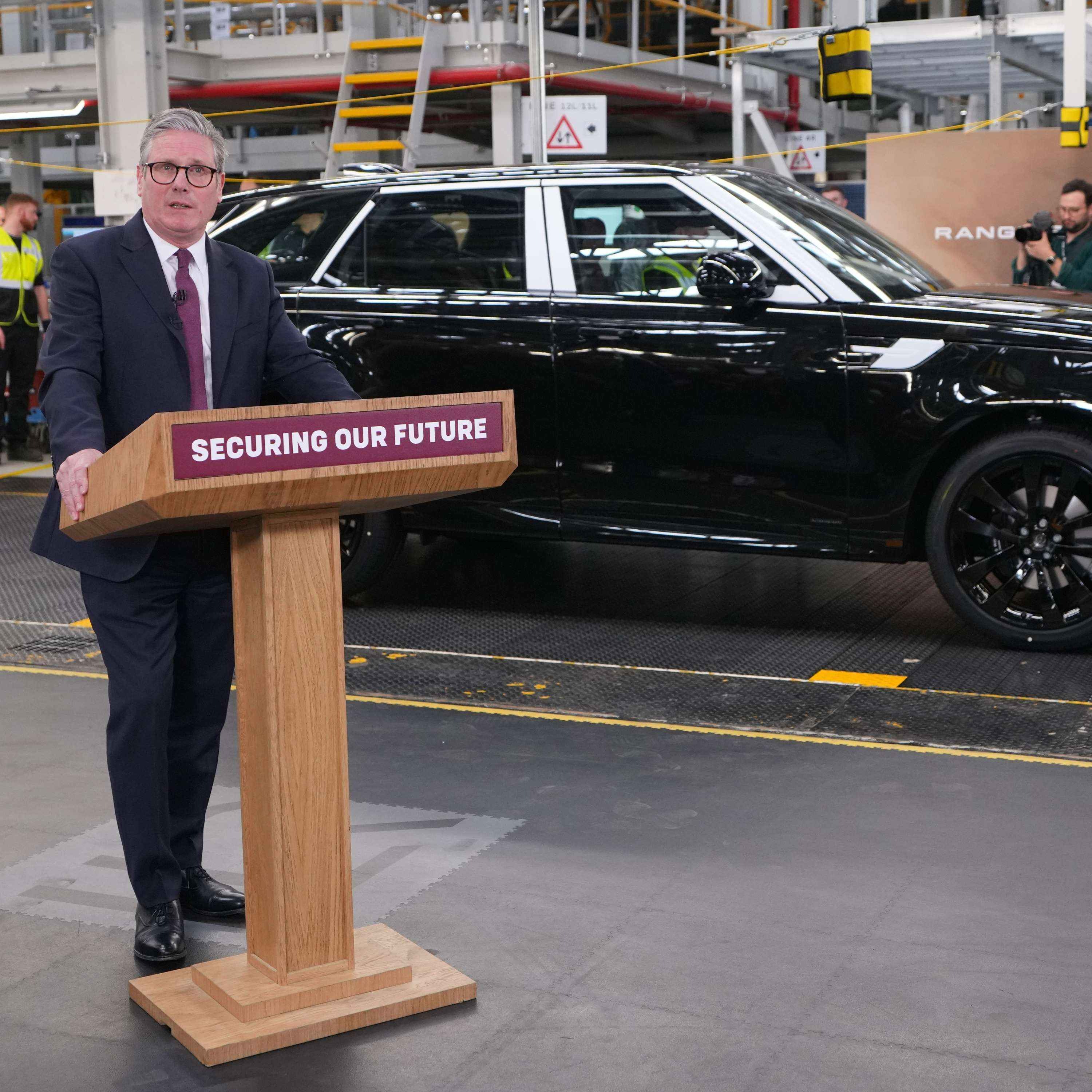
0:38But first, the FTSE 100 plunged to its lowest level in a year this morning, dropping by around 5 % in early trading with similar falls across Europe and Asia. It saw more than£90 billion wiped off the value of Britain's leading companies as the London stock market crashed on fears over the global impact of new tariffs announced by Donald Trump. foreign cars imported into the US now face a 25 % charge and there's a 10 % levy on a range of other goods it's a move that sent shockwaves through global markets in response the UK government's preparing a package of reforms aimed at reducing the pressure on manufacturers these include easing rules around electric vehicle production and introducing exemptions for luxury car makers such as Aston Martin and McLaren but what does it all mean for the economy for British industry and for the rest of us.
1:29The London Standards business editor, Jonathan Prynne, joins me now to help unpack what's going on. We've seen the FTSE drop sharply along with other markets around the world. Can you just explain for us what's going on and why everyone's reacting so strongly? I think the big question that everyone's really focusing on is what this means for the global economy. And there's a lot of economists and other experts who now fear that the world is heading for a recession and in a way all the stock markets that you've seen falling so dramatically over the last few days they're kind of reflecting that sort of recalibration of the hopes and prospects for the world economy over the next few years there's some more technical reasons behind it as well the Asian markets fell particularly heavily this morning because there was a Chinese holiday on Friday so there was a bit of catch-up but the big picture is are we heading for a recession on what that means for company profits and so on.
2:27So what impact might this have on people living and working here in the UK? How are we going to notice this on our payslips, shopping bills, pensions? Where's this going to hit? Yeah, it's a good question. I mean, the most immediate impact is in the value of our savings. Not everyone has direct savings in company shares. In fact, I think it's only about 20 % now the British population invests directly in company shares. those people will obviously see the value of their shareholdings go down. But almost all the population or very significant proportion of it has an indirect interest through the value of their pension funds.
3:03Pension funds typically are invested very heavily, sometimes as much as 70, 80, 90 % in shares or equities as they're kind of known to the financial community. Now, obviously, when you've had markets for 20%, which is kind of what we're talking about since the start of the the year in some cases, the value of those pension funds is going to start looking pretty sick. And people are going to check in, as you can do much more easily now, on the day-to-day value of their pension funds. And they're going to say, oh, hang on, it was worth X a few weeks ago. Now it's worth X minus 10, 20 % now. That doesn't look good.
3:40That kind of has a knock-on effect as well. People feel anxious. They're less confident about spending money. They might decide They want to put more money aside in their pension funds or less, maybe, if they're really worried about where stock markets are going to go. So that's the sort of short-term effect. Longer term, we could see companies, the tariffs, the trade barriers and the trade wars getting into trouble, going out of business. So we could see higher unemployment. The one good thing that might come out of all this is it looks more likely that we're going to get more interest rate cuts this year.
4:13The market was pricing in a couple of cuts this year. They're now, I think, at least three, who knows, maybe four this year. So sharper falls in interest rates are good for mortgage holders, obviously, and for businesses that have a lot of debt. So, yeah, ramifications throughout the economy. So this is all in reaction to Trump's tariffs. And the government's talking today about trying to ease pressure on manufacturers, especially carmakers, by softening some of the electric vehicle rules. What do you make of that? Well, from what I understand, he's slightly tweaking the rules on when car manufacturers have to be fully electric.
4:49I think particularly on hybrid cars, they've slightly relaxed the rules saying it's useful stuff. The car manufacturers will think, OK, well, that's given us a few more years of wiggle room before we have to go fully electric. But in the big picture, the fact is that the UK car manufacturing industry has just had a huge chunk of its export market taken away. British cars are suddenly going to become way more expensive in America, and that's bound to affect export sales of British-made cars and vehicles into the American market. Jaguar Land Rovers paused exports to the US because of these new tariffs.
5:23Could we see more British firms pulling back from international markets? Yes, it makes sense. I mean, the landscape has just completely changed overnight. So it makes sense for them to put a temporary halt, reassess what their options are, There's all sorts of complications about where components initially came from and where cars are assembled. It's very, very complicated. So I think other manufacturers will probably follow that lead and just take a deep intake of breath and decide what it all means and how they should react. Well, Donald Trump seems very, very certain he isn't going to back down or change his mind over these tariffs.
6:04What is it that he's pushing to see? He's playing very, very hard ball. It's a very, very hardball form of negotiation. It's brinkmanship. I think it's not impossible that we may yet see concessions, deals, softening, weakening. But the language he's using is extremely strong at the moment. There is no alternative. These tariffs are permanent. The markets need to take the medicine. All the language is of a very hardball negotiator. Now, he is a very hardball negotiator, and he has been for 40, 50 years in the real estate market. So I don't think we should be too surprised at that sort of language.
6:45He's always had a nose for a deal, and his book was called The Art of a Deal. I wouldn't be too surprised if some deals on a bilateral basis with individual countries do emerge over the next few days and weeks, because that's how he rolls. But at the moment, yeah, I mean, he's a tough negotiator. That's his DNA, and the language is very, very strong at the moment. And perhaps the Prime Minister's meeting that strong language head on. We're hearing him say this is the end of globalisation. I mean, that's pretty strong language, isn't it? It is, it is. But I guess that just reflects the stone cold reality that the period of globalisation, which don't forget, delivered incredible increases in standard of living in the sense that globalisation made all the stuff that we buy from our trainers to our mobile phones, to our TVs or whatever, massively more affordable than they were to our parents' generation.
7:38That's an absolute huge win in terms of standard of living. We mustn't forget that. But equally, there were losers in globalization, you know, classic one being the motor manufacturing industry of America, which has a sort of totemic status in American society. So, yeah, I mean, there are plenty of winners through globalization. So to say that the end of the year of globalization is over, that's a good catchphrase, but it's not all good news. To give you an example, America imports 99 % of all its shoes, all its footwear, comes mainly from places like Vietnam and Cambodia and China. They produce only 1 % of their own shoes.
8:1999 % of it is suddenly going to become 30%, 40%, 50 % more expensive. So yeah, the end of the year of globalisation is not a total win. It is for some people, but not for many.
8:34Let's go to a break. Coming up in part two, London's first new river crossing in 58 years opened this morning. We'll be joined by the Standards, Transport and City Hall editor Ross Lydell as he sees the first traffic through the tunnel. See you back here in just a moment.
8:57Welcome back. London's newest tunnel under the Thames is open. This morning the first cars, buses and bikes rolled through the Silvertown Tunnel. It's the capital's first new river crossing in decades, a£2.2 billion project that's promised to cut congestion and ease pressure on the ageing Blackwall Tunnel. We caught up with London Mayor Sir Sadiq Khan on the new Superloop route. He's hoping the new cycle shuttle buses will spark a trend. I'm very proud of this. This is a scheme and Boris Johnson deserves credit. First conceived by Boris Johnson, we've improved it hugely from Boris Johnson's plans and we've improved it to make sure there are more improvements for cyclists, more improvements for pedestrians, making sure we improve the quality of the air, have a reserved bus lane, but also ensure there are 21 zero emission buses again across the Blackwater and Thumbtine.
9:46I want to encourage more and more people to cycle across London. We've seen a massive increase over the past eight years. One of the explanations cyclists tell me, people who cycle all the time, is that cycleways make it easier to get across our city, they feel safer, but also it's got to be convenient. And what I'm hoping is that more and more cyclists, or people who are thinking about cycling in this part London, will realise there is no way to get across for free. The first of its kind in the country, these cycle shuttle buses. and I'm hoping this encourages those across the country to show the benefits of improved infrastructure of facilities and cyclists.
10:18The Standards Transport and City Hall editor Ross Lydell was there this morning. Here's what he saw. It's around 8am on the 7th of April and Sadiq Khan's£2.2 billion Silvertown Tunnel is being used by traffic. It opened early this morning and as things stand just now, it's been moderately well used. There is a flow of traffic but it's nowhere near as busy as the Blackwall Tunnel. Is this going to work? Well the issue is if this takes traffic from Blackwall and smooths the flow there then Sadiq Khan will say this has been worthwhile. What we've seen so far there are a number of cars there are some buses they're mostly empty and the cycle bus has been running through as well as well as the new SL4 Superloop.
10:59The cycle bus that went south on this way down to North Greenwich was empty one's just come the other way with one cyclist on board. Time will tell whether this tunnel is essentially going to be used by londoners whether it's going to pay its way and whether there are environmental concerns caused by the amount of traffic coming through here one thing for sure though is it's pretty noisy well ross is now back with us to talk through the first few hours of the tunnel ross we heard you describe the scene earlier how did that compare with what tfl was expecting for day one in terms of the traffic going through the silvertown tunnel I think this would have surpassed TfL's expectations.
11:40However, the enormous caveat is that this is the start of Easter holidays and traffic is actually very light. Sadiq Khan, when we took the SL4 Superloop bus through the Silvertown Tunnel with him just a few minutes ago, was sort of beaming from year to year. He was the Cheshire cat from Tooting, if you like, because there were no holdups. There was nothing in the way. And it only takes about two minutes to go through the tunnel. So he was happy as Larry. I think the real challenge will come in two or three weeks when everybody's back from holidays and things return to normal. And if drivers are getting stuck while still paying£4 to get across the river or under the river, they ain't going to be too pleased.
12:23You mentioned that the new Superloop and the cycle shuttle, both of them were pretty quiet. Do we know how much usage they're actually anticipating long term? Well, in terms of the Silvertown Tunnel, what they expect is about 25 ,000 vehicles a day to use the tunnel. About 100 ,000 vehicles a day use the Blackwall Tunnel and about a quarter are expected to divert from it. in terms of the Superloop bus and the cycle shuttle, we don't actually have any figures or unexpected usage there. What they're doing with the cycle bus is running five sort of round trips an hour. So the bus will depart every 12 minutes from the DLR station just near City Hall and vice versa over in North Greenwich and then sort of do the trip and then come back.
13:09It can't take too many people, to be honest. You'd be lucky to get more than eight or 10 cyclists on that because of the space for storing the bikes. There's plenty of seats but it's only going to take people who have bikes that won't take normal bus passengers. In terms of how many will use the Superloop, again it's a bit unknown. It's a brand new route. The chance of it being reasonably well used, if not very well used, are a bit better because it will go to and from Canary Wharf and obviously many people take that route to working from work and today it fairly zipped through the traffic but the bus we were on with the mayor didn't stop at any bus stops.
13:47The Superloop doesn't stop at as many bus stops as a normal bus, but it will still stop, so that will slow it down. So I think wait and see. You also mentioned about the noise. Was that surprising to you? Well, what campaigners are really concerned about is extra pollution. The noise probably comes from the fact I was standing between two dual carriageways, so maybe I should have expected that. But it was, even though the traffic was low, it did seem particularly noisy. and one of the reasons there is because you have large juggernauts rolling past and double-decker buses. This isn't just a little local road.
14:20This is a road that can be used by some seriously large, heavy traffic. So there's a lot of noise, possibly because of the tunnel walls bouncing the noise around. The acoustics weren't great. Luckily, nobody lives right beside it, but they don't live too far away. There are a number of new flats all around the Royal Docks here. The concern, as I say, is that this will increase pollution and congestion. TfL says it will measure the pollution. It's already measured levels just now. In its defence, it says the vehicles using this tunnel should be ULES compliant. Otherwise, if they're not, then they have to pay the ULES as well as the fee to use the tunnel.
14:55So it's not a sort of escape route for the dirtiest, smelliest vehicles. But it would be common sense to suggest that more traffic is going to come through this part of East London or South East London on the other side. And therefore, it's quite feasible that pollution will increase. But overall, the aim is to decrease the pollution going through Blackwall Tunnel. And it's an undisputed fact that certainly for vehicles trying to head north, those who get stuck before they get to Blackwall Tunnel, there is a lot of pollution coming from that sort of static traffic. So overall, over both roads, both tunnels, the hope is from the mayor and TfL that overall pollution levels will not be higher than they are just now should actually be slightly lower.
15:44And that's The Standard. For all the latest news, head to standard.co.uk and please do drop us a line at podcasts at standard.co.uk. This podcast returns tomorrow at four. We'll see you then.
The FTSE 100 plunged to its lowest level in a year as markets reacted to sweeping new US tariffs, including a 25% charge on imported vehicles.
The London Standard’s Business Editor Jonathan Prynn breaks down what’s driving the market turmoil, what it could mean for wages, pensions and jobs, and whether the UK’s emergency reforms will be enough to cushion the blow.
We also hear from Transport and City Hall Editor Ross Lydall on the opening of London’s brand new £2.2 billion Silvertown Tunnel. He shares what he saw as the first cars made the crossing, and whether the new tunnel is really easing pressure on Blackwall.
Hosted on Acast. See acast.com/privacy for more information.


