
 Ask ChatGPT


 The Standard
18 Aug 2025 · 15m
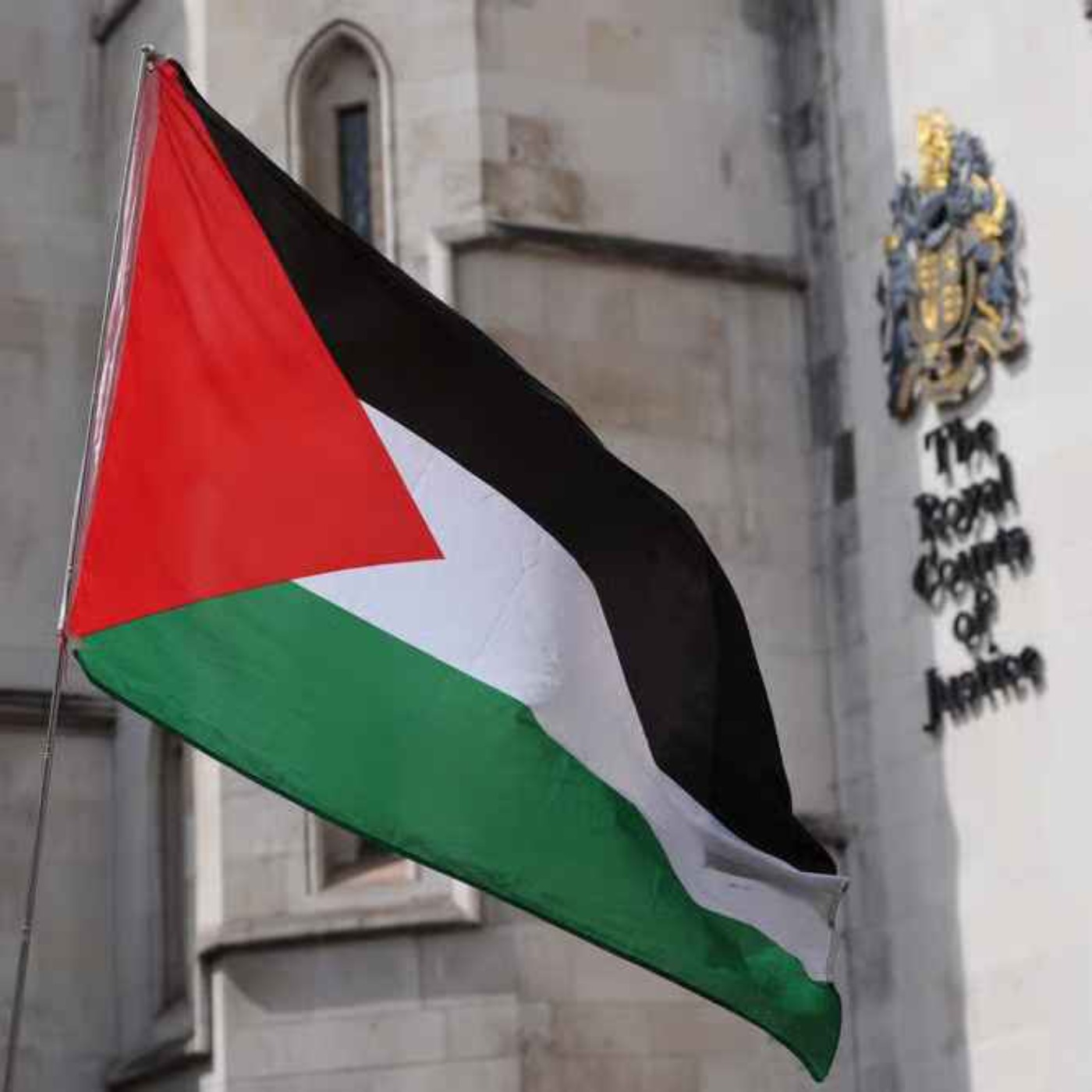
In the latest episode of The Standard, hosted by Charlie Duffield, the discussion centers around the UK government's plans to evacuate critically ill and injured children from Gaza for medical treatment. Expert insights are provided by Dr. James Smith, an emergency physician with humanitarian experience in Gaza. The episode also features author Julia Smith, who shares her favorite countryside walks near London from her book, "Walks for Each Season."
Written by AI. May contain mistakes.

Get the gist, explore an idea or ask about something said.
 Claude
On The Standard, what are the key points of this episode?
Searching your listeningAutomatic transcript. May contain errors.
0:02Hi, I'm Charlie Duffield and welcome back to The Standard Podcast. If you're new here, hit follow and give us a rating. For all the latest news, head to standard.co.uk. Coming up later in the show, from majestic clifftop hikes to rambles through bluebell forests, the best countryside walks which are easily accessible from London. We don't often notice what's great about our backyard. And we're always sort of dashing off for city breaks or to find something quite exotic. But actually, if you take time to really explore South East England, it's absolutely exceptional. It's beautiful.
0:53But first, in the coming weeks, a group of between 30 and 50 critically ill and injured Palestinian children will be evacuated from Gaza to the UK for medical treatment. They would be the first children brought to the UK for treatment as part of a government operation being coordinated by the Foreign Office, Home Office and Department of Health. The children would be selected by the World Health Organization and will travel to family members via a third country where biometric data will be collected. It comes after cross-party MPs wrote a letter to the government urging them to bring sick and injured children from Gaza to the UK without delay for treatment.
1:34They warned the healthcare system in Gaza Strip has been decimated and have requested a timeline of evacuations as well as adequate funding. More than 50 ,000 children have been killed or injured since the war in Gaza began on October 2023, according to the UN charity UNICEF. Joining us now is Dr James Smith, a British emergency physician and expert in humanitarian studies based at University College London. He worked in Gaza for two and a half months and assisted with the medical transfer and evacuation of patients. James, before we get on to today's news, can you tell me a bit more about your experience of working in Gaza?
2:16I was working in Gaza in December of 2023 for two weeks. We were providing emergency care alongside our Palestinian colleagues. The conditions at that time were utterly horrific. A sort of violence inflicted upon people, the injuries that they were coming to hospital with were unlike anything that I have ever seen before. I then returned to Gaza in April of 2024, working alongside the Palestine Red Crescent and other Palestinian colleagues. We were working in various locations, initially in Mawasi, later in Rafa in the south, and then again in two hospitals in the middle area of Gaza. But we were also providing pre-hospital support to the Ministry of Health and the World Health Organization.
3:00We were assisting with the transfer of critically injured, severely medically unwell patients from various hospitals inside Gaza, many of whom would then be waiting for medical evacuation outside of Gaza. And that was a process that we were involved with for several months. It was paused for a protracted period of time following Israel's invasion and destruction of the Rafa border crossing between Gaza and Egypt in the South before restarting again sometime later once the UN system had managed to renegotiate medical evacuations for patients. And what's your initial reaction to the news that Palestinian children will be evacuated from Gaza to the UK for medical treatment?
3:46The kind of immediate gut feeling is too little, too late. It's exceptionally important that the UK shares the responsibility to provide care to Palestinian patients. The UK in particular bears additional responsibilities given the ways in which the UK government is itself implicated in ongoing violence against Palestinians in Gaza. And those are moral responsibilities that need to be taken very seriously. The frustrating thing when we hear this news, again, the UK government is saying that it will take several weeks. When it came to the evacuation of patients from Ukraine, this was a process that the UK government was able to facilitate within a matter of days.
4:30We're now talking about 22 months of persistent lobbying. I myself have attended Parliament several times to lobby for the evacuation of patients from Gaza. For each day that we wait, more patients are becoming more unwell, and certainly many patients are dying while they are waiting for medical treatment that is no longer available in Gaza. And that is just completely unacceptable. So why has it taken so long for this to happen? The short answer is a lack of political will. I firmly believe that it is pervasive anti-Palestinian racism that manifests as not only apathy and indifference, but in this case, active collusion with Israel in its violence against the Palestinian people.
5:15That then translates to complete indifference and a lack of willingness to engage with efforts to support the Palestinian people. Even at this particularly dire moment, when the violence in Gaza effectively continues unabated, almost the entirety of the Gaza Strip has been completely destroyed. More than 86 % of Gaza is now subject to either direct military occupation by Israel or forced displacement orders imposed by the Israeli military. Tell me more about these so-called bureaucratic hurdles like the need for biometric information. So the Home Office is saying that it requires for immigration purposes information from patients, proof of identification, various other bits and pieces that are typically needed.
6:01For example, for those of us that need a passport in the UK, you'll have photographs taken and so on, perhaps fingerprints taken. This is the sort of information that may very well be required for visa processing purposes in various different countries worldwide. But to ask for this in the context of what's currently ongoing in Gaza just defies comprehension. It would be very easy for the UK government to facilitate the gathering of such information in a third country. So safely evacuate patients to, for example, Jordan or Egypt, quickly process the information there, and continue with the medical transfer as is clinically required.
6:41And how does a medical evacuation work? The way that a medical evacuation typically works is that Palestinian healthcare workers in Gaza will determine, based on need, who requires an evacuation outside of Gaza to receive treatment that is no longer available in Gaza's hospitals. Now, the important point to emphasise here is that for as long as Israel's violence against the Palestinian people and against the Palestinian health system continues, the available treatment in Gaza will continue to shrink. And therefore, the number of people requiring treatment outside of Gaza will continue to grow.
7:16Those healthcare workers submit through their referral committees at the hospital level, a request that is then shared with the World Health Organization. They in turn organize a prioritization process for those people who are most critically unwell. That's then submitted to Israel. Israel effectively retains complete control over who enters and exits Gaza, be they patients, healthcare workers, humanitarian workers, and many people, including those patients that require urgent evacuation, are being arbitrarily denied, along with caretakers and companions. So you can imagine if a patient is approved, but the caretaker is denied, often that will mean that the medical evacuation can't proceed because otherwise you would be separating a family or leaving a minor to receive treatment alone in another country, which is just not possible.
8:14Then, of course, you need approval from the recipient country. And in this case, many countries in the region have accepted hundreds and thousands of patients. Egypt, the Emirates, Jordan. What is the UK's responsibility here compared to other European nations? The UK's response is woefully inadequate. Many other European countries have accepted many more patients than the UK government has. As we speak, the UK government has accepted three children from Gaza, which is frankly disgraceful. Italy has accepted at least 95, if not more now, patients from Gaza and many other countries in Europe have accepted many more.
8:55Romania, Greece, Norway and other countries. Let's go to a break. Coming up in part two, the best walking day trips in easy reach of the capital. We'll see you back here in just a moment.
9:20Welcome back. Now, if you need a break from city life, you don't have to travel far to reap the rewards of time in nature. London is the ideal base from which to explore the countryside. Greenbelt architects and campaigners halted the spread of the suburbs in the 1930s and 40s, so true countryside can be found close to London, even within the M25. Author Julia Smith has walked more than a thousand miles, and she went on to write her book Walks for Each Season. 26 great days out in the countryside near London. Julia joins me now. So where did the idea for this book come from, Julia? Most of my life I've lived in London.
9:59I grew up in Bromley in the suburbs and for the last 30 or so years I've lived in Haringey in North London. I've always really loved walking. It also coincided with a time where I was beginning to really notice the seasons. You don't really notice them in London. I looked to see if there was a book of countryside walks near London by season, and I couldn't find anything. So I decided to research and write my own book. It sort of coincided with me being a bit bored of my walks, but also really wanting to immerse myself in each season. And I was also curious about what did the countryside outside of London look like?
10:39I knew little bits of it, but I wanted to learn more. So I started a five-year project of going out there into each of the counties around London and finding really good walks which showcase the best of each season. Eventually I selected 26 of those and wrote the book. And what are some of your favourite walks? I think there's lots of areas of outstanding natural beauty on our doorstep. We've got these chalk downs and chalk cliffs along the seaside, which are exceptional. You don't get those in many other countries. There's loads of sort of national walks which are near London. So I would really entreat people to sort of get out there and explore the southeast a little bit more.
11:24The ones I'd probably select, there's one from Tree Station. The highlight there is the Bluebells. That's a very, very mixed walk. So you've got hills, you've got beautiful beach woods, and you've got, of course, got the Bluebells if you go in around May. I'd also choose Lewis in East Sussex. There's some lovely downs there and some beautiful wildflower meadows. Benfleet to Southend in Essex is a wonderful walk along the coast with a little bit of sort of a nice mixture of quite wild places plus seaside town. Guildford is a lovely walk up onto the North Downs there. And also Richmond Park's one of my favourites as well, especially in the autumn when the deer are rutting and you get all these lovely autumn trees.
12:07What walks would you recommend for this time of year? So late August and moving into September? Well, I don't really like walking in the countryside when it's very hot. So in the summer, that's the time when I always head to the coast. So there's some really nice coastal walks in walks for each season. I would particularly highlight Frinton to Walton on the Nays because that's a great walk for sort of getting exposure to the seaside. But also on the Nays, which is a bit at the end of the walk, there's some really wild kind of coastal section. Deal to Dover is another excellent walk. And also for early September, I would suggest a walk to see the apple blossom in Kent.
12:53One of my favourite apple blossom walks in the book is from Chartham to Canterbury. And you go through a lovely orchard called No Man's Law Orchard, which is an organic community run orchard. And you can pick the apples and take them away with you. And it's a very, very beautiful place. What are the benefits of walking or spending time in nature? It definitely helps mental health. Walking in itself, I think, is very good for that, but also obviously being in all that green countryside. I think the other thing I would say is it's how I see my friends now. Often if I go to the pub or act for a meal, sometimes it doesn't seem quite long enough.
13:30Whereas if you can spend a whole day walking with your friends, you can have a really good chat, a really good catch up. I love walking. It's a great opportunity to meet up and really have some quality time with people. Finally, you've told me you're a Londoner through and through, but have you ever been tempted to escape to the countryside for good? The book is also a hymn to London. I think actually the premise of the book is if you live in London, you can actually see more countryside and a greater variety than if you move. And the reason for that is our train service, because from London, you've got all these amazing train routes that shoot out from the centre like a spider across the southeast.
14:11So you can go from walks from north in the west, the North Wessex Downs, to the east, the coast in Essex. In the north, you can get right up to Suffolk. And in the south, you've got all our wonderful sort of old Victorian seaside towns and coastal walks there. And that's a huge variety of different types of the countryside. Whereas if you live in the countryside, it's quite difficult to get anywhere and you definitely will need a car. Whereas in London, we've got the luxury of being able to go out by train and to cover, I think, a wider area and a greater variety. So to answer your question, I will never move from London.
14:51I like its vibrancy. I always love coming back to London, but I also really love getting out of it as well.
15:00And that's The Standard. For all the latest news, head to standard.co.uk. If you'd like to get in touch, please do drop us a line at podcasts at standard.co.uk. We'll be back here tomorrow at 5pm. We'll see you then.
The Government is working “at pace” to bring sick and injured children from Gaza to the UK for urgent medical treatment, Downing Street has said. We’re joined by Dr James Smith, a British emergency physician and expert in humanitarian studies based at University College London. He worked in Gaza for 2.5 months, and assisted with the medical transfer and evacuation of patients.
And in part two, author Julia Smith joins us to share her favourite walks which are close to the capital, from her book ‘Walks for each season: 26 great days out in the countryside near London’.
Hosted on Acast. See acast.com/privacy for more information.


