
 Ask ChatGPT



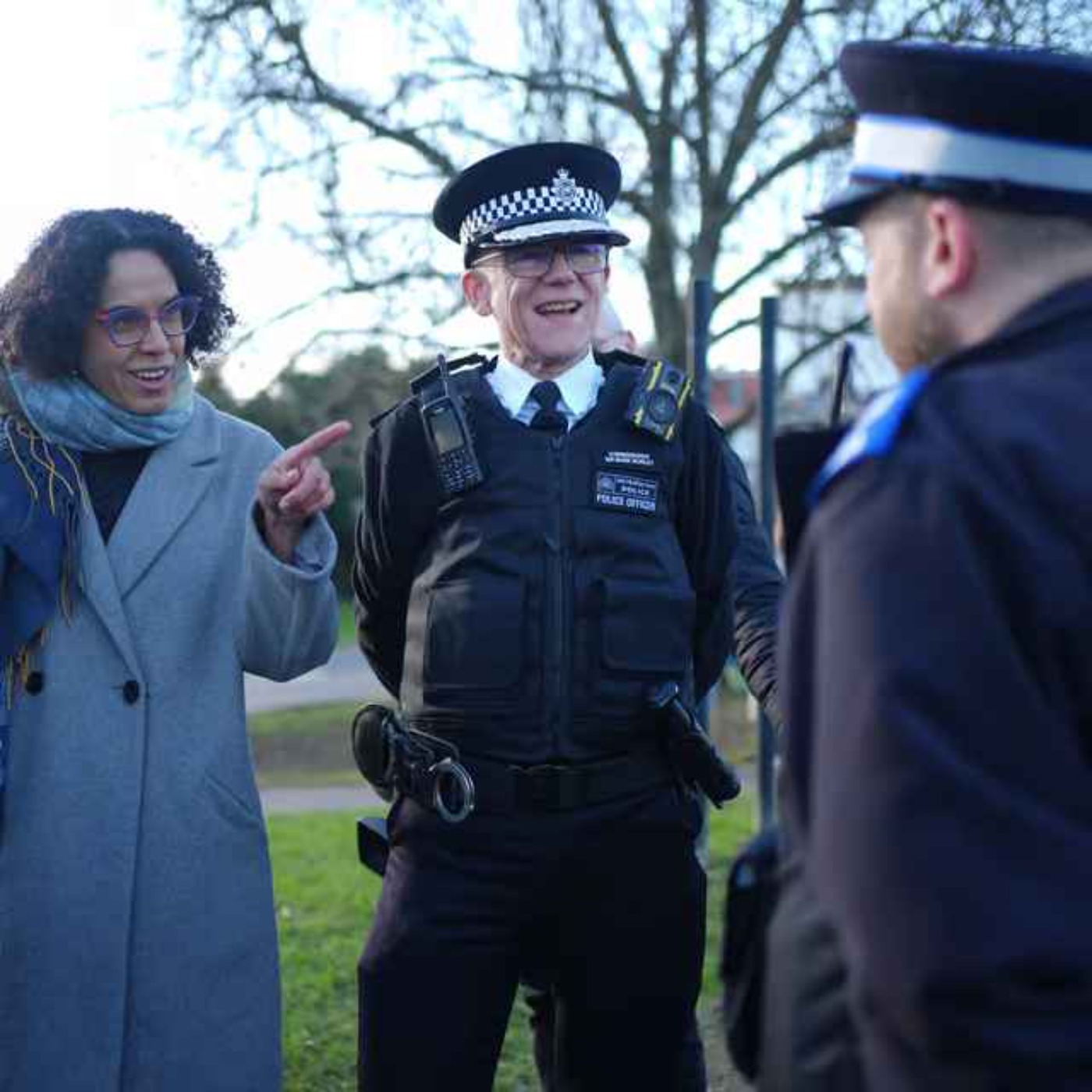
In this episode, the Metropolitan Police's decision to close half of its front desks in London is discussed. The closures are seen as a response to a significant budget shortfall, prompting concerns about public safety amidst rising crime rates. The second part of the episode addresses security issues surrounding women's dating safety apps following a data breach.
Written by AI. May contain mistakes.

Get the gist, explore an idea or ask about something said.
 Claude
On The Standard, what are the key points of this episode?
Searching your listeningAutomatic transcript. May contain errors.
0:02Hi, I'm Charlie Duffield and welcome back to the Standard Podcast. If you're new here, hit follow and give us a rating. For all the latest news, head to standard.co.uk. Coming up later in the show, users of a women's dating safety app were encouraged to spill the tea, but then their data got hacked. So where do we go from here? It's pretty ironic to think that a platform created to guard its users from dodgy men has now been targeted by dodgy men.
0:38But first, the Metropolitan Police will close half of its front desks to save money. In a list published overnight, Scotland Yard confirms it will break its pledge to have one police station accessible 24 hours a day in each of the capital's 32 boroughs. Just 20 will remain open, with 18 being axed in a desperate attempt to balance a£260m budget shortfall. Writing on X, the Shadow Justice Secretary Chris Phelps said, The police will now be less accessible and Londoners even less safe. It comes amid an epidemic of knife crime, mobile phone snatches, shoplifting and bike theft across the capital.
1:22Joining us now is The Standard's crime correspondent Anthony France. So, tell us more about this news. Although it was always going to come out, it is pretty depressing reading. Scotland Yard put out overnight the list. It reveals that just 20 police station front desks will remain open and 18 are being axed. This is all part of a desperate attempt by the Met to balance their£260 million budget short for. Which police stations are closing? So the ones that are closing, Kentish Town in Camden, big stations like Tottenham in Haringey and Edmonton in Enfield, Harrow Station, Bethnal Green in Tower Hamlets, Dagenham, Chingford in Waltham Forest, which we know from the MP.
2:07Stella Creasy was very, very worried about this particular station because there had been a rape of a young woman in Walthamstow recently. Kensington, Hammersmith, Twickenham in the Richmond Borough. And that one of there, of course, is of key important because now that one has closed that does mean that people who live in that area will have to go much further to report crimes. Lavender Hill in Wandsworth, Wimbledon in Mertonborough, Hayes in Hillenden and Plumstead in the Greenwich area. And didn't the Met previously promise to keep at least one station open in every London borough? Yes that was very much part of the new met for London plans two years in the making.
2:50And it was also when the mayor had been re-elected, he said that every London borough would have its own police station. But unfortunately, that's not the case. And today, both the Assistant Commissioner Matt Twist and Sadiq Khan's Deputy Mayor for Policing faced furious London Assembly members at a extraordinary additional meeting that was held at City Hall today. What did you find out from the City Hall meeting? It turned out from the deputy mayor that she knew that these closures were going to happen in either June or July, but members accused her of saying nothing. And they actually asked her what is the point of her job, which pays her out£150 ,000 a year.
3:32She's not going to stand up for London. Susan Hall demanded to know where the mayor was and why he'd sent his deputy instead. instead. And there was also a Liberal Democrat member who challenged her and asked her when she came to the last meeting and she was unsure how many police stations with Chloe. Was that true? Did she really know? And they think that she's trying to shy away from the scrutiny that is needed. She responded saying that it was a real missed opportunity for the London Assembly to hold the mayor and the Metropolitan Police to account. How have the police justified this? The Met are actually saying that just 5 % of crimes reported using front counters last year, 1 % of those made during the night.
4:15At the busiest front counters, on average, 15 crimes are reported a day, less than one an hour. And in the least busiest, only two and a half crimes are reported a day. This is a time, as the Met says, that Londoners are telling them they want to see more officers on the beat. And they say that closing the front counters will save£7 million and just shy of 4 ,000 hours of police officer time. What do you make of all this, Anthony? Personally, I think I've already said that I think it's very short-sighted. I think£7 million, which the Met is saying that they will save. Well, if just one woman who feels unsafe walks into a police station, there's an attempt against her safety.
4:59That's worth the money. I just don't want to see a situation where somebody is attacked near a police station and they turn to a police station and find that police station closed. Police stations, they're places of sanctuary. And I think even the Mets Police Federation, which represents rank and file officers, even they're against this idea. So Paula Dodds, who is the chair of the MET Federation, says the public won't have access to us when they most need it. And they said that you can't hide behind technology. The MET are suggesting, obviously, that people report stuff online because there are just people who just can't do that.
5:35And people want that personal interaction. Let's go to a break. Coming up in part two, what can be learned from the T-App data hack and how can users be kept safe? We'll see you back here in just a moment.
5:55Welcome back. A dating safety app designed to protect women has been targeted in a revenge attack by the right-wing anti-woman group 4chan. The T app works similarly to Facebook whisper groups like Are We Dating the Same Guy? It allows users to vet potential dates, run background checks and identify possible catfish or sex offenders. In our post-MeToo era, it had been growing in popularity with 1.6 million users. But ironically, the latest data breach simply reinforces the very issues it was trying to address. The question is, could this be a turning point? Might it spur genuine solutions to this growing societal problem?
6:40Joining us now is features journalist Katie Strick, who has been investigating this story for The Standard. Katie, how are women feeling about this cyber attack? This story actually starts the week before the cyber attack, when Tea became the most downloaded free app on the Apple Store. And I spoke to several single women, in particular a 30-year-old woman we're calling Mia. She's been using the apps on and off for about five years now and says that when she read the story about the Tea app, she, like so many women across the UK, was horrified. and not because she doesn't agree with many of the privacy and ethical concerns surrounding these groups but because of what the attack meant for women's wider feelings of safety online.
7:18She told me she can think of at least three friends who've left the dating apps due to safety issues in recent years and has had her fair share of horror stories herself over that period. So she's been on a date with a man who looked nothing like his pictures, another who turned up high on drugs, a third who wouldn't take no for an answer after she turned down his offer to walk her home and she just says it's terrifying to be honest the thought of all these different things that could go wrong on a date before you even get to the stage of figuring out if you like one another attacks like this even if they're complicated and on controversial app they just add to that feeling of being more unsafe than ever online and who else did you speak to so i've also spoken to katia faber who is someone i've worked really closely with personally for the last couple of years for a true crime podcast i recently wrote and hosted for the standard called killer privilege this podcast tells the story of Katya's son, who was brutally killed by a man he considered to be a friend, Bennett von Vertes.
8:12And you're probably asking yourself what this has to do with female safety on dating apps. And the answer to that is that it's not much really, but the two stories do overlap because since the podcast was released, Katya, the victim's mother, has been contacted by at least three women who've spotted her son's killer, Bennett, on dating apps around Europe, despite him being a convicted killer and rapist. One woman even said she ended up on a date with him and reports that he boasted about being newly out of prison and became quite threatening, forcing her to make an excuse and run away. Now Katya also happens to be a criminal barrister, so she's a particularly fascinating person to speak to in all of this because she's currently fighting to raise awareness of the current loopholes in the legal system that allow criminals like him and others to pose on dating apps.
8:54And she says she's sickened to think that any innocent woman would end up on dates with her son's killer and to think that those same women may now have their identities leaked and ridiculed and rated on groups like 4chan just feels even more bleak. Tell me more about this data hack. This was no ordinary data breach. It was a revenge attack, seemingly as direct reaction to the app's popularity. So it's been called a hack, but what it was essentially was a data leak with 72 ,000 images of female users being compromised. The T app might have been popular, but it turns out it wasn't particularly sophisticated.
9:27So T users were encouraged to use sensitive data like government IDs to verify their identities in the app. And ironically, it was these that ended up getting leaked by 4chan users. 4chan users were also able to come across some T-app users' messages, and they even sourced the metadata included in the photos of users to find their locations. So they went on to do things like making a map of T-users' locations and even rating the attractiveness of their photos against one another. I spoke to London cyber behaviour specialist Gemma Davis, and she says she could understand why the attack was horrifying for many women.
10:02For a lot of people, it's not just about data fears. It's about emotional fatigue, trust erosion, general app fatigue. She did say that this particular attack didn't surprise her. So yes, it was a perfect storm of weak authentication, sensitive data and emotionally vulnerable users. But the more pressing fact to her was that it exposes this wider feeling that online dating has never felt more unsafe. That data leak has exposed the grim reality for women that was the very issue that T-app ironically was built to solve. So how can we make dating safer for women? Technology is ever-changing, and that's the problem here, really.
10:35The law is really struggling to keep up. Dating apps are unfortunately pretty limited in what they can do. They themselves don't have access to information about a user's offending behaviour, criminal histories, etc. Increased vigilance by individual users is a big one, but certainly not the biggest. Increased protection of those individuals by dating apps themselves, who do need to step up in certain ways. And then legislation, so government level stuff that gives dating app users more power to find out if a match has a history of violence. So I spoke to Simon Newman, CEO of the Online Dating and Discovery Association, which is the recognized trade body for the sector in this country.
11:11And he regularly meets with the police and the Home Office and other politicians regarding how to keep serious and violent offenders off dating apps. And he said the most frustrating element of this leak was that it's completely avoidable. He pointed to other countries. So Australia last year introduced a voluntary online dating safety code requiring apps to implement reporting mechanisms for instance of online harm and take necessary action. Switzerland, actually, interestingly, the country where Katia's son was killed, is looking at introducing something similar off the back of the Standards podcast about this very issue.
11:45Katia herself is calling on British politicians to follow suit. If not, she says, actually, as a criminal barrister herself, she would like them to go a step further and embed the concept in criminal law. So make dating app companies complicit in any wrongdoing by user of their services. And she's actually meeting with the MP Jess Phillips, the current minister for safeguarding, about this next month. So there are small steps that are being taken. But Simon Newman, who I mentioned earlier, he says he'd like to be in a position where the sector ideally blocks anyone with a conviction for sexual or violent offence.
12:17There are barriers to this. He says DBS checks on users are expensive, slow and not particularly effective in his experience. And politicians just weren't interested when he proposed adopting the Australian online dating safety code in the UK. He's currently speaking to the Ministry of Justice about another potential avenue, which would be enforcing licensing conditions on offenders as they're released from prison, which would essentially prevent them from accessing dating apps altogether. He says there's been some appetite for an extension of something called Claire's Law as well, which is a really important one here.
12:50It was introduced in 2014. Anyone can contact the police and ask whether someone they're dating has a known history of violence or abuse. And that's a legal right. He says he'd love this to be broadened out to encompass anyone using a dating or social media app as well. Even then, though, he did stress it won't help in the case of foreign criminals like Bennett von Wirtes, who killed Katya's son. And he says this is a glaring gap that means that actually the UK risks undermining its own efforts, you know, even if we do all the other things right. He says if he had to pick one issue for the government to deal with, it would be this, how to deal with foreign criminals on our apps.
13:24It sounds like some small steps are being taken. In the meantime, what advice do you have for users? Just staying really vigilant on the apps, essentially, and looking for red flags like blurry or filtered photos, and doing your own simple online checks before meeting someone in person, which obviously a lot of women already do. And only speaking to those with profiles that are verified. That's not a foolproof piece of advice at all, but it will at least filter out those most obvious scans. Gemma says she is calling on dating apps to lift any fees they charge for verification at the moment. She really does strongly believe that that should be something that people can access for free.
13:59Finally, is there anything else you want to add? Apps like Tea and Facebook groups, are we dating the same guy? They're not true safeguarding and we shouldn't be relying on them. In fact, unfortunately, as this particular data leak has showed, they actually can put us in more danger if we're not careful. So the irony is this particular case has left many online data feeling more unsafe than ever. And that's a very sad fact. But the small silver lining is that it has finally started a conversation and exposed that problem it was built to solve.
14:34And that's The Standard. For all the latest news, head to standard.co.uk. if you'd like to get in touch please do drop us a line at podcasts at standard.co.uk we'll be back here tomorrow at 5 p.m we'll see you then
The Metropolitan Police plans to close half of its front desk to save money. In a list published overnight, Scotland Yard confirmed it will break its pledge to have one accessible 24 hours a day, in each of the 32 boroughs. It comes amid an epidemic of knife crime, mobile phone snatches, shoplifting and bike theft across the capital. The Standard's Crime Correspondent Anthony France reacts to the news.
And in part two, features journalist Katie Strick delves into the grim reality of modern dating, after the women's safety app Tea was targeted in a revenge attack by the right-wing anti-women group 4Chan.
Hosted on Acast. See acast.com/privacy for more information.


