
 Ask ChatGPT



The episode discusses the Hinduja family, known for their immense wealth and influence in London, as they navigate a complex succession crisis following the death of their patriarch, Gopichand Hinduja (GP). The discussion touches on family dynamics, business philosophy, and the cultural impact of the Hinduja Group, as well as the implications of their recent leadership changes.
Written by AI. May contain mistakes.

Get the gist, explore an idea or ask about something said.
 Claude
On The Standard, what are the key points of this episode?
Searching your listeningAutomatic transcript. May contain errors.
0:02Hi, I'm Charlie Duffield and welcome back to The Standard Podcast. if you're new here hit follow and give us a rating for all the latest news head to standard.co.uk coming up later in the show the hinduja family brought billions to london and built its grandest hotel but after the death of the family patriarch what will happen to their empire i mean i think there's a reason that succession the tv show did so well is that you know i was speaking to a source who said when you have these sort of family companies, you really have to have these copper bottomed, watertight agreements on who owns what and how the company is run.
0:46Whereas the four brothers had signed a piece of paper that said we all share everything. I don't believe there was anything legally enshrined, which led to this fallout, this years long court case. It's the sunshine and rainbows view that of happy families that this kind of thing can just happen like that. But as we know, siblings sharing things doesn't tend to work. I should know I've got six of them. It was a classic case, really, of it seeming like this fairy tale existence they had. But then these cracks have started to emerge.
1:22But first, when you think of a billionaire, you might imagine private jets, lavish holidays in far-flung destinations, dazzling jewellery, extensive property portfolios and maybe even a trip to space. But the head of Britain's formerly richest family allegedly preferred the simple things in life. He enjoyed spending time in London's St James' Park, feeding peanuts and breadcrumbs to the capital's squirrels and pigeons. That is until last month, when Gopichand Hindujo, known as GP, died at the age of 85, leaving behind a colossal empire and triggering a succession-style saga amid his remaining relatives.
2:10Gopichand Hindujo, who became the UK's richest man after creating a global business empire with his three brothers, has died at the age of 85. The tycoon headed the family business, the Indian conglomerate Hindujo Group, which gave the brothers an estimated fortune of more than£35 billion. GP and his family topped the most recent Sunday Times rich list with a net worth of£35.3 billion. They also ranked 11th on the Forbes list of India's 100 richest business people in 2024. They own one of London's most extravagant hotels, and their private home round the corner from Buckingham Palace is estimated to be worth over£300 million.
2:53To find out more, I spoke to The Standard's feature writer Claudia Cockerell. Claudia, tell us more about this family. So the Hindujas are a family who are originally from India. There's four brothers and two of the brothers lived in London. Their names were Gopichand and Sreechand. They both had their dad's middle name, so they're both known by the initials GP and SP, which can be a little bit confusing. But they, for years, were the richest family in England. They topped the Sunday Times rich list for six of the last 10 years. The most recent list had their net worth at about£35 billion. And they're head of this conglomerate called Hinduja Group, which covers a massive amount of industries.
3:37They span media, entertainment, finance, oil, real estate. One of their companies is Ashok Leyland, this automotive group. They also have Gulf Oil under the conglomerate. So it makes a ton of money every year. And GP and SP kind of ran it together. They were the two patriarchs of both the family and this company. There's also two younger brothers, and then they've all got children. Some of them are involved in the family business, some are not. GP and SP were the kind of heads of the family. But then in 2023, SP died. And then in November, GP also died. So they've left behind this enormous multi-billion pound legacy and also relatives who are rumoured to be arguing about who owns what.
4:24It's a succession battle. And what was their family motto or business philosophy? And how did this family rift actually begin? So they were very much insistent that this was a family run business. Family came first. You know, SP once said in an interview that he and his three brothers were one soul. And in 2014, they signed a letter stating that assets held in any single brother's name belonged to all four. So that meant that on paper, at least, they didn't have their own cars, they didn't have their own houses, everything was shared. It all looked great for a while. It all seemed like they were one big happy family.
5:01And then we started to see these kind of splinters emerging when in 2015, SP, the eldest brother, went against the terms of the letter. And he decided to take full control of Hinduja Bank, which is based in Switzerland, which his daughter was the chair of. This went against the letter they'd signed. So then the contents of this letter was contested in court. Now, at this point, SP was suffering from dementia. So one of his daughters was representing him in court. And during the case, which was done behind closed doors for a while, journalists weren't allowed to report on it, but then Bloomberg campaigned to be able to report on it.
5:40It turned out that the sisters felt that they had been sidelined. So SP's daughter, Vinu, was litigating on his behalf because at this point he had developed dementia. And Vinu said that from 2014 onwards, the brothers had attempted to exclude their side of the family from funding and decision making. And I think part of this was that the brothers had quite traditional patriarchal values, and they felt that the business should only ever be run by sons, not daughters. Now, Shanu, SP's other daughter, was head of Hinduja Bank, but they weren't going to be allowed to oversee the whole conglomerate.
6:16So has there been any kind of resolution? The case went on for quite a long time. And actually by late 2021, it was alleged that funding for SP's medical care had dried up to such an extent that lawyers were considering moving him to a state funded hospital. I mean, that's a reality for most of us. But for a kind of a family who's worth billions and billions of pounds, it's quite a shocking revelation. GP always denied this. He said that£5 million had been made available and that actually Espy's daughters were using his funds to pay for the court case and pay for various other expenses. The court battle only ended in 2022.
6:54There was a sort of truce when Espy's health was really deteriorating. GP's lawyers effectively agreed to tear up the letter that said everyone owns everything. And since then, it's kind of been up in the air about whether that philosophy is still in place, whether the truce is still in place. There's a few conflicting narratives. Some insiders and those close to the family say that it's all fine. And others say that some family members don't feel they've got what they deserve out of the business and will be moving to gain their share now that GP has also died. Let's go to an ad break. Coming up, how has London benefited from Hinduja's billions?
7:35We'll see you back here in just a moment.
7:43Welcome back. Claudia, tell me more about GP's legacy on the capital. Yeah, so I imagine a lot of Londoners haven't heard of them, but they've had a massive cultural impact on London. They used to have these enormous Diwali parties. One of their advisors said that big glitzy Diwali parties weren't really a thing when they arrived in London in 1979, but they had massive parties in Alexander Palace, the V &A, all sorts of places. And politicians, diplomats, world leaders would come along. Margaret Thatcher went to one, Tony Blair, lots of heads of state. And in the last few decades, they had them in their enormous residence, which is on Carlton House Terrace, round the corner from Buckingham Palace.
8:28It's actually four Georgian mansions squashed together. They bought it for about£50 million in 2006 and spent another£50 million doing it up. It's now worth about£300 million. It's got 25 bedrooms. And yeah, they had this really glamorous party there. The editor of Tatler, Richard Denon, once said it was like a meeting of the United Nations General Assembly. It was the Diwali party to go to. So that was one of the things they did. But really, their big legacy to London was the Owo Hotel. So this is on the site of the old war offices. It's where Churchill had his offices when he was minister for war in 1919.
9:07All sorts of thousands of army generals, military politicians have had their offices there for over a century. But then it was almost abandoned since the 1960s. This is a really grand building on Whitehall. So the Hinduja group bought the old war office building from the government for over 350 million pounds in 2016. They then spent over a billion pounds, nearly 1.4 billion, doing it up. It took years and years. There were 1 ,500 workers on the site for an eight-year period. So I think that makes it one of, if not the most expensively built hotels in London. It opened in 2023. And it's now this incredibly grand kind of stately hotel with 120 rooms.
9:51So you can stay in Churchill's old office for, I think, starting at£20 ,000 a night. There's a four-floor spa. It's a classic five-star luxurious hotel. GP said that that was what he really wanted to be remembered for. He said it was kind of his way of giving back to London, his legacy on the city. They've also funded scholarships for Indian students at Cambridge University and King's College London. And has there been any negative press of this family over the years? So the family has not been without controversy. There was this scandal back in 2001 where Peter Mandelson was forced to resign from Tony Blair's government because it emerged that he'd tried to help SP obtain a British passport in 1999.
10:33And the timing was a little bit suspect because SP and GP had just donated a million pounds to the project to build the Millennium Dome. The brothers always denied wrongdoing and Mandelson was actually later cleared, but that was still a bit damaging for their reputation. Now, despite their immense wealth, you describe several instances of them having surprisingly modest taste. Is this your typical billionaire family? I think that they at least claim to really value being low-key. So they lived next to St James' Park and one of GP and SP's favourite activities was walking around the park And when they would walk, they would be swarmed by birds and squirrels because they always had bags of breadcrumbs and peanuts in their bag, which they would kind of scatter around.
11:23You're not really meant to feed the wildlife in St. James's Park, but SP said that he'd learn about investment from squirrels because if you give a squirrel two nuts, they'll bury one and eat the other one. So this philosophy has obviously served him rather well. And then GP also said that he doesn't believe in luxury. I mean, the kind of extreme opulence of his house maybe suggests otherwise, but he did insist that he'd be very happy to sleep on the floor if it were required of him. Finally, how have things been left following GP's death? So yeah, GP died last month and at his memorial service, the family were really putting on this kind of united front.
12:03So SP's daughter was saying that her uncle had taught her that differences are not divisions, they're part of what makes a family strong. She was saying that they were all going to take forward what they'd learned from him. So there's real display of family unity. But behind the scenes, there are whispers that some of the family are still not happy with how much they've got from the company. From what it seems, at the moment, the conglomerate is going to be taken over by the two younger brothers. That's Ashok, who's based in India, and Prakash in Monaco. And then GP's sons, one of whom is based in London, will also be helping out.
12:44And that's The Standard. For all the latest news, head to standard.co.uk. If you'd like to get in touch, please do drop us a line at podcasts at standard.co.uk. We'll be back here tomorrow morning. We'll see you then.
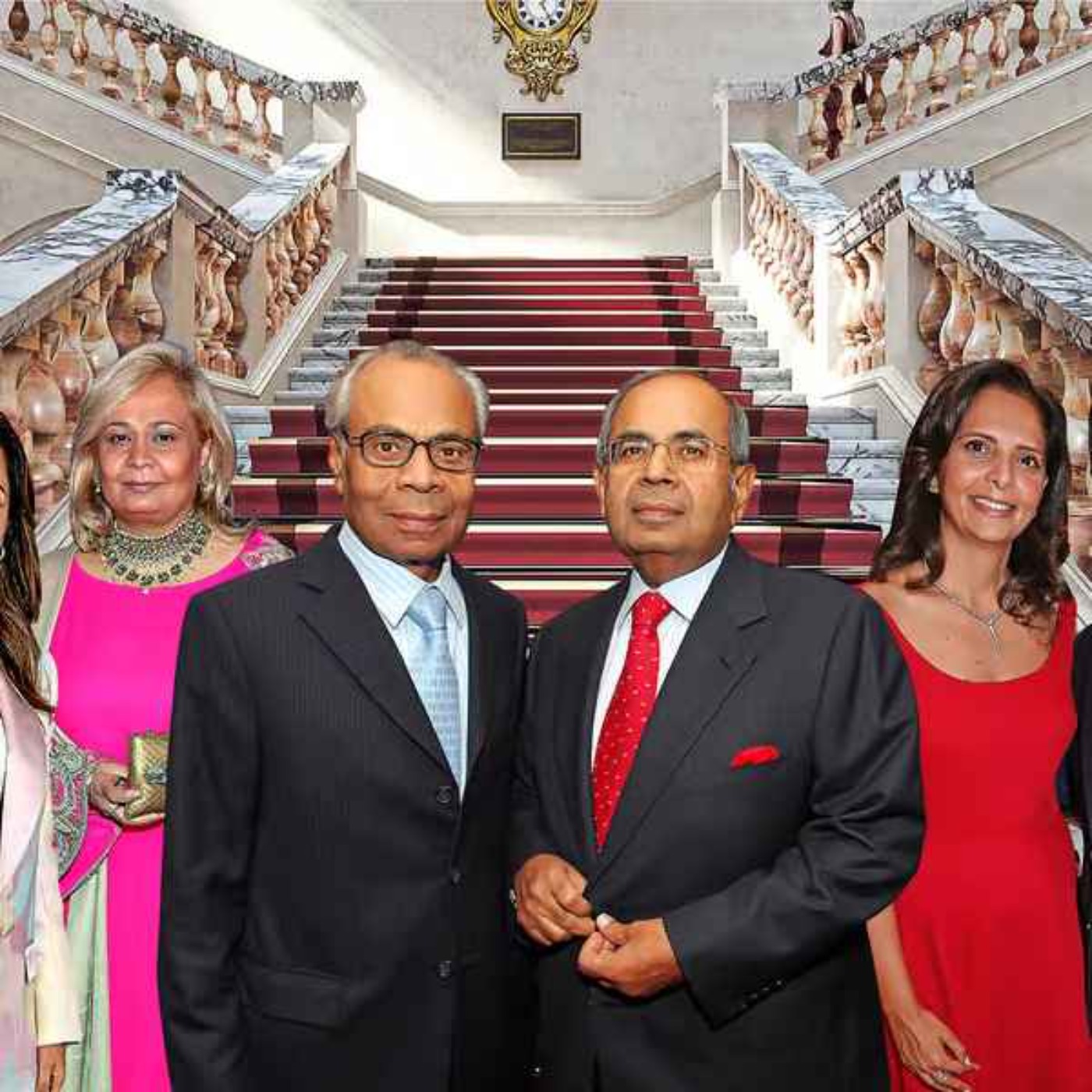
You might not have heard of the Hinduja family, but with a net worth of over £35 billion, they topped the Sunday Times Rich List for six of the past 10 years.
The eldest two of four sons, Srichand and Gopichand, were co-chairmen of the Hinduja Group - which always prided itself on being a family business. They brought billions to London and built the capital’s grandest hotel - the Owo - and their private home round the corner from Buckingham Palace is estimated to be worth over £300 million.
But after the death of the family patriarch, what will happen to their empire?
The Standard’s Feature Writer Claudia Cockerell joins us to discuss this Succession-style battle in the capital.
Hosted on Acast. See acast.com/privacy for more information.


