
 Ask ChatGPT



Description: A London-based podcast featuring top news insiders discussing pivotal political, cultural, and economic issues with award-winning journalists and celebrity guests.
The episode dives into the rising food and drink prices, the implications on household budgets, and features insights from Martin Lines, CEO of the Nature Friendly Farming Network. It also includes a review of the musical "The Producers" by Nick Curtis, Chief Theatre Critic.
Written by AI. May contain mistakes.

Get the gist, explore an idea or ask about something said.
 Claude
On The Standard, what are the key points of this episode?
Searching your listeningAutomatic transcript. May contain errors.
0:02Hi, I'm Charlie Duffield and welcome back to The Standard Podcast. If you're new here, hit follow and give us a rating. For all the latest news, head to standard.co.uk. Coming up later in the show, why you won't want to miss out on the funniest show in London. It goes back to it being deliberately, willfully, carelessly offensive, really, in lots of ways. I think there's so much performative outrage out there at the moment, and so everything is sort of polarised. that a show that actually makes everybody who could potentially be offended by it laugh. It's something to really treasure. There's a tremendous amount of warmth to it as well.
0:42And I think, you know, life is pretty lacking in warmth and humour at the moment. So anything that serves up large dollops for both of those is a good thing.
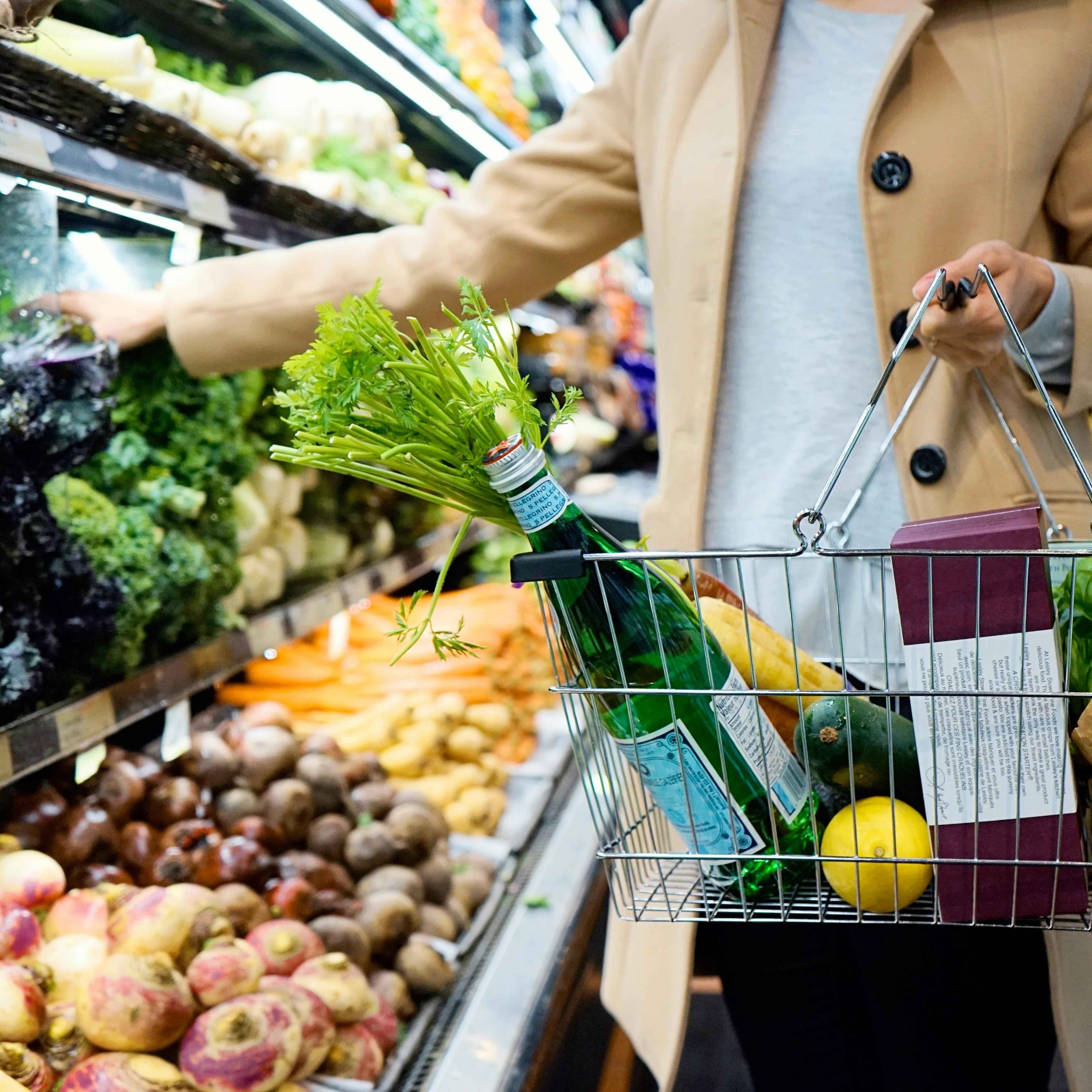
0:54But first, food and drink prices are rising at their fastest rate since January last year in a painful new supermarket squeeze on household budgets, whilst the rate of inflation stayed the same in August at 3.8%. The latest official figures show the inflation rate for food and non-alcoholic drinks rose to 5.1 % in August, up from 4.9 % in July. It was the fifth successive month of accelerating food inflation and the fastest rate since January 2024. And it's the first time food inflation has run at above 5 % since February last year. Food manufacturers and retailers are experiencing new and increased taxes, such as higher employer national insurance contribution rates and a new packaging tax, alongside poor harvests around the world and the UK for some key food commodities such as coffee beans.
1:50The boss of Aldi warned the government that any further measures in this year's budget that further increase costs on employers could lead to higher food prices. Some of the biggest rises were seen in everyday staples such as butter, coffee, chocolate and milk. And the price of beef and veal is almost 25 % higher amid global falls in production. Economists fear food inflation could peak at as much as 6 % towards the end of the year. Here's Chief Secretary to the Treasury, James James Murray, speaking today about how the government is sticking to Chancellor Rachel Reeves' rules on spending to help control inflation.
2:30Well, we know a lot of families are finding things tough and we're determined to bring down the cost of living and to put more money in people's pockets. And that's why we've increased the national living wage, we've extended the bus fare cap, and we've expanded free school meals across the country. And that's why we're doing that whilst at the same time growing the economy to make sure the economy works for working people and puts more money in their pockets. Well, we know that a key factor in terms of food prices is global commodity prices. And that's why it's so important that we struck three trade deals, which we have, because those trade deals not only help with jobs and investment in the UK, but they also help to bring down the cost of things at the supermarket checkout.
3:07We've made sure that we're doing everything we can right now to help people with the cost of living, whether that's the cap on bus fares, the increase in the national living wage, the expansion of free school meals. But we know what's really crucial to people in the long run is to have a stronger economy, an economy that works for working people, that rewards hard work. And the Chancellor's fiscal rules underpin everything that we're doing in government. They are crucial to make sure that we are having a tight grip on public spending, because that's the way to bring down inflation and to make sure that we're in a stronger position as a country.
3:37Joining us now is Martin Lyons, CEO of the Nature Friendly Farming Network and an arable farmer in Cambridgeshire. Martin, from your perspective, what's behind this rise in food prices? Much of it is effects of weather, cost of production of food items, but it's also a reflection of how our climate is affecting our production. So many of our core ingredients of food, cost of production, and the supply of those is changing. So prices are going up. As producers, we're not seeing all the prices coming reflected back down to the primary producer. And quite often that profit, that value is getting swallowed up within the supply chain.
4:12So as farmers, we're seeing higher costs, but poorer returns. The fertiliser, the diesel, the machinery are all going up in costs. But also the impact of what weather is happening is the quality of what we're producing and the volumes is being interrupted. So there's not always a volume available to meet demand, which drives prices. There have been various warnings in recent months from farmers over weak harvests because of heat waves and spells of drought over the summer. How is that impacting this situation? Last year was extreme wet, so production from farms was reduced. And this year we've seen huge issues with lack of rainfall and droughts, with many farmers in arable situations seeing reductions in yield and quality, and in livestock systems, lack of grass.
4:56The produce from farms is a different quality and yields and availability is less, which is driving the wider market prices up. But the price received by farmers is not reflecting those price rises. So what actions can farmers take to mitigate these risks? Farmers are having to adapt and change their practices. We need to do that alongside the support by the supply chain and public funding and getting the right actions. So as a farmer, I'm looking to invest in better soil health that's more resilient to drought and extreme rainfall events. Growing a wider variety of crops so we can meet the different weather challenges that are coming.
5:34But we need to work with our supply chain and our customers to make sure what we're producing as farmers this year is the produce they want next year. Farming is a long-term game in delivery, so we need to build resilience into our farming systems and into our soils that can deliver the produce and the food society wants in the future. What crops do you grow and how have they been affected this year? So we mainly grow cereals and combinable crops, so wheat, barley, beans, oilseed, rape. Last year, we were seeing 40 to 50 % reductions in yields to too much rain and too wet of soil. And this year, we're seeing 10, 20, 30 % of reduction in crops because it's been too dry.
6:13As a farmer, we've been improving our soil structure for a number of years, which has built us more resilient. We haven't been affected this year as much as near neighbours and other farmers due to the lack of rainfall. So we can build resilience, but it does affect how much we can produce and the quality of that produce. So is this something that just the UK is struggling with? No, if we look at the global figures, we trade food globally. Much of what we consume directly or indirectly is sourced from abroad, and they are equally having problems. Much of our fruits and vegetables and salads are coming from Spain, South Spain and Europe and parts of Africa, where they have extreme drought situations.
6:54This year they've had more rain, but normally they have availability of water. So the real risk is that food inflation in the years to come will get a bigger problem because we are sourcing food products from areas of the world where climate change is having an effect on production. And that's why we need to focus around what is real food security and bring home much of that production so we can actually manage our water levels and our production to meet the needs of UK citizens. Finally, is there anything else you want to add? We've all enjoyed a reasonably nice summer, enjoyed the sunshine, but that sunshine comes to effect to a farmer.
7:30And we need to think about food choices, where they come from, and also what mitigating around climate impacts within our supply chain. But also support farmers that are trying to be more nature friendly, climate resilient, and making sure produce that is being purchased by society tries to come from those production systems. And also think far enough ahead. I'm thinking five, 10 years ahead in my planning in cropping, and we need to have certainty from consumer demands and needs that I'm growing the food that the consumer wants, not just this year, but in the years ahead. Many farmers, they're recognising nature is underpins their production, healthy soils, biodiversity, pollinators, predatory insects.
8:08So how do we have a landscape that not only delivers food and food security, but also delivers nature restoration, climate mitigation? So actually, how can we farm with nature rather than against it? And unfortunately, farming in the past has caused lots of disruption to nature and to the environment. So we can deliver those solutions if we change our practices and have a joined up approach. So we have nature that underpins production and food security. And as a farmer, that makes me more resilient and hopefully more profitable in the long term. Let's go to a break. Coming up in part two, The genius of Mel Brooks' comedy musical is a much needed tonic for these turbulent times.
8:52We'll see you back here in just a moment.
8:59Welcome back. It's almost 20 years since The West End was first treated to Mel Brooks' award winning musical version of The Producers, the 1967 film that made his name. Under the right circumstances, a producer could make more money with a flop than he could with a hit. You bloody little genius! I want everything I've ever seen in the movies! All we have to do is find the worst play ever written. What is it? You found the flop? The original Broadway production won a record 12 Tony Awards, and this autumn is on at London's Garrick Theatre, following a sold-out run at the Meniere Chocolate Factory.
9:42The show is all about a down-and-his-luck Broadway producers' outlandish bid to create the biggest flop in theatre history, a third-right musical called Springtime for Hitler, only to have it backfire spectacularly and with thunderous applause. It's a parody of the golden age of Broadway musicals, with two cynical heroes out to make their fortunes in 60s New York. Joining us now is the Standard's chief theatre critic and host of the London Theatre Review podcast, Nick Curtis. Nick, can you remind us of the premise of this show? Yeah, well, The Producers is a musical by Mel Brooks on his 1967 film, which is a sort of spoof of Broadway in which two producers realise they can make more money out of a flop than they can out of a successful show by raising investment and then closing it up on the first night so they don't have to pay back the investment.
10:35So they decide to find the worst show they possibly can and they find a play called Springtime for Hitler written by a covert Nazi about Adolf Hitler. And they give it to the campus gay director to direct. Now, you've called this the funniest show in London. What makes it so special? Well, I think the fact that it's a sort of equal opportunities offender. There's stuff in there that's potentially offensive to almost everyone. But it sort of dates from an era which I think we've slightly lost when people were able to laugh with and at each other. And there's just a great comic zest to it. There are tremendous performances.
11:11The lyrics are, and the songs are incredibly witty. Anybody who knows Mel Brooks, I mean, I think this is really, in some ways, his finest work. I suppose I would maybe put Young Frankenstein and Blazing Saddles in there as well. But I think this, in some ways, exceeds the original film. There's just something about the fact that it is a Broadway musical about the staging of a Broadway musical. It's in love with its own art form. It's lovingly making fun of lots of sort of Broadway tropes. I just think it's an absolute riot. So what were the standout performances then? Well, I think it all hinges on Andy Nyman's performance as Max Bialystock.
11:42Zero Mostel played him in the film. Nathan Lane originally played him when it was first done as a musical and brought over from Broadway in 2004, I think it was. But now it's Andy Nyman who plays this sort of once great producer gone to seed, in fact gone spectacularly, seedily to seed. His suit has stains on it that you don't want to think about, and his hair seems to rinse up to his head with spittle. And it's a role that sort of invites hysteria and over-the-top performance, but he actually underplays it rather nicely. He's quite sardonic, he's nimble on his feet, he's quite sort of snappish and irate.
12:16It's a lovely performance, and he's very well complemented by Mark Antolin, who plays Leo Bloom, the accountant who comes up with the scheme and who Bialy Jock persuades to be his partner in this sort of fraud. That's the harder part, Leo Bloom. He's a sort of anxious man-child who sort of grows into maturity through the course of the show, but Mark Anselm plays it with a certain amount of sweetness. The supporting cast is great. Harry Morrison, who plays Franz Liebkin, is very funny, as is Trevor Ashley, who plays the gay director, Roger Debris. But a quick proper shout-out for Joanna Woodward, who plays Ulla, the sort of sexy wannabe actress.
12:48She's an absolute sort of bombshell stereotype, but Joanna Woodward plays her not only with a... She has a tremendous singing voice, plays her with a great deal of wit and charm. It's a very, very funny performance. You've given this show five stars, so it's obviously a hard act to follow. But I wondered what other theatre you're looking forward to this autumn. One thing I would say about giving it five stars is it initially opened at the Menier Chocolate Factory last year, last December, and I gave it four stars. It was pretty damn good then. But it's somehow sort of filled out and come into its own and the performances have sort of grown a little bit.
13:20And it also has more space, so the choreography is more lavish and extravagant in this one. The sets are a lot more garish and wonderful as well. There's lots of interesting stuff coming up. I'm particularly looking forward to fairly soon, I'm going to go and see The Lady from the Sea with Alicia Vikander in it. It's an adaptation of an Ibsen play by Simon Stone, who did an adaptation of Yerma and of Fedra in the last few years, which are absolutely wonderful. And it's Alicia Vikander's London stage debut, so an Oscar winner treading the boards at the Bridge Theatre. there's the new season from the National Theatre's new artistic director starting with Bakke, the ancient Greek drama which unfortunately I'm on holiday for but I'll be catching when I get back and then she's following that with a production of Hamlet which will actually be directed by her deputy Robert Hastie that's going to be really interesting as well I think there's all sorts of good stuff coming up
14:09And that's The Standard for all the latest news head to standard.co.uk if you'd like to get in touch please do drop us a line at podcasts at standard.co.uk we'll be back here tomorrow at 5 p.m we'll see you then
Food and drink prices are rising at their fastest rate since January last year, whilst the overall headline rate of inflation remains unchanged at 3.8 per cent. Food prices are expected to peak in December as hot weather has led to a poor harvest and higher industry costs. According to ONS figures, the biggest price rises in food and drink include beef and veal, butter, coffee, chocolate and milk. Martin Lines, CEO of the Nature Friendly Farming Network, and an arable farmer in Cambridgeshire, joins us to discuss how the current challenges mean consumers are paying more for everyday essentials.
And in part two, The Standard’s Chief Theatre Critic, and host of The London Theatre Review podcast, Nick Curtis, joins us to discuss his five star review of The Producers musical at the Garrick Theatre.
Hosted on Acast. See acast.com/privacy for more information.


