
 Ask ChatGPT



The Standard podcast delivers insights on politics, culture, and current events. Hosted from London, it features top news insiders discussing pressing topics with award-winning journalists and celebrity guests.
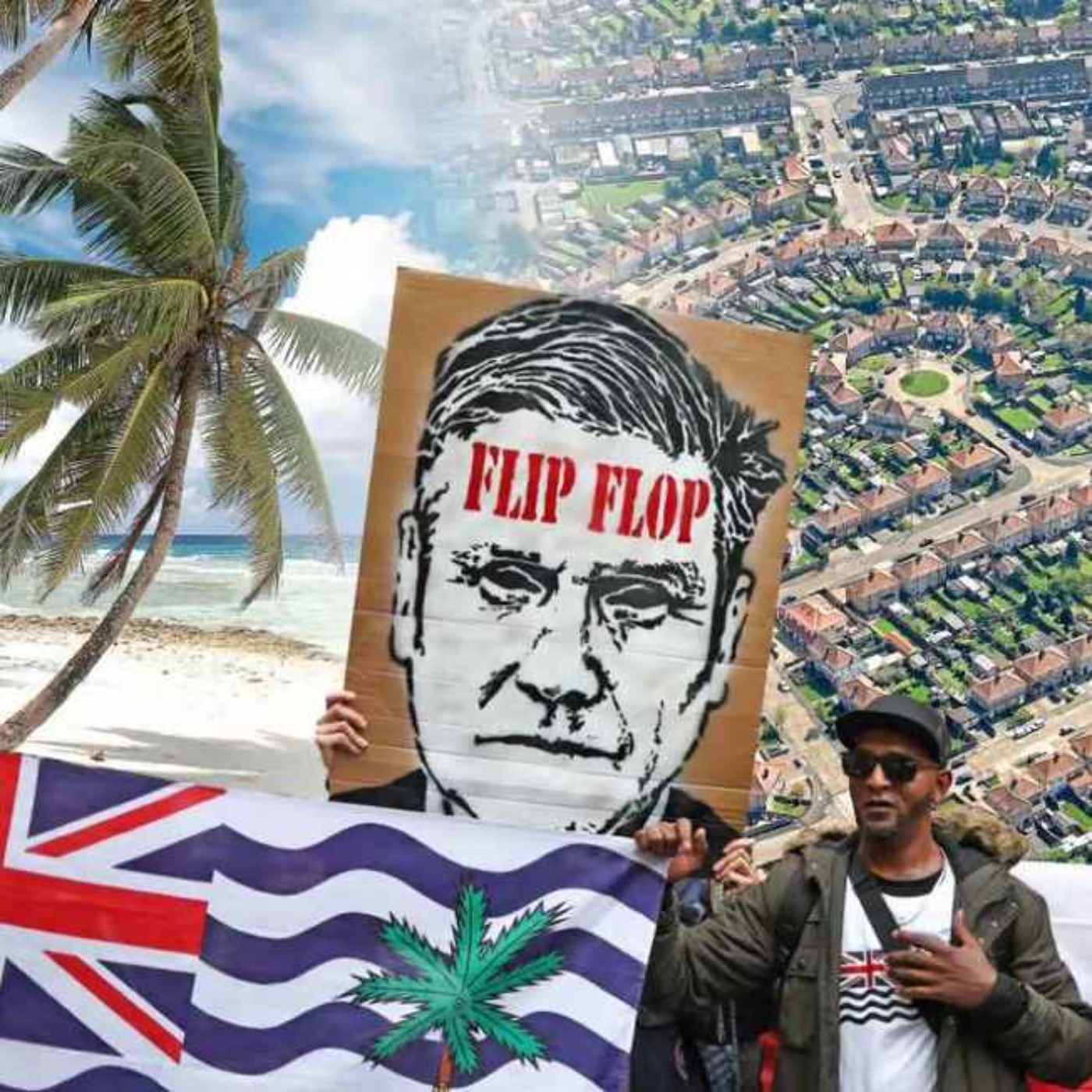
In this episode, the discussion centers around the Chagos Islands deal and its implications for Hillingdon Council due to an influx of Chagossians moving to the UK. The episode also highlights a special segment on a historical cigar merchant, JJ Fox, in London.
Written by AI. May contain mistakes.

Get the gist, explore an idea or ask about something said.
 Claude
On The Standard, what are the key points of this episode?
Searching your listeningAutomatic transcript. May contain errors.
0:02Hi, I'm Charlie Duffield and welcome back to The Standard Podcast. If you're new here, hit follow and give us a rating. For all the latest news, head to standard.co.uk. Coming up later in the show, the London shop that has drawn the great and the good from Sir Winston Churchill to Oscar Wilde for almost 240 years. It's kind of a capsule of two centuries of cigar smokers and the kind of society that came in and then little details about them are revealed. You can see, for example, where it's a severance humidor, which is kept there. Yeah, it's just an insight into changing tastes, changing expenditure and the way that society seemed to all gather in this shop.
0:49It wasn't like a meeting place for them, but it's the idea that these figures would come and go and pass and that's what makes it fascinating. Whether you're a smoker or a non-smoker, it's an interesting place to go because it shows Britain changing through the ages. But first, Prime Minister Sir Keir Starmer's Chagos giveaway has brought an influx of islanders to Heathrow, leaving Hillingdon Council in crisis. As more and more Chagossians exercise their right to British citizenship and move to the UK, local authorities are feeling the strain. The global Chagossian diaspora is estimated at approximately 10 ,000 people, with around half living in Britain and the rest in Mauritius and the Seychelles.
1:35For decades, their citizenship status remained precarious, but in 2022, those born on Chagos and their children were offered full British citizenship, a small gesture towards acknowledging historical wrongs. This citizenship route predated the UK government's decision earlier this year to hand over ownership of the Chagos Islands to Mauritius. The government says the deal is completely unrelated to the Diego Garcia military base agreement. Earlier, I chatted to the Standard's chief political correspondent, Rachel Burford, before the Chagos Islands deal returned to the Commons. Rachel, why are we talking about this today?
2:16The Chagos bill returns to the Commons this afternoon for its remaining stages. This has been a long-running dispute. It was a deal that was originally sort of negotiated under the previous government. And essentially, what Britain is proposing is handing sovereignty of the Chagos Islands to Mauritius. The largest island, Diego Garcia, is home to a large US-UK military base. And the terms of this treaty will allow the US and the UK to continue operating that military base for an initial period of 99 years. And that will cost about£101 million a year. Keir Starmer, the prime minister, has described it as a good deal.
2:57The base is strategically important, and it has been reportedly used for things like bomb strikes against the Houthi rebels in Yemen. But it is a deal that sparked a lot of criticism, particularly from the conservatives and reform. Nigel Farage, the reform leader, is particularly against it. And also UN experts have sort of said that preventing people from returning to the Chagos Islands, the Chagossians, it is not right that they don't have the right to return. Can you remind us of the history here? So in the 1960s, the entire Chagossian population was expelled to make way for this military base.
3:36Many of them ended up in Mauritius. That has always been controversial. So you've expelled people from an island that they called home. This deal has been criticised by the Chagossians who were hoping to return one day to their homeland. So why has Kistama taken this action? Negotiations first began under the previous government, so it has been in the works for a long time. The Prime Minister says that this is the best way to ensure that the UK and the US has this strategically important military base. he's described it as a good deal, something that is important to Britain and something needs to happen.
4:15The Prime Minister has said the continued use of Diego Garcia as a military base has been signed off by members of the Five Eyes Alliance, they're called, that's the UK, US, Canada, Australia and New Zealand. And the US will pay for the running costs of the base and then we will pay the£101 million a year to lease it essentially back from Mauritius. And under the deal, although Mauritius will control Diego Garcia, essentially, it will not be allowed to resettle the island. It's very controversial, but it is something that the government are arguing that we need to do. Defence Secretary John Healy said, without this deal, within weeks, we could face losing legal rulings.
4:52And within just a few years, the base would be inoperable. So they said it's defensively, strategically important, and we need to do this deal to make sure we can keep running that military base under Diego Garcia. And why are there now so many Chagossians arriving in the UK? What has prompted this? Basically, Chagossians have faced discrimination. Mauritius has certainly different human rights laws than the UK. In 2022, the last government put in place a scheme, essentially, that entitled Chagossians to British citizenship. And that was open to all individuals of Chagossian descent living anywhere in the world.
5:32and adults have been given until November 2027 to apply. This citizenship route means that people of Chagossian descent can apply and become British citizens very easily. And what that has resulted in is a lot coming to Britain. What we've seen in recent months is a big influx of them arriving at Heathrow Airport and Hillingdon Council, the borough where Hillingdon Airport is, say that this is putting a huge, huge strain on their homelessness services, because essentially they've got Chagossians turning up, many of them with children, and they do not have any homes to go to. And the problem with this is because they have at least one child with them, the council has a statutory duty to then house them.
6:18Since July 2024, when they became to power, the Hillenden Council has registered 621 individuals, and that's made up of 168 families of Chagossian descent arriving at the airport. I think last week alone, they had over 150 arrivals coming. The Council is now estimating that it will spend up to£2 million this year housing them and supporting them. The government covers the cost of the first 10 days in the country, but after that, it is on the local authority to cover the costs. And we're already facing a housing crisis in London, the council has already had to make over£30 million worth of cuts this year to its budgets because of the dire straits that it is already in.
7:00The council is essentially arguing that this is an unfair burden on hillings and taxpayers because this is a national policy that has resulted in this influx of people coming to the airport. And just because of the fact they are a port authority, because the airport is there, they are bearing the brunt of having to house hundreds more people than they expected to. They're just arguing they need more money. Essentially, they're warning as well that more people are coming. People have until November 2027 to apply for citizenship. They've had over 600 arrive already. They're expecting many, many more to arrive.
7:33Although these are British citizens and the council says they do want to help them in any way they can, this is putting a huge amount of pressure on their homelessness services, on their budgets. What can we expect when the Chagos Islands deal is back in the Commons? So I think there's going to be a bit of a row in the Commons. It's obviously going on into the night. We've scheduled five hours for this debate. The bill now is in its remaining stages. I think we can expect quite a fight to go down. There's five hours scheduled for debate. We've already seen Nigel Farage has come out today saying he'll be attending the debate.
8:06He's arguing that this is kind of the UK selling us out to China because he says China has built a small city next door in Port Louise. He's saying the Americans are going to be annoyed that the military base is not as secure. I think the Conservatives as well are going to come out and really argue that this deal is extremely expensive, that it's not got as many positives as the government is trying to make it out, that it has got, and that this should be renegotiated and a different deal done. Finally, how do Chagossians feel about this situation? So we spoke to some Chagossians who said they feel actually a bit betrayed by this deal.
8:47I spoke to Frankie Fontomps, who is a second generation Chagossian. He says at the heart of this tragedy lies our people and we have been completely ignored. It's not like the Chagossians said they wanted to go to Mauritius. They were dumped there. They were kicked out. He said he would give up his British passport tomorrow if he was allowed to return to the islands. We lost our culture, our way of living. For the sort of around 3 ,000 Chagossians that live in the UK, a lot of them do feel a bit let down by this deal. They feel that although they've got British passports, many of them did not grow up speaking English.
9:20They've got this route to British citizenship. but when they arrive here, there's very little help for them. It's a different way of life here. They want to live and build their own lives. He said that the Tchaikovsians that are already in the UK, they raised the problem from 2022 when this citizenship route was launched. And they said the government knew that thousands of people would be coming and there was no sort of programmes put in place to help them. Let's go to a break. Coming up in part two, the tobacconist's shop that acts as a roll call of London's Who's Who. We'll see you back here in just a moment.
10:01Welcome back. For this week's Hidden London, we're visiting a cigar merchant that has been standing since 1787. If you take a step inside Jojo Fox, the air smells of cedarwood and tobacco leaf, with customers and staff talking in quiet murmurs amid the interior of wood panelling and hanging brass lights. There's a portrait of Sir Winston Churchill on the wall and his old smoking chair. It's a destination which reveals not just the history of cigars, but of society too. To find out more, I spoke to The Standard's restaurant critic and going out editor David Ellis. David, whereabouts is the James J.
10:42Fox shop in the city? Can you describe the area? So it's on St James's Street, which is a particularly interesting road in London because it cuts between Piccadilly, where at the top there's the Ritz Hotel and there's all the traffic going by. And then at the bottom of it is Pall Mall, where there are all the gentlemen's clubs, Berry Brothers, so you know London's most historic wine merchant. And actually St James's Street itself is just sort of mad because it is a part of London that has been, for the most part, untouched by economic headwinds as time's gone by. So it's really where the great and the good and the moneyed have always shopped and it remains there today.
11:21So you might go and look at hunting rifles. You might go and buy gold bars. You could get a Fabergé egg. There is medieval jewellery there. You can buy very, very expensive wine. You can stop in on hotels where every single person in the courtyard smoking cigars. And as part of this, there is James J. Fox itself, or J.J. Fox, as everyone calls it, that's traded here since the late 1700s. So remind us of the history of this business. So the shop itself was called Robert Lewis, and that is the shop that's traded since 1787. But J.J. Fox, or James J. Fox, is a tobacconist that began in Dublin in 1881.
12:03It very quickly built up as a business coming to London in the 40s, just after the war. In the 80s and the 90s, it began supplying cigars for Selfridges and for Harrods. And then in 1992, Robert Lewis and James J. Fox decided to combine their businesses, J.J. Fox taking over the shop and renaming it for itself, because at the time it was a better known merchant, because it had Dublin Outpost, It had an old Bond Street place, it had Harrods, it had Selfridges, and it just had made more of a name for itself than Robert Lewis had. And what can visitors learn about in the Freddie Fox Museum? Freddie Fox is the man who basically drove J.J.
12:47Fox and did all that expansion. And he's an interesting man himself because he only took over the Fox family business off cigars because one of his brothers was murdered by thieves who thought to be connected to the IRA in the 20s. and his other brother was lost during the war. And so he found himself on his own with this great tobacconist and having to run it. And so they've named the museum after him as sort of a nod to the legacy that he left behind. And in that shop itself, it tells the story of 240-ish years of cigar smokers. And then little nods to history, which is where it gets really interesting.
13:23And then most famously, it's Winston Churchill. So Churchill shops here from 1900 until he died in 65 and was a regular customer of the shop. And according to the ledgers that are there, because you can read it, quite behind on quite a lot of his payments, which is quite funny. Churchill is synonymous with cigar. There is even a type of cigar named after him. You can see the actual chair that he smokes in. and you yourself can sit in it. But also you can sort of see what he would order, how often he was in, what his habits were during the war and things like that that's kind of interesting. So they have details of everyone else who was in.
14:00So there are other prime ministers, David Lloyd George, there's Oscar Wilde. He used to shop there, though seemed to favour cigarettes over cigars. Rajar Kipling, Noel Coward, Evelyn Moore, Sigmund Freud. Bram Stoker, author of Dracula, went there. It sounds like this place is more than just a tobacconist, But are these types of shops set to be relegated to a bygone era? Because of this museum, it feels more than a tobacconist. But what's interesting is that for those customers that we've just spoken of, actually, it was just a cigar shop. It's where they could get pipes and they could buy all the paraphernalia and everything else.
14:34And that's still true. A lot of people who shop in JJ Fox don't shop there because Noel Coward went there or Churchill or whomever. They shop because their fathers and mothers and grandparents shopped there. And it's that kind of shop that inspires this loyalty. The difficulty is that there is a tobacco and vape spill currently going through Parliament. It's looking to decrease smoking in this country. Obviously, it is meant to come with health benefits, which are obvious and don't need explaining. What it doesn't necessarily look at is that cigar smokers and pipe smokers tend to smoke in different ways than cigarette smokers or vape smokers.
15:11One of the things it wants to do, for example, is it wants to increase completely standardised packages for everything. While that's fine for cigarettes, because all cigarettes are basically the same size and you can just fit in the same boxes, that's much harder with cigars because they come in all shapes and sizes. And the other thing is that the UK only gets 2 % of the world's cigars. It's very unlikely that manufacturers would bend to our rules and regulations. They just won't be able to sell the same volume of cigars. And so a 240-year-old business is a threat of closing with this great history because what it sells is a specialist niche product being held to rules that are more likely intended for mass-produced goods.
15:52It does show that if this bill doesn't take into account that cigar merchants, and there's one just up the road from JJ Fox, Dunhills, which is also very famous, if they're not treated as sort of being these one-off businesses, then their future looks uncertain, to say the least.
16:14And that's The Standard. For all the latest news, head to standard.co.uk. If you'd like to get in touch, please do drop us a line at podcasts at standard.co.uk. We'll be back here tomorrow at 5pm. We'll see you then.
As the Chagos Islands deal returns to the Commons, the Standard’s Chief Political Correspondent, Rachael Burford, joins us to explain how the influx of islanders from the remote archipelago has left Hillingdon council in crisis. The Chagos Islands have been the subject of a long-running legal dispute between the UK and Mauritius. This week’s special report explains how in 2022, those born on Chagos and their children were offered full British citizenship, as a small gesture towards acknowledging historical wrongs. But with more families expected to arrive in the capital, the financial strain is forcing difficult choices.
And in part two, The Standard’s Chief Restaurant Critic and Going Out Editor David Ellis is here to reveal this week’s Hidden London destination - the cigar merchant JJ Fox, which for more than 240 years has drawn the great and the good, from Winston Churchill to Oscar Wilde.
Hosted on Acast. See acast.com/privacy for more information.


