
 Ask ChatGPT


 The Standard
6 Jan 2026 · 15m · 7 chapters
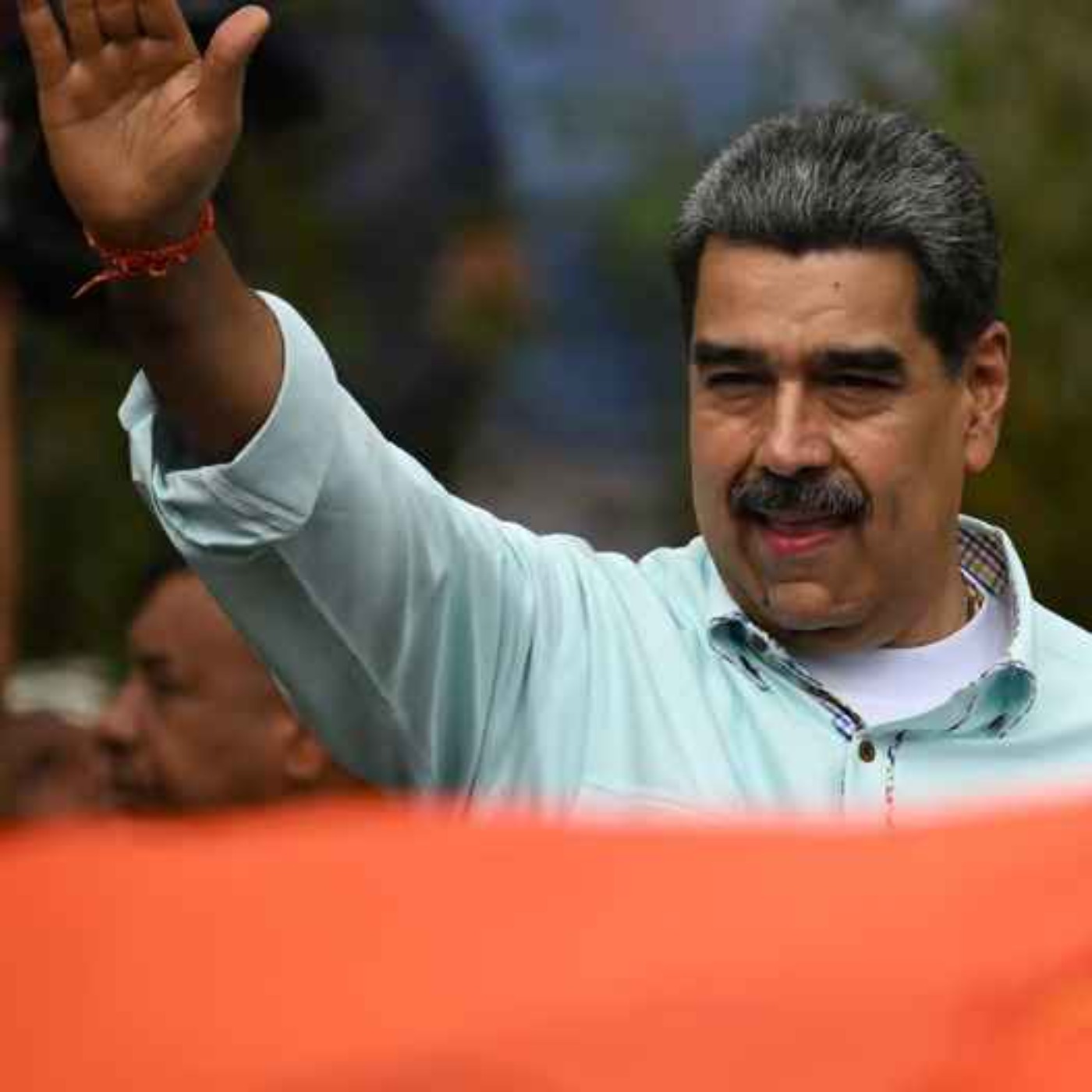
In this episode of The Standard, host Charlie Duffield discusses the recent capture of Nicolás Maduro, the ousted president of Venezuela, and explores the unusual historical deal he struck with London that allowed low-income Londoners to benefit from discounted transportation fares.
Written by AI. May contain mistakes.
Discussion on Nicolas Maduro's capture, US accusations, and international law considerations.
“Here's what US President Donald Trump had to say.”
Exploring the origins and motivations behind the oil deal struck with Venezuela.
“Maduro's previous links with the capital, specifically a bizarre deal that was struck between the two nations.”
The political backlash against Ken Livingstone over the Venezuelan oil deal.
“Whereas the Tory party said this was pretty shameful stuff.”
Analyzing the rarity of city-level deals with national governments and their implications.
“Ross, this sort of arrangement doesn't happen frequently, does it?”
Explore the current drug trafficking charges against Maduro and their historical ties.
“So it's quite uncanny now, like 20 years on, President Maduro is now facing these drug trafficking charges in New York after President Trump ordered US forces to intervene.”
Learn about Maduro's involvement in a surprising deal with London's mayor.
“But this is the same person who would have been involved 20 years ago in orchestrating a deal between his superior, Hugo Chavez, and the mayor of London, Ken Livingston.”
Discover how Maduro's actions led to cheaper bus fares in London.

Get the gist, explore an idea or ask about something said.
 Claude
On The Standard, what are the key points of this episode?
Searching your listeningAutomatic transcript. May contain errors.
0:01Hi, I'm Charlie Duffield, and welcome back to The Standard Podcast. If you're new here, hit follow and give us a rating. For all the latest news, head to standard.co.uk. Coming up later in the show, how the ousted Venezuelan president helped give Londoners cheap bus fares. But first, the world is watching on as Venezuelan president Nicolas Maduro was captured on Saturday morning after US spies had been monitoring his every move for months. He appeared before a New York court on Monday, accused by the US of drug trafficking and weapons offences and of running a narco-terrorist regime, which is a claim he denies.
0:49Here's what US President Donald Trump had to say. So we are going to run the country until such time as we can do a safe, proper and judicious transition. And it has to be judicious. That's what we're all about. We want peace, liberty and justice for the great people of Venezuela. And that includes many from Venezuela that are now living in the United States and want to go back to their country. It's their homeland. At the time of recording, Home Office Minister Mike Tapp would not be drawn into saying whether the UK government believes the US capture of Venezuela's president was lawful under international law.
1:30Well, first, I just want to say that this man, Maduro, who's been removed was a evil, illegitimate dictator who tortured people. He used sexual violence, arrested dissidents, and him not being in power there makes Venezuela a safer place. But what we need to see now is a democratic, safe, peaceful transition of power. And we've been really clear that we will always abide by international law as a nation. That's what we respect. That's what we stand for. There are conversations ongoing with the Americans and with our close allies, and there's more to come. But of course, we won't give a running commentary on that behind the scenes diplomacy.
2:16What's really important now is that that man is not in charge of Venezuela, that we respect international law and that we see a safe and peaceful transition for the people of Venezuela. These sorts of operations are complex and this is why it's for the United States to lay out its legal basis for what it's done and for the operation that it conducted. Meanwhile, Venezuelan's new leader, Delce Rodriguez, has been sworn in, with Trump warning she could pay a very big price if she doesn't do what's right, as China and Iran have called on the US to release Maduro. Back in October, the think tank, the International Crisis Group, warned that the fall of Maduro could lead to violence and instability in Venezuela.
3:03Members of the Venezuelan community in the UK were pictured celebrating in Trafalgar Square following the US attack and the capture and detention of Maduro. As the saga unfolds, today we're exploring Maduro's previous links with the capital, specifically a bizarre deal that was struck between the two nations. Joining us now is the Standard City Hall and Transport editor Ross Lydell. Ross, I'm really intrigued by this. Tell me a bit more about this deal and how on earth it came about. This goes back to 2006 when Ken Livingston was in his second term as the Mayor of London. He served between 2000 and 2008 and at the time I recall him inviting the Standard and many other journalists to City Hall to come and meet or ask questions of Hugo Chavez, who was then the president of Venezuela.
3:58Now, not a lot was known about Chavez at the time, other than the fact that he was potentially a sort of modern day Che Guevara or Fidel Castro. Basically, he was from the sort of the left wing politically and was running Venezuela, which obviously is an oil-rich nation, rather for the benefit of poor people across the world. And Ken, being obviously of the left himself, thought this was an appropriate, if unusual, opportunity for a sort of meeting of political minds. So along we went, Ken and Chavez answered questions on a variety of topics. But what later transpired was that this was going to go beyond just the sort of nice, friendly lunch paid for by Londoners, I should add, at City Hall.
4:46This was the old City Hall beside Tower Bridge, not the current one where Sadiq Khan is holed up in the Royal Docks. And what this led to was a very unusual deal where essentially cheap Venezuelan oil was used to subsidise the cost of bus travel for low-income Londoners. Okay, so what were the benefits for both countries, would you say? About 250 ,000 Londoners who were on income support were able to apply to get half price bus and tram tickets. The Oyster card had only been introduced a couple of years before this. And under the system that City Hall was keen to sort of cook up, you would simply go along to the post office with proof that you actually received income support.
5:33You would then get a document which then entitled you to go to a ticket office or a tube station and get this oyster card, which essentially gave you half price rush travel for the next 12 months. From Venezuela's perspective, it gained from an improved reputation, if you like, in obviously one of the world's great cities. People talking about the generosity of its president. It wasn't costing it a lot. But this was according to Ken Livingston. Venezuela had so much oil that it wouldn't actually get much money back from the oil that was offering London, simply because the oil companies would essentially cream off much of the profit.
6:11The deal was between Transport for London and Venezuela's sort of nationalised oil company that quite a lot of benefit could be obtained by both sides here. because in return, London would give Venezuela its expertise. Some TFL officials were due to go to Caracas to help that city understand and improve its transport problems. It's a very congested city. And at the time, London had introduced the congestion charge and was seen as a sort of world leader in tackling congestion. The idea was that in return for the cheap oil, London would give Caracas and Venezuela its expertise and how to improve public transport systems.
6:55So what impact did this deal have? Though there were 250 ,000 Londoners on income support who were entitled to claim the half-price bus and tram travel, only about 160 ,000 people actually went through, I guess, the sort of degree of rigmarole and actually getting these concession passes. So about 60 % take up, which isn't bad. So a number of Londoners did benefit from cheaper fares. In terms of whether this improved the reputation of Venezuela and Hugo Chavez, it's probably hard to say from a London perspective. They would be looking to see how they were viewed on a world stage. So this may have helped their reputation almost for some sort of form of philanthropy, I guess you could say.
7:43But for those who got half-priced bus fails, that's not to be sneezed at. Bus fails were cheaper then than they are now, but even then they're still pretty cheap by comparison. The problem that Ken Livingston faced was more of a political problem, that he was heavily criticised for this deal by his rivals, both Tories and even the Green Party at the time raised concerns. The Greens were concerned that essentially he was continuing to pour diesel into bus engines or bus fuel tanks rather than actually looking at the bigger picture of trying to clean up the capital's bus fleet, which is now something that's very much in vogue and has been taken on board with greater force by the current mayor.
8:26Whereas the Tory party said this was pretty shameful stuff. The Tories described it as a squalid deal because they said that with about a third of people in Venezuela living in poverty, it was entirely wrong for a country that was essentially a third world nation, even though it was oil rich, to be subsidising of the world's greatest and wealthiest cities. And that was the problem that Ken Livingston faced in trying to justify this deal. It didn't feel right. It sort of failed the sort of smell test. Why is such a wealthy city gaining from a relatively impoverished nation? So therefore, in retrospect, it was a deal that was controversial at the time, in which has never really sort of justified its place in terms of being something that both sides benefited from on an equal basis.
9:18Let's go to an ad break. Coming up, how does this controversial initiative by a London mayor link to the recent events in Venezuela? We'll see you back here in just a moment.
9:35Welcome back. Ross, this sort of arrangement doesn't happen frequently, does it? It's very unusual for cities or city mayors, such as the London mayor, to essentially strike deals with national presidents. So the fact that you had London, the Greater London Authority, striking a deal with the Venezuelan government is pretty much unprecedented. Normally, cities wouldn't really strike deals with other cities in any case, apart from perhaps sort of friendship or sort of information sharing arrangements, you know, like one city might copy another's leadership, whether it's on transport schemes or whether it's on the Olympics.
10:18That's the more common thing so that whenever a city hosts the Olympics, then they will normally offer the next host of the Olympics all the information that they have shared or gained from during their hosting period. But it's very unusual for a commercial arrangement like this to be set up. and also for such a political deal to be done as well. So we've covered the mayoral tea for about 20 years now and it's very hard to think of such an unusual and controversial deal to have been struck either by Ken Livingston, Boris Johnson or Sadiq Khan, who we have now. And I just feel like this sort of thing wouldn't happen nowadays.
10:53Do you agree? Quite often in recent terms, Sadiq Khan, who's got himself in, shall we say, hot water, he's got himself involved in controversy over contracts that have been awarded by the GLA to firms. For example, the firm that gave Sadiq Khan free tickets to a Taylor Swift concert a couple of summers ago. Sadiq Khan was accused then of essentially favouring a company that paid for these free tickets at Wembley Stadium. Now, he said in his defence he no longer or has never got involved in actual procurement processes. This is done by officials, not by mayors. And that's probably the safer way now so that whereas the mayor can go out and about and meet people and meet people of equal status, when it comes to actually signing contracts, that's led by officials.
11:42Quite often there are tender documents, different companies are able to bid for contracts, whether it's, for example, contracts that run different routes on London's bus network. So the mayor stays of this and sort of independent of the process, whereas here we had Ken Livingston essentially directing a deal be done with Hugo Chavez, partly for political benefit for both of them as they saw it. So tell me, how did this deal come to an end? The deal came to an end in the summer of 2008 because back in May 2008, Ken Livingston's mayoralty came to an end. Ken Livingston did stand for a third term as mayor.
12:23He was defeated in 2008 by Boris Johnson, then the Tory mayoral candidate. Boris went on then to be London mayor for eight years. And one of the first things that Boris did was to scrap this deal, both for the oil from Venezuela. Venezuela. So there was no longer any cheap oil coming to London or no longer the benefit of the oil because the oil itself didn't come to London. Even though it sounded like we were getting cheap oil, what essentially was happening was that the oil was being traded elsewhere. So the oil remained with the oil companies. Financial transactions meant that by essentially getting involved in a contract for the oil, London was able to receive cheaper diesel fuel elsewhere in the whole sort a wider petroleum market.
13:09But Boris came into power. He had pledged in his manifesto to end the deal. And very soon after he took power, he did end the deal. But sadly for Londoners on low incomes, he soon also ended the deal where they got half price bus and tram travel. So London essentially wiped its hands under Boris's mayoralty of the Venezuela oil deal. But it also meant that Londoners had to pay more for their bus and their tram travel journeys as well. Finally, what do you find most interesting about this story? In terms of the US raid on Caracas and the capturing of Maduro is that Maduro was a foreign secretary, if you like, the sort of foreign minister to Hugo Chavez at the time.
13:55So Maduro would have been in London with his president and would have met Ken Livingston as well and would have been instrumental in setting up this deal. So it's quite uncanny now, like 20 years on, President Maduro is now facing these drug trafficking charges in New York after President Trump ordered US forces to intervene. But this is the same person who would have been involved 20 years ago in orchestrating a deal between his superior, Hugo Chavez, and the mayor of London, Ken Livingston. And actually, something as basic as cheaper bus fares for London came about through the actions of Nicolás Maduro.
14:38and that's the standard for all the latest news head to standard.co.uk if you'd like to get in touch please do drop us a line at podcasts at standard.co.uk we'll be back here tomorrow morning we'll see you then
Overthrown Venezuelan president Nicolas Maduro is facing drug trafficking charges in New York after being seized by US forces in an early-morning raid on Caracas.
But he was once instrumental in an extraordinary deal between London and the oil-rich South American nation that resulted in 250,000 low-income Londoners being able to claim half-price bus and tram fares for a year.
As the world watches on, The Standard’s City Hall and Transport Editor Ross Lydall is here with the latest.
Hosted on Acast. See acast.com/privacy for more information.


