
 Ask ChatGPT



```markdown
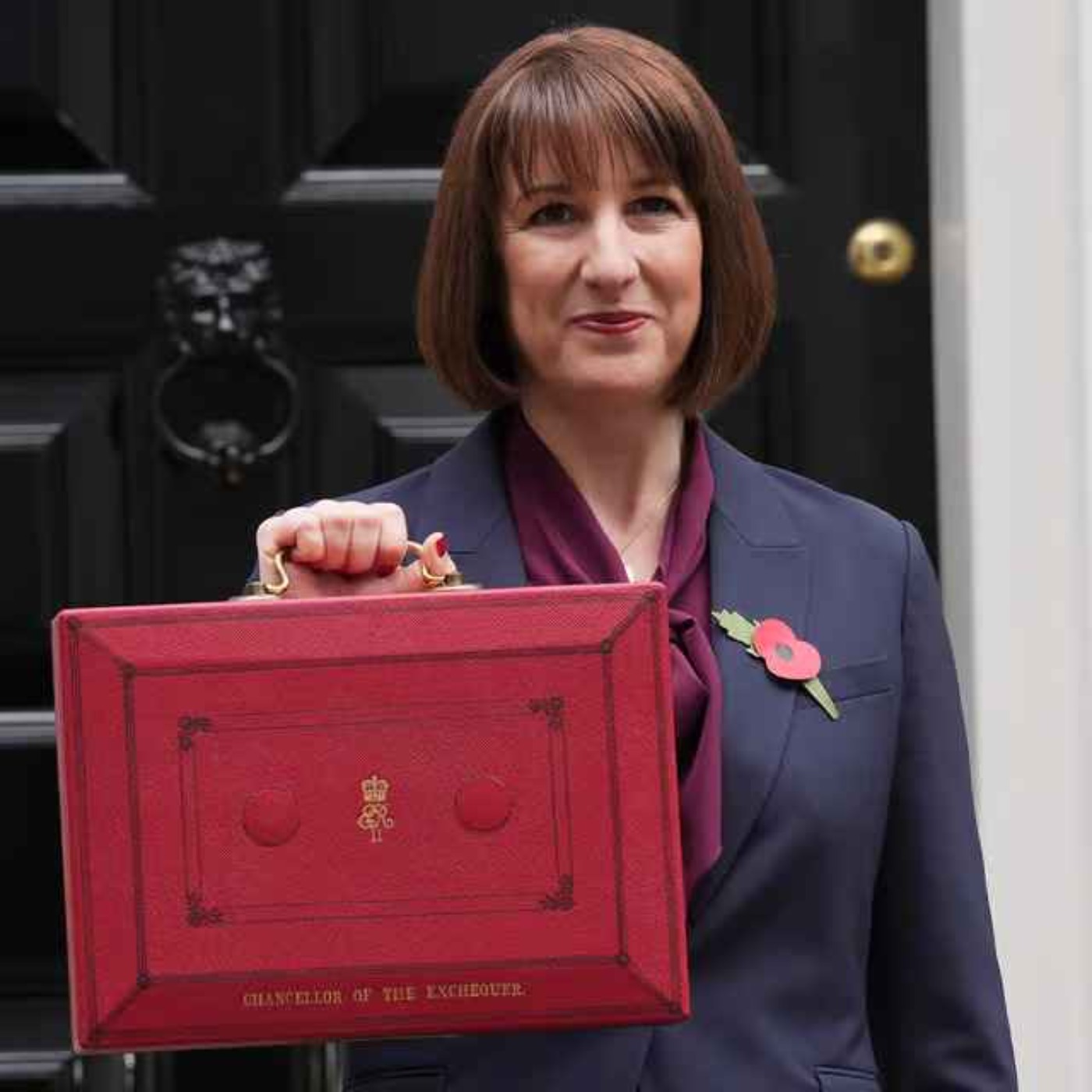
The episode discusses Chancellor Rachel Reeves' recently announced autumn budget, which includes significant tax hikes and policy changes expected to impact personal finances across the UK. The budget, characterized as defining for Reeves' career and critical for the Labour government's fortunes, has been met with both anticipation and skepticism.
Written by AI. May contain mistakes.

Get the gist, explore an idea or ask about something said.
 Claude
On The Standard, what are the key points of this episode?
Searching your listeningAutomatic transcript. May contain errors.
0:02Hi, I'm Charlie Duffield and welcome back to The Standard Podcast. If you're new here, hit follow and give us a rating. For all the latest news, head to standard.co.uk. Coming up later in the show, can Chancellor Rachel Reeves deliver on her promise of a budget to build a stable economy? So the markets are nervous about whether Rachel Reeves really is an iron chancellor, as she sought to portray, or whether actually when she comes under a bit of pressure, she buckles. But first, Chancellor Rachel Reeves has unveiled her long-awaited career-defining autumn budget, which is widely seen to be critical to the fortunes of the Labour government and the UK economy.
0:52Ahead of the budget, she acknowledged the public anger and frustration at the state of the economy as she prepared to announce further tax hikes to balance the books. Today's budget will deliver on our promise of change, cutting the cost of living, cutting hospital waiting lists and cutting the cost of our national debt. Change was never going to come easy. It requires hard work and it requires fair choices. In the past year, we have begun to see the results. With wages rising faster than inflation, hospital waiting lists coming down and our economy growing faster and stronger than people expected.
1:27But I know that there is more to do. I know that the cost of living is still bearing down on family finances. I know that people feel frustrated at the pace of change or angry at the unfairness in our economy. I have to be honest that the damage done from austerity, a chaotic Brexit and the pandemic were worse than we thought. I'm not going to duck those challenges and nor will I accept that our past must define our future. It doesn't have to. I believe and I know that a brighter future is within our grasp. A stronger Britain, a fairer Britain, a more secure Britain. So today, I'm going to take the fair and the necessary choices to deliver on our promise of change.
2:05On Tuesday, increases to the minimum wage were confirmed, as well as changes to the sugar tax, meaning milkshakes will be affected from 2028. But what did the Chancellor reveal in her red box? Well, there was a slight slip up in that the details of the budget were released early, with the Office for Budget Responsibility unexpectedly publishing its growth forecast ahead of Chancellor Rachel Reeves' big statement. I just want to say to viewers who might be tuning in for promises questions that the reason we're not following that at this moment is that the Office for Budget Responsibility's report into the budget has been published online by mistake ahead of the Chancellor herself getting up in the House of Commons at 12.30.
2:49We'll, of course, still bring you Rachel Reeves' speech, but the details have been published by mistake. So we are chewing over those before we hear from the Chancellor, which I understand and realise is quite strange. The entire thing is out in the wild. The Chancellor called the blunder by the Office for Budget Responsibility deeply disappointing as a technical error was blamed for the whole fiasco. She went on to tell the Commons how she is launching a£26 billion tax raid as she unveiled some giveaways to tackle the cost of living crisis. Joining us now is The Standards political editor Nick Cecil.
3:25Nick, what was the main takeaway, do you think? So the big tax raiser from the budget is the Chancellor's decision to freeze the income tax thresholds, not for another two years, but for another three years. And that was slightly unexpected. And so that is going to raise some£12 billion for the Treasury by 2030-31. And so that's a very significant tax rise. It's a stealth tax rise as well, because it's not increasing the rates of income tax, which everyone understands. It's freezing the thresholds at, for example, the higher rate, just over£50 ,000 and the basic rate about£12 ,500. And so what that does is basically that slowly drags more and more people into paying tax as their wages rise.
4:12And for many people, they don't realise that is happening. And what is the Chancellor's strategy here? The balance of this budget basically depends very much how much she earns. So the Chancellor has tried to protect people on lower incomes, whereas she's gone out of her way to hike taxes on the better off, particularly the wealthy. In the budget, there were a number of measures to try and deal with the cost of living crisis. The most obvious one is that she is promising to cut energy bills. She says that for the average household, they'll come down by£150 by next April. And that is by getting rid of a green scheme, which was introduced to the Conservatives.
4:53And there's other measures, for example, freezing railfares for the first time in 30 years. That was an unexpected announcement actually made earlier this week. But that could save London commuters, for example, about£350 a year if they have a season ticket. So does this budget do anything new for growth? Well, that's the big question. So generally, raising taxes damages growth, because if people have less money to spend, they won't go shopping, they won't invest, and that will hit growth. So in her first budget, Ms Reeves raised national insurance contributions on employers by£20 billion. And that was widely blamed for hitting economic growth.
5:37And that was a direct hit on businesses. This time, she is targeting her tax rates on people rather than businesses, but that will still feed through into dampening economic growth. So it might not have quite the immediate impact that hitting businesses does, but the expectation that it will undermine growth to a certain extent. This salary sacrifice scheme is proving controversial. What's the reasoning behind it? I think the reason is that the Chancellor needed to find billions and billions of pounds to fund her plans. And from this scaling back, putting a limit on these pension salary sacrifice schemes, she can raise£2.5 billion by 2030-31.
6:18So again, this is an example of where she is targeting better off, where at the same time, the state pension is going up by more than inflation under the triple lock. She's also increasing the national minimum wage and the national living wage, so that those are going up by above inflation. She's trying to help people on low incomes, while at the same time hitting people on higher incomes. When you say that, though, she's not targeting the super rich here, is she? Well, the freeze-on income tax thresholds will actually affect millions and millions of workers, nearly all workers, certainly the vast majority, because it applies to the basic rate as well as the higher rate of income tax.
7:01This isn't a tax particularly only on the wealthy. This will hit people on middle incomes and some people on low incomes as well. So she's tried to help people on the lowest incomes, but there will still be people on pretty low incomes will be affected. Let's go to an ad break. Coming up, how will Londoners be impacted by this budget? We'll see you back here in just a moment.
7:29Welcome back. How much of a surprise was the budget? Does it deviate from what we were expecting? What's been interesting about this budget is really the chaos and the pre-briefing. So most of these measures were already known and had already been mooted. The Chancellor had even made this highly unusual speech in Downing Street, where she effectively said that I'm going to break Labour's manifesto to raise the rate of income tax. Now, there was a backlash against that from cabinet ministers and from Labour MPs. And then people in Whitehall briefed that the Chancellor had actually got better forecasts on wage growth and tax growth.
8:07And she did a screeching U-turn. So this has never happened before a budget. So that in itself was kind of absolutely unprecedented. And then this morning, before the Chancellor had even delivered her budget, all the key details leaked out because the OPR, the Office for Budget Responsibility which is a fiscal watchdog, put up on its website by mistake a copy of its budget book where it says all the analysis. So all the key measures were in there and they were very quickly public actually they were made public during Prime Minister's questions so the details of the budget were dropping many minutes before Ms.
8:43Reid had said a word. And how will Londoners be impacted? London is a very divided city. There are obviously lots of very rich people, but there are also lots of deprived communities. So, for example, the mansion tax being introduced, that will apply to properties worth more than£2 million. About six in ten properties above this price level are in the capital, so that will hit the capital very hard. It'll be based on a series of council tax surcharges with extra levies of up to£7 ,500. And that, aims to raise about 400 million pounds. So that's an example where rich Londoners will be hit. Also, hundreds of thousands of people in London and the wider Southeast are also being dragged into paying the higher rate of income tax under this freeze of the thresholds, as well as more people being dragged into paying the basic rate.
9:39Average incomes in London are higher than the rest of the country. So again, this freeze on the income tax thresholds will impact on the capital harder than on other regions. But then if you look at other parts of London, more deprived parts of London, the lifting of the two-child cap, that will be very welcome in many communities. And it's estimated that as many as 260 ,000 children in London will benefit from this. Lifting the cap costs about£3 billion. And certainly the boroughs which will benefit most from this are Newham, Tower Hamlets and Hackney. What has the reaction been so far? Kemi Badenoch had some scathing words, calling Rachel Reeves the country's worst ever chancellor.
10:29Yes, well, you'd expect the Conservatives to attack the budget and likewise the Liberal Democrats and reform. So that's politics. The crucial response, I think, which the government will be watching out for is how the markets react. Because what the Chancellor really wants to do is to bring down the cost of government borrowing, because we're spending huge, huge sums purely just on the interest on government borrowing at the moment. And obviously, for every pound spent on interest of government borrowing, that's a pound not going to the NHS, not going to schools, to police and so on. So what the Chancellor has done, she's more than doubled what's called her fiscal headroom, which is in effect her economic cushion.
11:12So that's now more than£20 billion. And she hopes that with all these measures and sticking to her fiscal rules, that the markets will see that she is very firm in her determination to control the public finances. So basically, the crucial reaction to how well this plan will work or not will depend to a significant extent about whether the government ends up having to pay more on the national debt or less. And certainly the markets have been concerned because so far the government has failed to get any reforms through on welfare. So the Chancellor has tried twice to make welfare reforms by cutting the winter fuel payment and by cutting personal independent payments.
11:55But this has been blocked by Labour MPs in terms of the pips. And the Chancellor also had to do a U-turn over winter fuel payments. You mentioned the NHS. Have any provisions been made for public services? Well, the government is pouring billions and billions of pounds more into the NHS. And when they came to office, the NHS was in one of its worst crises after the COVID pandemic, dealing with increasing health demands. And at the time last July, when Labour won power, waiting lists were at 7.6 million. Now, they've come down to around 7.4 million, which is about 200 ,000. But that is, while it's an achievement, it's not a major cut in waiting lists.
12:39So it really remains to be seen whether Wes Streeting, the health secretary, who by all accounts wants to be prime minister, whether he can deliver the cuts in NHS waiting lists that the public want. So who are the winners and losers of this budget? In terms of the winners, I think cutting energy bills by£150, the average household, if that happens, then that will be very welcome. People who will now get thousands of pounds more through the lifting of the two child cap will be winners. Pensioners are certainly pensions on low incomes are winners with above inflation rise in state pension of 4.8%.
13:17Poorer pensioners benefit. In terms of clear losers are people who own multi-million pound houses in London and other parts of the country that they'll be hit by the mansion tax. In terms of motorists, this is quite interesting because the Chancellor has again frozen fuel duty. So people who drive petrol and diesel vehicles won't face the rise there, but she's imposing a new pay per mile levy on electric cars. So if you drive an electric car, you might think you're doing the right thing, but you'll end up paying more tax now. This can be justified because obviously, if you have an electric car, you don't pay fuel duty.
13:53So there's an unbalance there. But even so, it looks like kind of rewarding people to drive more polluting cars, while those who have made the switch electric vehicles might feel slightly penalised. And finally, what do you think the political ramifications will be for Reeves? It all depends how the budget lands. So on budget day, it's always the Chancellor's moment in the sun. It should have been, apart from all the details were leaked before she announced them. Now the kind of leading economists will be scrutinising the fine detail of the budget and trying to work out exactly what it means. So budgets do have a tendency to unravel quite quickly in the days after they're delivered.
14:31and both the Chancellor and the Prime Minister, Sir Kiyosthama, are under lots of pressure at the moment because Labour is close or at a record low in the polls, including in London, where Labour's support has been down to 32%, which is very low compared to what it normally is. So both the PM and the Chancellor are under huge pressure to deliver and to basically to boost Labour's fortunes. And what we've got coming up in May, we've got the local elections, including in London. And now at the moment, if you look at the polls, they suggest that Labour is going to lose hundreds, if not thousands of councillors across the country.
15:10They're also expected to do significantly worse in London than they did four years ago. In 2022, they won a series of flagship Tory councils, including Westminster, Barnett and Wandsworth. The chance of Labour holding on to those is looking really quite challenging for the party.
15:32And that's The Standard. For all the latest news, head to standard.co.uk. if you'd like to get in touch please do drop us a line at podcasts at standard.co.uk we'll be back here tomorrow morning we'll see you then
Yesterday Chancellor Rachel Reeves delivered a Budget that will hike taxes by £26 billion and bring a huge change to personal finances up and down the country.
More than 1.7 million people will face paying more income tax after the Chancellor froze thresholds, meaning people will be dragged into paying the tax for the first time or shifted into higher bands as earnings increase. While there is a new “mansion tax” on £2 million homes and above, a pay-per mile charge for electric vehicles, a new national insurance tax on salary sacrifice pension contributions above £2,000 and changes to ISA rules.
Some levies placed on energy bills will go - lowering bills for millions of households by £150 a year, the Chancellor said. While the two-child benefit cap has been scrapped. Increased tax rates on dividends, property and savings income by two percentage points will all be introduced.
We’re joined by The Standard’s Political Editor Nic Cecil with the latest.
Hosted on Acast. See acast.com/privacy for more information.


