
 Ask ChatGPT



Description: The Standard podcast provides insightful discussions on contemporary issues, including politics, culture, sports, and fashion, featuring top journalists and celebrity guests. Episodes air Monday to Friday at 4 PM from London.
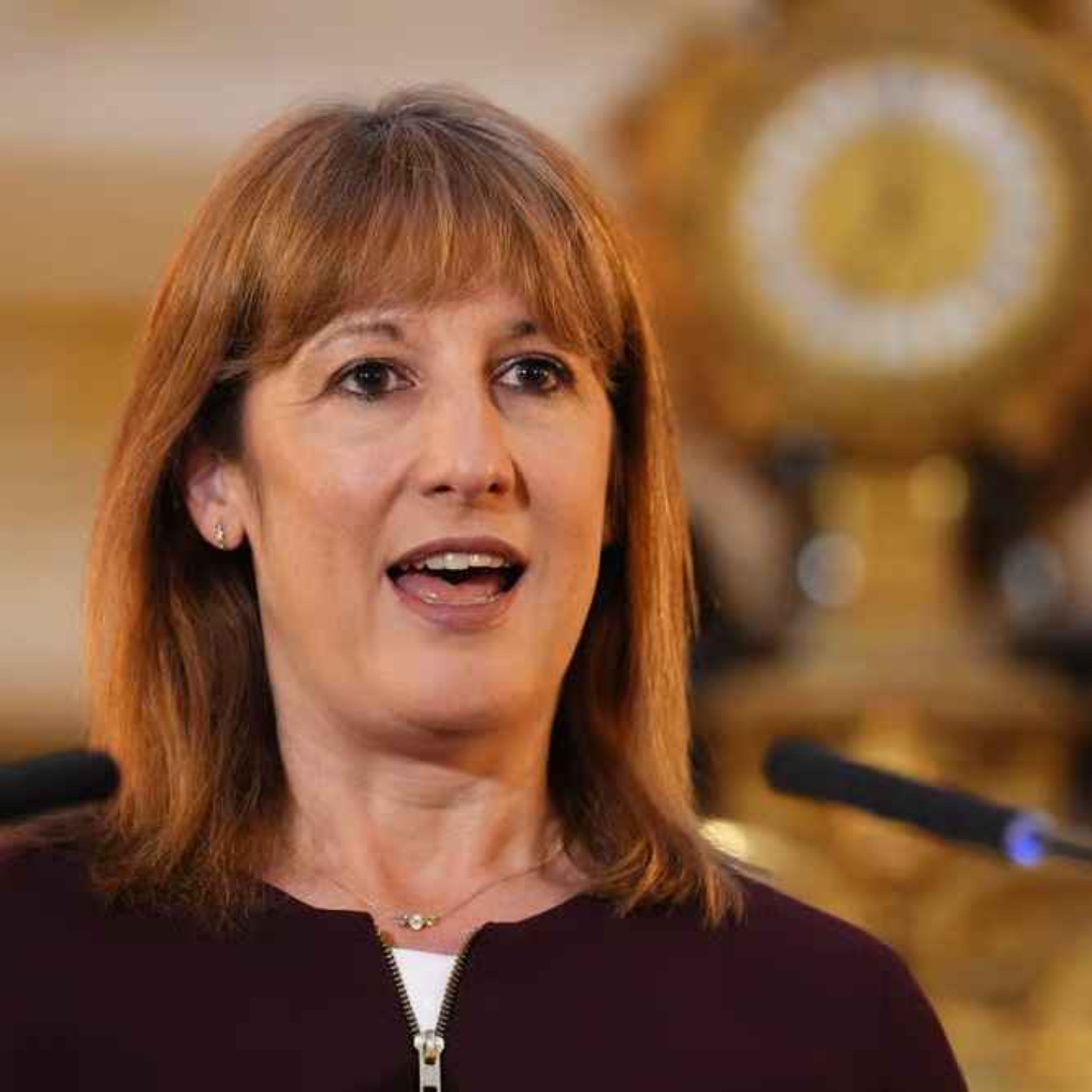
Chancellor Rachel Reeves discusses the upcoming budget and the challenges posed by an anticipated £20 billion budget shortfall due to downgraded productivity forecasts. The episode features insights from Chaitanya Kumar, Head of Economy and Environment at the New Economics Foundation.
Written by AI. May contain mistakes.

Get the gist, explore an idea or ask about something said.
 Claude
On The Standard, what are the key points of this episode?
Searching your listeningAutomatic transcript. May contain errors.
0:02Hi, I'm Charlie Duffield and welcome back to The Standard Podcast.
0:30a few proper old-school boozer style of pubs rather than just food pubs. But that's probably just a matter of personal taste.
0:40But first, today Chancellor Rachel Reeves has said she is determined to defy forecasts that suggest she will face a multi-billion pound black hole in next month's budget, but has indicated that there are some tough choices along the way. Writing in The Guardian, the Chancellor argued the foundations of Britain's economy remain strong and has rejected claims the country is in a permanent state of decline. Reports have suggested that Office for Budget Responsibility is expected to downgrade its productivity growth forecast by about 0.3 percentage points. That means the Treasury will take in less tax than expected over the coming years, and this could leave a gap of up to£40 billion in the country's finances.
1:30The Chancellor wrote she would not pre-empt these forecasts, and her job is not to relitigate the past or let past mistakes determine our future. Ahead of the autumn budget in November, speculation is growing about what choices she will make on tax and public spending, and it's thought she may break a key manifesto pledge by raising income tax or national insurance during the budget on 26th November. Some top economists have warned the Chancellor that increasing income tax or reducing public spending is her only option for balancing the books. Joining us now is Shaitanya Kumar, Head of Economy and Environment at the New Economics Foundation.
2:16What's your initial reaction to today's news? The scale of the challenge obviously is big and it seems to get bigger and bigger by the day. It's hard to really gauge what sets of policies she might land on because every day brings a new policy area that is being floated around and there's a debate in the press and we move along. But it's fairly clear that she faces two big challenges, which has been consistent for the last few months. One is low growth, and the other is essentially a fall in productivity, which seems to be essentially causing more headache for her and raising the black hole by about 20 billion pounds.
2:55So closing that or fixing that seems to be the biggest challenge for her. And taxes seems to be the only option. So she has to raise taxes. What sorts of taxes will they be is really the big question leading up to the budget. One suggestion is that Reeves might increase income tax. Would that be effective? The press stories seem to suggest that perhaps a working definition of a working class or a working person in the UK could be someone who earns less than£45 ,000. It seems like a fairly arbitrary way to define who a working person is. I think this will all be a way of weaseling out from breaking the manifesto pledge.
3:35I would be very surprised if income tax is under attack and is raised for everybody. There are other ways of raising a lot of capital before the nuclear option, but it remains to be seen. We know... Why do you refer to it as the nuclear option? That we are relatively highly taxed in the country and a lot of people are not happy with the state of public services. The general understanding that people have is our taxes go into paying for better public services and we look around and most of the public services seem to be basically falling apart and not working. The idea that the Chancellor will have to come and raid incomes of people again, I just don't think will sit well with the public.
4:20And of course, as everybody knows, they've pledged very clearly that they will not break the manifesto pledge. having actually already broken it once with national insurance for employers last autumn. It is a big, bold, risky move. It can raise more money. Any broad-based taxes can raise substantial amounts of money. We've already seen that with the 40-odd billion pounds she raised last autumn with national insurance rises. So it is definitely possible to raise a lot of money, but what sort of political hit will you take? National insurance kicked in from April this year. Businesses aren't happy about it.
4:57We've seen impacts of that in the real economy. So raising income taxes, again, will definitely not go down well. But as I said, there are other approaches, other taxes, things like taxes on banks or changing the way we actually shift money from the Treasury to the Bank of England, for example, that can raise quickly overnight about five billion pounds a year through the course of this parliament. There are lots of things like that, which the Chancellor, obviously under a lot of pressure from key sectors like the banking industry, the gambling industry, etc., is perhaps not looking at them as closely as she should.
5:32So income tax should be the last thing on the list when there are other ways of raising taxes on things like wealth, for example. So what action would you recommend? She began changing the rates on capital gains tax again last autumn, but she could go the full distance and equalize capital gains with income tax. Our estimates suggest that could raise about£11 billion,£10 to£11 billion a year. Second thing she could do is raise things like gambling taxes, which again, a lot of support exists in the public for such tax. And that could raise anywhere between 1.7 to 2 billion pounds. The third thing, as I said earlier, is banks are making an absolute killing at the moment.
6:13For a variety of reasons, because of interest rates going up, there is effectively a mechanism where the Treasury transfers billions of pounds to the Bank of England, that then subsequently props up the profits of commercial banks like HSBC or Barclays, etc. Stopping that can, as I said, raise another five billion pounds. So just these three measures, and I haven't even got to a wealth tax, like a full-fat wealth tax, which again, a lot of people are talking about and there's a lot of public support for it. Even before going to a wealth tax, you can quickly raise about 17-18 billion pounds with just those three ideas that I mentioned.
6:49There are other ways of taxing wealth at the moment that the Chancellor should actively consider. Finally, what other policy ideas could help get the country's finances back on track? One is raising fuel duty. Fuel duty has been frozen for over a decade now at a substantial loss to the Treasury. Just a small increase to that could raise a few billion pounds. Another is aviation carbon taxes. We have a very weird quirk in the system where if you travel to Europe and domestically in the UK, you are charged a carbon price for your airfares. But if you travel internationally, you do not face any such tariffs.
7:32What it does is it forces more people to actually travel to more international destinations, and as a result, effectively causing more pollution in the process. So just equalizing those tariffs, those carbon tariffs that are levied on domestic and EU flights, on international flights as well, could raise at least£2 billion. These are just a couple of ideas that can do both two things. One is reduce environmental pollution because it creates a disincentive for emitting more carbon and also raise a lot more capital. Just those two taxes can achieve two goals. One is reducing carbon emissions and associated pollution, which is good for everybody, and quickly raise, at least collectively,£4 billion for the Chancellor.
8:19I think these are the small but very impactful ways of raising tax in the short term. Let's go to a break. Coming up in part two, did your local make the list of the best 100 pubs in the UK? We'll see you back here in just a moment.
8:42Welcome back. The Good Food Guide has announced its list of the top 100 pubs in Britain, with Notting Hill celebrity hangout The Pelican named as the best in London. The West London Hangout, which is known for its celebrity draw, with regulars said to include Dua Lipa, Princess Eugenie and Olivia Wilde, placed seventh on the list. To find out more, I spoke to The Standard's restaurant critic and going out editor David Ellis. David, tell us more about the Good Food Guide. So the Good Food Guide is a historic restaurant guide that's been going for many, many years. And they've just launched their first ever list of the 100 best pubs in Britain.
9:25Well, they're calling it Brisson, but they've included one from the Isle of Wight, which is obviously from the UK. We won't hold them too accountable for that. Anyway, they listed the best pubs in the country, and the one that's come out top in London is the Pelican. It's quite a famous pub in Nossing Hill. It opened a couple of years ago, maybe three years ago now. And it's known because it attracts a very glamorous West London set. So, Julep has been seen there. Olivia Wilde's been there. Princess Eugenie's been there. And it also got in trouble last year because all of the neighbours complained about everyone on the streets till all hours and throwing away the glasses and everything.
9:54But it's a lovely pub. It's not a particularly traditional pub. It has sort of bare woods and it's very clean looking. It's not like a proper old boozer in that sense, but it does great food. And the people behind it have gone on to open lots of other pubs in London very successfully. They've opened the Hero Made of Vale. They also have an Italian restaurant in Notting Hill called Canteen, which is fabulous. So that's the headline news is that the Pelicans come out on top. And how did London score overall then? London's done quite well In general there's 12 London pubs Which isn't a bad sharing out of 100 Probably most notable is the Eagle Which came in at number 11 on the list And the Eagle is sometimes incorrectly said to be the first gastropub in the country But certainly in London it's the one that really kicked things off in the very early 90s Other places that did quite well for London were the Kerfield Arms The Parakeet which is a terrific pub Devonshire which is arguably the most famous pub in the world That's in Soho, opened up a couple of years ago and still fully booked The Waterman's Arms in Barnes, which is my favourite gastropub, Canton Arms, Camberwell Arms, Anglesey Arms and Hammersmith, Anchor and Hope and the Tamil Crown.
10:57Oh, and the Surprise. And the pub that came out absolutely top of the list was the Highland Laddie in Leeds, which is actually a really nice story because the owners have a cafe in Leeds that did really well and then they went to this old boozer and reopened it in April. And so for it to come out on top is proof that their methods work and that them just putting in a lot of time and energy and care has helped revive a proper community asset. It's a very small pub. It's from 1925. It's sort of room on one side to go and have a pint and then on the other side there's a few tables but it's sort of a front room pub as it were.
11:31So what type of pubs made the list? It's a list of pubs and they were looking at places that you could go drinking as well as places that you could get something to eat. Most of these places have a food offering or a small restaurant of sorts. Certainly in London, they are definitely gastropub leaning. The Devonshire, for example, is three stories of restaurant with just one story of pub. And the Parakeet is known for its food. You can go drinking there. I have done it. You would really want to get a meal there because it's so delicious. And it's also used to be one that I believe Keir Starmer used to go to because it's in his neck of the woods in Kentish Town.
12:05And tell me about your favourite pub on the list. My favourite is the Waterman's Arms down in Barnes. I think it's quite unexpected. Barns is a long way from me, so I don't get down there very often. But I think they've just made it look very beautiful, which matters to me in pubs because I think they are places of beauty. And it's quite simple food and drink, but it's very well executed. The only interesting part about it here is whether or not I consider it a pub. It's a gastropub, but it's very much on the restaurant end of that spectrum. You can go in and get a pint, I've been told, but I don't know where you'd sit for that, for example.
12:40Whereas to me, a proper pub is primarily somewhere you go for a drink and if you can get a meal too, all the better. So what does this mean for hospitality in the capital? It is positive. It sort of shows that the headline stats that have been going around about the number of pubs closing are slightly inflated. The Standard Runner story earlier in the year explained that the drop-off of pubs over the last 20 years is huge, but the majority of those closures happened after the smoking ban. That kills pubs. There's no two ways around it. And the drop-off was immediate and massive and in the thousands.
13:14But since then, we actually aren't losing that many pubs as a net year on year. It's declining, but it's not declining. The headline stat is that it's a pub every single day. That just isn't true for London. It might be true overall for the UK, but in London, in different boroughs, it might be like one or two have closed because new places are opening up. It's been quite strong in London recently. Nave of Clubs was a massive opening. And I think actually the Devonshire, which I mentioned, is part of the drive for that because they opened up and quickly became the most successful hospitality business in London, arguably, or they'd probably like to say that they were, but they are full.
13:48And it's because they offered something that people wanted and people saw that you can make money out of pubs and that they weren't a dying entity. And I think that's the thing is that when you have a narrative saying pubs are terrible, they're all going to shut, then no one wants to go and have a go at one of them. And then when you see actually no they can be brilliant then they do very well and i think this is proof that london has an incredibly strong pub scene and i think it's a really good showing for london because actually in general country pubs are just much nicer this just shows that we have forward-thinking innovative businesses opening up and although there's a few legacy pubs on this the eagle camberwell arms and the canton arms a lot of these are fairly recent openings and what makes a great london pub all the one thing that you can't control which is who goes i think it's more important to people now that the beer is kept properly that they can get a nice glass of wine because it used to be you never had a glass of wine in the pub because you didn't want to be the person who when it was the round was having a much more expensive drink but glass of wine and pint are basically the same price these days so you need to have a good wine selection you can't serve cocktails that should be illegal in a pub i think it should be somewhere that has a sense of community so the pubs that i go to a lot i see the same people in that kind of reflects that they're serving their community properly because there's a lot of people who are loyal to it and the sort of pubs that I can't really stand are sort of faceless places where people are transient and they might go once because they're in the area but they're never going to come back to and that's something to do with a feeling that you create don't play music let chatter fill up the room keep the lighting fairly low also don't suffer fools there's nothing worse than being in a pub and people are like kicking off you need a landslord or landlady who keeps the place a little in order just so that everyone can have a good time in soho there's the french house and leslie the landlady like if leslie says stop it then you stop it leslie can stop you with a look if you're slightly getting out of line she'll just look at you point and that's it and then it and then it just keeps it exactly as you want it to be and that's the standard for all the latest news head to standard.co.uk.
15:53If you'd like to get in touch, please do drop us a line at podcasts at standard.co.uk. We'll be back here tomorrow at 5pm. We'll see you then.
Today Chancellor Rachel Reeves has insisted Britain can “defy” economic forecasts as she prepares to deliver another tough budget next month. The Office for Budget Responsibility (OBR) is expected to deal the Chancellor a further blow in November by downgrading its productivity forecasts for the British economy, leaving her trying to fill a gap in her plans of more than £20 billion. Some top economists have warned Reeves that increasing income tax or reducing public spending is her only option for balancing the books. We’re joined by Chaitanya Kumar, Head of Economy and Environment at the New Economics Foundation.
And in part two, The Good Food Guide has named the Pelican as London’s best pub. The Standard’s Restaurant Critic and Going Out Editor David Ellis is here with the latest.
Hosted on Acast. See acast.com/privacy for more information.


