
 Ask ChatGPT



In this episode of The Standard, host Charlie Duffield explores two key topics: the potential impact of a proposed new property tax on Londoners and the current dynamics of heterosexual dating in London. The episode features insights from Chief Political Correspondent Rachael Burford and freelance journalist Arielle Domb.
Written by AI. May contain mistakes.

Get the gist, explore an idea or ask about something said.
 Claude
On The Standard, what are the key points of this episode?
Searching your listeningAutomatic transcript. May contain errors.
0:02Hi, I'm Charlie Duffield and welcome back to The Standard Podcast. If you're new here, hit follow and give us a rating. For all the latest news, head to standard.co.uk. Coming up later in the show, in an era of hetero pessimism, what do young men really think about dating in the capital? The reason why I wanted to write this story and why I was so interested in it is because among so much chat about hetero pessimism and women who are going boy sober and celibate and giving up on men, the voices and perspectives of men who date women are left out of this conversation, which just doesn't feel productive.
0:51But first, a radical overhaul of stamp duty and council tax rules that could hammer Londoners hardest is reportedly being considered by Chancellor Rachel Reeves ahead of this autumn's budget. The Treasury is mulling over plans to raise money from a tax on the sale of homes worth more than£500 ,000. Half of all home sales over half a million pounds are in London, with a further 26 % in the southeast, according to analysis of land registry data by property company Hamptons. Londoners also pay an average lower council tax than other parts of the country, with Wandsworth and Westminster boroughs setting the lowest bills in the nation.
1:35Businesses and local authorities in the capital have already warned that planned reforms to the way councils are funded could leave the capital's town halls hundreds of millions of pounds worse off, risking core services and undermining the city's competitiveness. Joining us now is the Standards' Chief Political Correspondent, Rachel Burford. So Rachel, what exactly are these potential plans? So there's been a lot of breamers around this morning around a sort of radical overhaul essentially of the stamp duty system. The Chancellor has reportedly asked Treasury officials to examine reforms to that system and some of those plans under consideration include the owners of houses worth more than£500 ,000 could pay a proportional property tax based on the value of their properties when they sell them and that would replace the current system of stamp duty, which is paid for by buyers at the moment.
2:31Stamp duty has always been controversial with a lot of economists and property experts. They say it sort of does hamper the property market because it means buyers, including first time buyers, have to stump up a lot of extra cash when they're already buying perhaps the most expensive thing that they will have ever bought as a sort of tax on buying a home. This will be quite a radical overhaul, although critics have also got complaints about it. So, you know, it'll make people stay in expensive houses when they want to downsize, perhaps for longer. There are some sort of longer term plans that have been talked about as well, which is that there are perhaps being discussed proposals for a local property tax that could be introduced that would replace council tax.
3:11Those payments will be on the owners of the property rather than the residents paying, and they would pay those levies based on the value of their homes rather than the sort of current system we have at the moment, which is based on the value of your property in 1992, I think. And it means that people that own homes in sort of Westminster are paying lower council tax than someone who lives in, say, Hartlepool, for example, where wages are significantly lower. People use more services. So the council tax has always been talked about as a sort of unfair tax, particularly in recent years. So it does look like the Treasury are looking to overhaul that system as well.
3:43And how would this disproportionately affect Londoners? In London, obviously, properties cost more money and you get a lot less for your money than you would in other parts of the country. Half of all home sales over£500 ,000 are in London, with a further 26 % in the southeast. And that's according to analysis of the land registry data by Hamptons, the property company. For the amount you pay for a two-bedroom flat in London, you could buy a much larger and often detached property in sort of the northern parts of the country. There are a lot more people buying homes worth over£500 ,000 in the city and there are a lot more people selling them.
4:17Now, what some sort of property experts are saying this morning is that while it's good to perhaps that first time buyers, particularly in the capital, will not have to stump up so much in stamp duty. It does mean that people that were thinking about perhaps downsizing or moving out of London will think again because they will suddenly have this extra payment if these plans go ahead that they wouldn't have had otherwise. so it's a sort of mixed bag but yes homeowners in London will definitely face more of these charges if they go ahead than other parts of the country. What has the reaction been so far to these ideas?
4:49There have been various property experts on the radio talking about these proposals this morning. Location location location presenter Kirstie Alsop was pretty damning. She said this is seeking to punish people for buying their own home and she accused the government of wanting to punish people for making the sacrifices they've made to buy their own homes for saving up and actually getting on the property ladder and that effectively they're being taxed more for those sacrifices they've made. Others are saying if you do own a property you should be liable to pay some sort of taxes on that and particularly with council tax reform poorer people in this country paying a lot more money than richer people in certain areas.
5:31London while it does have some of the most expensive property in the UK also on average sees the lowest council tax payments. Westminster and Wandsworth boroughs have the lowest set the lowest council tax in the country. Homes there are worth significantly more than other places. Obviously you have to balance that with how much it costs to live in the capital compared to other places in the country and obviously renters are paying council tax on homes that they may live in that are worth a lot of money but they do not own. So it's sort of a mixed bag at the moment because obviously we haven't got any details of this and we don't know whether these plans will actually come to fruition.
6:04The Chancellor's facing a bit of heat this morning for this suggestion that she is doing a sort of wealth tax on people who own property. Finally, can you put this in context for us? The government is under increasing pressure to balance the books. Is that right? There is a lot of economic gloom and doom in the UK at the moment. Rachel Reeves is under quite significant pressure. We've seen some of the proposals that she put forward when she first became chancellor have been sort of scrapped things like the winter fuel payments and disability benefit cuts that did have to be significantly scaled back because of the absolute outrage and the protests that happened around those.
6:44So she has been left with a big hole in the country's finances that she has to fill in some way. And that has sparked a lot of speculation that come the autumn budget, workers are going to be seeing quite big tax rises and And they are looking for sort of creative ways to put those in place because Labour said when they came to power that they were not going to tax working people anymore. And obviously now with the economy not improving in the way the government would like and this hole they've got in the finances that they've got to plug somehow, we are going to have to see some tax rises. And I think that is quite safe speculation ahead of the autumn budget.
7:24Let's go to a break. Coming up in part two. Cynicism about heterosexual dating dynamics is rife, but is it justified? Freelance journalist Arielle Dom has been speaking to some of London's bachelors to find out. We'll see you back here in just a moment.
7:47Welcome back. From being self-partnered to boy sober, celibate, hetero-fatalistic or decentering men altogether, it's hard to avoid the ever-loudening noise which seems to declare that modern-day romance is ruined. But with a growing number of women giving up on heterosexual dating and relationships entirely, where does that leave men and how do they feel about it all? Freelance journalist Arielle Dom set out to find out. Ariel, first of all, why do you think women are having such a hard time dating? I've looked at it kind of numerically. Women aged 25 to 35 do outnumber men in London by 7%. And then that disparity is compounded by the pressures of the biological clock.
8:33Interestingly, there was some research conducted by a data scientist and demographer, Stephen J. Shaw, who found that it was harder for women living in London to settle down. 32 % of British women aged 25 to 35 living outside of London in the southeast of England, so the main barrier at starting a family was finding a suitable partner. But that figure rose to 47 % in the capital. On the other hand, whilst I think those numbers are important to consider, I think there's been a lot of chat recently, which makes sense to me, about whether women have too high standards, judging people based on things like whether or not they're six foot.
9:13We are putting a lot of pressure on men. Obviously, we're rightly critical of men who are misogynistic and who aren't self-reflective. But then when men do try and engage in some introspection, say by reading the important parts of the canon of feminist literature, we do also laugh at them. I think when we think big picture about the manuscript and how social media algorithms are really driving young men into quite a dark, polarised space, I don't think these trends and this discourse is necessarily helpful. So do you think men have an easier time dating or do they just face slightly different pressures to women.
9:53Dating is raw and vulnerable and it's hard for everyone. And I think, yeah, as you say, they do just face different pressures. Tinder recently introduced a height filter. I interviewed one man who was 5 '10". He said his friend was shorter than him. I think he was 5 '6", and said that he lied on the app and put a taller height because otherwise you wouldn't get a look in. I think we have so many amazing communities where we're embracing body diversity and we can speak to our friends about the things that we feel insecure about. We can be vulnerable. We can get support from our friends. And I don't think men necessarily have that.
10:29It is very hard for men in that sense that they do, I think, face a huge amount of pressure, some to do with their physical experience. But unlike women who easily can unpack this with their friends, men don't necessarily have that. And I'm talking about the kind of structures of gender and the way in which we're socialised to understand gender and perform gender rather than saying this is an innately masculine or feminine experience. Do you think dating apps perpetuate cynical dating tropes or is it just as challenging to date offline? My feeling is that dating apps probably do amplify the biases that we have in society.
11:11I think it does make you put more emphasis on things like someone's hairline, someone's job. When actually in person, when you're meeting a three-dimensional person and you're having a chat with them, none of those things matter. You can be attracted to someone you never thought you would be attracted to if you read their credentials on Hinge. It just makes your experience of human beings so disposable. Ghosting on the apps is so normalized and socially acceptable. If you go on a date with someone that's okay, or maybe it's even a nice date, then you're sometimes on the bus home and you're on the app again.
11:46So I think there is this kind of insatiable feeling. I spoke to one man, he's been single on and off for 10 years. He does want a relationship. He's found that because of the apps, there's this feeling of being in this kind of hamster wheel and not knowing when to stop. He said, I found it hard to know when to decide that this is the right person that I want to stay with. Whereas another man I spoke with, he described it as window shopping, that feeling that a lot of people have of just having endless people at your fingertips that you can talk to. Whereas in our parents' generation, you'd maybe meet someone who is kind and has good values and respects you and you would build a relationship from there.
12:26These days, if it's not initial fireworks, you're probably just going to go back on the apps. Let's talk about the cost of dating. we're in a cost of living crisis after all so do you think men feel more financial pressure on dates? I was surprised that the majority of men I spoke with did feel pressure to pay for the first date at least sometimes according to one elite single survey conducted a few years ago with 300 ,000 singles 63 % of men thought that they should pay for the bill on first date or just 7 % wanted a half there and what's interesting is the same survey found that actually less than half of women agreed that men should be paying for it.
13:07And 18 % would rather split the bill. Men are putting more pressure on themselves, despite what women actually expect. More young men than women are still living with their parents. Women who do like to be wined and dined by men that are on a date with sometimes bring up the gender wage pay gap. So the fact that women earn an average of£631 less for men each month, which means taking home about £7 ,572 less each year, which to me, yeah, I guess that I mean, I'm kind of torn on the topic myself. But like, I think that is some kind of financial argument that we exist in a patriarchy, women are making less than men, it's fair that if men are making more, you know, it's nice for them to pick up the bill.
13:53However, what I found really interesting was that there might actually be situations where men in a more financially precarious situation than they are with a woman that they're on a date with, but they're still feeling the pressure to pick up the bill. Finally, what do you want readers to take away from this story? There was a brilliant piece in the New York Times, an essay about hetero-pessimism, and it ended in a really nice way that I think reflects on this piece, that the scepticism and a cynicism about heterosexual structures and relationships is a positive thing. And I think queer people are amazing at rethinking the structures of society that we've been taught, and they don't necessarily have that cultural template.
14:37And so relationships can just look completely different. And people can have relationships and have sex and have intimacy in a way that empowers them and it's reimagined and it's not just submitting to a cultural script. I actually hope this movement of heteropasmism is something productive where people actually rethink the elements of courting someone, of dating and all the routines and dances and rhythms of it. We can actually think about what aspects of it serve us and what aspects don't. We can't pretend like gender doesn't exist. And by gender, the socialization of gender, the cultural tropes that we're taught from a young age of a child.
15:21I do think gender affects the way we date. It affects the way we behave in intimate situations, the way we behave to each other. However, I think dating is raw and vulnerable and hard for everyone. And everyone I spoke to has experiences of feeling rejected, of feeling insecure, of feeling hurt, of feeling vulnerable, of feeling exposed. And I think we can all improve our mental health and our personal lives and our dating lives if we can just talk to each other about aspects of intimacy we find hard and be honest about it.
15:59And that's The Standard. For all the latest news, head to standard.co.uk. If you'd like to get in touch, please do drop us a line at podcasts at standard.co.uk. We'll be back here tomorrow at 5pm. We'll see you then.
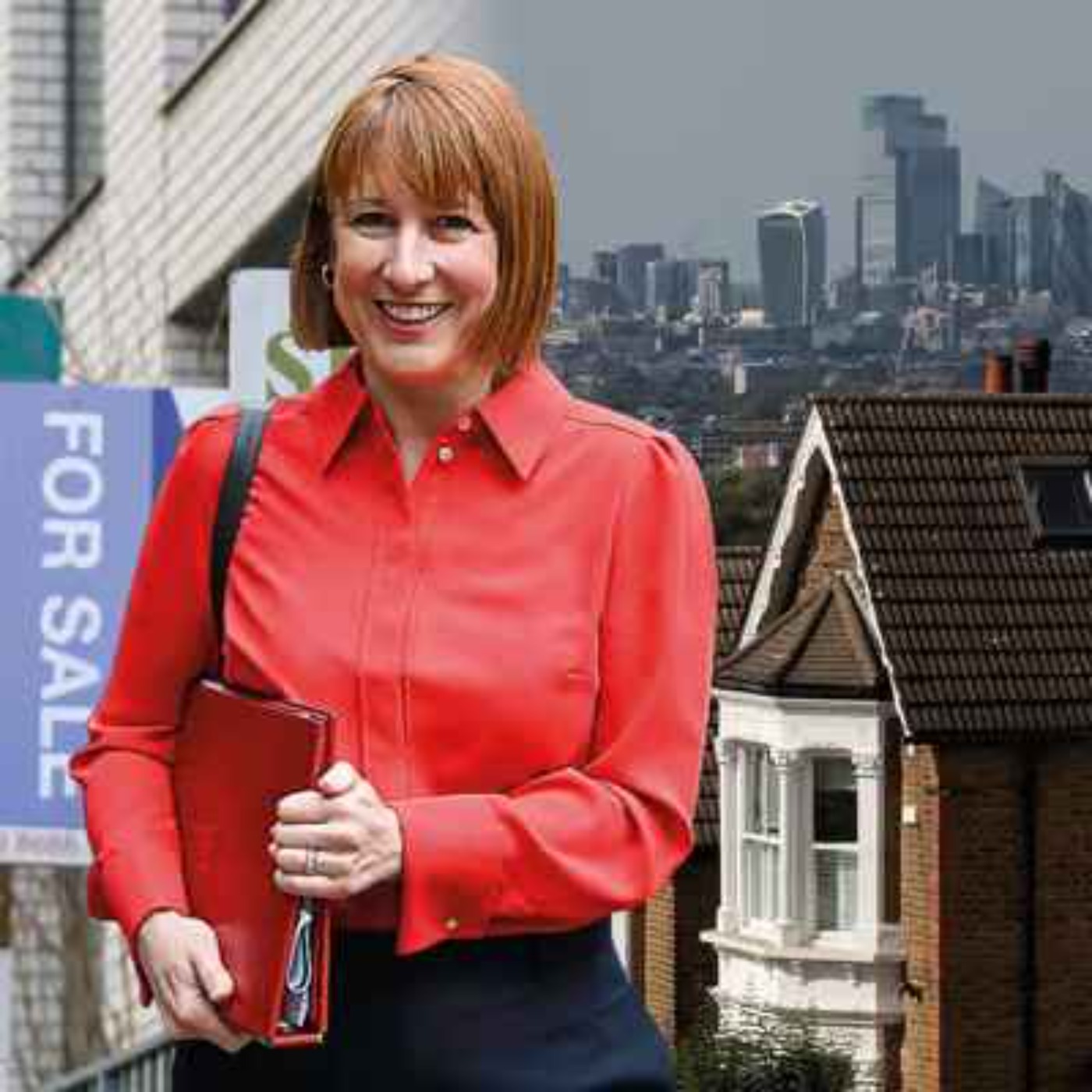
The Treasury is considering a new tax on the sale of homes worth more than £500,000 as a step towards a radical overhaul of stamp duty and council tax - although no final decision has been made. With half of all home sales over £500,000 in London, it would have a disproportionate impact on the capital. The Standard’s Chief Political Correspondent Rachael Burford has the latest.
And in part two, male-scepticism is rife among straight female daters, with many women giving up on relationships entirely. But do they really have the worse end of the stick, or is it just as hard for guys? Freelance journalist Arielle Domb joins us to share her findings after interviewing some of London’s bachelors about the state of modern dating.
Hosted on Acast. See acast.com/privacy for more information.


