
 Ask ChatGPT



This episode discusses the issue of knife crime among youth in London, featuring insights from Tristan Kirk, The Standard’s Courts Correspondent. The discussion explores efforts being made within the youth court system to intervene and provide rehabilitation before young offenders spiral into serious crime. The episode also includes a segment by journalist Alice Cockerell on behind-the-scenes experiences at the Wimbledon tennis tournament.
Written by AI. May contain mistakes.

Get the gist, explore an idea or ask about something said.
 Claude
On The Standard, what are the key points of this episode?
Searching your listeningAutomatic transcript. May contain errors.
0:02Hi, I'm Charlie Duffield and welcome back to The Standard Podcast. If you're new here, hit follow and give us a rating. For all the latest news, head to standard.co.uk. Coming up later in the show, what really happens behind the scenes at Wimbledon.
0:29But first, teenage knife crime dominates London news. But what is being done to intervene before tragedy strikes? That's the question the Standards Court's correspondent Tristan Kirk set out to explore in this week's special report. It led him to the capital's youth courts, which are trying to stop first-time offenders caught with blades from spiralling into murderers. The Labour government has promised to reduce knife crime by 50 % within the next decade. But is the anti-knife message getting through? Tristan joins me now. So tell me about what inspired this report. There is a disproportionate focus on the end result of knife crime, i.e.
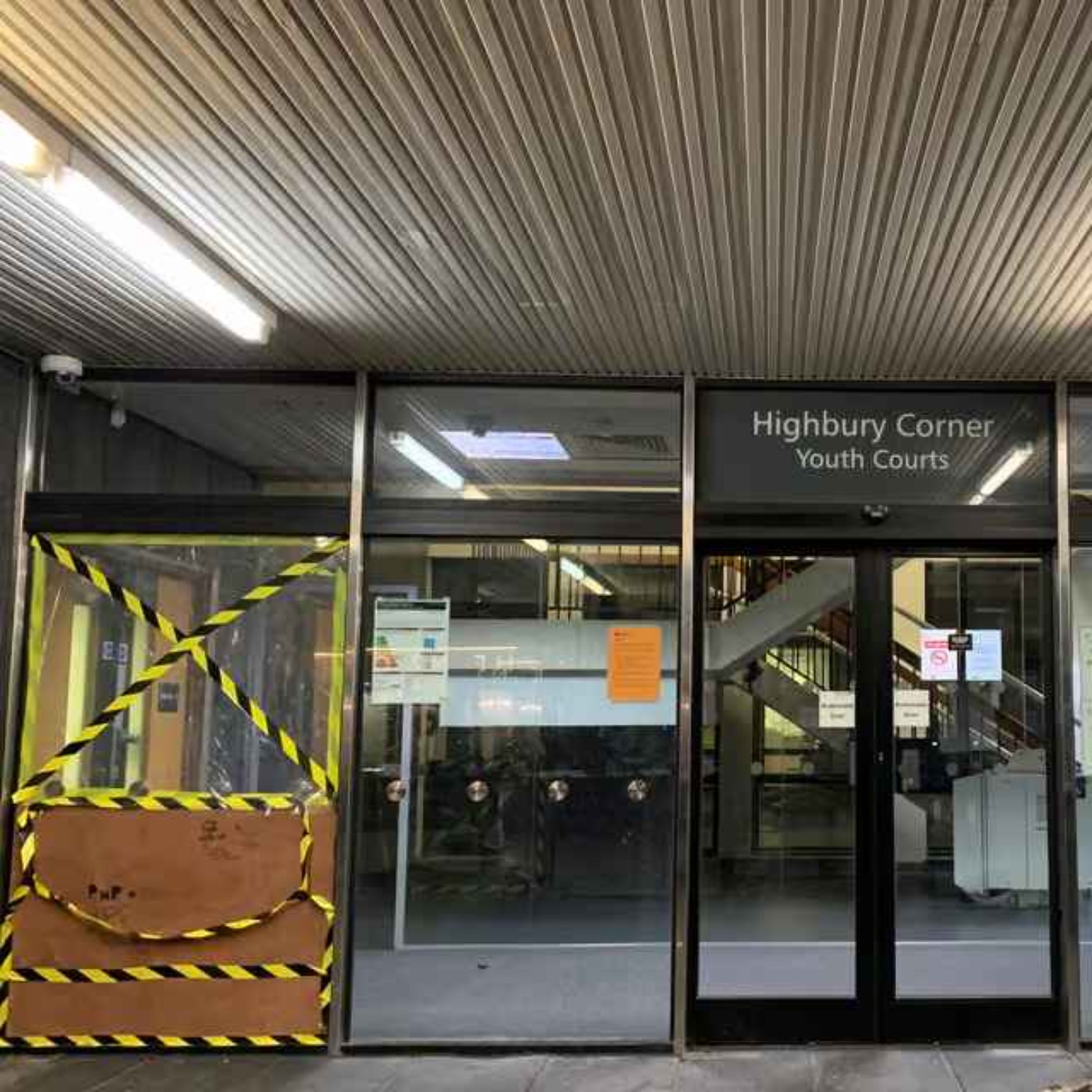
1:19when somebody has been stabbed. I wanted to go back to the start and look at teenagers, predominantly teenage boys, caught for the first time potentially with a knife and explore why it is that they did that. And what is it that the justice system, the youth offending teams, the magistrates and the lawyers are going to do to spear them away from crime? I started attending on a fairly regular basis the youth courts. We have a few that operate these specialised courts just for defendants under the age of 18. I went to Highbury and Stratford particularly because they deal with these specialist cases and sat in and listened to some of the cases that were being dealt with and you got a sense of how these kinds of crimes happen.
2:07And why might a young person carry a knife? Quite a lot of them would say that they were carrying it for protection, something that they felt was entirely necessary in their view because of the dangers on London streets and by extension the dangers of other people carrying knives. In court they'd get that sort of fairly directly sent back to them that by carrying a knife you're not doing anything for protection. If anything you're making yourself more at danger because either you'll end up using that knife or it'll be taken from you and used against you. Some of the defendants referred to peer pressure that they had essentially been told to carry a knife by somebody who was older than them, more influential within their social circle.
2:52And then they did it for that reason. They could be locked up or there could be months and months of rehabilitation, community sessions, but they have to do. So the punishment is very much down to the individual. Can you explain how youth courts differ from magistrates' courts. There are some very particular differences because of the specialist nature of the hearings. Members of the public can't attend the youth courts. They are essentially held in private to protect the young people involved because youth courts are primarily aiming to rehabilitate young people, to protect them from adverse publicity so they don't have to endure being publicly shamed.
3:33Journalists have a special allowance that we can attend the youth courts in a professional capacity. Other differences are that the defendants in youth courts are referred to by their first name rather than by the surname. The defendants, unless they've been produced from custody, sit in the well of the court, often alongside their lawyer or alongside their parents or somebody who helps them like a social worker or a care worker. And they are spoken to within the proceedings very much in a way to help them to understand everything that's going on. In each case, when a young defendant's admitted to an offence, they themselves are given an opportunity to speak, answer questions, explain why they did it.
4:18And also their parents, if they're present. I think they're all aimed towards helping rather than punishing. What sort of punishment do young people receive? A teenager who admits a crime or is convicted could be given a fine. They could be given a detention and training order, which is essentially youth prison. In the middle of those two ends are either referral orders or the youth rehabilitation orders, basically a direction from the court to do various things, go on courses to try and aim to educate and rehabilitate the offender. Youth referral orders are slightly more advanced version of those where the teenager is sent off to a panel made up of youth offending workers, potentially social workers who can speak to the young person about what they did, assess them as to what it is that might help them to grow, to develop and to rehabilitate.
5:14and then they sign a contract that lasts over a period of time set by the court. The young person agrees to do various things, turn up for training sessions, they go through thinking skills, courses, all this kind of thing. If they don't follow the order, then they'll wind up back in court. Since they were introduced, I think we've seen the really offending rate come down. But it's not like every teenager who's given a referral order will not go on to offend again. That's obviously not going to be the case. Obviously, you sat through a lot of court hearings. What stories really stick in your mind?
5:51Every single case that you come across is different. And sitting in the youth court for quite a few hours, you would see on the face of it written down very similar crimes, possession of a knife at the train station, at the bus station, in the streets in central London. But then you start to hear the cases outlined. And I think one of the things that you get to see is the humility and the embarrassment, the shame even, that some of the teenagers were visibly expressing at doing what they'd done. That's the sort of power of the youth court. The most surprising thing was the lack of themes and trends and the individuality of each decision that's made.
6:33In my report, I talk about a boy who was carrying a knife, Actually walking his girlfriend home, he had a machete in his trousers. He describes how a member of his family had been attacked in the recent past. And that's what had led him to do what he did. Another case that really stood out was a young boy, 14, who got stopped at the train station. After a night, he spent socializing with people he sort of vaguely knew. He was with one friend. And they were doing a music video. One of the older boys had told him to carry a knife, and he had. It was a 14-year-old boy, essentially impressionable, and he'd done what he was told and then got stopped at the train station on his way home and ended up in the cells.
7:17The most heartbreaking aspect of that particular case was actually the delay in the case coming on. It was caused because his mum, who had, I think, two or three other children, was scrambling around, devastated, obviously, trying to find childcare for her other children so that If you could be at court for this boy, it's something that the courts always like to see. That was a really sort of powerful human moment and perhaps something that the boy will hold with him. Look at the pain and the destruction and the chaos that you have caused by making that very poor decision. What would you like listeners to take away from this story?
7:55There are powerful human stories behind the facts and figures of knife crime. I personally think it's really important to hear some of these stories so that you don't just think of knife crime and the horrible murders and the stabbings, because there are opportunities to stop it getting that far. Let's go to a break. Coming up in part two, divas and drama as the most famous tennis competition in the world kicks off today in the sweltering London heat. We'll see you back here in just a moment.
8:41Welcome back. Wimbledon is a quintessential part of the English summer, but it's certainly not all strawberries and cream. Aside from world-class tennis, it's always been an arena of thrills and spills. This year, the gentleman and lady singles champions will take home£3 million. And even being knocked out in the first round will see you sitting£66 ,000 prettier. So there's a huge amount to play for. Journalist Alice Cockrell has been exploring what really happens behind the scenes. Alice, what did you find out about what it's really like to be a ball boy or a ball girl? Wow, it's just fantastically stressful.
9:27Seriously, it's like a boot camp slash hunger game system. These kids, they start training in October and they get winnowed down ruthlessly, completely ruthlessly. And they go in every week and then they get tapped on their shoulders and just told to go home. The stress completely builds. And then once it starts the competition, you still have complete jeopardy that you get demoted if you roll the ball the wrong way. then you just get taken from the glory of centre court to the kind of back quarters of, I don't know what the most minor court is, but so they're always on edge. And they faint all the time because it's so hot.
10:03But actually every year I think it changes. So this year they're only going to do one hour on the court, one hour off, because I think in 2023 about four of them fainted on court. So that kind of thing is easing up. And what can we expect from the royals this year? Who will be attending? Well, definitely Kate, the Princess of Wales. She's just a fanatic. I mean, she was long before she married William. It kind of epitomises the difference between her and Meghan because it's just such a Middleton kind of thing. They're all very sporty. Whereas Meghan, I don't think ever really got the hang of it.
10:38I mean, she first went there, she was invited by Ralph Lauren, I think it was the first year that they started sponsoring things. So she was kind of there in a celebrity capacity. I shouldn't think she's particularly interested in tennis. And that's famously when the idea was hatched to set her up with Prince Harry, fateful day. And then, yeah, six months before Mexit, she went back to see her great friend Serena Williams play. And she was wearing jeans, so they wouldn't let her in the royal box. and then apparently she was quite a diva. She wouldn't let any photographs be taken of her and her security kept pulling people away and stuck, which is really not in the spirit of Grimble.
11:14Do you think there will be any tantrums this year, either on or off the court? I think it's going to be one of the stormiest years we've seen because Andrei Rublov, who's kind of, I think he's number five seed at the moment, last year he really lost his marbles and he just started banging himself. He hit himself six times on the knee with his racket and then screamed and then hit himself on the head with his racket. So he might be a kind of good one to watch tantrum-wise. And there's a very competitive girl called Mira Andreeva who threw her racket twice and then refused to shake hands at the umpire.
11:48So she was going to be pretty stormy. But I also think the spectators, it's just such a kind of highly adrenalised environment, really, that rows are kind of inevitable. The weather, I mean, speaking from just coming back from Glastonbury, British people and hot sunshine do not mix. I mean, people get so leery, both on and off the court. What about fashion? Can we expect a relaxation of the rules? It's still strictly all white. You're not even allowed off-white. And so traditionally over the years, they're a huge bone of contention. People have really got fired up about mainly it's girls wearing funny knickers.
12:21Venus Williams wore a pink bra in 1949. Gertrude Moran, Gertie, she wore these kind of lace knickers, kind of French knickers. hosiery she got in trouble for that and um to hana golovin's she wore red knickers and there's a bit of a kind of push at the moment for the women you know they say if they're on their period they you know it's just not it's not nice to wear white for six hours on a court anything else to add alice kind of post covid but now you're not allowed to swipe the sweaty towels thrown by players so ball girls and ball boys kind of do it they get 200 pounds in expenses and they get to keep their kind of kit.
12:58But in the past, it was a really, you know, it was a lovely side hustle to get some nice sweaty towels thrown at you. I spoke to this ball girl who was really crestfallen. You know, she had a great plan for who she was going to give the sweaty towels to. I mean, obviously it's a slightly revolting, unhygienic idea to go around getting people's perspiration towels, but you know, it's just our tradition.
13:21and that's the standard for all the latest news head to standard.co.uk if you'd like to get in touch please do drop us a line at podcasts at standard.co.uk we'll be back here tomorrow at 4 p.m we'll see you then
The problem of knife crime is usually viewed through the prism of tragedy. But after spending months reporting from inside the capital’s youth courts, The Standard’s Courts Correspondent Tristan Kirk joins us to discuss his special report on the efforts being made to steer children away from crime before it’s too late.
And in part two, journalist Alice Cockerell ventures behind the scenes at Wimbledon tennis tournament, with ball boys and ball girls being put through their paces, and bad behaviour both on and off court.
Hosted on Acast. See acast.com/privacy for more information.


