
 Ask ChatGPT


 The Standard
22 Apr 2026 · 21m · 10 chapters
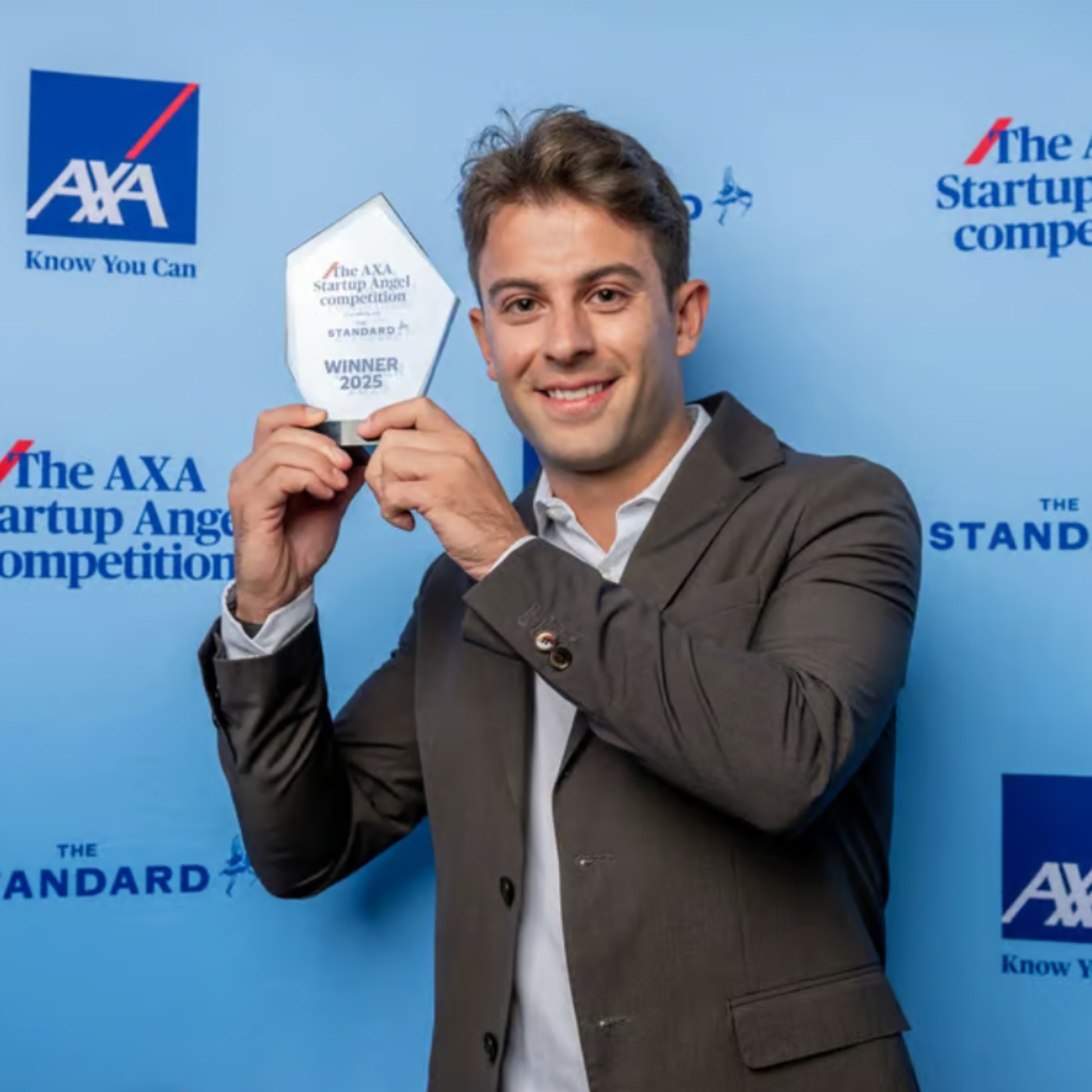
The episode asks whether it’s easier to build a startup in the UK now, amid cooled investment, higher borrowing costs, and longer early-stage funding rounds. Guests argue it’s harder to raise capital but “healthy” and disciplined: founders must be clearer on business models, margins, and customer value, and can’t hide behind hype. They highlight underrepresented founders’ visibility gains but persistent capital gaps (e.g., female-funded share down to 1.8% from ~2% despite a £50m female-founder initiative).
Shell (started with importing seashells), 3M (mining), and “Uber for commercial trucking.” The AXA Startup Angel Competition offers £25,000, mentoring from four AXA startup angels, and a year of business insurance.
Rafael Svaluque, serial entrepreneur/founder of UK Black Business Show & Week; Izzy Obeng, founder/CEO of Foundervine accelerator and 2025 MBE recipient.
Written by AI. May contain mistakes.
Discussing the current landscape for startups in the UK.
“As of last year, small and medium-sized enterprises accounted for almost all of the UK's 5.7 million new companies.”
Introduction of competition judges Rafael Svaluque and Izzy Obeng.
“with investors backing fewer, more proven ventures.”
Exploring the difficulties and resilience required in today's market.
“He's also been a longstanding judge and mentor for the AXA Startup Angel competition, helping to spot and support the next wave of early stage founders.”
Key traits necessary for success in entrepreneurship.
“We're no longer in that era where capital is freely flowing everywhere.”
The importance of speed and learning from initial failures in startups.
“I recently came across the term neuroplasticity.”
Discussing investment initiatives for underrepresented founders in the UK.
“and how the products that we know them for is not the products that they first started with.”
Learn about the current state of entrepreneurship and underrepresented founders.
“Oh, we're inventing the Uber for the commercial trucking industry.”
Understand the disconnect between funding initiatives and actual capital distribution.
“So at FounderVine, we're seeing a real kind of appetite, I would say, to have a go at starting a business.”
Discover strategies for building meaningful business relationships and networks.
“The kinds of businesses that VCs back tend to be the kind of global companies, the unicorns, deep tech companies that need a lot of capital investment.”
Explore what judges are looking for in the upcoming startup competition.
“What advice would you give to somebody to actually make the most of meeting other successful people?”

Get the gist, explore an idea or ask about something said.
 Claude
On The Standard, what are the key points of this episode?
Searching your listeningAutomatic transcript. May contain errors.
0:00This episode is brought to you by Progressive Insurance. Do you ever think about switching insurance companies to see if you could save some cash? Progressive makes it easy to see if you could save when you bundle your home and auto policies. Try it at Progressive.com. Progressive Casualty Insurance Company and Affiliates. Potential savings will vary. Not available in all states. Have you ever been stuck on a weight loss plateau, trying everything and anything you can to lose that extra weight and reach peak health? We've all been there, but Noom's unlocked a secret to reaching the mountaintop.
0:30Go in micro. The Noom GLP-1 microdose program starts at$79 and is delivered to your door in seven days. Start your microdose GLP-1 journey today at Noom.com. That's N-O-O-M dot com. Noom. Microchanges. Big results.
1:10Thank you.
1:17This episode of The Standard is brought to you by the AXA Startup Angel Competition.
1:37As of last year, small and medium-sized enterprises accounted for almost all of the UK's 5.7 million new companies. So what does it really take to build something from scratch today? And is entrepreneurship becoming more accessible or more competitive? Hi, I'm Tamara Komornik and welcome back to The Standard Podcast. For the latest news, head to standard.co.uk.
2:16It's not exactly easy to be a founder at the moment. Investment levels have cooled from the pandemic era boom, and borrowing costs are still relatively high compared with a few years ago. And according to recent industry data, early stage funding rounds are taking longer to close, with investors backing fewer, more proven ventures. Who you are also matters. While the UK continues to rank among Europe's leading startup ecosystems, founders from underrepresented backgrounds still receive a disproportionately small share of venture capital funding in the UK. To address the early stage funding gap, the AXA Startup Angel Competition from AXA Business Insurance, in partnership with The Standard, is back for its fifth year.
3:02The competition offers the most impressive ventures the chance to win top prizes, including£25 ,000. expert mentoring from four of the AXA startup angels, plus business insurance for a year, thanks to AXA. In this episode, I'll be speaking with two of the competition judges about the recipe for entrepreneurial success and which entrepreneurs stand out to them.
3:39With me now, I have serial entrepreneur and the founder of the UK Black Business Show and UK Black Business Week, Rafael Svaluque, whose flagship event attracts tens and thousands of attendees and major corporate sponsors. His work centers on visibility, representation and unlocking commercial opportunities through community and networks. He's also been a longstanding judge and mentor for the AXA Startup Angel competition, helping to spot and support the next wave of early stage founders. Hi, Raphael. Hi, excited to be here. Great to have you. And also joining me, I've got AXA Startup Angel's newest judge, the founder and CEO of Foundervine, Izzy Obeng, who has just come back from a trip to Ghana.
4:26She runs an accelerator business dedicated to helping underrepresented entrepreneurs build and scale startups. Through mentorship, funding access and training, she supported hundreds of workers in navigating the path from idea to growth. And in 2025, she was awarded an MBE for her contributions to UK digital growth and entrepreneurship. Welcome, Izzy. Thanks. Thanks for having me. And congratulations. Thank you very much. Yes. So let's kick off. You both work closely with founders at the earliest stages and you've both been in the game for quite some time. How would you describe the current climate in the UK when it comes to starting a business at the moment?
5:09It's harder. That's definitely the case. But I say it's quite healthy. I think sometimes we have a tendency to be quite glass half empty about the current state of the economy, the current state of the opportunities we have. The gloom. Yeah, but it's really important to recognise the UK has five and a half million SMEs and they represent the vast majority of businesses in the country. And entrepreneurship isn't a fringe thing. You know, there are businesses who are growing and thriving and generating huge amounts of value, both in terms of social impact and in terms of commercial value for the economy.
5:46I think where we're seeing challenge is in access to capital. Money is drying up. It is not as easy as it once was to raise capital, but that also creates quite tough, resilient entrepreneurs. You know, if you don't have the cash to throw away, you tend to be a lot more conservative. You tend to roll your sleeves up and see how you can kind of just deliver value for your customers in a lean way. And I think you do see really great businesses coming out of quite hard times. So Darwinism at its finest. Raphael, what's your take on this? Yeah, no, I completely agree with Izzy. I think actually it's a time where, you know, we're in a disciplined climate.
6:29We're no longer in that era where capital is freely flowing everywhere. You know, investors, they're more cautious. Customers are more price sensitive. and in many ways actually now is a time where you know it creates even better founders so for me when you know money is tight that's when actually clarity really really matters how are you creating your business model how does that work how are your margins you know it's not a time where you can actually now hide behind the hype so in terms of is it a good time I would say It's a really, it's a serious time right now and a time where, you know, some of the best businesses actually can be created.
7:12Absolutely. And I think that we're also seeing a really exciting number of businesses from, say, people from less traditional backgrounds. Now it's much easier to start a business if you have a laptop and an internet connection. We're seeing more women-led businesses come to the fore and get the visibility that they need nationally and internationally. we're seeing more businesses run by disabled founders and there are huge challenges in kind of supporting those kinds of businesses to grow because of the historic issues but I don't know how you feel Raph but I feel quite positive about where we are going despite the challenges that exist.
7:50Yeah absolutely I think all entrepreneurs are just extremely positive. Yeah you have to be. Yeah yeah you do and I was speaking with a friend and talking about the word which I love the word you know audacity and audacious and i always say you know where would the world be without audacious people you know no one would have went to the moon so you know actually now's the time to be audacious and just think think really big because you really don't know where you you'll end up i like that you know i used to always say delusion as well you know you have to be slightly delusional because you have to believe you are single-handedly the best person to take something and make it as big as Coca-Cola one day.
8:31I recently came across the term neuroplasticity. Oh yes, it's about how your brain matter is sort of flexible and you can rewire certain neural pathways in your brain. Is that? Perfect, yes, there we go. So I heard that and I thought, that's what I'm actually talking about. You know, you have to convince yourself you are that person and then your brain will adjust to actually make you that person. We've talked about audaciousness, neuroplasticity, but in your experience, what are the attributes that successful founders have or need to have and which traits do you think can be learnt? We hear it all the time.
9:10Resilience is non-negotiable. You know, I think back to the first few years of UK Black Business Show, I got so many no's, but from the no's I learnt how to change, how to pivot, how to adapt. so you know it's not just being resilient but also learning while being resilient I think confidence is a skill that actually can be learned and I would say clarity as well that that's that's less of kind of learning I think you just have to have that as a founder you need to understand who your audience is you know what markets you serve some of the best businesses I'd say that they're made from turning frustration into inspiration.
9:51Yeah. And I think just to add to that, and I think about our experience at Founder Vine, we support entrepreneurs, we help them grow. And I have to say one thing that shows up over and over again is conviction. Even if others don't quite believe you where you are, or they think another business is out there that does it better, you see the founders that have true conviction and it's infectious. So I think for founders who are coming up. The biggest killer of startups is spending way too long in the ideation stage. If they're not actually focusing on getting it out as much as possible and as quickly as possible, then, you know, you're not actually testing whether people want it.
10:33And so you ask whether it can be learned or whether they're kind of innate skills. I think everything could be learned. You can understand cash flow, you can build commercial clarity. But what is innate, I think is that kind of sense of resilience and conviction in what you're doing and no one can teach you that brilliant I think Izzy you touched on that speed and urgency as a founder and it is critical my brother when I started I phoned him to tell him about the idea of the UK Black Business Show and I was just like great I'm gonna do it next year he was like no do it this year because someone else might do it and you know when you start fast actually even if you mess up you're on your second iteration like get that product out get it to market start learning start messing it up so you can improve it quicker yeah I think there's a tendency as well to think of founders as you know these kind of geniuses that just kind of crop up when really there's a kind of I think there's there's probably a founder in all of us there are always going to be challenges when starting a business.
11:43But ultimately, you're not going to be the only one that's going through a hard time, right? No, yeah, you aren't. And when you start something, even if it's not perfect that first time, you create this kind of operational flywheel where you get much better at doing something else. And I think about a lot of the most successful businesses that are out there and how the products that we know them for is not the products that they first started with. So pop quiz. Do you know why Shell's called Shell? Tell us. Because one of their first products was importing seashells. No way. 3M, you know, your post-its and all of that.
12:20Guess where they started? Tell us. They started in mining. And that's why it's so important to just go out there. Speed and execution completely agree with you. Okay, let's talk about the sometimes painful and long-winded ideation stage. stage. Raphael, you've built major platforms from scratch, going from a few hundred people to tens of thousands. When you look at early stage founders now, what signals to you that a business or an idea has legs? That's a great question. It's, you know, looking at two things. Is this a local problem or is this a global problem? I always say if there's a problem that you're facing, that could be your business.
13:04And it's about finding out actually how many people are affected by this. The founder is very important. You have many investors who they will back a founder. They believe they have the right quality to succeed at some point. You know, do they understand their market as well? You know, how many people could they potentially reach? All of those things for me are kind of key indicators to see if the business has legs. To add to that, I think that, you know, you really do feel it in your gut as an investor. And I've been angel investing for about five years now. And there's a huge difference in kind of coaching a founder and saying, I believe in you, than actually, you know, putting cash into a business.
13:46You really need to have, you know, a sense that that business can do 100x your investment, that they can really return on the funding that you have given them at the very least. And I find that the businesses who do really well are where they're able to articulate what they're doing in such a simple way. Oh, we're inventing the Uber for the commercial trucking industry. You know, something like that's off the top of my head. But if you're able to say that, I can actually relate it. They can then, you know, explain to customers why they are able to offer value. And you're also looking for the kind of self-awareness and growth mindset and the founder.
14:26You know, you're investing in a founder who you need to believe is the right person to take that business from idea stage to the first 100K to the first million and beyond. And so self-awareness, humility is so important. Izzy, you work closely with underrepresented founders through Foundervine. The UK government has put forward a£500 million investment initiative to boost growth and opportunity for underrepresented entrepreneurs. And£50 million of this is actually designated for female founders. At what rate do you think entrepreneurship is becoming more accessible? So at FounderVine, we're seeing a real kind of appetite, I would say, to have a go at starting a business.
15:17Female founder-led businesses, disabled founder-led businesses, black-led businesses. We're seeing a lot more visibility, which is really exciting. The challenge that we have at the moment is that capital isn't signalling in the same way. The 50 million ring fencing is a great signal. We should support it. We should amplify it as a business community as much as possible. What we are seeing is that allocating this capital doesn't fundamentally translate into the industry actually increasing the amount of capital, which is what we need to see. Five years ago, we saw that figure at around 2 % of founders who were funded being female-led businesses.
15:58That figure is now at 1.8%. It's declined despite all of the signalling we're seeing in the right direction. And what's happening is that there's a fundamental disconnect in what we are showcasing, what we're advocating for, and in the decision making of the venture capital industry. The kinds of businesses that VCs back tend to be the kind of global companies, the unicorns, deep tech companies that need a lot of capital investment. And if those businesses are not led by people who reflect the entirety of our country, then we have a real problem. I think, first of all, completely agree with Izzy in terms of, you know, it's a great signal.
16:39The money going specifically to women will hopefully see how we can close a huge gap. But, you know, it can't just be the funding. There needs to be the mentorship opportunities available. I talk about kind of visibility and media a lot. So we've just announced Legacy Black last year, a new media company that I've co-founded with Stephen Bartlett for black founders everywhere. And when we think about visibility, it's so important because, you know, if people aren't seeing successful black entrepreneurs and professionals, why would they invest in them? Yeah. And just to add to that, it's the pipeline building, right?
17:23So if we have a huge top of funnel that includes more diverse audiences, then we're going to kind of filter into a wider range of startups who are scalable and venture backable. And just to clarify what I was saying before, it's not necessarily government being the only player that can put pressure on. If you are a fund who have very limited resources, virtually no money outside of the capital you're deploying, you're not necessarily going to invest in, you know, going beyond the same universities and clubs that you go to to meet founders and actually looking into new spaces. You're not going to invest in the mentoring, the doing the office hours, the work that it takes to actually diversify your deal flow.
18:05So we need more organisations like Founder Vine, shameless plug in terms of coaching and mentoring and signposting to funds, but also the spaces that are created through Black Business Show, through, you know, other women's communities where you can actually just speak to people and understand the funds that they have raised funding from. And it's that network effect we were talking about that is often the way that people raise capital. You're both really big into your networks. What advice would you give to somebody to actually make the most of meeting other successful people? So I always say that when you are building relationships, let's call it that rather than networking, when you are building relationships in business, you have to be two things.
18:53And that is interested and interesting. And when you start from there, you just find that people kind of float towards you and it's easier to connect with like minded people. you never know you know how things are going to come about and the person that you think might not be relevant to you has a friend cousin aunt uncle former business partner who might be interesting to you I think people sometimes think they need to have something to give and that's not always the case especially when you're in the beginning of your journey or your career I always think even if it is offering help or offering assistance or a relationship of your own that can be so helpful sometimes it could be as simple as saying hey how can I help in any small way I love that piece of advice because I've actually got opportunities myself from instead of saying oh I'm really interested in this thing I want to know more about it I've said I've seen that you do this thing just to let you know these are my skills and this is how I can help you.
20:04I would not be sitting where I am now if I had not done that. Let's move on now to talking about the competition itself. Izzy, you're a new judge. Raphael, you've been on the judging panel for a while now. What are you hoping to discover from this year's applicants? I'm looking to see big, big, bold ideas. And I'm looking to see ideas that, you know, can change the world. When you look back at some of the past winners, they're businesses that, you know, have an impact on society. Also, obviously, AI is extremely important now. I would love to see the new AI ideas that are coming out. So I know we're going to be filled with AI applications.
20:50Yeah, I think AI business is really interesting because you think about the last computer revolution around the kind of personal computer and we nowadays you wouldn't think to say computer businesses right every business is a computer business and I think we're going to get to that stage with AI where every business is an AI business it's underpinned in some way and in that sense what we're looking for is not kind of gimmicky uses of AI but how we can actually use advances in AI to look into traditional problems and see where we can improve them. So how can AI and healthcare be used to detect illnesses earlier?
21:26How can AI and education give a more personalised experience to children, particularly those with special educational needs? That kind of stuff I find really, really exciting. Well, thank you both so much. It's been an absolute pleasure talking to you both. Thank you. Thank you for having us. and that's the standard for more information and to enter this year's access startup angel competition search access startup angel entries close on the 21st of june and as ever for all the latest news head to standard.co.uk if you're new here hit follow and leave us a rating we'll be back here tomorrow morning see you then
22:11Business is booming, but you know what really helped? Zero. The accounting platform for small businesses. I used to think spreadsheets were just part of it. Ugh. But real-time cash flow? Wow. Invoices that chase themselves? Even better. Books that automate? That's a big one. And I can keep track from my phone while I get the job done. No spreadsheet in sight. What a life. Do right by yourself and your business and search XERO for your free trial. Conditions apply. Breaking news for your home. Wayday. Wayfair's big sale is almost here. And you can score the best deals in home. Like up to 80 % off everything home.
22:51Yes, you heard that right. 80 % off with free shipping on everything. Plus surprise flash deals all way day long. We're talking outdoor furniture and essentials, rugs and more. All at Wayfair. And all up to 80 % off during Wayday. Shop Wayfair's Wayday from April 25th through 27th. Way fair, every style, every home. This is the new Weight Watchers. Built for real life and real results, no matter what mode you're in. Maddie went all in for her big day and lost 33 pounds. Emily lost 85 pounds and hit her goal while still living her life. Weight Watchers gave me the tools and I feel amazing. Join the millions of members and lose weight with the number one doctor-recommended weight loss program.
23:35Lose more at WeightWatchers.com. At six months, participants in a clinical trial of Weight Watchers program lost an average of 12 pounds.
Small and medium-sized enterprises accounted for 99.9% of the UK’s 5.7 million new companies last year. So what does it really take to build a business from scratch today, and how easy is it to secure funding?
In this episode, host Tamara Kormornick sits down with Raphael Sofoluke, the founder of the UK Black Business Show and UK Black Business Week, and Izzy Obeng, the founder and CEO of Foundervine. Both guests are on the judging panel for the AXA Startup Angel Competition from AXA Business Insurance - in partnership with the Standard - and in a couple of months they will select impressive entrepreneurs to win top prizes, including £25,000, expert mentoring, plus business insurance for a year. Together, they discuss what it takes to be a founder, including the most common mistakes, tips on how to impress investors, and how to build a supportive business network that pays dividends in the long run.
Competition entries close on 21 June 2026. For more information and to enter this year's AXA startup Angel competition, visit https://axastartupangel.standard.co.uk/
Hosted on Acast. See acast.com/privacy for more information.


