
 Ask ChatGPT



Description: Insightful discussions on politics, culture, sports, and fashion from top news insiders and celebrity guests, airing Monday to Friday at 4 PM from London.
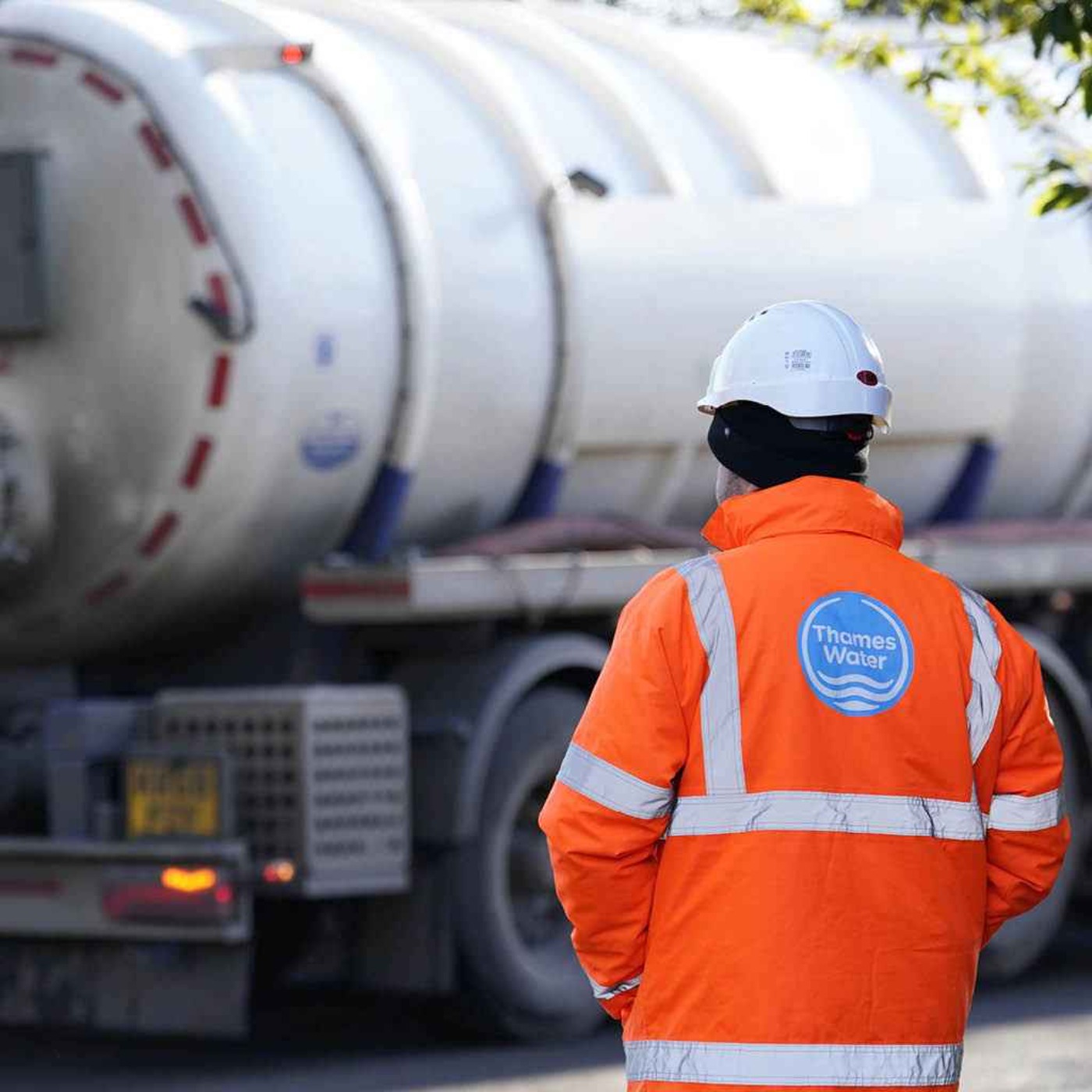
In this episode, the focus is on the financial crisis facing Thames Water following the withdrawal of the private equity firm KKR from a rescue plan. Eleanor Shearer, a senior research fellow at the Common Wealth think tank, shares her insights on the implications of this development and the ongoing issues within the water industry. Additionally, showbiz correspondent Tina Campbell discusses the continuing legal feud between Blake Lively and Justin Baldoni, co-stars of the film "It Ends With Us".
Written by AI. May contain mistakes.

Get the gist, explore an idea or ask about something said.
 Claude
On The Standard, what are the key points of this episode?
Searching your listeningAutomatic transcript. May contain errors.
0:03Hi, I'm Charlie Duffield and welcome back to The Standard Podcast. If you're new here, hit follow and give us a rating. For the latest news, head to standard.co.uk. Coming up later in the show, the feud continues between It Ends With Us co-stars Blake Lively and Justin Baldoni.
0:29But first, Thameswater is in crisis again and sliding closer to a government special administration. Today, the New York private equity firm KKR dramatically pulled out of a financial rescue plan for the heavily indebted water supplier. Thames Water serves 16 million customers in London and South East England and needs to secure fresh funding for its operations by the end of June. Joining us now is Eleanor Shearer, a Senior Research Fellow at the Commonwealth think tank, which looks at issues of ownership and democratising the economy. Can you just remind us what has happened today regarding the private equity firm KKR and Thames Water?
1:15Yes, so the private equity firm KKR were the preferred bidder as part of a rescue deal. Thames Water has been on the brink of collapse for quite a while now. This was one of their sort of last hopes. That bidder has just pulled out, leaving the company's sort of solvency and financial future in a lot of doubt. And do we know why this has happened? It's not exactly clear what has gone on here, but I think we can infer that the investors felt that the company didn't have a secure future, they couldn't get a return on their investment. And in fact, this kind of speaks to the broader problem with the water industry as a whole.
1:49You know, Thames Water is kind of the tip of the iceberg here. It's quite surreal that on the day that this is happening and the company looks like it's about to collapse, the government's independent review into the future of the audit industry came out basically saying we just need more regulation well there's a bit of a tension at the heart of that approach because the more that you regulate the more that you ask companies for example restrict their dividends payments restrict payouts to executive bosses all things that the general public is crying out for because the industry is in such crisis the more that you do that the less attractive these companies look to private investors.
2:26And that's not a moral judgment. The purpose of a private equity firm like KKR is to make a return. But it just speaks to the fact that there's a kind of a contradiction here. You can't run this sort of utility for private profit without ending up in the situation that we've ended up in, where private investors have come in, they've assets stripped, they've piled debt onto these companies to be able to pay themselves massive dividends. And then at the same time the infrastructure is crumbling you know Thames Water it's 19 billion pounds worth of its assets that are in poor failing condition that puts about 40 000 homes in London at risk of rapid flooding it puts all of us at risk of contamination our drinking water supply with parasites so while we don't know exactly why KTL's position on Thames Water change I think we can really see here that tension which is that these companies aren't attractive to private investors.
3:18They're not going to be unless you start scaling back massively the regulation, which is just not feasible with where the public is at. People want to see the companies held to account for polluting our rivers and our waterways. They want to see them held to account for trying to hike our bills over and over. So really, the only solution left on the table is public ownership. Can you explain a bit more about the role of OffWatt? So OffWatt is the regulator for the water industry. So it has mainly a duty to look at. So because water is a natural monopoly, which means that you as a consumer don't have a choice.
3:53You can't go to an alternative water company. They're not happy with your service. to protect consumers from the fact that these are monopolies off what's one of their main responsibilities is setting pricing each year. So they determine, they do their economic modelling and they say, we think this is a fair price for the companies to charge to consumers based on what we think they need to kind of keep investment, meet all of their duties to maintain their infrastructure and provide safe drinking water. And were you surprised by today's news? No, I wasn't. And we at Commonwealth have been arguing for a while, basically since Labour came into power, that Thames Water and possibly other water companies as well, it's really a question of if rather than when they end up collapsing, unless they get what they are pushing for, which is either off-watt to cave and allow massive bill increases for consumers, which isn't really politically possible.
4:45There was a recent bit of Citizens Advice polling where about a third of people said that they were going to struggle to be able to pay the 25 % bill increase in their water bills for next year. So unless of what paves and allows these companies to hike our bills massively, or unless you scale back all of the environmental requirements so that they don't have to put money into new investments and new infrastructure, you are going to struggle to make them attractive to private buyers. You are going to struggle to make them attractive to companies that are looking for a high rate of return on their investment.
5:15So no, it doesn't surprise me because I think we've just reached the crisis point of what was inevitable as soon as privatisation was set in train, which is that it's really hard to run these sectors for private profit and natural monopolies. So you don't get the kind of competition that we were promised. They are not incentivised to kind of invest for the long term. They're looking at their short term balance sheets. They're looking at their quarterly returns so they can pay their shareholders. So yeah, no, I wasn't surprised. And I do think that the government has been foolish to so strongly rule out public ownership.
5:43It's been foolish not to get on the front foot. And frankly, from when they carry into office under the existing legislation, they had a case to bring Tentwater back into public ownership, to bring into what's called special administration under the current laws. And the fact that they'd get to this acute crisis point, you know, the longer it takes them to act, the more desperately they'll have to scramble when they finally are called on to act. So I really think they should have been a bit more proactive and sort of right from the outset for seeing this was going to be the position that we would end up in.
6:11As you've already mentioned, this comes as the Independent Water Commission has recommended a radical shake-up of water regulation. Tell us more about the Cunliffe Review, the problems it's trying to address and its recommendations. The Cunliffe Review was commissioned by the government as an independent review into the state of the water industry. You know, everyone agrees that the status quo is not working. The problem with the Cunliffe Review, the reason I'd say it was sort of dead on arrival, if the government said up front you cannot look at public ownership as one of the solutions here, That prevents the review from being able to explore bringing England in line with the vast majority of the world where water systems aren't run for private profit.
6:52So instead, it has to look predominantly at issues of regulation. Now, I don't think that all of its findings and recommendations are wrong. I think in particular, the focus it puts on regulatory enforcement and resourcing. So the fact that the environmental agency, its budget for environmental enforcement, so looking at kind of pollution incidents and holding companies to account, that budget was more than halved between 2010 and 2020, the period of austerity. So it is making fair points about some of the regulatory challenges that the sector faces. And there definitely is a role for strong regulation, whatever the ownership structure of these companies.
7:30But by not being able to explore what public ownership would look like, the benefits it could bring. By not, for example, being able to compare. So England and Wales have privatised utility companies, but Scotland, Scottish Water is publicly owned. And we know, for example, that it invested at a higher rate during the previous decades than the private water companies did in England and Wales. If down here, down south, we'd have that same rate of investment as Scottish water, we would have£28 billion more of investment in our water infrastructure, preventing those things like sewage spills, keeping our drinking water safe.
8:06So by not being able to kind of address the elephant in the room, which is privatisation, I think the Cundiff Review was sort of hamstrung from the start. So what happens next in terms of the future of Thames Water? The company is claiming that it is exploring other options. And so it may be that an alternative private buyer does come forward. And we go through this process again of seeing will they or won't they actually commit to putting their money into the company to sort of rescue it. But I think in the short term, it's likely that if the company ends up in a position where it cannot remain solvent, The government is going to have to step in.
8:45Keeping the taps flowing is so essential that there's no other choice. And so we may well see in the short term the government having to bring Tamswater into a special administration, in effect, a temporary nationalisation. I think if that happens, what you want to look very closely at is, is this effectively a bailout for the shareholders and creditors of Tamswater? I really don't think it should be because I think the company should bear the responsibility for four financial decisions that it made. But there are ways of doing that temporary nationalisation that can kind of reduce or even in some cases eliminate the debt that the company is under.
9:19The government has the right under an existing legislation to do that. So we would argue that bringing Temp Water back into public ownership, you should be looking at really reducing its debt liabilities and reducing the amount you pay to its creditors. I think even in the case where you have another private equity firm stepping forward or equivalent to buy Thames Water, the problem at the heart of the company's future hasn't been resolved, which is effectively that they need money to be able to fix that failing infrastructure. You know, they spent decades focused more on financial engineering, on trying to work out how they can load the most debt onto the company than they did on real engineering.
9:55in the UK, we haven't built a new water reservoir since privatisation happened. So this isn't something that's going to be fixed overnight. And it's something that's going to take money to fix. Let's go to a break. Coming up in part two, the latest on surely one of the biggest ongoing legal battles in Hollywood. We'll see you back here in just a moment.
10:30Welcome back. Now, when the romantic drama It Ends With Us came out in 2024, based on the best-selling novel by Colleen Hoover, few could have predicted what would unfold. The actor, Blake Lively, accused her director and co-star, Justin Baldoni, of sexual harassment, and he claimed that she and her husband, Ryan Reynolds, attempted to destroy his career. Several legal actions later, the case continues. And now, the Gossip Girl star has reportedly withdrawn part of her lawsuit against director Justin Baldoni. To find out more, we're joined by the standard showbiz correspondent, Tina Campbell. Tina, for anyone who might not be aware of this, can you explain what has been going on between Blake Lively and Justin Baldoni since they starred in this film, It Ends With Us?
11:22So after the release of last year's movie, It Ends With Us, Blake Lively filed a lawsuit against her co-star and the director, Justin Baldoni, accusing him of sexual harassment and alleging that he and his team were involved in a campaign to damage her reputation. Justin has denied those claims and countersued Blake, her husband, Ryan Reynolds, and her publicist for$400 million, accusing them of extortion and defamation. It's become a really massive, highly publicised legal battle with both sides presenting serious allegations against each other. And today there is a new update to the case. Can you tell us more?
11:59Recently, Blake dropped her claim of emotional distress against Justin Baldoni. According to her legal team, this doesn't mean she's completely stepping away from that part of the case. Rather, it appears that they're choosing to pause that specific claim for now but want to reserve the right to bring it back later if new evidence or circumstances come up. Justin Baldoni's team has all put it out there that they requested Blake's medical therapy files, but she has yet to give them access to that. And at the same time, though, Blake is still pursuing the other allegations she made and Justin's countersuit remains active.
12:34Both sides are now preparing for the trial. Now, Taylor Swift was involved last month as well. What happened there? Taylor Swift and Blake Lively were the epitome of besties absolutely joined at the hip for 10 years they were photographed together everywhere and she was drawn into the situation when Justin's legal team issued a subpoena alleging that Blake had involved Taylor to put pressure on him during the making of the film however the subpoena was later dropped after the court ruled the filings were inappropriate although Taylor is no longer part of the legal proceedings Reports suggest her friendship with Blake has been affected by the dispute.
13:12And finally, when will the two face each other in court? It's not coming anytime soon as the trial is scheduled to begin on March 9th, 2026. So both are expected to testify and the court will hear all the claims and defences before making a decision. It's going to be a very important moment for showbiz and in the resolving of the really high profile case. The reaction has been absolutely huge. People debating from all sides. Blake Lively has actually received a lot of backlash against it. A lot of people seem to have turned on her and also her husband, Ryan Reynolds, too, at one point, seemed like they could do no wrong.
13:51And that's The Standard. For all the latest news, head to standard.co.uk. And if you'd like to get in touch, please do drop us a line at podcasts at standard.co.uk. We'll be back here tomorrow at 4pm. We'll see you then. You
Today the New York private equity firm KKR dramatically pulled out of a financial rescue plan for the heavily indebted Thames Water. Eleanor Shearer, a senior research fellow at the Common Wealth think tank, joins us to ask what happens next.
Plus, the Standard’s showbiz correspondent Tina Campbell, is here to discuss the latest development in the continuing feud between It Ends With Us co-stars Blake Lively and Justin Baldoni.
https://www.standard.co.uk/business/new-york-private-equity-kkr-thames-water-rescue-ofwat-b1230923.html
https://www.standard.co.uk/showbiz/blake-lively-justin-baldoni-medical-records-b1230950.html
Hosted on Acast. See acast.com/privacy for more information.


