
 Ask ChatGPT



Written by AI. May contain mistakes.
Discussion on how the Middle East crisis is affecting oil prices and daily living expenses.
“Is the Middle East crisis about to hit our energy bills?”
Examination of the impact of the closure of the Strait of Hormuz on global oil supply.
“I mean, in rural areas or outside London, that is really big hit to their everyday budgets and household incomes and so on.”
Exploration of future energy price projections and the political implications for the UK.
“So oil prices, they've surpassed$100 per barrel for the first time since 2022 when Russia invaded Ukraine.”
Analysis of how rising oil prices are affecting stock markets and consumer businesses.
“Let's get straight back to my chat with Jonathan.”
Learn how rising energy prices affect supply chains and consumer costs.
“This week, it looks like defence stocks are under the cosh as well.”
Understand the UK's vulnerability to energy price fluctuations relative to Europe.
“much more of a reality check that this isn't a one-week wonder and the fallout is going to affect us all for quite a while.”
Get insights on how to approach investment during a market decline.
Discover strategies for remaining composed when facing market instability.
“what advice would you give to people who are maybe panicking at this stage?”

Get the gist, explore an idea or ask about something said.
 Claude
On The Standard, what are the key points of this episode?
Searching your listeningAutomatic transcript. May contain errors.
0:00Jonathan Prynn: It's time your hard-earned money works harder for you. With the Wealthfront Cash Account, your uninvested cash can earn up to 3.95 % APY. That's a 0.65 % boost over an already high rate for three months, just for being a new client. Plus, free instant withdrawals to eligible accounts. Start today at Wealthfront.com. 3.3 % base APY via Program Banks as of January 30, 2026. It is representative variable, requires no minimum, and is earned on funds swept to Program Banks. Boost up to$150 ,000. Cash account offered by Wealthfront Brokerage LLC member FINRA SIPC, not a bank.
0:59Jonathan Prynn: podcaster, I get a comprehensive look at everything that's coming out and spend my time curating the best books so you don't have to. Stay in the know, get insider insights, and connect with guests like Grammy Award-winning singer Alicia Keys, critically acclaimed author Judy Blume, and Academy Award-winning screenwriter John Irving every single day. With Totally Booked, you aren't just listening, you're part of the story, so don't miss out. Follow Totally Booked with Zibi on Apple Podcasts, Spotify, or wherever you're listening now.
1:34Jonathan Prynn: ACAST helps creators launch, grow, and monetize their podcasts everywhere. ACAST.com
1:53Jonathan Prynn: Amid the escalating Middle East conflict, Iran's near closure of the Persian Gulf is rattling global markets. But how quickly will we feel the fallout here in the West? Hi, and welcome back to The Standard Podcast. I'm Tamara Komornik. For all the latest news, head to standard.co.uk. Coming up. Is the Middle East crisis about to hit our energy bills?
2:27Jonathan Prynn: Around 20 % of the world's oil supply travels through the Strait of Hormuz, a key choke point in the Persian Gulf, which Iran has effectively brought to a near standstill. The disruption has sent oil prices soaring and has sparked global concern over oil supply, which has had a spillover effect on equity and gilt markets. In today's episode, I speak to The Standards business editor, Jonathan Prynne, about the impact of these events and how quickly we might feel the effects in our bank accounts. Here's my conversation with Jonathan.
3:05Jonathan Prynn: Hi Jonathan, thanks so much for jumping back on The Standard Podcast. It's great to have you.
3:10Tamara Kormornick: Hi Tamara, good to be back.
3:12Jonathan Prynn: So Jonathan, today we're going to be talking about the impact that the war in Iran is starting to have on Britain. Let's kick off by discussing how we might see the war affecting us day to day in the near future. When I say us, I'm talking about you and me. I'm not talking about, you know, geopolitical implications. This will start to affect all of us, really.
3:40Tamara Kormornick: Oh, it already has. And you're absolutely right. This is going to feed through to everyday living very very quickly and then possibly in quite a profound way petrol's up about 5p a litre diesel about 8p a litre and the RAC's latest projections are that that will continue to rise we could possibly see as much as 30p a litre going on the cost of filling up the car within a few weeks.
4:12Jonathan Prynn: Yikes.
4:13Tamara Kormornick: Yeah, yikes. I mean, in rural areas or outside London, that is really big hit to their everyday budgets and household incomes and so on. So that's probably where we've seen it first, probably the next effect will be possibly in energy prices. they are almost certain to rise come the summer and oh I should also say an effect we're already seeing immediately is in the mortgage market where the threats of higher interest rates to cool down inflation are feeding through to the interest rates that lenders are prepared to offer to borrowers. I mean the big picture is it's starting to have an effect right across people's everyday living expenses.
5:06Jonathan Prynn: So let's start with energy. So Middle Eastern oil producers, they've cut the supply due to the effective closure of the Strait of Hormuz. This narrow body of water in the Persian Gulf accounts for about 20 % of global oil and liquefied natural gas shipments. Jonathan, can you speak on this closure?
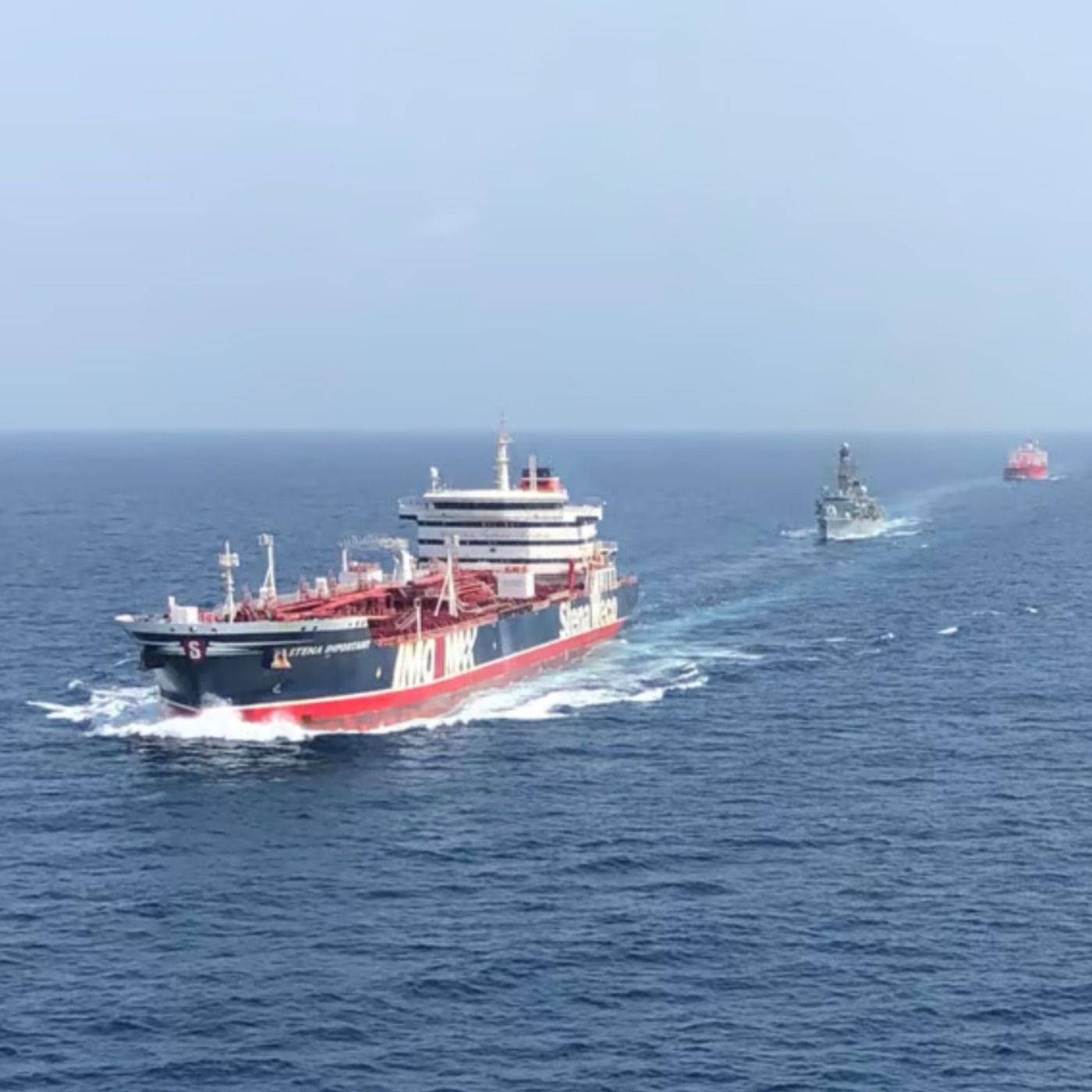
5:33Tamara Kormornick: It is exactly as you say. It's the absolute lifeline. It's the Achilles heel of the West. It's the artery, if you like, of Western economies. Without that flow of oil, cheap energy that Western economies need to keep themselves going, as you say, about 20 % flows through the Straits of Hormuz. The Straits is effectively shut at the moment. I think only three ships went through on Saturday. Normally, it's, you know, dozens and dozens go through. There's hundreds of tankers now piled up in an enormous traffic jam in the Gulf waiting for to go through to fill up from countries such as Bahrain and Qatar and so on.
6:17Tamara Kormornick: Meanwhile, on top of that, Iran has targeted the production facilities of countries like Qatar, and that has also helped push up gas prices in particular. Meanwhile, on top of that, countries like Iraq are running out of storage facilities because they can't get the oil out of the production and refinery facilities into the market. So they are having to close down production. So these three factors together have had an absolutely dramatic impact on the price of oil and gas in the wholesale markets.
7:02Jonathan Prynn: So oil prices, they've surpassed$100 per barrel for the first time since 2022 when Russia invaded Ukraine. Do you think oil prices could rise higher than the around$130-odd per barrel that we saw in 2022?
7:22Tamara Kormornick: I think today all bets are off. At one stage, the biggest one-day rise in oil prices that we've ever seen hitting around$120 a barrel. And I think on the futures market, it maybe did tickle up around the$130 level briefly. So getting close to those incredible elevated levels that we saw during the 2022 full-scale invasion of Ukraine. They've eased off a little bit, pretty disastrous. But the group, the club of leading Western economies, the G7, have agreed to release petroleum stocks into the market to try and cool the price a little bit. Now, that will work in the short term. But if market prices stay at these sorts of levels because of huge disruption in the Gulf for any length of time, then it's just inevitable that oil and gas prices will start their upward march again.
8:26Tamara Kormornick: And who knows, 130, 140, 150. These are possible prices, but no one knows. It all depends on the duration of the disruption to the market.
8:38Jonathan Prynn: And in terms of what this means for you and I, the energy price cap that's set by Ofgem is due to run out in June. With the increase in energy prices that we're seeing now, if you are on a variable rate or you're on a fixed rate that's about to expire, is it too late to get a decent price? Do you have any advice for people who are worried about their energy bills?
9:06Tamara Kormornick: Yeah, absolutely. I mean, the fixed price market is all over the place today. The pricing is very, very difficult for the energy suppliers to nail down. But I would say, yes, go into the market if you can today and just grab the best fix that you can see, because it's likely that a lot of those fixed deals, particularly the cheaper end, are going to disappear over the coming days. So, yes, get in there quick while you can. It is now looking increasingly likely that tariffs, the price cap, will go up quite sharply in July. Topgem, the regulator, they look at wholesale prices over a three-month period and then set the cap according to those wholesale prices over that period.
9:53Tamara Kormornick: They're next due to set the cap on the 28th of May for the July to October quarter. so if prices stay high up to the 28th of may we could be in for a very very significant increase come july which could add hundreds of pounds to bills on an annualized basis a resolution foundation who think tank are warning that in due course bills could be 500 pounds a year higher as a result of these increases in in wholesale energy prices now that may or may not come to pass. That's a huge political threat to Labour, which came in promising cuts of£300 in energy bills. So I would have thought it's quite likely that the government will step in at some point and try and put a lid on these increases or at least provide some protection for maybe more vulnerable households.
10:53but we shall see if they've got the firepower, the public finances under great strain at the
11:00Tamara Kormornick: moment, as we know. Have they got the wiggle room to be able to do that?
11:12Jonathan Prynn: We'll take a quick break. Coming up, I asked Jonathan about the global stock market tumble, which stocks he thinks will take a bashing in the next few weeks and whether the UK is more exposed to market shocks than the rest of Europe.
11:33Jonathan Prynn: It's time your hard-earned money works harder for you. With the Wealthfront Cash account, your uninvested cash can earn up to 3.95 % APY. That's a 0.65 % boost over an already high rate for three months just for being a new client. Plus free instant withdrawals to eligible accounts. Start today at Wealthfront.com. 3.3 % base APY via program banks as of January 30th, 2026. It is representative variable, requires no minimum, and is earned on funds swept to program banks. Loosed up to$150 ,000. Cash account offered by Wealthfront Brokerage LLC member FINRA SIPC, not a bank. Finding a hoodie that lasts through the season can be tough.
12:06Jonathan Prynn: The American Giant Classic Full Zip hoodie is made to last a lifetime. So you can count on it year after year. The iconic classic full zip hoodie is the jacket that started it all for American Giant. Custom heavyweight fleece and side panels for mobility make it the best hoodie ever. Every American Giant piece is made in America and designed to last. No exceptions. The result is durable clothing like the premium Slub Crew Tee, No BS High Rise Pant, and Slim Roughneck Pant that become part of your life. Snag the hoodie that will bring you comfort for life. The American Giant Classic Full Zip. Save 20 % off your first order at American-Giant.com when you use code STAPLE20 at checkout.
12:57Jonathan Prynn: Welcome back. Let's get straight back to my chat with Jonathan.
13:05Jonathan Prynn: So, Jonathan, I want to talk about markets now. Now, in London, when the FTSE opened for the week, nearly all shares in the FTSE 100 fell. And only really oil giants like BP and Shell were among the few companies to actually see an increase. which stocks do you think are the most likely to really be affected by the surge in oil price and sort of affected by the shock waves of this well i guess i mean the ones that we've seen
13:43Tamara Kormornick: perhaps take the biggest hit so far are the travel companies and companies in the travel sector which aviation stocks and look like they're boob-sickly badly here i guess broad the broader consumer of stocks retail and so on they're going to be very very vulnerable uh as the weeks roll by and
14:03Jonathan Prynn: we don't get any resolution to this crisis is that for supply chain issues yeah supply chain issues
14:09Tamara Kormornick: um just the whole cost of those energy prices cascading through the entire supply chain and yeah any consumer business is going to really really suffer from that as their transport and distribution costs rise and that feeds through into higher consumer prices which obviously consumers already quite stretched already seen a cost of living crisis over the last two or three years um yeah anything in the consumer sector will be hard hit uh as you say the oil giants are probably the only ones are likely to benefit interesting last week defense stocks rose uh because of expectations that there's going to be, you know, there's a lot of munitions being destroyed at the moment that will all have to be replaced.
15:01Tamara Kormornick: This week, it looks like defence stocks are under the cosh as well. So it's a very, very broad-based sell-off this week. And I think that it's a different mood to last week, much more of a reality check that this isn't a one-week wonder and the fallout is going to affect us all for quite a while. Mm.
15:21Jonathan Prynn: The gilt market and sterling, they're also down as a result of this instability we're seeing. Jonathan, do you consider Britain to be more exposed to energy price shocks than other EU countries? And are British investors flocking to European markets as a slightly safer bet?
15:46Tamara Kormornick: I think I mean all of Europe is very exposed with possible exception of maybe Norway and one or two countries that have big access access to gas fields and so on. But the point about the gilts market is that the sell off in the UK once again appears to have been bigger than the sell off in most other developed countries. These gilt yields have risen faster than the yields on most other major countries' debt. That goes back to the trust period when foreign investors really started putting an extra premium on the risk of investing in UK bonds because UK governments seem much less reliable than governments elsewhere in the developed world.
16:35Tamara Kormornick: So, yeah, I mean, it's a big problem. um uk is very exposed um one advantage is we get a lot of our gas from america um and those supplies look secure for now we only get about i think it's six percent of our gas from qatar which is one of the world's biggest suppliers so uh the problem for europe is that asia will need huge amounts of imports of gas and oil as well they you know uh rely massively on imports from the Gulf and they will outbid Europe probably to secure those supplies pushing the price up even more so yeah Europe is is heavily exposed I'm afraid and the UK as much as anywhere
17:23Jonathan Prynn: I asked this question but I must include a disclaimer that this does not constitute investment advice if you need investment advice speak to a qualified investment professional Jonathan, to wrap up our conversation, for retail investors in the UK who are opening up their phones and their accounts and seeing, you know, the red, whether it's FTSE 100, S &P 500, the DAX, whichever market, it just markets are down. And this is a bit worrying. what advice would you give to people who are maybe panicking at this stage?
18:09Tamara Kormornick: Don't panic. Every downturn finishes with an upturn. There's an old stock market adage, buy into the dip. There comes a point where markets turn. It's impossible to know exactly when that turning point is coming. But markets are considerably cheaper than they were two weeks ago. I wouldn't be piling money into markets just at the moment, but there'll come a point maybe in a few weeks' time when they settle down a little bit and sort of reach the bottom when it might be an opportunity to buy stocks at relatively cheap prices or reduced prices. yeah don't sell up now because you are selling into a falling market um sit it out uh and in due course things will get better um they always do eventually but it is it does feel very hairy
19:08Jonathan Prynn: at the moment well thanks so much jonathan it's been great to chat to you on this oh great pleasure
19:14Tamara Kormornick: and um yeah i think this one isn't going away so i'm sure we'll be talking again soon yeah absolutely
19:23Jonathan Prynn: And that's The Standard. For all the latest news, head to standard.co.uk. If you'd like to get in touch, email us at podcasts at standard.co.uk. We'll be back here tomorrow morning. See you then.
19:49Tamara Kormornick: Podcast powers the world's best podcasts.
19:52Jonathan Prynn: Here's a show that we recommend. Michael Gargiulo stalked and slaughtered his female neighbors in L.A. in the 2000s until one survived. She painted a picture that you could never imagine. In a first on Mind of a Monster, we dive into a case that's still active. Did Michael's murderous rampage start in the 1990s when he was just 17? His impulsivity and his rage was starting to peak around that age. Listen to Mind of a Monster, the Hollywood Ripper, wherever you get your podcasts. Acast helps creators launch, grow, and monetize their podcasts everywhere. Acast.com.
Amid the escalating Middle East conflict, Iran’s near-closure of the Persian Gulf is rattling global markets. The disruption has sent oil prices soaring and sparked global concern over oil supply, which has had a spill-over effect on equity and gilt markets.
In this episode, host Tamara Kormornick speaks to the Standard’s business editor, Jonathan Prynn, to discuss the impact of these events on markets – and our wallets. The two discuss how quickly bills will rise, how costly this could be for Brits, and which sectors will be rocked by the continuing conflict in the Middle East.
Hosted on Acast. See acast.com/privacy for more information.


