
 Ask ChatGPT



In this episode of The Standard, host Julie Banks discusses significant concerns surrounding the UK’s power network in the wake of recent electrical substation fires. The episode features insights from John Loughhead, a clean energy professor, and Tina Campanella from the Zoological Society London (ZSL), who seeks public help for uncovering lost film footage ahead of ZSL's bicentennial celebrations.
Written by AI. May contain mistakes.

Get the gist, explore an idea or ask about something said.
 Claude
On The Standard, what are the key points of this episode?
Searching your listeningAutomatic transcript. May contain errors.
0:04Hi, I'm Julie Banks. Welcome back to The Standard Podcast. If you're new here, hit follow and leave a review. Coming up, could you help rescue long-lost footage, including from Sir David Attenborough's first nature documentaries? Some have titles, others only have really quite cryptic descriptions, others are completely blank, and we really want to uncover the mystery of what's on these incredible film reels. Tina Campanella from the Zoological Society London is here to tell us why they need help a year out from their bicentenary celebrations.
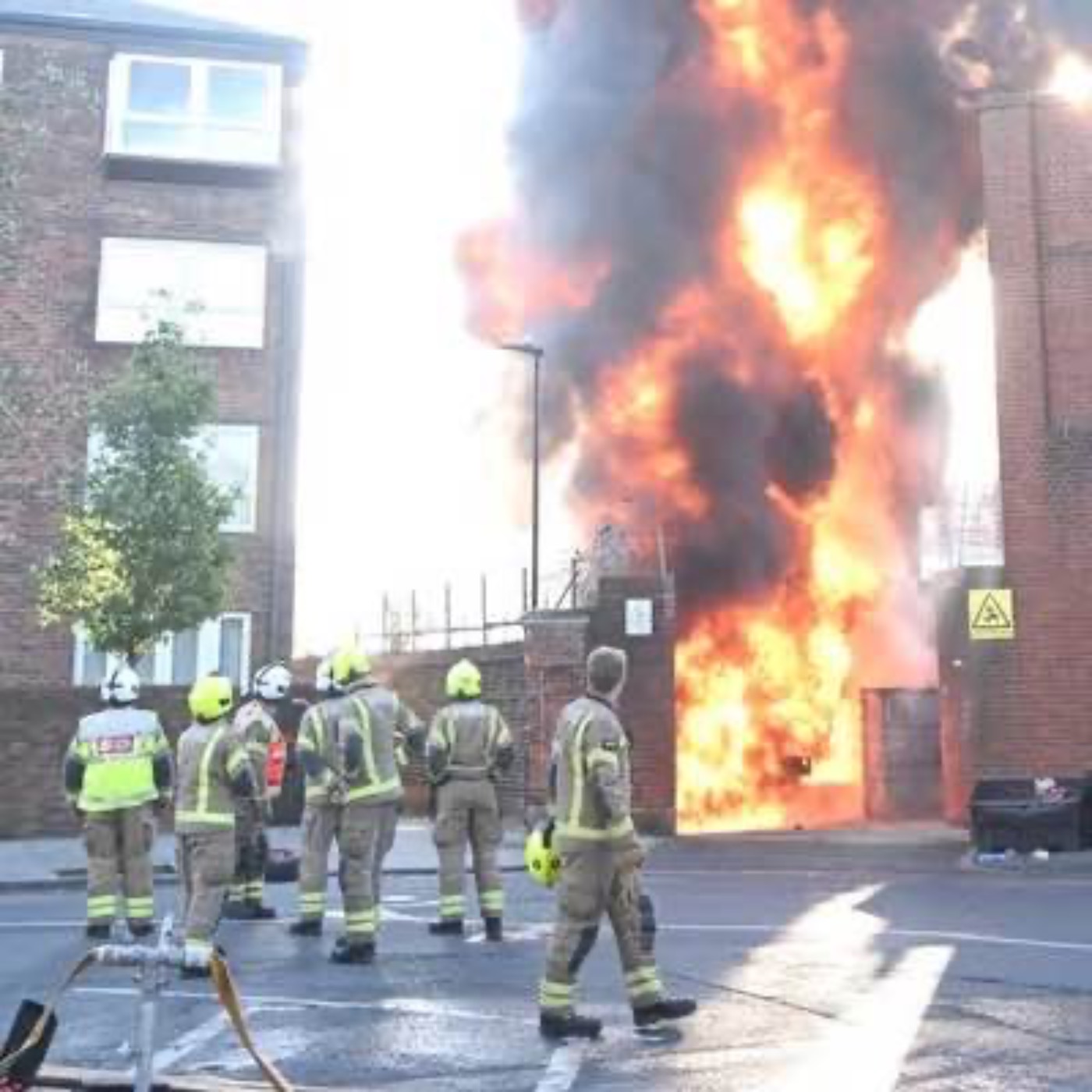
0:46But first, firefighters in London have been battling a huge blaze at an electrical substation in the St John's Wood area of the capital after reports of a fire were first made at around 5.30 this morning. It's the second such incident in just over a month. At the end of March, a fire at a substation in Hayes brought Heathrow Airport to a standstill. How worried should we be about the frequency of these substation fires? And in light of recent events in Spain and Portugal, are there greater concerns about the stability of the UK's power network? Well, joining us now to discuss the situation is John Lafhead, Professor of Clean Energy at the University of Birmingham and fellow and former president at the Institute of Engineering and Technology.
1:28So John, what could be the cause of this latest substation fire? It's very difficult to tell from the information that's been made available. The operator of the substation has said it was a piece of equipment that failed, but what that equipment was and how it failed is not very clear. Looking at the pictures, your first instinct is that it looks like a fire in a transformer because it looks as though the oil in the transformer is burning, but that's not been explicitly confirmed by anyone at the moment. We take electricity somewhat for granted, but can you explain what actually goes on in a substation?
2:02Well, the substation is the point where electricity is brought in either from the transmission grid or possibly a higher voltage part of the distribution network. And from there, it is delivered out to the users. So there are two things that happen in a substation. The first is that the voltage is transformed down to the voltage that the users need. So that's why there's a transformer there. And the second thing is usually it's also switched out from three-phase to single-phase supply, which is what we all have in our homes. That's a technical detail that we don't need to get too concerned with.
2:38It's also got various elements of switchgear to move the circuits around, as circumstances require, and then protection equipment, which monitors things like short circuits and other faults that could cause problems. But from the fire today, it appears that electricity supplies were not disrupted. Now, whether that's because the substation continues to operate or because supplies were able to be routed in from other substations to meet the needs is not very clear. Looking at the fire, personally, I'd be a little surprised if the substation was still operational, but there is contradictory information.
3:17It just said supplies were not interrupted. Well, it's only a month, of course, since there was a substation fire as well in Hayes in North London, which closed down Heathrow Airport for the best part of a day. Should the public be concerned about the safety of these substations, especially in residential areas? I think it would probably be a little alarmist to say we need to be concerned about their safety. Unfortunately, in any engineered equipment, things can occasionally go wrong. You see it with your car, you see it with your domestic appliances, and in this instance, we've seen it in substations.
3:50I don't think at the moment there's any information that would lead us to suggest that there is any generic or systemic fault that's causing this. It does appear in both cases to simply have been a piece of equipment that failed for some reason. Now, of course, there are lots of big headlines coming out of Spain and Portugal yesterday and today continues with news about their national blackout and the problems they're having there. I know details are still emerging, but is it something which in theory could happen here in the UK, do you think? In theory, it can happen on any electrical network that something could go on.
4:23The latest information I had were that there were two interruptions of some form which caused disconnections from the automatic protection equipment. And the network survived the first one, but couldn't survive the second. Now, the cause of those interruptions is simply not known. So we would just be speculating on what it would be. But normally the interruptions are because of either a short circuit somewhere along the network, or possibly because of a failure of an important piece of equipment in the network. But we just don't know. Could it happen here? Well, yes, in theory, it could happen here.
5:00But the design of the network and the operation of the network very much focuses on minimising the possibility of that happening. Electrical networks are very complex systems because you need to instantaneously balance the supply of electricity with the load that people are taking. And the disconnection sometimes, if they disconnect, one part of a supply can cause a shortage of supply, which then causes the frequency or the voltage to drop, which might cause another protection system to say, oh, I'm in trouble, I'd better disconnect. And before you know where you are, these things can cascade.
5:34but the whole concept of the system design and protection is to try to mitigate that so it's very unusual to see what's happened in Spain it has happened before elsewhere and I'm sure it will happen again but if you look generally at electricity supply systems they are extremely reliable so these are extreme events that unfortunately you can never guarantee will not happen unless you invest so much money in duplicate equipment that the network becomes unsustainably expensive. Well I guess that sort of brings me on to my final point that I wanted to ask you. Where does the UK sort of sit in terms of future-proofing its power?
6:14Is there more that needs to be done to upgrade the existing network or are we in a pretty good place at the moment? I think there are two aspects to that question. The first is, is the network secure? I think it's fair to say the UK network by international standards has a very high degree of security and I don't think we should feel concerned that we're liable to be subject to an event like that imminently. There's no reason to believe that. The second aspect is because of the government's decarbonisation policy, a lot of that relies upon electrifying things that previously were driven by gas, like heating, or by liquid fuels, like cars.
6:54And that means that our demand for electricity will increase quite dramatically. So there are two elements to meeting that increase in demand. The first is the rapid development of predominantly wind power generation, which is going to be increased quite notably over the coming five or six years, mainly off the coast of Scotland and in the far North Sea off the east coast of the UK. And that is providing security on the total amount of energy that we have available to us. But that is in areas that previously were not involved in the electricity system very much. So we've got this other need to expand the electricity system, first of all, in order to get the energy from where we're going to generate it, very often offshore into the UK.
7:44And then where it arrives is not where we traditionally generated power. So we've got to provide extra transmission capacity to move it from where it arrives, as well as meeting the fact we're going to be using more electricity in the future. So this is a major infrastructure development for the UK, and we should not underestimate what it will require to get it done. But we can certainly do it. There's no question about its feasibility. As we go through this massive expansion, there's going to be a need for public engagement on how we do it. We in the IET have just published a report today on the costs of the equipment that we can use to expand the network, particularly in terms of overhead lines, buried cables, and so forth.
8:27And because however we do it is going to cause some impact on environments, but do we want electricity or do we want no change at all to our environment? And probably, as we've seen from Spain, we'd rather have the electricity than not. So the question is, how do we best do it? And therefore, how do we make the trade-offs between the different options of cost, local impact, global impact, and so forth? Let's go to a break. Coming up, can you help the wildlife charity behind London Zoo uncover the mystery of forgotten film footage? Tina Campanella from ZSL joins us with more details. We'll see you back here in just a moment.
9:18Welcome back. Exactly a year today, the Zoological Society London, or ZSL for short, will celebrate its 200th anniversary. The conservation charity is behind both London and Whipsnade zoos, and in the run-up to their celebrations, they've issued a call for help after finding mystery film tapes in their archives. Tina Campanella is the Bicentenary Project Manager at ZSL and joins us now. Tina, before we hear more about these tapes, can you give us the background to ZSL's origins? Absolutely. So ZSL was founded in 1826 and the purpose of the organisation was really to further zoological science.
10:00So that means we've spent the past 200 years really bringing people closer to wildlife. And we've really led the way in amazing changes in zoology throughout that time, but also lots of cultural changes. So at first, what we did was we gave academics, zoologists, the first real opportunity to study living animals. Previously, they'd relied on images or quite frankly, very badly taxidermied animals, which was very limiting for their work. But with a living collection to study the academic literature on animals and wildlife increased, scientific knowledge spread across the world. But our founders also realised that the scientific fellows who were visiting were more often than not bringing their family and friends who were less scientifically minded and more emotionally curious about nature and the animals that they had also only ever seen in books.
10:48So we opened to the public in the 1840s and we've been part of generations of family histories ever since. People's first steps, first interactions with nature, family memories, first dates, and the cycle really does continue to this day. So what are some of the ways you'll be looking to celebrate your 200th anniversary? We have so much planned for 2026. We'll be celebrating for the whole year. We will have exhibitions charting our history at both London and Whipsnade zoos. We'll have a huge birthday party over Easter for our visitors to join in. We'll be bringing historic characters back from our past who you can meet, including Charles Darwin, who was a ZSL fellow.
11:29We'll have new trails for people to explore where you can follow in the footsteps of some of our most famous residents. And you'll be able to see where blockbusters like About a Boy, Jurassic World, Whitsnail and I were filmed because we've been a really iconic film location since almost the beginning of cinema too. So ZSL is many things to many people. We're an academic research centre, We're a global team of conservationists. We're conservation zoos. We're great days out, but we're also a London icon. And there are lots of cultural elements that we'll be celebrating in 2026. And there are some really quite fun facts that we're hoping to share with our visitors and with the world.
12:05So, for example, there are a number of words that we're responsible for. The word zoo itself comes from a musical song called Walking in the Zoo, which was first called Walking in the London Zoological Gardens. But obviously that didn't quite scan. So walking in the zoo was the short version. And that's where we get the word zoo. Another word that we have is jumbo. So the word jumbo comes from an elephant, a very famous elephant that lived at London Zoo called Jumbo. Jumbo was the biggest animal our visitors had ever seen in their lives. And his name really became that word that people used to describe really big things.
12:41And people still use that word today. So even if you don't think you're connected to us in 2026, you'll realise that you are. So Tina, tell us more then about these archive films that you've discovered and how exactly you need help with them. We've spent the last year really digging through our archives, which are extensive. We have an incredible library and archive here, which people can visit. And we've been looking for stories to celebrate our 200th anniversary. During that digging, we found 230 incredible film reels. Some of them are dating back to the 60s. Some are from the 90s. Some have titles, others only have really quite cryptic descriptions, others are completely blank, but we really don't have the kit or the expertise to digitise them.
13:27So we have absolutely no idea what's on them and we really want to uncover the mystery of what's on these incredible film reels. So do you know how to digitize film? Do you have the kit? Can you come and help us do it? We have 230 reels. That is a lot of film to get through and we'd really like to get through it before 2026. So if you know how to do that and you have the kit and you're willing to share your time and your expertise, please do get in touch with us. You can email us at historyhive at zsl.org. We'd love to hear from you. Do you have any idea at all what you might find on them? So we can kind of see that some of the footage might have been part of broadcast packages for pioneering animal documentaries, such as the 1950s BBC series Zoo Quest, which actually was the series that brought Sir David Attenborough to our screens for the first time.
14:19So in the 1950s, Sir David was a producer at the BBC, and he went out with our curator, Jack Lester, to Sierra Leone in West Africa, looking for really rare animals. But Jack Lester, who was supposed to be in front of the camera, unfortunately felt ill. And Sir David had to step in front of the camera and history was made, really. So we don't know what's on these film reels, but we really want to find out.
14:45And that's The Standard. For all the latest news, head to standard.co.uk. If you'd like to get in touch, you can drop us a line at podcasts at standard.co.uk. This podcast will be back tomorrow at 4pm. See you then.
15:04You
With firefighters in London battling a huge blaze at an electrical substation, just over a month since a similar incident brought Heathrow Airport to a standstill, how worried should we be about the frequency of these substation fires?
And, in light of the recent events in Spain and Portugal, are there greater concerns about the stability of the UK’s power network?
John Loughhead, Professor of Clean Energy at the University of Birmingham and Fellow and Former President at the Institution of Engineering and Technology, is here to offer an insight to the situation both here and abroad.
Plus, in part two, could you help the Zoological Society London uncover mystery film footage in time for their 200th anniversary celebrations in 2026? ZSL’s Bicentenary Project Manager, Tina Campanella joins us to explain how to get involved.
Hosted on Acast. See acast.com/privacy for more information.


