
 Ask ChatGPT



The episode centers around the anticipation and critical appraisal of Wicked: For Good, the sequel to the successful film adaptation of the Broadway musical Wicked. Hosts Charlie Duffield and India Block discuss the film’s themes, character arcs, and the creative contributions of its cast and crew.
Written by AI. May contain mistakes.

Get the gist, explore an idea or ask about something said.
 Claude
On The Standard, what are the key points of this episode?
Searching your listeningAutomatic transcript. May contain errors.
0:02Hi, I'm Charlie Duffield and welcome back to The Standard Podcast. If you're new here, hit follow and give us a rating. For all the latest news, head to standard.co.uk. Coming up later in the show, find out how Oscar-nominated and Tony Award-winning costume designer Paul Tazwell spun his magic on the movie adaptation of Wicked. But first...
0:38Elva Bathrop, I know you're out here. Just come in before the monkeys spot you.
0:50There's no going back.
0:55This is between us, the wizard, and I.
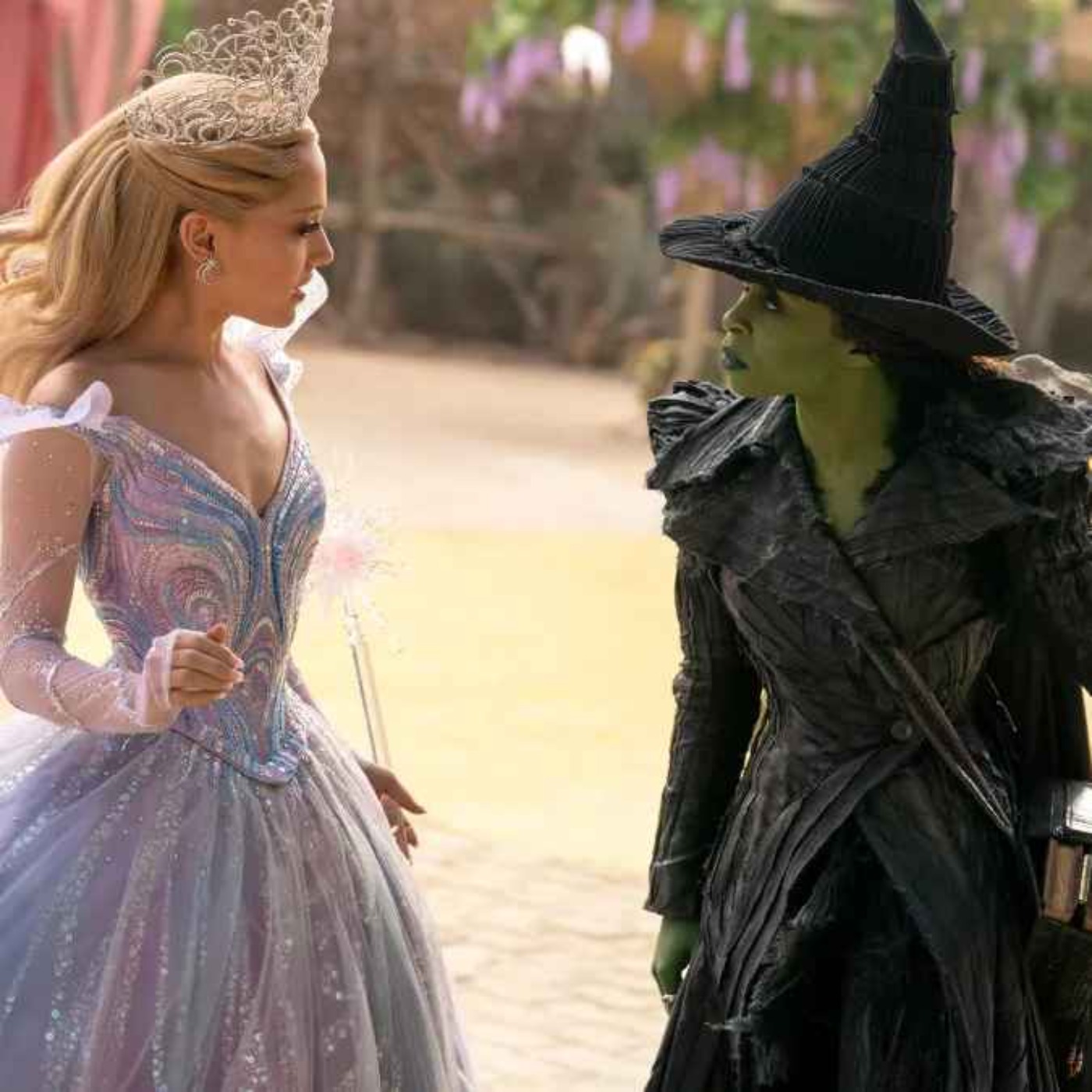
1:01Rejoicify fellow Ozians. The movie musical Wicked for Good is finally being released this Friday the 21st of November and it's billed as the film event of the year. The Wizard of Oz Riff is one of the greatest stories of all time featuring green-skinned Elphaba as Wicked Witch of the West played by Cynthia Erivo and Glinda Goodwitch of the North played by Ariana Grande. The pair form an unlikely friendship, and the duo's chemistry has been more than apparent off-screen as well. The sequel picks up where the first film left off, after Elphaba and Glinda part ways. Elphaba is now an enemy of the state of Oz, while Glinda has become a public figure controlled by the Wizard.
1:45The film has been adapted from the hugely successful Broadway and West End musical, which is based on Gregory Maguire's 1995 novel and was first performed in San Francisco in 2003. Wicked was the highest grossing movie of 2024 in the UK and scored a staggering 10 Oscar nominations, winning two for Best Costume and Production Design. But can Wicked for Good live up to the hype? Joining me now is The Standard's culture writer, India Block, who's been lucky enough to have already seen the film. so a warning that there may be some spoilers ahead. India, remind us what happened in the first film and what the plot of the sequel is.
2:26Films 1 and 2 have been pretty much tracking the musicals Act 1 and Act 2. So Act 1 finished with Elphaba meeting the wizard and rejecting his cruel plans to subjugate the animals and she sort of has this tearful farewell with Glinda who's decided that she can't leave working with the wizard behind. So she flies off into the air with her broomstick, sings Defying Gravity, leaving Glinda sort of in the clutches of the wizard and Madame Morrible. By the time Wicked for Good opens, Elphaba is sort of a seasoned freedom fighter. She's living alone in this lair she's built in the forests with only the animals that she's saving from the wizard's regime for company.
3:11Whereas Glinda is sort of very firmly ensconced within the regime. She's this figurehead. She's turning up looking beautiful. She's engaged Jafiero, who's a sort of captain in the army, but she still misses Elphaba terribly. And really, it's about their journey back to each other and what it means to be a good person, because obviously, we have this vision of the Wicked Witch. The Wicked is this retelling that gets into whether goodness is something that you are perceived as or something that you act. Is it a sort of a facade or an action? So it really sort of digs far more into that. The first film is more of the setup.
3:57And then this is the payoff, which I think is really, really interesting. But it is a lot darker. There's no sort of boarding school framework. They've left Shiz University now. So So it is, it's a bit stickier, it's a bit thornier, but it's really fun. So would you say that the tone of Wicked for Good is much darker? The characters are older, the stakes are higher. There's also, and this is considered a spoiler, so if you have not seen the musical and you have no idea what happens, maybe pause for a little bit. But Wicked, because it is a retelling of The Wizard of Oz, we also get the backstories for Tin Man and Scarecrow.
4:39And these are two characters that we know pretty well, and their transformations are actually pretty traumatic because they're the result of Elphaba's magic in attempting to save people, hurting them, or transforming them in some way that they dislike. they are shown in a way that gives you a full understanding of what's happening there's the flying monkeys which were already quite threatening this end of the first film and there is also the sort of analogy of fascism that's happening with the wizards regime and this decision to cage animals through which they learn speech the animals then in return decide that they're not safe in Oz and they decide to sort of leave even though Alphaba begs them to try and stay and fight.
5:33One challenge facing the sequel is that most of the best-known songs from the musical such as Defying Gravity and The Wizard and I featured in the first film. Does the follow-up still pack a punch and how does the music tell the story? Yeah this is a problem that we also see with reverse adaptations. So Frozen, the film, getting turned into a musical and Wicked, the musical, being turned into a film. If your big sort of I am story changing song happens in sort of the first act, it's quite hard to stick the landing. So Let It Go in Frozen is kind of the big number that everyone knows. Similarly Defying Gravity happens, but then what happens when you finish an act or you finish an entire movie on such a soaring song.
6:26So no, there is no sort of defying gravity, but they are my personal favorites. I really like No Good Deed, sort of Elphaba's big villain transformation, scare quote song. I think that's actually probably my favorite song. There's also For Good that also sort of gets to this discussion of what is goodness versus wickedness. And it's also the sort of final love song duet between Elphaba and Glinda. We had sort of loathing in the first act. And then this is about how their relationship has changed each other. I think lyrically, it's one of the most interesting. They've written two new songs, actually the original composer has and if you're someone like me who sort of grew up listening to the soundtrack it does feel quite weird to have a song that you're like wait I don't know the lyrics for this what do you mean I haven't listened to this like 300 times but they're pretty good one's called the girl in the bubble and that's sort of the song getting more into the interiority and her realizing that she's lived this sort of privileged life and that she needs to kind of pop that bubble and step into the real world.
7:39And then There's No Place Like Home is Elphaba's song that she sings to the animals and sort of tries to encourage them to stay and fight for their rights and for ours. You've said that Cynthia Arrivo and Ariana Grande have changed cinema for the better. Tell me a bit more about that. I think it's really shown what can be done in a movie musical. I think they've both given such an incredible sort of transformative performance But it's really a team effort, just everything comes together And there's the costuming, the sets, the locations So much stuff was done practically for this Which is really amazing given how much green screen there is at the moment The CGI when it's used for say the animals is actually very charming Which again I think is very rare currently everything kind of comes together to create this multi-sensory experience that is paying tribute to the golden age of Hollywood and the Wizard of Oz but without sort of pastiching it and pushing it forward interesting ways it's just quite well written and pacey you know it genuinely feels magical I cannot even sort of present them having all of these insane tie-ins you know okay fine we'll have the pink and green yogurt we'll have the pink and green popcorn they've actually earned it.
9:00This isn't just a marketing campaign with a nice movie attached. Speaking of the marketing campaign, we probably should mention that there's a destination in London which has been given the Wicked makeover. Do you want to reveal where exactly that is? Yeah, we actually had the exclusive on this for the Standard last year. They turned Greenwich into Greenwich. This year, because the Yellow Brick Road does turn up in the film, they have turned Brick Lane in East London into the yellow brick lane. Six artists have created gorgeous murals and installations, painted the literal road on brick lane in yellow bricks.
9:38It's really cool to see that sort of thing happening, obviously, in our backyard and something that is paying other artists and creating more art. And what message do you think director John M. Shue wants viewers to take away? What's the moral of the story and how might it be applied to real life? I felt that first film sort of speaks to what the musical is about which is about accepting difference and that difference can be powerful and that judgment and ostracizing people isn't good and that you maybe don't know the real and true story behind something if you fall for propaganda. I feel like there's a real sort of digging into that.
10:19And actually, this film, while the propaganda is there, and the idea of the true story behind it is there, I think John M. Chu, the director, has really sort of found an analogy with what is happening in the world today, especially in America and here in the UK, where there is this fascist regime growing that wishes to divide people, that wishes to deport people who they think have no right to be in a country, people who may be visibly different. There is all of this sort of xenophobia, transphobia growing as well, this idea that we can categorise people and ban them from certain places. They've really tapped into something that is incredibly timely.
11:04Finally, what was your standout performance? I think everyone's still going to be blown away by Ariana Grande and how, you know, Glenda is a character that lots of great actresses have made their own on stage. And she's really done something incredible there. But I still think when I look at her, I'm looking at Ariana Grande. Whereas Cynthia Erivo does something amazing with Elphaba. And like, obviously, she's green and she looks green, but you forget that you're looking at a sort of green person. And she's so powerful, while being so soft she's never sort of overacting yeah I think it's got to be her if someone was going to come down from a bubble with a wand and give me the power to give an Oscar I'd want want to go to Cynthia first let's go to an ad break but coming up a behind the scenes glimpse into the fashion of the film we'll see you back here in just a moment welcome back now we're heading for a peek inside the visual world of oz as india chatted to wicked's award-winning costume designer paul taswell i'd love to speak about alphabet and the looks that you created for cynthia here my job as a costume designer is to create a silent really a narrative that gives a character backstory and then how that style informs where they are emotionally throughout their arc.
12:32So starting with Wicked Part One, it was establishing her as an introvert and one that was armored within all of this Black and using that as a way of protection. And then how she breaks out of that, and then also the specificity of her silhouette to find her power. And then how she sheds that power by the end of Wicked for Good. There are a lot of different looks that start to inform how she matures, where she is emotionally, how she expands as a hero, all the while keeping it aligned with this archetype of the Wicked Witch of the West. The sleeves come off. Is that meant to be a gloves are coming off moment?
13:12It reveals her green skin more, again, more self-aware. It makes her feel more powerful because we actually see her physicality. I was also trying to telegraph that she's shedding what has kind of kept her as an icon for wickedness. And she's making it her own in the same way that she does in the Oz Dust Ballroom, where she uses the hat as a prop of power. She actually embraces it and then turns it on its head. So she's taking a joke and making it into her identity. And I think that that's what continues to happen in the second film. And then with the hat, and then we see the boots that Glinda's been keeping all along.
13:56I mean, you've referred to them as props, but was that important that they sort of be there as these symbols and then become cherished keepsakes? We recognize them as Elphaba's boots. But what it says about Glinda is that she still has this place in her heart that is held with Elphaba, you know, and the fact that she's held on to these boots as cherished pieces. we see them on this pink poof behind a, you know, a rack of clothing. It's something that she's held on to because she's trying to hold that very important moment in her life and that connection to her best friend in a very dear way. And then to be able to put them on as a way for her to be powerful.
14:38She's climbing up on a horse or she's going into disguise to try to save her best friend, someone that she dearly loves. All of these very subtle elements that John M. Chu has put into the storytelling help to underline what their relationship is based on. And then as her sort of flip side, we have Glinda, who is still very much of the heir of butterflies, presenting this permanent smile to the world. And we get more of her backstory, but also she has almost unwittingly become the figurehead for a sort of fascist anti-animal regime. I was really trying to capture the perfection that Emerald City, this archetype of goodness, some of that was informed by the colour palette that I used.
15:26The silhouettes are based on this, their kind of Dior, their kind of Marie Antoinette. There is this quality of her being caged like a bird when we see her in her apartments. All of her surroundings are glowing and beautiful, and her silhouettes are precise, informed by this 1950s Hollywood idealism. So to give Ariana an Audrey Hepburn quality in the clothing, it allowed for her to resonate with vulnerability, with femininity, with beauty and elegance. There are all of these different qualities that I was trying to imbue into the Glinda clothing track as she's maturing into Wicked for Good. That's with her dandelion dress that's hand embroidered with these seeded dandelions that, again, give you this idea of seeds caught in the air with her first bubble dress, the one that is purple and blue.
16:25It does nod to the original Wicked musical Glinda dress, but it also speaks to the icon of the Glinda from the 1939 film and that silhouette.
16:43And that's The Standard. For all the latest news, head to standard.co.uk. if you'd like to get in touch please do drop us a line at podcasts at standard.co.uk we'll be back here tomorrow morning we'll see you then
It’s predicted to be the movie event of the year, and this Friday 21 November, Wicked: For Good is finally released in cinemas - the follow-up to last year’s Oscar-nominated first film, featuring Cynthia Erivo and Ariana Grande.
We’re joined by The Standard’s Culture Writer India Block, who gave the sequel a five star rating, and said if it doesn’t get more Oscar nominations, she’ll eat her witch's hat!
Plus, India is joined by Paul Tazewell, the costume designer behind the epic outfits of the show, who offers a glimpse inside the visual world of Oz…and have you spotted the London destination that has been given a Wicked makeover?
Hosted on Acast. See acast.com/privacy for more information.


