
 Ask ChatGPT



Israel's 'Declaration of War' as it Attacks Iran’s Nuclear Facilities
Written by AI. May contain mistakes.

Get the gist, explore an idea or ask about something said.
 Claude
On The Standard, what are the key points of this episode?
Searching your listeningAutomatic transcript. May contain errors.
0:02Hi, I'm Charlie Duffield and welcome back to The Standard Podcast. If you're new here, hit follow and give us a rating. For the latest news, head to standard.co.uk. Coming up later in the show, why we're all so fascinated by true crime.
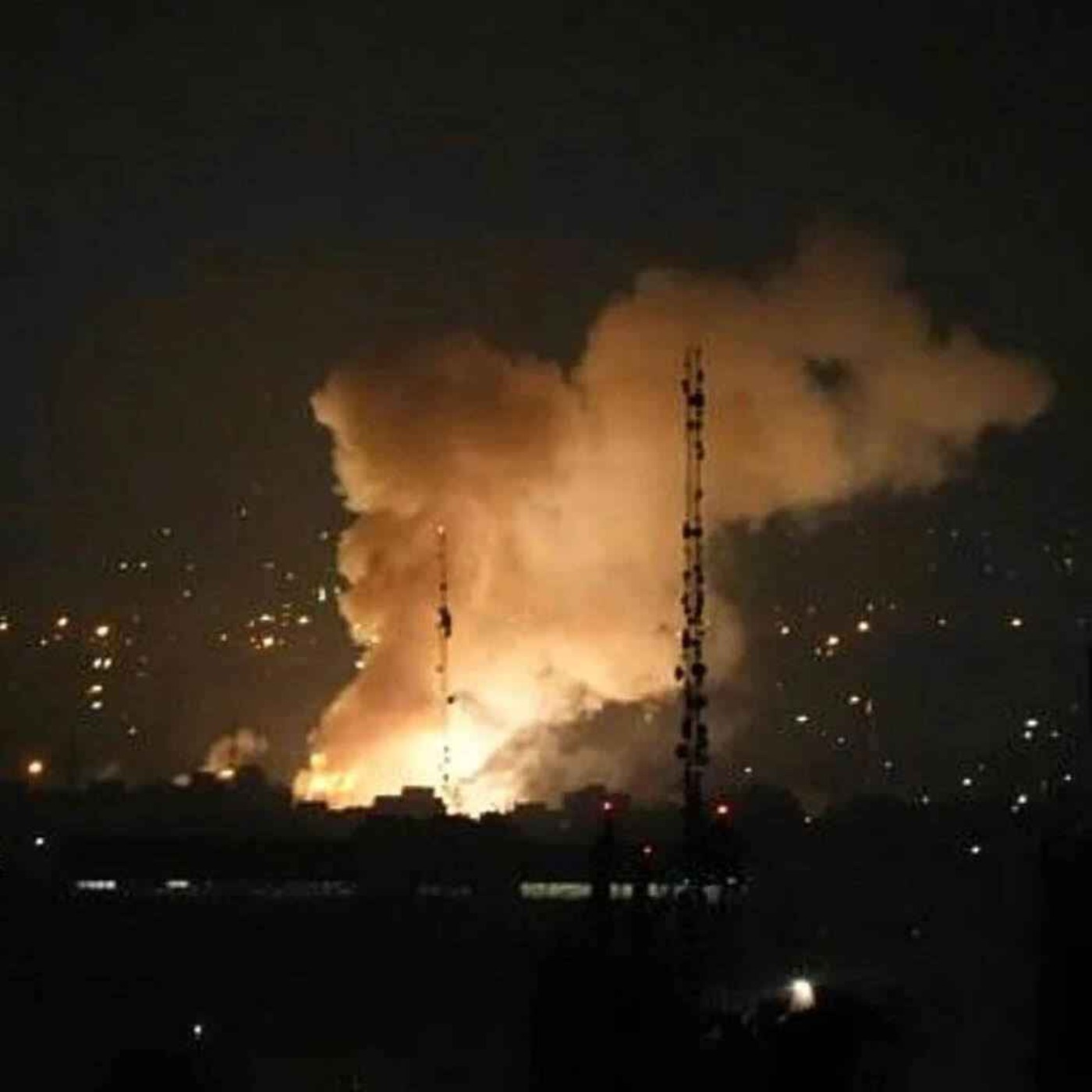
0:29But first, in the early hours of Friday morning, Israel launched an unprecedented attack on Iran's nuclear facilities. The strikes killed Hossein Salami, chief of Israel's Islamic Revolutionary Guards, a powerful branch of the country's armed forces, other senior military figures, plus several nuclear scientists. Here's Israeli Prime Minister Benjamin Nehnyahu. Moments ago, Israel launched Operation Rising Lion, a targeted military operation to roll back the Iranian threat to Israel's very survival. We struck at the heart of Iran's nuclear enrichment program. We struck at the heart of Iran's nuclear weaponization program.
1:12We targeted Iran's main enrichment facility in Natanz. We targeted Iran's leading nuclear scientists working on the Iranian bomb. We also struck at the heart of Iran's ballistic missile program. He said the attacks will continue for as many days as it takes to remove the threat. But Iran has long insisted that its nuclear activities are peaceful. It appears to be the most serious attack Iran has faced since the revolution in 1979, and the country has promised retaliation. Iran's foreign minister, Abbas Arachie, described the attack as a declaration of war. The Israeli military said Iran launched about 100 drones towards Israel on Friday morning, many of which were intercepted.
1:59And President Donald Trump said he was aware of Israel's plans beforehand. The UN Security Council will meet later today and a state of emergency has been declared in Israel. This is a fast-moving story and at the time of recording we're joined by The Standards Defence editor Robert Fox. Robert, what prompted this attack from Israel? I think it'd been building up in the past few days and past few weeks. And it was actually a report by the main nuclear monitoring authority under the UN, the IAEA, the International Atomic Energy Authority, which said more or less that Iran had been cheating, but cheating far more seriously than had been appreciated.
2:43and they'd been building a bomb quite clearly. Despite all the denials, they were in breach of arrangements for which they'd been sanctioned and that they were looking for sanctions to be taken off, but particularly under the Nuclear Non-Proliferation Treaty. And what the Israelis had worked out is that they were actually building bombs, either 15 or 9, according to various Israeli calculations, which they could use. And they were showing increasing willingness to use by the end of the year. That's why they decided to do it. And I think Netanyahu and his generals were fairly hard-lined with Trump, curiously.
3:20They said, whatever you say, boss, we're going to do it because the opportunity is never going to be better. The Iranian regime is weak now, due to various things, not least Israel's raids last year. And we've really got to do it before it goes beyond a point of no return. And there were signs that it was getting to that within in days, possibly weeks. Israeli Prime Minister Benjamin Netanyahu said the strikes were a targeted military operation to roll back the Iranian threat to Israel's very survival. What does he actually want? When Netanyahu said this is what had happened, and initially the first wave of 100 plus aircraft with missiles had gone in, in a five-phase attack, and subsequently we've learned that another hundred have gone in, which is an awful lot of airplanes to be used in one-way combat.
4:14He and his chief of staff, General Zamir, told the Israeli press that even this phase is likely to go on for three or four or even five days, because we've got to see what we've managed to do and what we've missed. And that relates, too, to something that, one, the IEA, the Atomic Energy Authority had discovered. And remember, Trump had been in discussions about getting a deal over nuclear and particularly sophisticated nuclear materials, the enrichment of uranium to weapons grade. And his man in the Middle East, that's his buddy and his personal envoy, who's been doing a lot of the work, Steve Whitcock, is due to go into talks again the sixth round at the weekend in Oman.
5:03And it's pretty clear that the Iranians have not been taking this seriously, because when the Americans put down a pretty reasonable proposal, you know, that you have to reduce the amount of enriched uranium you keep in country, you can send a lot of it out, which is what they have done before, but you must not enrich up to weapons grade. They've got to 60%. If it goes to 90 % refinement, that is for a weapon. And they're pretty sure that they're doing that anyway. The reply of Iran to the American offer was very surprising. It was facetious and it was almost churlish. It said, no, we're not going to be told to reduce the quality of our enrichment.
5:44And by the way, yeah, yeah, yeah, we've got a sophisticated, hitherto undisclosed hidden facility where we've got new centrifuges, we've got new machinery, which is doing this process even further. And it's almost, in childish terms, it was as if the Ayatollahs or their scientists were saying, yaboo to the world, not only to the Americans, but the Atomic Energy Authority and the group of five others, including the EU and Britain, that had been trying to persuade Iran to be reasonable about nuclear development and promise not to go for a nuclear weapon. And that went back to 2015, 2016. That deal, which Trump pulled out of in his first presidency, is due to expire anyway next year.
6:30And this, again, was another trigger point that, oh boy, they've got another facility that nobody knows about, or they say nobody knows about. Rafael Grasso, who's in charge of the Atomic Energy Authority, was pretty clear that they were concealing very sophisticated, very deep nuclear facilities. So that's how you get to the point where we are. The man who was clear in his vision and was absolutely determined to do it was Netanyahu. And Trump said, well, we're not in it for this time. And it's an Israeli operation. And so it was. But of course, all these operations do require American support.
7:06And it's pretty clear they've been getting real time intelligence on surveillance and targeting from American and allied means. Let's talk more about Donald Trump. He has urged Iran to make a deal over its nuclear program, saying in a post on his Truth Social platform that there is still time for the country to prevent further conflict with Israel. Are we seeing the limits of his influence and control as he's being dragged into this? There has been an understanding from the Americans that something really has to be done about Iran, because otherwise the war with the proxies, particularly the Houthis, but there's a lot more to it, which we would discuss about the proliferating, hostile activity of Iran, which is extremely concerning for Europeans, and particularly Britain.
7:55And that's why Trump realized he had to go on with this. But one thing you can say of Donald Trump, he doesn't like wars. And least of all, does he like the prospect of an open-ended or long war? And that's where you can see in the way his mind works, or those closest to him, that they're pretty fed up with Gaza, of course. They're pretty fed up with Ukraine, because it's meandering on and it's unpredictable. He's also very worried, more than has been generally advertised, about the potential threat a non-state state actor like the Houthis, the Houthi de facto regime in Sana 'a can do. It's a very real prospect that the regime in Tehran can close the Strait of Hormuz and sow it with mines.
8:43By the way, that will bring the Brits in probably pretty directly because I think they'll be asked to clear it. We're seeing a quite reluctant Trump in this. But nonetheless, he knows when the chips are down. He has to supply the stuff. And he has been supplying some very, very big weapons to Israel. So how could this affect Britain? Britain has a great deal of interest in Iran historically and indeed in Israel. Britain is deeply involved and deeply interested because it has been involved in an alliance with America in supporting the efforts both with Europe, but particularly with the American-led coalition in keeping the Straits of Bab al-Manda, but the neck of the Red Sea and the Red Sea and the Suez Canal open.
9:27The Brits are particularly good historically in the area at mine clearance. If the regime of the Ayatollahs of the Islamic Republic of Iran decides to close the Straits of humus, which puts a choke point on extraordinarily valuable hydrocarbon products, particularly liquid natural gas from Qatar, which is responsible for between a quarter and a third of the world's total exports of that material of LNG. I think Britain will be offering the good services of sea drones, that is, unmanned, unpersoned craft to clear the mines with which they've been experimenting very successfully with the Ukrainians in the North Black Sea, where it's been, on the whole, pretty darn successful and really upsets the Russians.
10:18Britain has an asset in the area, namely in the Cyprus bases, which is extremely vulnerable to the new sophisticated missiles of Iran. And by the way, this operation is not just to take out potential nuclear sites. It's actually to deal with this growing activity in drone and missile production, these new weapons, which obviously Iran has been working up and improving with Russia in their collaboration and cooperation over the Ukraine war. That's one side of it. The other side of it, they're very worried about subversive terrorists, grey zone war activity by subversive Iranian groups in Europe.
11:01So we're on our mettle. This is a security crisis, and the European allies and the Americans will be particularly keen that it's contained. The fear is it's a bit like the cancer surgery. You may get quite a lot, but you may not get entirely the primary growth, if I can put it like that. But what they've done within a matter of hours, places like Natanz, where they've just blown up, the Israelis, the reactor there, They're going to go round and round until they're pretty sure that they have neutralised for at least 10 years the Iranian bid to become a major nuclear power. Finally, Rob, it remains to be seen how Iran will respond to this.
11:46What are your thoughts? Iran will be desperate to show to its allies like the Houthis and Hamas that it's still in business. So quite quickly after the initial round of aerial attacks and, of course, commando operations by Mossad within Iran, they launched about 100 drones. But what is so interesting and why it is a regional war is that Israel, for reasons of technology, they chose to try and stop as many as they crossed into the territory of allies. And though they wouldn't care to be reminded of it over much at the moment, Jordan is an ally. And Jordan was a place for a lot of overflight. It's going to be very interesting to look at what's known as the BDA, the Battle Damage Assessment, as to what happened.
12:35I've no idea, for instance, as I'm speaking to you, whether Israel, through accident or design or enemy action, have lost any of their assets. As we record it, we're still in the early hours of this. and a lot will happen within the next 24, 36 hours. By the time we get to, say, Saturday night, it'll be clear whether we're in for a long war or not. Let's go to a break. Coming up in part two, some surprising insights into a criminal mind. We'll see you back here in just a moment.
13:19Welcome back. If you're looking for some escapism this weekend, perhaps you'll be drawn to a true crime novel or podcast. You could even listen to the standards, injustice, killer, privilege show about the brutal ketamine-fuelled killing of public schoolboy Alex Morgan that shocked the world. From notorious criminals to high-profile robberies and real-life horrors, according to the digital magazine and newspaper app Readly, 74 % of people choose to read true crime. Readly has launched a true crime retro series with The Standard, featuring some of the most well-known crimes such as Jack the Ripper, The Great Train Robbery, serial killer Fred West, House of Horrors, and The Pearl Robbery.
14:05To understand this fascination, Professor Donna Youngs joins us. She's a criminal investigative psychologist. Donna, this recent research by Readly shows that 74 % of us actually choose to read true crime. What do you make of all this? It's the longest read times. We've got an average of 44 minutes, people are reading the material. People are emotionally engaging with the material. They're sticking with it. It's not just a superficial browsing and initial interest. It's a real emotional engagement. One of the things it's about is actually dealing with people's fears about these kinds of crimes.
14:41We live in this increasingly civilised, increasingly organised society. And yet every so often a story breaks through. That's horrible. That frightens us. And so we need to find a way to deal with that. And one of the ways of taking control is by seeking out directly this material. There are different types of different styles of people who read the material. So we talk, for instance, in the reader research about psychological preppers. So these are people who are drawn to serial killer stories because they want to know everything possible about what these people do, their modus operandi, how they target their victims, all this kind of thing, as a way of protecting themselves against it happening to them.
15:24How have crime stories evolved through history? We can read the stories of the child of Dr. Crippen back in, I think, October 1910, I think it was. In more recent history, the infamous crimes of the 60s, the Great Train Robbery and the Cray Twins, all those kinds of crimes. And actually, although in some ways, some of the overt ways in which crimes are conducted have adjusted a little bit to keep up with times and technology and so forth. The basic human motivation, the basic human styles, the psychological styles of modus operandi that we identify in the research remains the same. Can we ever actually know what is truly behind a criminal mind?
16:04We have quite a good understanding of many criminals. The group of offenders that are really distinct are the ones that we would formally recognise as psychopaths because their style of thinking really is different from most people's thinking in that they will, any means, justifies the end. They really do have a much more instrumental focus. They're prepared to do anything in order to secure the goal that they are seeking. So those people are harder to understand as lay people. But in general, actually, most criminals, the narratives that we see driving why they carry out offences and how they carry out offences, these are actually exactly the same narratives that I could identify in your career motivations or your personal motivations.
16:53just in a much, obviously, a much more destructive variant of those narratives. But they're the same basic psychological format, the same basic motivations. They've just gone wrong, gone wrong somewhere along the lines. We have a number of different narrative styles that we talk about. So we talk about the hero. And these are criminals who are entirely egocentric. They're entirely focused on demonstrating, if you will, their prowess to the world. And obviously, this is a narrative that you see in business people as well, or you see in sports people as well. So there are equivalents. It's just the way in which the narrative is executed in the real world varies.
17:35And that's The Standard. For all the latest news, head to standard.co.uk. If you'd like to get in touch, please do drop us a line at podcasts at standard.co.uk. We'll be back here on Monday at 4pm. We'll see you then!
As Israel attacks Iran’s nuclear facilities, The Standard’s Defence Editor Robert Fox joins us to explain the latest developments in the Middle East.
And in part two, criminal investigative psychologist Professor Donna Youngs reveals why so many of us are drawn to true crime stories, as digital app Readly launches a true crime retro series with The Standard.
Hosted on Acast. See acast.com/privacy for more information.


