
 Ask ChatGPT


 The Standard
8 Jan 2026 · 17m · 8 chapters
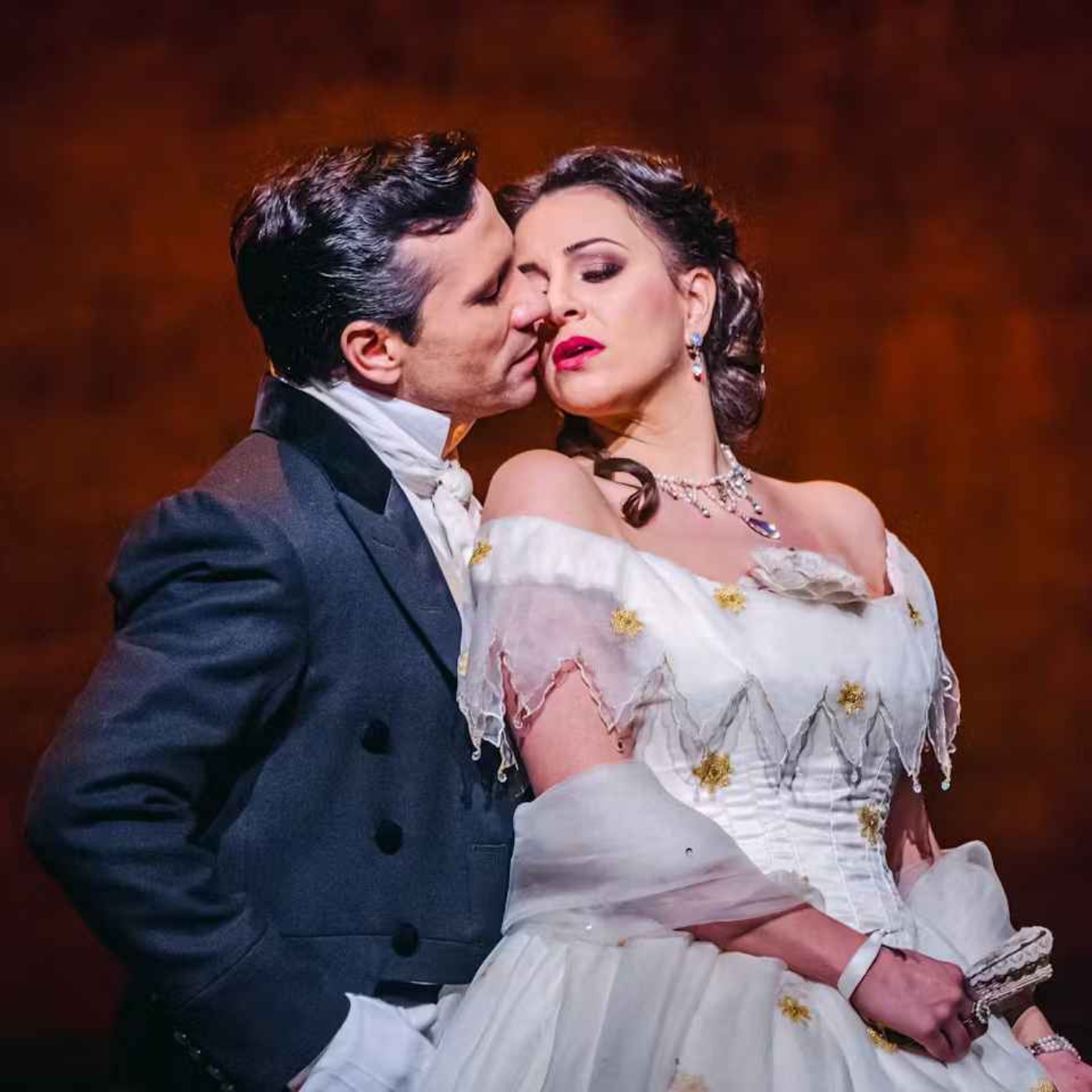
'It speaks straight to the heart': The Royal's Opera's Netia Jones on a misunderstood art form
The Standard podcast, hosted by Charlie Duffield, features discussions on current affairs, culture, politics, sports, and fashion, with insights from top journalists and celebrity guests. In this episode, the focus is on opera, particularly the opening of La Traviata, the most performed opera worldwide.
Written by AI. May contain mistakes.
Exploring opera's relevance, especially with La Traviata opening.
“But first, if you're keen to experience some new culture this year, then you can pick up a copy of this week's The Standard to read about some of our top picks for the year ahead.”
Discussing the origins of opera and its captivating qualities.
“So Nisha, opera is an art form that goes back years.”
Addressing common misconceptions and accessibility of opera.
“Well, I think that's why it's so amazing, because the whole point about opera is it's a completely collaborative art form.”
Advice on how to enjoy opera for the first time, including La Traviata.
“We often do performances that the actual piece was written 300, 200, 100 years ago.”
Insights into La Traviata's enduring popularity and its production details.
“Now, obviously today we have La Traviata opening in the theatre and it will also be broadcast live in cinemas on the 14th of January and with encore performances from the 18th of January.”
Exploring how technology like VR and AI are influencing opera.
“And apart from La Traviata, what are some of your other favourite operas?”
The discussion focuses on the complexities of AI and its implications for the art of opera.
“Are you a positive proponent of AI or more on the fence?”
Highlights of upcoming operatic works, including Britten's 'The Turn of the Screw' and an AI exploration festival.
“Now, we're obviously at the very start of a new year.”

Get the gist, explore an idea or ask about something said.
 Claude
On The Standard, what are the key points of this episode?
Searching your listeningAutomatic transcript. May contain errors.
0:01Hi, I'm Charlie Duffield, and welcome back to The Standard Podcast. If you're new here, hit follow and give us a rating. For all the latest news, head to standard.co.uk. Coming up later in the show, we're debunking opera as La Traviata opens today, which is the perfect show for first-timers.
0:45But first, if you're keen to experience some new culture this year, then you can pick up a copy of this week's The Standard to read about some of our top picks for the year ahead. Today, we're exploring and debunking perhaps one of the lesser-known art forms, which is opera, just in time for the opening of a timeless classic in the capital, La Traviata, by Giuseppe Verde, which tells the moving story of a woman in love that features one of opera's most famous melodies, a clip of which you heard just a few moments ago. The name La Traviata literally translates as those who have strayed from the path and is inspired by the life and death of the real-life Parisian courtesan Marie du Plessis.
1:34I was lucky enough to chat to Nisha Jones, the Associate Director of Opera at the Royal Opera, about this and much more. So Nisha, opera is an art form that goes back years. When and where did it originate? Opera is unlike every other art form because you can actually date when it started. It has like, you know, a point of departure. You can't really do that with painting or with poetry or with writing or with music in general. But opera started at 1600. It started in Italy, and it came out of this idea of the time, which was recreating antiquity, the storytelling methods of antiquity. So the idea of choruses and sung verses and really kind of telling a story through music.
2:21And that's how it all began. Okay, so do we have an exact date when it began? The theoretical date is 1600. That's when we think it is. We kind of usually date it around a composer called Jacopo Perry. But it was really a kind of moment in Italy when they were inventing this art form. And he was one of the leading voices at this time. That's so interesting. And can you take me back to your very first experience of opera? What was it that captivated you about the art form? Yeah, totally. And it's why I always keep banging on about schools being able to get access to go to operas because many kids will just think this is strange and not really love it.
3:04But some, I think, like me, will be really captivated. I first saw an opera when I was on a school outing and we went to an opera, which is really not a school's opera at all. But I just found the whole thing completely amazing. I just thought the mixture of music and visuals and drama and this huge orchestra and these incredible voices and the darkness of the auditorium and the kind of excitement of going into the theatre, the whole journey there. I really found the whole thing completely amazing. And the weirdest thing is that even after all these years, I still get that feeling sometimes. When I go into the theatre, it feels exciting and it feels like something exciting is about to happen.
3:49And so, yeah, I haven't really grown out of that. When I think of opera, I think obviously of the singing, but it sounds like there's much more to it than that. Well, I think that's why it's so amazing, because the whole point about opera is it's a completely collaborative art form. So many people have to come together to make the one thing. In fact, it's hundreds of people. And the idea of hundreds of people coming together to make one thing this one evening, and it all comes together when the curtain opens, is kind of thrilling. You've got costume makers and set builders and painters and musicians, and then you've got the whole kind of backstage team, and then you've got the performers.
4:31Even in any one opera, you might have 200 people actually in it, and then more than 50 people backstage supporting it, and then everybody else in the rest of the building. So I think that in and of itself is something that is kind of extraordinary. So what do you think are some of the biggest misconceptions about opera? I think a lot of people are quite scared of it, thinking that either it's really inaccessible, like it's really impenetrable. You have to be some kind of expert to be able to get anything out of it. And it is a bit different from, for example, going to the cinema or going to the theatre, because in a way, the more you put in, the more you get out.
5:10And so weirdly, we don't really do spoiler alerts. It's better if you know the story beforehand. So that's kind of odd to go to a storytelling medium, but it's kind of better that you know the ending. But it is true. Like if you have read up about the story, when you're watching an opera, somehow you get more involved with what's going on. So I think that part of it can feel a bit alien. But then the other part of it, I think, is that you have to be super musical or you have to have some kind of history of either being a musician or like a lot of prior knowledge of classical music. I don't think any of these things are true because I think the strangest thing about opera is it does something unlike anything else and it speaks kind of straight to the heart.
5:53I think that's why as well it's a bit timeless. We often do performances that the actual piece was written 300, 200, 100 years ago. We even do productions that may be 10 years or 20 years or 30 years old, but they still actually speak to you and they communicate really directly because they're doing it in a very different way. They're speaking to a different part of ourselves. There's something that we call threshold anxiety. It's the thing of, I don't want to cross that threshold. I don't want to go in that building. but I think once you're in the building it is very persuasive and it's very exciting.
6:30When you said about reading the story beforehand is that a tip you'd give someone perhaps who is trying opera for the first time? Is that the best way to enjoy it? I think it's a good tip I think it's really worth doing because often obviously they're not in English now we've got surtitles so you get to see all of the words but it's just easier if you have a sense of who's who before you start off. It's not impossible either way, but it's a good start and it makes you feel like you kind of know it a bit better, you know, before you go in. And then I think the other thing is opera is not just one thing.
7:03And I think that's really, really important because you'll know what you like. You know, if you like period drama, you might choose an opera that is a period production, something that's got a kind of extravagant costumes and a big elaborate set, or you might prefer something really modern, really cutting edge. And then you might choose to go to one of the new commissions or a modern story or something that's a little bit more up to date. So I think because it is an art form that can be so many things, it's worth really exploring. If you've genuinely never been to one before, it's worth kind of exploring, knowing yourself and thinking, yeah, I think that has got something that speaks to me that is going to be interesting to me and be my way in to something that maybe I haven't experienced before.
7:48That's great advice. Now, obviously today we have La Traviata opening in the theatre and it will also be broadcast live in cinemas on the 14th of January and with encore performances from the 18th of January. And interestingly, it was also the opera that Julia Roberts' character in the popular movie Pretty Woman goes to see. Here's a clip from that moment in the film. people's reactions to opera the first time they see it is very dramatic either love it or they hate it if they love it they will always love it if they don't they may learn to appreciate it but it will never become part of their soul
8:50So Nisha, tell us more about La Traviata. Yeah, so La Traviata is in fact the most performed opera in the world. At any given moment, there is a performance of it happening. And I've really wondered why this is, because there are some really brilliant operas, but this is the one that has really captured the imagination. The production at the Opera House is a classic. In every way, it's a classic. It's from 1994, but it really stands the test of time because it's very, very clear storytelling, very sumptuous production, really exciting sets and costumes and lots of movement. But it's also this incredible music.
9:32The music is incredibly written. So it's woven together like a tapestry. And you get very intimately involved in what is a kind of timeless and very tragic and touching story. This one is conducted by Antonella Manacorda, who really just imbues the whole thing with total theatricality. It's an amazing experience, actually. It's a very, very good one if you've never been to an opera before. There are two ways of thinking. One is that a really nice way to start operas with something quite classic, quite traditional. And then one is to go to something completely cutting edge. We've also just finished in the smaller theatre at the Opera House, in the Limbry Theatre, a show called Last Days, which was based around the story of Kurt Cobain.
10:18They're two very polar opposite kinds of production, but in a way they're both really quite good for somebody who might not feel that they've had a lot of experience with operas, or even if it's their very first one. I really, really recommend going to La Traviata as an experience of going to the opera house. It is, as I say, absolutely classic. The orchestra is amazing. The singing is amazing. Their sets, the costumes, the whole experience is like opera with a capital O and it's pretty ravishing. Let's go to an ad break. Coming up, how the world of opera is evolving with virtual reality and AI.
10:58We'll see you back here in just a moment.
11:05Welcome back. And apart from La Traviata, what are some of your other favourite operas? I have kind of been listening and thinking about opera for quite a while. And this first opera that I saw with my school was Peter Graham's by Benjamin Britten, which is a really dark tale of a murderous fisherman, like really not something for an eight-year-old. But I did think the whole thing was incredible. And I think it's because I had an immediate connection to that composer and that music. So Benjamin Britton is an English composer, and he's almost like a house composer at the Royal Opera House. There's quite often productions of his amazing operas.
11:46And Peter Grimes has been a very successful production by Deborah Warner quite recently, and that will come back, I think. So yeah, that's much more dramatic. It's more modern in kind of sound world, but it's really involving and it's absolutely incredible music. So they're very different kinds of experience, but they're both pretty amazing. I was also really interested to read that you directed the world's first virtual reality opera, which sounds like an amazing feat. Tell me more about that and how is technology used nowadays to attract new audiences or even evolve the art form? You know, opera has used technology since the very beginning, because the really early operas, the Baroque operas, they really used whatever technology they could get their hands on.
12:32And they had these extravagant, amazing performances. Things would come through the floor and down from the ceiling, and there'd be live flames and running water. And they really went to town with technology. And in a way, opera making has followed the developments in technology as they've happened. And so it's lighting in the theatre and then electricity and then film and projection and new technologies have arrived. Opera has kind of adopted them. And so yes, a couple of years ago, in fact, it was through COVID, we made an opera in VR. And it was one of the most amazing experiences that I've ever had, because it made you rethink what opera is and envisage it in a totally different way.
13:12And that is really exciting because it's an art form that can change with the times. And so in a way, although it's an ancient art form, it's also very futuristic. You can kind of imagine it in many different versions. The thing about being in a VR headset in an opera is you become like the protagonist in the opera, and then you can surround people with sound and with visuals. And it is kind of amazing. And I think those are the technologies that are going to get easier and easier to work with. And this idea of total immersion and that you are in it will become something that we'll really be able to explore a lot in opera making.
13:52I mean, you kind of hope that happens anyway when people are just sitting in the audience. You hope that they are going to get fully immersed. OK, so where do you stand on this issue? Are you a positive proponent of AI or more on the fence? If you take a very black and white view on something that is really complicated, I think you are going to maybe, I don't think that's the ideal standpoint. I think you have to look at this really complicated thing in quite a complicated way. And it needs deep thinking and it needs lots of voices. so I think the jury is out I think it's here and we have to grapple with it one way or the other and so I think the point about doing that from the point of view of opera which on the one hand is completely random and left field but because opera is this really collaborative and creative art form it's a really nice way of exploring something that is quite frightening I think that art can help us navigate our way through things that are very difficult and scary.
14:58And actually, opera, because it's not about making profits, and it's not about kind of making people unemployed, it can investigate something as difficult and as polemic as AI in quite a helpful way, I think. Now, we're obviously at the very start of a new year. So I wondered what you're looking forward to in the months ahead in operatic terms. There's some really exciting things coming up. I work a lot in the Limbury Theatre, which is the smaller theatre in the Opera House. We're about to do a Benjamin Britten, The Turn of the Screw, and it's going to be absolutely amazing. It's like a ghost story, but also it's very sinister.
15:36It's quite dark. But the production itself, the way that the team have conceived this production is absolutely stunning. It's really pushing us to the limits of what's possible technically in the theatre, and that's really exciting. And then after that, we're doing a festival, a four-day exploration of what AI might mean in opera. So that's going to be really, really interesting. Lots of people will have things to say. And the idea is that it's four days of looking at the good, the bad and the ugly and really without fear or favour, exploring what this new technology that is affecting us all might actually mean in the world of opera.
16:14And Nisha, it's been brilliant to have you on the show do you have any final remarks for listeners all i can say is give it a go it's a 300 year old art form but it's not going away and that's the standard for all the latest news head to standard.co.uk if you'd like to get in touch please do drop us a line at podcasts at standard.co.uk we'll be back here tomorrow morning we'll see you then
Is there anything better than a cultural escape as winter sets in?
Today we're debunking one of the lesser-known art forms - opera - as the timelessly classical La Traviata show opens in the capital, which is the most performed opera in the world.
We're joined by Netia Jones, the Associate Director of Opera at the Royal Opera, to discuss the origins of the art forum, how technology is changing it, tips for first-time opera attendees and much more.
And if you’re keen to experience some new culture this year, then read more about some of our top cultural picks for the year ahead.
Hosted on Acast. See acast.com/privacy for more information.


