
 Ask ChatGPT


 The Standard
26 Jan 2026 · 17m · 9 chapters
"It’s not a question of if, but when": Tom Tugendhat on Iran's protests
In this episode, former Security Minister Tom Tugendhat MP discusses the ongoing protests in Iran and the UK government's response to the crisis. The conversation highlights the extreme violence faced by Iranian citizens, the legitimacy crisis of the Iranian regime, and the need for the international community, particularly the UK, to provide support for a liberated Iran.
Written by AI. May contain mistakes.
Tom Tugendhat discusses the brutal protests in Iran and the UK's response.
“The reaction from the UK government and Britain as a whole has been arguably underwhelming.”
Exploration of the history behind the current protests in Iran and local motivations.
“They're blaming Western imperial powers in Israel, say, for getting involved in their politics.”
Discussing how communication blackouts affect protests and international awareness.
“You know, one of the most powerful things we can do is make sure people know what's going on, because even within the country, the communications are cut off, the Internet's off.”
Examining the geopolitical risks and the international community's attention to Iran.
“particularly when a country like Iran has been isolated in many ways for the last 46, 7 years.”
Analyzing the economic factors that could lead to regime change in Iran.
“Let's get straight back to the interview.”
Discussion on the Islamic Revolutionary Guard Corps and its implications for UK law.
“So what is waiting in the wings, though, for Iran?”
Exploring China's role in supporting the Iranian regime during the protests.
“So the Americans call terrorist states, we don't.”
Explore how Chinese technology facilitates repression in Iran.
“But I'm sure that that doesn't mean for a second that MI5 and the counter-terror police have let their guard down.”
Discuss the potential future of Iran as a free and culturally rich nation.
“And what would you like to see the future?”

Get the gist, explore an idea or ask about something said.
 Claude
On The Standard, what are the key points of this episode?
Searching your listeningAutomatic transcript. May contain errors.
0:07Iran is facing one of the most brutal waves of extreme violence in its recent history. So, should the UK be paying more attention? Hi, and welcome back to The Standard Podcast. I'm Tamara Kormornik. If you're new here, hit follow and give us a rating. For all the latest news, head to standard.co.uk. Coming up, Tom Tugendhat on Iran's protests.
0:42It's difficult to see past the bleak conditions faced by Iranian citizens. The reaction from the UK government and Britain as a whole has been arguably underwhelming. In this episode, the Standards' Chief Political Correspondent Rachel Burford pays a visit to former Security Minister Tom Tugendhat to speak about the Iranian leadership crisis, the West's muted reaction to the atrocities, and ways the UK government can support a liberated Iran. Tom, thanks for joining us. Nice to be with you. Thank you. We're in your office overlooking Big Ben and the River Thames, which is very lovely. We're here to talk about Iran.
1:20Obviously, you're a bit of an expert on Iran. In the last few weeks and days, we've seen these horrendous, brutal protests out there. The leadership there really cracking down on these protests as well. How do you think our government has played its response to these? Our response has been pretty silent. I mean, it's hard to know, but certainly thousands and possibly as many as 20 ,000 people have been killed in these protests. And the reason I say it's hard to know is because many people are not going to hospitals. If you go to hospital, you're likely to be dragged out by the police and murdered or at very least imprisoned.
1:59And a lot of the people who are imprisoned are submitted to extraordinary levels of sexual violence. and if they are killed the families are made to pay the bullet price as in the price for the bullet that killed them i mean it's absolutely horrific and yet from our side we've been pretty silent frankly i don't think that's acceptable you know the regime is clamping down extremely brutally but it's lost all legitimacy and so the question now is not if but when this regime falls that doesn't mean tomorrow it doesn't even mean next month it could be a year or longer. But it's quite clear that this regime will never have legitimacy again.
2:38The regime is not backing down, it seems, at the moment, though. The Supreme Leader's made some pretty harsh comments about the US, warning them not to get involved. They're blaming Western imperial powers in Israel, say, for getting involved in their politics. What do you make of those claims? I mean, we have got obviously history of intervening in Iran. But what do you make of those claims now? Well, you're absolutely right. And it's one of the reasons I don't think we should be military and having any military intervention is because, you know, our interventions have not helped. They didn't help in the 50s.
3:15And they certainly wouldn't help now. But the idea that these protests are anything other than locally led and locally bred is ridiculous. These protests emerge out of many years of uprisings. So they started really, I suppose, in 2009 with the Green Movement, grew in 17 and 19. And then, of course, in 2020 with the murder of Massa, which was a young woman who did nothing but merely want to live like a normal human being and not be forced under a veil. And she was murdered by this regime. So, you know, we've seen these protests growing. This is the latest iteration, but it's also the most dominant.
3:54So I think, you know, what we need to be seeing is we need to be seeing support for those protesters. And today, what it really means is doing what you're doing now, which is communicating, spreading the message. You know, one of the most powerful things we can do is make sure people know what's going on, because even within the country, the communications are cut off, the Internet's off. And so a lot of people don't know what's going on in separate towns and separate villages and so on. And so this is one way of helping people to know, because although the internet is cut off, actually satellite TV is getting through and some satellite broadcasts are getting through.
4:26Yeah, like you said, obviously the internet's been cut off there, which means there's less and less information coming through. And at the same time, there are these big world events, geopolitical events going on here. You know, you've got Donald Trump threatening to invade Greenland. Not invade Greenland now. But, you know, he's very changeable. Does what's going on in Iran kind of risk being not thought about as much, just sort of being, you know, that's going on over there, but we've got more important things going on in Europe and people sort of forget about it? I mean, I think that's always a risk, particularly when a country like Iran has been isolated in many ways for the last 46, 7 years.
5:08That is a risk. But I think, you know, there are many very courageous Iranian voices inside Iran who are risking everything. And there are some very impressive individuals outside. I'm thinking of Omid Jalili, who's obviously known to most people as a comedian, but happens to be of Iranian origin and has been extremely vocal, very courageous on it. And then there's individuals like Masih Ali Najad, who's an Iranian activist, an Iranian voice in New York, and has been unbelievably courageous. In fact, so much so that the Iranians tried to kill her a couple of years ago, sending a hitman to her home in New York.
5:45So, you know, this is absolutely essential that we keep that pressure on. It's worth saying, actually, given that we're a London service. This isn't just about Iran. This is about us. You know, when I was security minister, I spent more time than I would have liked on dealing with policing issues here in London because of hit squads sent by the Iranian state. Now, I'm delighted that our police officers and our intelligence services were absolutely fantastic and did a brilliant job in keeping everybody safe. but it did get extremely serious. And I would be surprised if that threat has gone away.
6:20I mean, yeah, and even for, you know, for the Met, in recent days, we've seen big clashes outside the Iranian embassy here, quite violent, a lot of people arrested. So yeah, it is something that affects us over here as well. And I guess people that are doing these protests, they want to make sure it stays in the news and that, you know, as other events sort of overtake it in some of them. It's very striking though, isn't it? that there's tens of thousands of people, well, possibly 20 ,000 people being killed in Iran. And there's almost silence on the streets. It really does contrast with some incidents only a few months, a few years ago.
6:58Yeah, of course, you're talking about Palestine and huge protests we saw there. And why do you think there is that difference? Well, it's a good question. You'd have to ask those who protested then and don't protest now. I guess it's because Jews aren't involved. Coming up, Rachel and Tom explore what regime change could mean for Iran, the question of prescribing the IRGC as a terrorist organisation, and how the UK might support the country's next phase of leadership.
7:36Welcome back. Let's get straight back to the interview.
7:43There have been other iterations of these protests, but you think these ones are different? These ones, you know, may actually lead to the proper regime change? It's hard to say, isn't it? I mean, over the last, as I say, since 2009, these protests have grown and grown. So it's nearly 20 years. And it's getting to the point where it's very hard to see how it's sustainable. You know, the IRGC, the Islamic Revolutionary Guard Corps, who are the sort of the stormtroopers of the regime, have grown unbelievably wealthy. They own, depending on who you ask, anywhere between 20 and 50 percent of the Iranian economy.
8:18So, you know, road companies and concrete factories and everything that you can care to mention. And they're incredibly corrupt. So there's a few of them who are very rich. We now know that younger members of the IRGC are extremely angry with the older members. And you can see it, by the way, the Iranian social media. Well, you could see it. Forgive me. Of course, you can't at the moment. But you could see it in various different postings on Iranian social media that that split is there. And you could see it as well between the security forces, Army, Navy, Air Force, and the IRGC's Army, Navy, Air Force.
8:50They run an entirely separate unit. You know, one is very well paid and the other one is paid a pittance. And of course, with the economic collapse that we've seen, and I think I'm right in saying that the Iranian real was about 70, 80 to the dollar in 1979 and is now 1.45 million to the dollar. You know, we're seeing a complete collapse of the economy. So I think this has just grown over the years and the level of oppression has got worse and worse and worse. And women who are being brutalized on a daily basis and young men who just want freedom just won't take it anymore. So what is waiting in the wings, though, for Iran?
9:30If there is regime change, what takes over and will it be any better? Well, it's very hard to say and it's really hard to be firm on that. I mean, it's quite clear that the Shah's son, the crown prince, enjoys at least some support. You hear his name cried at various protests. But what's hard to say is, is that because he's the principal opponent of the regime and so a focus point? Or is that because he enjoys actual support? I can't answer that question. Only people on the ground in Iran can. But that's one of the reasons why the work that we should be doing now alongside partners in the region and a few others around the world is making sure we're ready to support those elements that could form a stable government afterwards.
10:14Because the danger is otherwise we fall into civil war, we fall into some level of greater violence. And this is an incredibly important country, apart from anything, It's an incredibly beautiful place with some amazing people. But it's also an incredibly important country because many people have fought over it over the years, over the centuries, because of its strategic position and because of its resources. And today it could, if it were able to, pump something like six, seven, eight million barrels of oil a day. Now, that would make a huge difference to the economy. What exactly would you like to see our government doing then at this point?
10:50I mean, like you say, you know, we can't get involved militarily. What kind of things would you like to do? We shouldn't get involved military and we shouldn't be involved in any of the elements of the protest. And I don't believe that we are or we would be. But what we should be doing is working with countries that have a real interest in the stability of the region. That's, of course, the Gulf state countries, those around the Persian Gulf, all the way from Iraq down to the United Arab Emirates and Oman. And we should be talking to others, including the United States, France, Germany, who were involved in the so-called JCPOA, the Joint Comprehensive Plan of Action, which was the deal that President Obama struck, handed over so much money to the Iranians that they then used to murder hundreds of thousands of Syrians.
11:37you know we need to make sure that we're ready for whatever comes next because the alternative as I say could be chaos or it could be some new form of brutality. There's been a lot of talk about prescribing the Islamic Revolutionary Guard. Yes I do and I recommended it before I was in government while I was in government and I still recommend it now. I must be honest the difference between prescription today and prescription in 2022 is less because while I was security minister, I brought in the National Security Act, which gives the British government the power to punish anyone who has any connection with foreign intelligence services.
12:14And of course, the IRGC is a foreign intelligence service. And so the difference between that and prescription is actually very slight. I happen to believe that the difference is enough and the symbolism is enough, that prescription would still be a useful tool. But I understand that the government keeps being resistant on it. Do you want to know why? Yeah, I do. Why are they dragging their feet? So the reason is, because under UK law, the way that we've designed the law over many years is that governments can't be terrorists. So the Americans call terrorist states, we don't. So governments can commit war crimes, only non-state actors can be terror groups.
12:54Now, you may say it's a distinction without a difference, and I take the point, but it is an important distinction. And it means that you can't use terror legislation against a state body. So although they are in many ways similar, Hezbollah is not part of the Lebanese state. It may be a political party, it may have occasionally have held power in government, but it's not part of the state. The IRGC is part of the Iranian constitutional state. So that's why we don't prescribe it. Now, I still think that symbolism would be important. I want to talk a bit more about London. You talked about when you were security minister, You know, you had these death squads coming over.
13:31Well, it was mostly criminals from other jurisdictions who were coming over, who were doing, you know, who were paid a few thousand dollars very often to come and commit criminal acts, often aggression or attempted espionage or intimidation against individuals here in the UK. And I have to say I pay huge tribute to MI5 and the police for the amazing work they did. And do you think there's more risk of that happening now while these protests are going on? I don't know. I suspect right now the IRGC are rather occupied at home. But I'm sure that that doesn't mean for a second that MI5 and the counter-terror police have let their guard down.
14:11You mentioned the US, but has China had a role in these protests? And is China thinking about doing anything in Iran? Is that something we should be worried about? Well, China already has a role in Iran. These protests have been repressed largely with Chinese technology, the cameras that you see on Iranian streets, the video surveillance tools, the ability to catch and then murder individuals is all enabled by Chinese technology. Huawei and, you know, Hikvision and all those other companies like them are connected to the Chinese regime in terms of repression at home and then exported to countries like Iran to enable repression and murder abroad.
14:51Now, for China, this is actually relatively important because China buys quite a lot of Persian, what used to be called Persian or Iranian oil at a discount, Persian Gulf oil. And they do that because it's sanctioned so they can buy it cheap. And that smuggling, that sanction busting is hugely, well, it's certainly beneficial to the Chinese economy. And that's it. You sort of answered this already, but I just want to, you know, what does the future hold for Iran? And what would you like to see the future? Well, I mean, I think the future that Iran should have is to be a free country in the region, building off the most extraordinary past and playing its part in the world.
15:35And you just have to see what Iranians do in free countries in the United Kingdom, in France, in the United States and Canada to see that the Iranian diaspora has been enormously enriching in various different ways, whether it's art, science, music. architecture, you name it, there are unbelievably impressive Iranians playing their part around the world. The tragedy is they're not doing so at home. And so what I'd like to see is Iran as a free country in the region standing on its own two feet with, you know, able to manage its own resources from water and energy and whatever, and being that place that it's always been traditionally, which is a home of culture and science and ideas.
16:18And, you know, if these protests do, you know, do lead to regime change, does London become a sort of safer place for Iranians living here? Well, let's just see what happens before we start predicting the future.
16:37And that's The Standard. For all the latest news, head to standard.co.uk. If you'd like to get in touch, email us at podcasts at standard.co.uk. We'll be back here tomorrow morning. See you then.
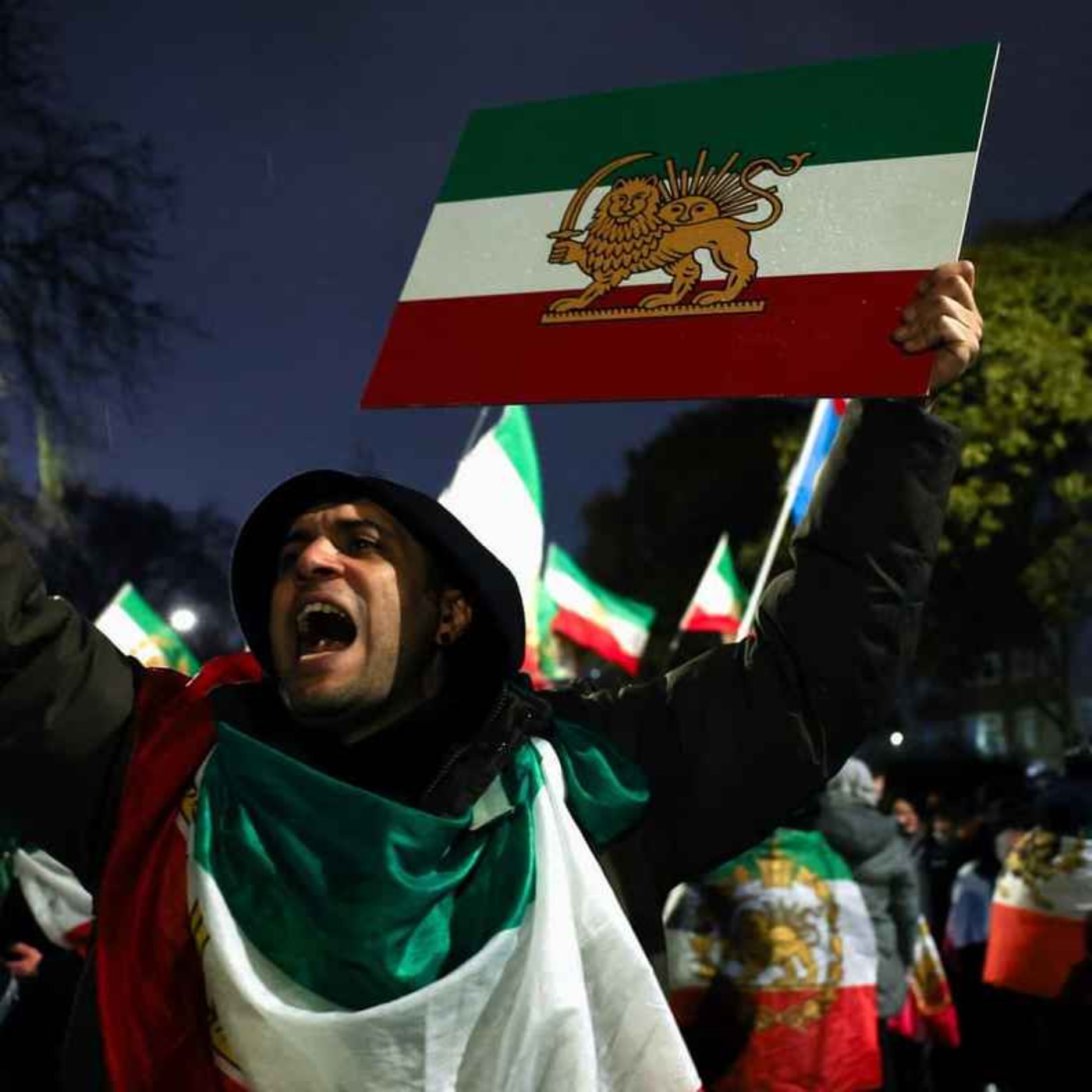
Iran is facing one of the most brutal waves of extreme violence in its recent history. Beyond protests outside the Iranian embassy in London, the reaction from the UK government, and Britain as a whole, has been subdued.
In this episode, The Standard’s chief political correspondent Rachael Burford speaks to former security minister Tom Tugendhat MP about the Iranian leadership crisis, the West’s muted reaction to the atrocities, and ways the UK government can support a liberated Iran.
Hosted on Acast. See acast.com/privacy for more information.


