
 Ask ChatGPT



The Standard podcast brings together top news insiders who discuss significant topics in politics, culture, sport, and more. This episode highlights a reset deal between the UK and EU, featuring insights from political correspondents and business editors.
Written by AI. May contain mistakes.

Get the gist, explore an idea or ask about something said.
 Claude
On The Standard, what are the key points of this episode?
Searching your listeningAutomatic transcript. May contain errors.
0:05Hi, I'm Charlie Duffield and welcome back to The Standard Podcast Podcast. If you're new here, hit follow and give us a rating. For the latest news, head to standard.co.uk. Coming up later in the show, the London landmark undergoing a facelift.
0:34But first, you might have seen headlines around Britain's reset deal with the European Union. And there's a lot to unpack. Prime Minister Keir Starmer claims the deal is a win-win for both sides and that the agreement will boost Britain's economy by£9 billion by 2040. Britain is back on the world stage, working with our partners, doing deals that will grow our economy and putting more money in the pockets of working people. Today we have struck this landmark deal with the EU, a new partnership between an independent Britain and our allies in Europe. This is the first UK-EU summit. It marks a new era in our relationship.
1:25And this deal is a win-win. And European Commission President Ursula von der Leyen said the deal was a historic moment. The London Standards Chief Political Correspondent Rachel Burford joins us now. Rachel, this deal was finalised yesterday afternoon. What measures did Keir Starmer set out? Keir Starmer has agreed what he's calling a reset deal with the European Union. There's a lot of elements to it. So a big part of the negotiations focused on defence and security. The British firms will gain access to at least a part of£125 billion EU defence fund. It's not clear how much the UK will pay into that fund just yet, but it said it will help Europe as a whole, including Britain, strengthen its defences against the threat from Vladimir Putin's Russia and cement Britain and France as the continent's two major military powers.
2:23There's certain deals that British citizens will perhaps notice more. Things like British travellers will get to use the E-gates at European airports. That's something that has been one of the most visible problems with Brexit. You know, these big queues you see as British citizens have to go through the non-EU passport gates. That should come in. There's certain things that owners of cats and dogs in the UK will find it easier to take their animals to the continent because they'll be able to get pet passports rather than these animal health certificates for every single trip. There'll be easing of trade rules to allow more UK food exports to the continent.
3:00And there's going to be a UK and EU mobility scheme for younger Britons, which will allow them to sort of get visas to work for time-limited periods in other European countries. That's all been sort of trailed and, you know, leaked up by the government. What aspects of the deal have proved controversial? One of the major points of contention was on fisheries and fishing rights. This has been something that's been seized upon by opposition parties. So there's particular anger over granting EU trawlers the right to fish in UK waters for 12 years. When Stammer was going into these negotiations, it was reported that he wanted four years, but obviously that's three times the amount that has been agreed.
3:43At the time of recording, the Prime Minister is about to face a bit of a Commons clash with opposition leaders, notably Nigel Farage and Kemi Badenok. They've branded this deal an abject surrender. Will it help UK trade and our economy? the government is obviously picking up the deal and claims that you know this is a huge win for britain after brexit when we look at the numbers the government says the deal will be worth 8.9 billion pounds to the uk by 2040 now that's roughly equivalent to 0.3 percent of gdp which is you know not to be sniffed out at all but when you look at the government's own independent forecasters they say that it's four percent of gdp that's you know been foregone as as a result of Brexit, it's a very small amount of the actual money we may have lost as a result of Brexit.
4:33Kirsten was really sort of hailed this mood change with the bloc. He said, we're not going to litigate old arguments. We're going to go forward in the spirit of what we do together. We do better. You know, he was expecting people like Nigel Farage and Kenny Badenoch to come out against this deal. But there are certain parts of it that polling suggests that the British public do support, things like a freedom of movement scheme for people to go and work more easily. And also businesses are majorly supporting this idea that it will be easier to trade with our European neighbours. That was a big problem with Brexit, all the red tape that was suddenly put in place when people were trying to export to countries on the continent.
5:15And that, it is hoped, this deal will make that much better, much easier, much smoother. the thing that the you know opposition leaders are going to go up majorly is this major concession over eu trawlers getting access to fish in uk waters that was a big point of contention during the original brexit negotiations all those years back and this is you know you know they're accusing kirstama of selling out the fishing industry and that's a claim he totally rejects stressing i'll be able to export more to the eu and that will be a much smoother process so obviously we've got you know quite a few years before the next election so we'll have to see how these plans actually you know come to fruition and do work in practice.
5:57Finally Chancellor Rachel Reeves said the UK government is already closing in on another trade deal. Tell us more about that. The Chancellor this morning has said that you know the UK is closing in on this pact with six Gulf nations they include Qatar and Saudi Arabia and that'll be the next major deal that the British government does. You know, she is suggesting that economic growth will be strengthened through these recent trade deals with the United States, the EU and India, which have all happened recently. So this is the next big one that the Chancellor is eyeing up. Let's go to a break. Coming up in part two, find out which much-loved architectural icon is being spruced up.
6:38We'll see you back here in just a moment.
6:55Welcome back. It's big, bold and brutalist, but now London's iconic Barbican Centre is set to undergo a makeover. The Grade 2 listed architectural icon was built on London's biggest post-war bombsite, and at its opening in 1982, Queen Elizabeth II called it one of the wonders of the modern world. Nowadays, the building is one of the UK's top 20 cultural attractions, and last year alone attracted 1.54 million visitors. Joining me is the London Standards business editor, Jonathan Prynne. Jonathan, new CGI images have been released which give us a glimpse of the renovation plans. What new features have been unveiled?
7:47The Barbican Arts Centre is very much the arts complex rather than the residential apartment blocks. But the Arts Centre revealed these new images of what will be quite an ambitious refurbishment and renovation, restoration really of some of their key spaces, including the absolutely spectacular conservatory that is very, very hard to access at the moment and is in a very run-down state. but also the foyers, the main foyers in the Barbican complex itself, were always intended to be very much part of the public spaces alongside the actual performance spaces, the spaces that people would mix and mingle and talk and there'd be performances actually in the foyers as well.
8:34It doesn't quite work at the moment. The foyers are rather dark and people don't use them in the way that it was hoped for in the early days. Also the lakeside as well, the areas around the Central Lake, they're all a bit run down. And it's those areas in particular that we've seen these new CGI, as you mentioned, where they hope to really make a difference. What is this restoration aiming to achieve? It's coming up to the 50th anniversary of the Barbican Centre. We're at 43 years old, rather, at the moment, opened in 1982, where the Queen, And I think they're just looking ahead and thinking when they do come to celebrate the great landmark of 50 years, they want to have something that they can show off and be proud of.
9:18And at the moment, it is looking a bit tired and run down. It is in need of a bit of love. So they've drawn up these plans, which are now going through consultation process, which seems to be meeting with approval from the people that they've surveyed. So that's kind of the timeline, really. It's all building up to 2032 when it hits 50. And who was involved in the design process for these new ambitious plans? So the main architects are Allies and Morrison, working with a design studio called the Sif Khan Studio. A firm of landscapers involved as well, Harris Bug Studio, who are very successful landscapers involved at the Chelsea Flower Show.
10:00So they're taking control of the recreating and improving the conservatory, which is a very spectacular space. So there's a lot of really top firms involved. How do Londoners feel about the renovation? City of London Corporation have already committed£191 million to help fund the works, but they need another£50 or£60 million, I think, to completely do it. So there'll be a big fundraising drive being planned quite soon. As part of their consultation, they've done surveying of the public and so on, and they say that 90 % of the respondents have expressed sort of positive feedback to what they've proposed.
10:40So I think most people seem to be in favour of it. In these consultations, you always try and sort of massage your questions so that you end up with a favourable response. But, you know, the numbers are what they are. 90 % of people they've asked say they like it. I think Londoners who use the Barbican will enjoy what they're proposing, because at the moment it does feel, as I said, there are areas that are not quite as good as they should be, and those foyers are amongst them. They're a little bit dark and gloomy. So, yeah, hopefully when the wraps come off in a few years' time, it's going to be renovated and an exciting new look.
11:22And that's The Standard. For all the latest news, head to standard.co.uk and please do drop us a line at podcasts at standard.co.uk. We'll see you back here tomorrow at 4pm. See you then.
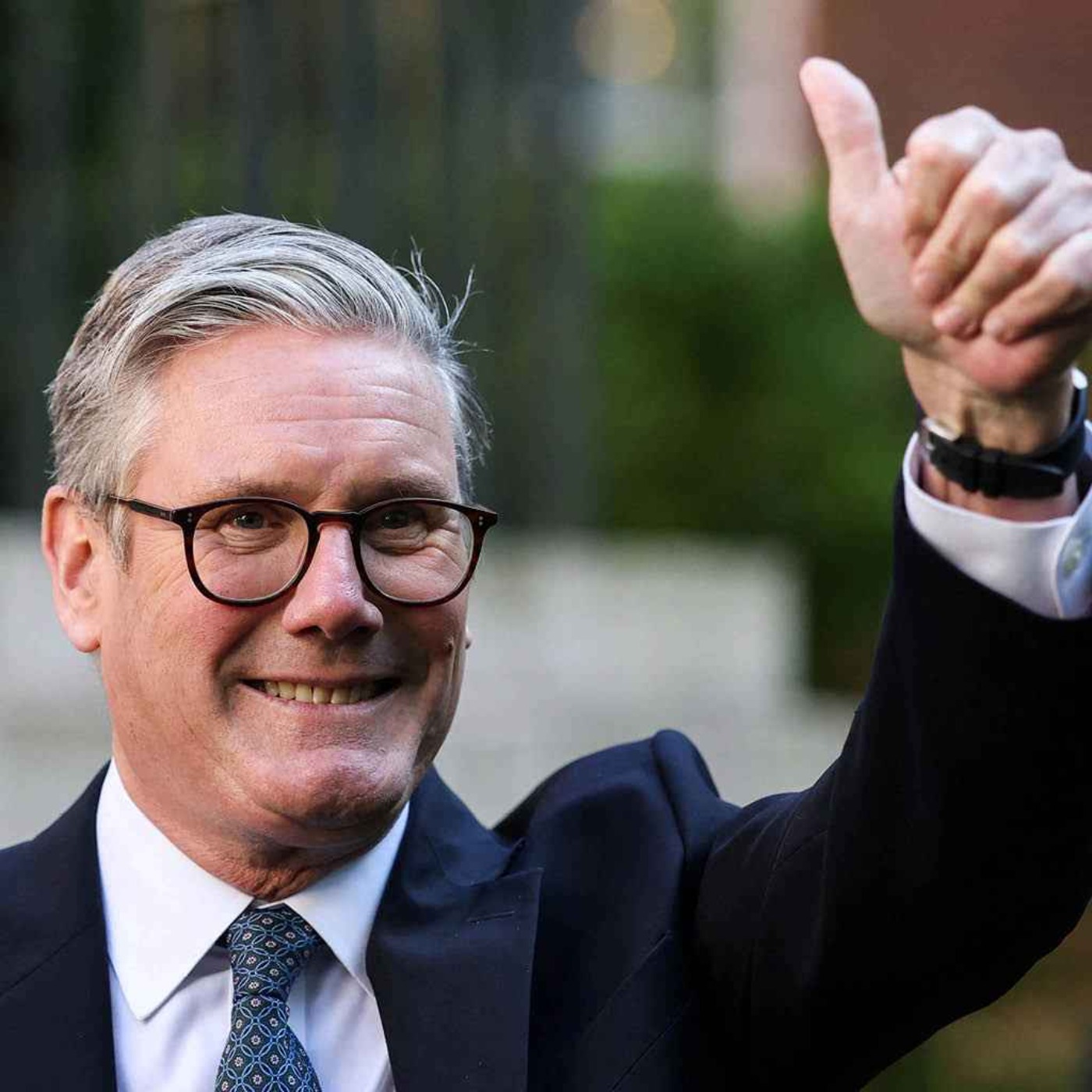
Keir Starmer claims Britain is back on the world stage after securing a new deal between Britain and the EU - but opposition leaders say he has surrendered on fishing rights.
Chief political correspondent Rachael Burford has the latest.
And in part two, The London Standard’s business editor Jonathan Pyrnn reveals details of the Barbican Centre’s ambitious renovation.
Hosted on Acast. See acast.com/privacy for more information.


