
 Ask ChatGPT



Description: In this episode, the Prime Minister announces plans to abolish NHS England in efforts to cut bureaucracy and improve patient care. The episode includes discussions on the implications of this decision and a look at Mayor Sadiq Khan's initiative to clean up London's rivers, making them swimmable by 2034.
Written by AI. May contain mistakes.

Get the gist, explore an idea or ask about something said.
 Claude
On The Standard, what are the key points of this episode?
Searching your listeningAutomatic transcript. May contain errors.
0:03Hi, it's Helen Awadia and welcome back to The Standard Podcast. Coming up, can the Mayor of London make good on his re-election pledge to clean up the capital's rivers and make waterways swimmable? The aim of the plan is to create rivers that Londoners can enjoy both in terms of walking and swimming. And he wants to achieve that by 2034. So he's got nine years left. And today he was bringing together different people from business, charities, Hemswater, the London Wildlife Trust, to see how that can be made a reality. We'll be joined by the London Standards reporter Noah Vickers after his walk through Walthamstow wetlands with Sadiq Khan.
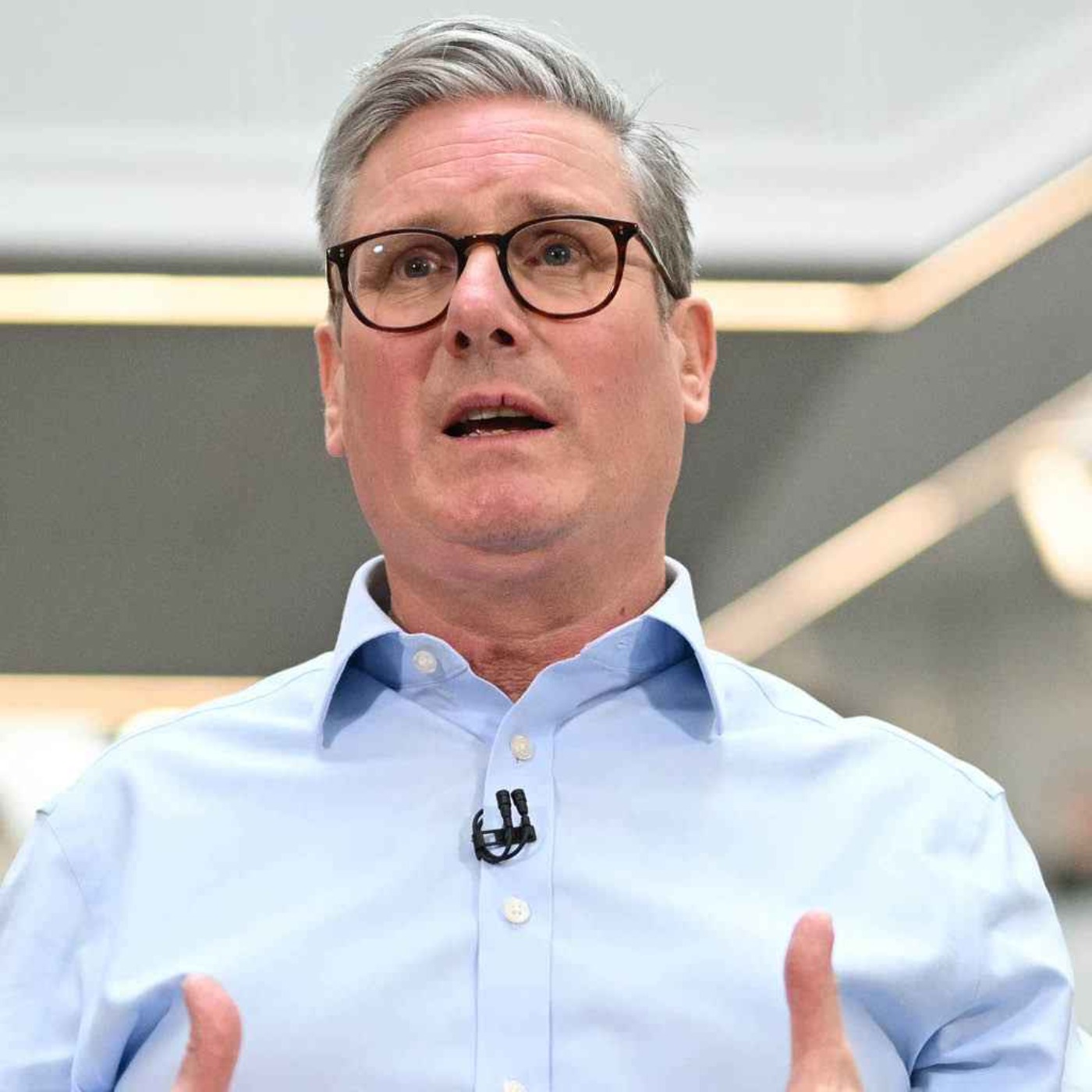
0:47But first today, the Prime Minister has announced that NHS England will be abolished to cut bureaucracy and make management of the health service more democratic. Sir Keir Starmas said decisions about billions of pounds of taxpayer money should not be taken by the arm's length body, as he promised sweeping reforms, which the government says will deliver better care for patients. NHS England is the body which leads the National Health Service here in England, originally established in 2013 by former Tory Health Secretary Andrew Lansley, to give the NHS greater independence and autonomy, intending for to operate at arm's length from the government.
1:29It employs about 13 ,000 people and is responsible for delivering high-quality care, supporting staff and ensuring value for money. But scrapping it, says Starmer, will put the NHS back at the heart of government where it belongs. The plans for NHS England were included in a wider speech delivered in Hull, where Sir Keir set out a plan to reshape an over-cautious and flabby Britain. This included an overhaul to the civil service, changing the role of regulators and setting out proposals to recruit tech apprentices to boost the take-up of AI on Whitehall. Well, here to talk us through it all is the London Standards Chief Political Correspondent, Rachel Burford.
2:13Hi, Rachel. Thank you for joining us. Hello. Thanks for having me. So, Sir Keir Starmer has announced that NHS England will be abolished. How big of a change will this be? Well, if you believe the government, it won't change much, unless, of course, you're one of the 15 ,300 people who work for NHS England, in which case your situation might be changing quite a bit. So essentially, the government wants to half the workforce there, and they'll be absorbed into the Department of Health and Social Care, which is run by the Health Secretary, Wes Streeting. You know, they're arguing that NHS England is the world's largest quango.
2:50It was set up in 2013 to give the NHS greater independence and autonomy from the government. But it's funded by taxpayers, but it's not directly controlled by central government. It's sort of got a wide range of regulatory powers. And it works with the government to agree things like funding priorities for the NHS and overseas services being delivered safely, etc. But the Prime Minister this morning has argued that there's a lot of duplication going on. And essentially people working in NHS England and for the Department of Health and Social Care are essentially working on the same things. They've all got strategy teams, they've all got communication teams, and they're both sort of doing the same things day to day.
3:31And he said abolishing NHS England will essentially bring the NHS back into democratic control. Wes treating the health secretary speaking after Keir Starmer's speech, told the Commons that basically when money is so tight, we can't justify such complex bureaucracy in our health system. And I think what they want to do is, you know, this was set up so that the NHS had greater independence. But essentially what it's also done is create lots of bureaucracy and there are no clear lines of accountability when things do go wrong. Well, the Prime Minister says that this move will shift money to frontline workers.
4:12In what way is that expected to happen? Well, so obviously if you half your workforce, there is expected to be quite big savings there. But obviously this is the government, so it won't happen overnight. In fact, it's going to take, they think, about two years for NHS England to fully be brought into the control and merge with the Department of Health. The health secretary says this will generate£100 million of savings and the government will then plough those into frontline services instead and use them to bring down waiting times, which have gone up so much in recent years. And that is a big priority for this government is to bring those waiting times down.
4:51Well, tell us, how have the other parties reacted to the announcement? Well, it's interesting. So the Tories and Liberal Democrats, well, despite being the parties who actually set up NHS England during the coalition years, have tentatively welcomed it being abolished. Lib Dem leader Ed Davies said there's no doubt big changes are needed to fix the NHS. But he's also argued that you won't fix the NHS until you fix social care. And that's going to need really bold action to fix that. Jeremy Hunt, who was once health secretary during a previous iteration of the Conservative government, he's also praised the boldness of the plan to abolish NHS England.
5:32But he's warned you can't just replace bureaucratic centralisation with political centralisation. So it has to be done properly and properly streamlined for it to work. Okay, well, let's look at what else the Prime Minister talked about during this speech in Hull. Sir Keir sets out proposals to recruit tech apprentices to boost the take-up of AI. But are there concerns about the use of AI in government? Yeah, I mean, there will always be concerns about AI government. I mean, you've got to remember the NHS is this massive juggernaut. It employs thousands and thousands of people across, you know, lots of different departments.
6:10And they're doing lots of different things. The Prime Minister said he wanted 2 ,000 tech apprentices to boost the take-up of AI across Whitehall. And he said that no one should be spending time on tasks that AI can do much more quickly. And they also want to employ more highly skilled people with AI capabilities. However, there are a few concerns around this. Firstly, that it'll mean some people that are already working in the civil service, particularly older people perhaps, or in those sort of administrative jobs, will lose their jobs. And secondly, with things like police forces, when there was this huge rise in online crime and online fraud, they employed AI experts and online experts to come in and train them up to fight these new crimes, new problems.
6:59And then the private sector comes along, a big bank comes along and says, oh, these people have got great training. We'll quadruple your salary, come over to us. And they got poached very quickly after being trained using taxpayer money. So there are lots of concerns about this. And obviously unions, I think the government may have a little bit of a fight on its hand facing unions who will obviously want to look after their employees and do not want to see people being made redundant and their jobs replaced by computers. Well, finally, this announcement about NHS England is a continued criticism of regulation in the UK from the government.
7:37Why have ministers seem to grow increasingly frustrated with the role of regulators? Yeah, so we're over six months into this government now, and there has been a lot of criticism of regulators and certain civil service bodies, you know, not just with things like the NHS, as we've seen today, but also they want to build more homes and they have begun reforming the planning system and talking about the bodies that oversee that and how they perhaps block certain things, which the government sees as necessary for growth. The civil service is this big juggernaut. and, you know, it's got all these people working for it.
8:12I think unions have come out today and said it's wrong to just come out and blame the civil service for everything that's going wrong with the country and blocking all these things, when actually all they do is implement the orders of politicians.
8:30Let's go to the ads. In part two, we'll be joined by local democracy reporter Noah Vickers, who met with the Mayor of London this morning as he announced new funding to clean up the capital's waterways. Will we really be able to swim in London's rivers? We'll see you back here in just a moment.
8:52Welcome back. Last year, Sadiq Khan won a historic third term as Mayor of London. One pledge in his re-election manifesto was to dive into action and make London's waterways swimmable by cleaning up the capital's rivers, canals and water bodies. Today, the London Standard's local democracy reporter Noah Vickers was in East London at the Walthamstow wetlands alongside the mayor to witness a roundtable discussion on river health. At the roundtable was government, businesses, charities, campaigners and community groups. Before we catch up with Noah, let's hear what the mayor of London had to say.
9:30Often we're told things can't be done. I remember being told nine years ago we could clean up the air. When I see and read stories about stories being discharged, rather from the roads into the drains and then to the rivers and streams, when I hear stories about the number of species in the River Thames, whether it's fish or birds that rely upon habitat in the Thames, being reduced over the decades, I think it's an issue of social justice and environmental justice. So what you've got today is a coming together of all the key individuals and groups. We'll be working towards a clean and healthy waterways plan.
10:05But also we've had today announcements of significant funds, not just from City Hall and TfL, from Thames Water and London Wildlife Task Force, which will begin the process of cleaning up the river and waters in London. The Mayor of London there. Well, let's find out a bit more. And joining me now is local democracy reporter Noah Vickers. Hi, Noah. How did it go today? where were you and who did you meet with? Hi, I'm at the Walthamstow Wetlands where Sadiq Khan, the mayor of London, has been unveiling the latest stage in his plan to create swimable rivers across the capital. This was a manifesto promise he made in his election last year.
10:42The aim of the plan is to create rivers that Londoners can enjoy both in terms of walking and swimming and he wants to achieve that by 2034. So he's got nine years left And today he was bringing together different people from business, charities, Thames Water, the London Wildlife Trust to see how that can be made a reality. So this plan for London's waterways, does it go beyond just the Thames? Absolutely. And indeed, there was a warning pretty recently from the Port of London Authority that the mayor mustn't be seen to encourage people to swim in the Thames. because regardless of how clean you make the Thames, it's still not safe in terms of tides that can really quickly overpower, you know, even quite strong swimmers.
11:23The Thames, you're only actually currently allowed to swim in it between Putney and Teddington, although even there it's not encouraged. West of Teddington, you absolutely can swim. Again, it's not going to be pristine water quality, but that's where it stops being tidal at the very least, so it becomes safe. But the plan is absolutely looking at waterways beyond the Thames. It's looking at rivers like the Roding and different chalk streams, canals, all sorts of waterways and seeing how can they be made as safe as possible. Not all of them necessarily will be safe by the end of the 10 years, but it's about trying to create, you know, as clean as possible rivers across London.
12:05Did the mayor's manifesto commitments come from a response to the amount of sewage in the rivers now? I think partly it did. This has been a really big political issue that's just grown and grown and grown across the country really since 2021. And it's become a really hot button topic. So here in London, obviously, the more recent kind of environmental battle or issue was over air quality. The mayor admitted to expanding the ULES across all of London, a great political risk to himself. But he succeeded in doing that. He won re-election after doing so. and he says what he wants to do for London's rivers is exactly what he's done for the air, take steps to clean it up.
12:44Does the mayor's focus on green spaces and swimmable rivers go beyond climate or environmental reasons? I think so because I think it's also about enjoyment. You know, he's aware of the fact that when you're living in an urban area, you know, you've obviously got fewer opportunities to really get out there and enjoy nature. I mean, I'm here at Walthamstow Wetlands, which is absolutely beautiful. It goes on and on. And I think that's a key part of the plan. absolutely he's also recognised and this is something that his team actually have emphasised that black and minority ethnic Londoners are less likely to have these opportunities and it's about trying to create swimmable sites in as many places as possible across the city to try and offer you know communities that might not have had the access or opportunity to go swimming or to you know enjoy nature in their local area to be able to do so.
13:33Does the mayor have the resources or powers to single-handedly force this change? Or if not, how is he going about this? I think that's a really good question. He absolutely doesn't have on his own the resources, all the powers even, to create some memorable rivers by 2034 on his own. That's part of what today was about, bringing together the different people who have those levers of power. Thames Water are a big part of it. Obviously, they faced heavy criticism over several years now for failure to invest in infrastructure that would stop sewage runoffs into the river. So having them around the table is a really key part of it.
14:10They've committed money. The mayor has just announced£7.15 million of funding from City Hall and TfL to try and stop road runoff pollution. But waterways is something that he doesn't really have direct power over. He was recently asked on LBC just about the levels of pollution on London's canals. That's something that he doesn't have the direct power to intervene in. But it is something he's looking at and is clearly interested in trying to improve. Well, alongside the Mayor of London today, Noah, who else did you speak to? Well, it was quite a packed room of people. We had a government minister, Baroness Sue Hayman, Parliamentary Undersecretary of State for the Environment here, saying that she really supports what the Mayor is doing here in London.
14:53And, you know, could there be national implications to it? There were also people from the London Wildlife Trust, from Thames Water, as well as Steve Backshall, the TV presenter, explorer, author, who's talked for a long time about how he enjoys kayaking on the Thames. He's given his full backing to this project and says that it's a wonderful thing. And he hopes that by 2034 it can be achieved because there's a long way to go still. It's a grand goal aiming for the rivers in London to be suitable in 10 years' time. But I think the exciting thing about it is that once you start on that path, you are creating day by day, week by week, month by month, better waterways.
15:33And that starts up with better waterways for wildlife and for people. It's a massive part of our well-being, particularly in a big city like London. So for me, I spent almost five or six years just rampaging against tennis water and against the outages of sewage into our waterways. To see this as a positive first step to a better future is a big deal.
16:00And that's The Standard. For all the latest news and to read more about the stories featured in this episode, head to standard.co.uk. If you'd like to get in touch, we'd love to hear from you. Drop us a line at podcasts at standard.co.uk.
The Prime Minister plans to abolish NHS England to 'cut bureaucracy' and bring the health service under government control, promising better patient care.
To find out more Helena Wadia joins The London Standard’s Chief Political Correspondent, Rachael Burford.
In part two, can Sir Sadiq Khan clean up the capital’s rivers and make waterways swimmable? We’re joined by The London Standard’s Local Democracy Reporter Noah Vickers, after his walk through Walthamstow Wetlands with the Mayor of London.
Hosted on Acast. See acast.com/privacy for more information.


