
 Ask ChatGPT



In this episode, the podcast discusses the sharp decline in support for the Labour Party in London, as revealed by a recent poll. The Conservatives have fallen to fourth place, trailing behind the Greens and Reform UK, highlighting a significant shift in political allegiances within the capital.
Written by AI. May contain mistakes.
Discussion about the recent poll revealing Labour's decline in London.
“with the Tories pushed into fourth place behind the Greens and Reform UK, according to a new poll.”
Examination of the multiple factors leading to Labour's falling support.
“Yes, so there's a new poll by Sivanta for the Mile End Institute at Queen Mary University of London, and that shows Labour at a new record low in London.”
Analysis of the reliability of different polling methods and their implications.
“Do you think these types of polls are reliable when we're looking at voting intentions?”
Insight into Sir Keir Starmer's current challenges both domestically and internationally.
“In terms of house building, house builders are not building the houses that Labour wants, basically, because they don't think it's economically viable at the moment.”

Get the gist, explore an idea or ask about something said.
 Claude
On The Standard, what are the key points of this episode?
Searching your listeningAutomatic transcript. May contain errors.
0:01Hi, I'm Charlie Duffield and welcome back to The Standard Podcast. If you're new here, hit follow and give us a rating. For all the latest news, head to standard.co.uk. Coming up later in the show... The Prime Minister has told Cabinet members that the fight of our political lives is underway against Reform UK. There's still hope for Keir Starmer and Labour, but leading pollsters say that it's rare, if never happened at all before, that a Prime Minister has come back from such a bad situation to win a general election. But first, support for Labour in London has fallen to a new record low, with the Tories pushed into fourth place behind the Greens and Reform UK, according to a new poll.
0:53The Cervantes survey for the Marlend Institute at Queen Mary University of London revealed how Londoners are turning their back on the traditional two main parties. Labour has plummeted in the opinion polls since the 2024 general election landslide, with Nigel Farage's Reform UK enjoying consistent leads and hopeful of successes in May's contests in English councils and in Wales. In Scotland, Labour faces a similar challenge from Reform, as both parties seek to oust the SNP. Just 31 % of Londoners now say they would vote for Sir Keir Starmer's party, according to a Cervantes survey, down from 43 % at the 2024 general election, even though the capital used to be a Labour stronghold.
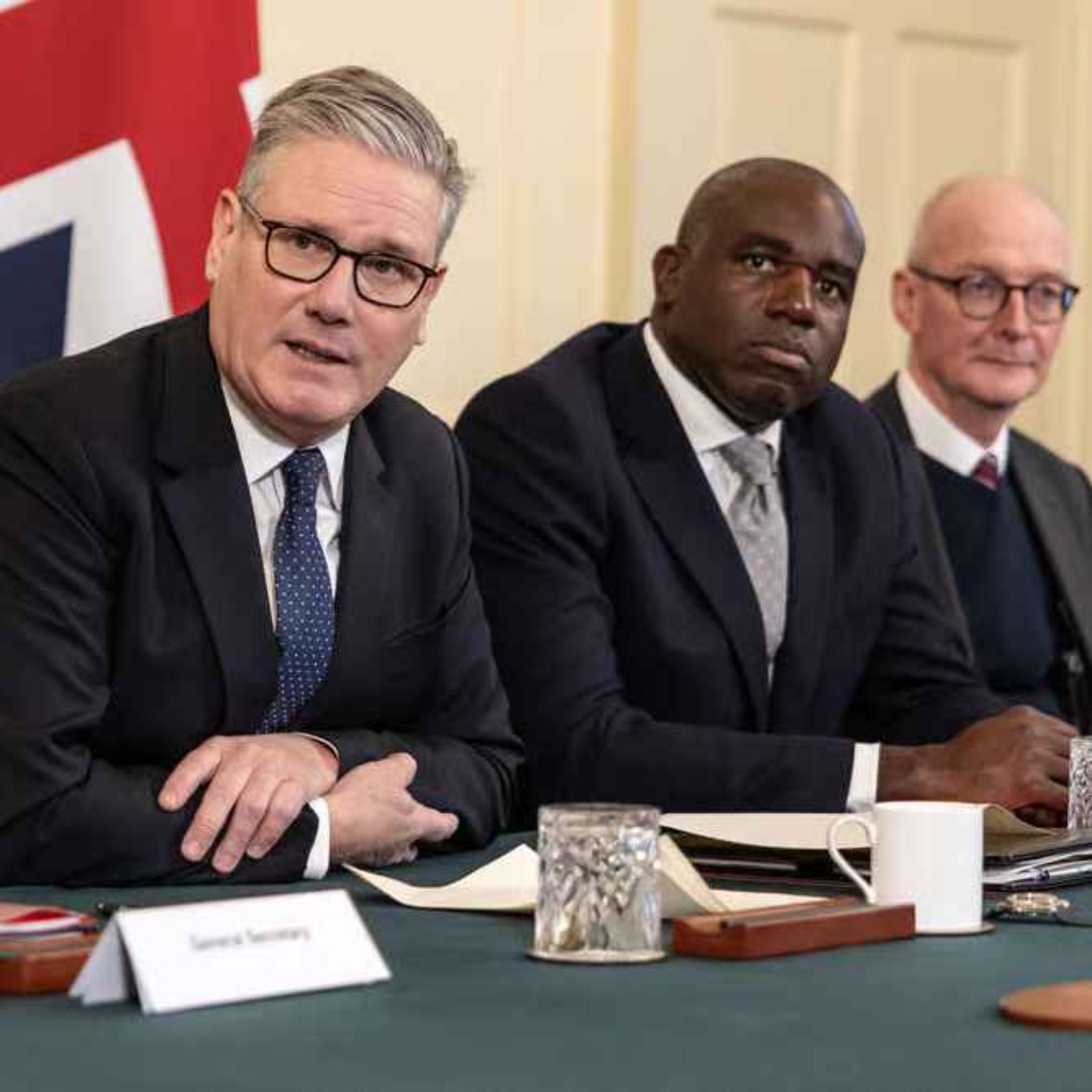
1:44It comes as Sir Keir Starmer called for discipline and a focus on tackling the cost of living in the first meeting of his top team in a potentially critical year for his premiership. In 2026, thanks to the choices that we have already made, more people will begin to feel the change that we promise in their bills, in their communities and in their health service. So despite the chaos that we inherited, you can already start to see the difference that a Labour government makes. By restoring economic stability, interest rates have fallen six times, helping homeowners with their mortgages. By investing in our NHS, with 5 million extra appointments, hospital waiting lists have fallen, meaning that patients are able to get on with their lives instead of waiting in agony for treatment.
2:31By getting more police patrolling our streets, violent crime has fallen, which means families can feel safer when they're out and about. Our challenge for this year is to prove that politics can deliver. And nowhere is this more important than when it comes to putting more money in people's pockets. Joining us now is The Standards political editor Nick Cecil. Nick, can you tell me a bit more about this poll? Yes, so there's a new poll by Sivanta for the Mile End Institute at Queen Mary University of London, and that shows Labour at a new record low in London. So London is a Labour stronghold, but now they are down to 31 % of the vote, according to this poll.
3:13And that is down 12 percentage points since the general election in July 2024, which put Sir Keir Starmer into number 10. There are two polls which have recently come out with London Angle. So there's a traditional poll, which is basically where polls are contacts around 1 ,000 people online or by phone, and these tend to have a margin of error of about 3%. It's better to look at trends rather than one particular poll, but generally a poll of 1 ,000 people is viewed as pretty reliable. And why do you think Labour is losing support in the capital? I think it's for multiple factors. One is a fragmentation of politics, because the other findings in this poll is that the Conservatives now are in fourth place.
3:59So they are on 17%, behind Nigel Farage's Reform UK on 19%, and the Greens on 18%. The Greens have actually seen the biggest rise of five percentage points since May. So they're very much on the front foot. Polls have a margin of error of around 3%. In a way, the Conservatives, Greens and Reform are pretty much on the same level. But in terms of if you have to place them in order, Rawls is now fourth in London, which is very unusual. London's make-up is very much a Labour stronghold. And there was actually another poll out recently by More in Common. And this showed that if these results were correct, that Nigel Farage would be Prime Minister and the Labour Party would be reduced to having literally just 85 seats across the country.
4:49But what's interesting about that is also that 47 of those 85 seats would still be in London. So that shows you how much Labour has been dominant in the capital for many, many years. Reform UK would win eight seats in London, and these are very much in outer London, particularly to the east. So reform would win from Labour, Barking, Bexley, Heath and Crayford, Dagnam and Raynham and Eltham and Chislehurst. Mr Farage's party would also win from the Conservatives, Hornchurch and Upminster, Old Bexley and Sidka, Orpinton and Romford. So reform have never had a seat before in London. So this would be a major reshaping of politics in London.
5:32It's for several factors. One is that the Labour government is deeply unpopular. many of the seats won by Labour at the general election were won by small margins. So while they got a very large margin, a big commons majority, the margins of all these victories were small, which made them very vulnerable to being lost to other parties. So people are dissatisfied with the government, that is partly due to cost of living crisis. For many families that still has never gone away. And Labour has also made a series of own goals and engulfed in controversies, including over U-turns, over welfare, over the winter fuel allowance.
6:13REE's budget has been shrouded with controversy, particularly the latest one with all the pre-briefings reports about possible tax rises which unsettled businesses and led to them investing less and recruiting fewer people.
6:30Let's go to an ad break. Coming up, how accurate are polls at forecasting election outcomes? We'll see you back here in just a moment. Welcome back. Do you think these types of polls are reliable when we're looking at voting intentions? So there's a new kind of poll called an MRP poll, which is a multi-level regression and post-stratification model poll. And this works out that it basically does large-scale polling of different groups of society to find out how they would vote. And then it looks at the particular makeup of local constituencies, their population and so on. And it tries to then mirror the large-scale polling into that particular constituency to find out the results.
7:18And some of these have turned out to be accurate, so there's no reason to particularly doubt them. Some, in the end, have been less accurate. The other factor which is worth mentioning is that polling in smaller areas, for example, like London, rather than the whole of the country, is more difficult. And London is particularly difficult because it's a very transient population. So if people always live at the address and never move, and that's reflected quite widely in the local area, then it's quite easy to poll people like that. But if it's a very transient community, as in parts of London, it's more difficult to get an accurate result.
7:53Do you think we can say that what is happening in London is a microcosm of the rest of the country or not so much? It's a microcosm of parts of the rest of the country. So Labour's vote is tending to now be more in urban areas amongst well-educated people, university cities and so on. Whereas if you look at other parts of the country, for example, the North West and the North Midlands in more town settings, and that vote often is going more to reform. And Starmer is really having a tricky time right now, isn't he? Starmer is facing challenges on multiple fronts. So he's got lots of domestic issues, which challenges, but he's also got lots of foreign issues, which are very significant, particularly Donald Trump.
8:37Donald Trump is effectively tearing up the world order as we know it, which was based on a rules-based system, very much a Western rules-based system, which people understood. and we have had decades of relative stability in Britain and other parts of Europe. Now, Trump has come in and he basically believes that might can be right, that if America is a very powerful nation, it can do what it wants in its own backyard. The problem with that, that if America does that, it's morally questionable. But also, if America does that, then why can't China? Why can't Russia? So then you have a world based on spheres of influence, where basically the most powerful nations have the most impact and can behave at times exactly how they want, even if it's to the significant detriment to other countries.
9:24And on the domestic fund, he's made all these pledges to cut NHS waiting lists, to improve cost of living situation for millions of families, and also to build 1.5 million new homes. All these issues take a lot longer than what's expected. So yes, NHS waiting lists have come down by maybe about 300 ,000, but they're still over 7 million. So if you're on a waiting list, you may well not have seen any difference. In terms of house building, house builders are not building the houses that Labour wants, basically, because they don't think it's economically viable at the moment. And on the cost of living crisis, even though inflation has come down, it's still running ahead of the wage increases of many households.
10:05Finally, is there anything else you want to add? There's still time to turn things around, and it's even more volatile than in past decades. Sir Keir Starmer is facing a very challenging situation. He is just trying to stick to what he thinks will work, which is unflashy, sensible delivery of policy. But there's a question mark over whether that will cut through to voters and whether that's appropriate for an age of modern media and voters wanting instant results.
10:39And that's The Standard. for all the latest news head to standard.co.uk if you'd like to get in touch please do drop us a line at podcasts at standard.co.uk we'll be back here tomorrow morning we'll see you then
Support for Labour in London has fallen to a new record low with the Tories pushed into fourth place behind the Greens and Reform UK, according to a new poll.
Just 31 per cent of Londoners now say they would vote for Sir Keir Starmer’s party, according to a Savanta survey, down from 43 per cent at the 2024 General Election.
The broader picture is of a fracturing of political allegiances in London in a blow to Sir Keir as he fights to stay Prime Minister amid unrest among Labour MPs.
The Standard's Political Editor Nic Cecil is here with the latest.
Hosted on Acast. See acast.com/privacy for more information.


