
 Ask ChatGPT


 The Standard
6 Jun 2025 · 16m
In this episode of "The Standard," hosted by Charlie Duffield, the discussion centers around two main topics:
Written by AI. May contain mistakes.

Get the gist, explore an idea or ask about something said.
 Claude
On The Standard, what are the key points of this episode?
Searching your listeningAutomatic transcript. May contain errors.
0:02Hi, I'm Charlie Duffield and welcome back to the Standard Podcast. If you're new here, hit follow and give us a rating. For the latest news, head to standard.co.uk. Coming up later in the show, the new music release from hip-hop icons, Cypress Hill. When people ask us, what are some of the highlights of your career? Woodstock, Saturday Night Live, and being invited on to The Simpsons, that's definitely one of them. You know, now, because of The Simpsons, rocking with the LSO at Albert Hall. That was amazing. But first, today Labour narrowly defeated the SNP to win the by-election in Hamilton, Larkhall and Stonehouse, with the form coming a close third.
0:52Davy Russell won the Scottish parliamentary seat by just over 600 votes. In recent months, Labour's position in opinion polls has been slipping, And Prime Minister Keir Starmer hailed the election result as a fantastic victory, saying that the people of Scotland have once again voted for change. Joining us now is The Standards' Chief Political Correspondent, Rachel Burford. Rachel, can you run us through what happened? Labour have won the Hamilton by-election up in Scotland. It was a bit of a surprise. The polls always said it was going to be very tight between Labour, the SNP and reform. That did happen.
1:33There was a lot of suggestions in the weeks leading up to the by-election that the Labour vote was dropping off. People were annoyed at the central government in Westminster. It was kind of between the SNP and reform. And that was sort of a narrative that was being pushed a lot and not really rolled back too much on by Labour. Labour didn't quite storm to victory, but did take the seat. Davy Russell won with just over 31 % of the vote. Then, you know, the SNP were down just over 29 % of the vote and reform in third, which is over 26 % of the vote. all the way down and forth. You had the Conservatives who came nowhere really with 6 % of the vote.
2:08So a sort of impressive win from Labour. I've heard that their on-the-ground campaign up in the seat was extremely organised. I think they really learnt their lesson from the run-corn by-election in May, where they lost to reform by just six votes. A lot of people in Labour feeling very sick about that. If they just, you know, knocked on a few more doors, taken the streets a little bit more, worked a little bit harder, they would have taken that seat as well. So they learned their lessons from that, you know, really had an organised and obviously very successful campaign up there. And what has Davy Russell said?
2:42He won the seat with a 7.4 % swing from the SNP. So, you know, it's still quite a tight election. He said his victory, he didn't actually talk about the SNP and his victory too much. He said that his victory sent a message to Nigel Farage and his, what he called his mob. Nigel Farage's party reform did actually do quite well in that. I mean, I think they are perhaps a little bit disappointed. I thought they thought it was going to be a sort of bit more of a straight fight between reform and the SNP. But, you know, they're sort of saying, oh, coming third is good. And, you know, they did get quite a significant portion of the vote.
3:15Obviously, it's been a bit overshadowed by reform's chairman, Zia Youssef, quitting just before the polls closed. It's a good victory for Labour. I think it's one that they will be very, very pleased with, if not a little bit surprised at. Do you think this is just a blip for Labour or could it be a sign that they're getting back on course? Labour have had a lot of negative press recently. I mean, I think part of the Labour plan is they always knew when they were coming in that the economy was in quite dire straits. You know, there was a lot of debt. They were always going to have to make cuts.
3:50I think part of the Labour plan may be to get those most controversial cuts. You know, we've seen the disability benefit cuts, the cutting of the winter fuel allowance for pensioners, getting those out of the way in their first year or two in government. As we come up to the next election in four years' time, hopefully the economy will be on better track and they'll be able to put in some more popular policies. It's been a tough time for Labour and also they're obviously seeing a big threat from reform. Like, you know, Nigel Farage's reform are polling, you know, consistently coming up the top of opinion polls.
4:23They are winning, you know, council by-elections. We saw in May they obviously took what was previously a very safe seat for Labour in Runcorn. They took that off Labour. They took control of almost a dozen councils. There is a very significant threat from reform. We've seen this week how unstable reform can be. You know, they've had one of their MPs, Rupert Lowe, has fallen out with the party massively and got kicked out early this year. And then obviously we've got Zia Youssef, who sensationally resigned as chairman of the party last night over a row about banning the burqa. It appears that he hasn't exactly said why he left, just that trying to get a reform government elected was not a good use of his time anymore, is I think the words he used.
5:07There's obviously some turmoil and infighting within reform. And I think Labour are hoping that the party kind of implodes itself before the next election. And finally, does Labour have a chance of winning next year's devolved election? This result will definitely spur on Labour activists in Scotland and Anasar Wa, who's the Scottish Labour leader up there, you know, will see this as a sort of a very positive thing to have happened. The SNP have been in charge in Scotland for a long time and I don't think voters are particularly happy with the SNP up there. Their party kind of imploded quite significantly and Nicola Sturgeon had to resign and they've gone through some leaders since her.
5:51And they seem to lack a bit of direction now that Scottish independence is not one of the top talking points in Scotland anymore. The problem is that Westminster government is not particularly popular in Scotland at the moment either. And there is a sort of idea that Labour should be doing much better than they are. You know, if you are in power in Westminster, you're always going to have those problems because, you know, everything that's sort of wrong with the economy and immigration and all those big issues that people really care about when they're going to the polls are suddenly all your fault.
6:21But this result will definitely spur them on and, you know, give them some hope that perhaps next year will not be quite as bad as people were predicting earlier this week.
6:34Let's go to a break. Coming up in part two, genre merging music at the Royal Albert Hall. We'll see you back here in just a moment.
6:48Welcome back. Hip hop icons Cypress Hill have a new album out today titled Black Sunday Live at the Royal Albert Hall with the London Symphony Orchestra. Black Sunday is the second studio album by the American group, which was originally released in 1993. The once-in-a-lifetime musical collaboration began as a joke on a 1996 episode of The Simpsons, but has now become a true multicultural milestone. Here's a sneak preview.
7:34The Standards producer Rachel Abbott met with founder of the band Be Real to find out more. Kicking off, tell me how this collaboration came about between you and the London Symphony Orchestra. It was an idea that we had after we had done the Simpsons episode, you know, because the bit was we stole Peter Frampton's orchestra. It was the joke of the Homer Palooza episodes. we thought, why not? Like, that would kind of be cool if we rocked a show with the orchestra or worked with an orchestra to any degree. But, you know, time and schedule conflicts sort of took us off the path for a bit. But every couple of years, we would revisit the idea.
8:13And finally, you know, there was just a pocket of time that we finally had to make it happen through an organic connection with the LSO. One of us put out a tweet in terms of The Simpsons. And when they reposted it that started the conversation finally you know we got the music written and we tried it out in Colorado and San Diego in a few places first and we got an amazing reception for it in reaction and that sort of led to us like okay yeah we are definitely going to push to do this with the London Symphony Orchestra. How did it feel to be featured on The Simpsons? You know it was a trip because some of us in the band were Simpsons fans and when we got the call about the episode saying hey they want to put you in an episode.
8:57And we're like, oh, well, hell yeah. So we got to go do our voiceovers and all that stuff. We didn't necessarily realize like the scope of it was until after the episode came out because we just came in. They coached us on how to read the lines. It was very surreal being in there doing mic work in that vein. We're used to rocking songs on microphones, not necessarily voiceover work, but it was cool. It was a great experience. It gave life to other things like this opportunity to rock with the London Symphony. It was surreal. You know, we never thought that we'd get a call from The Simpsons to, hey, we want to put you in this episode.
9:34We want to give you guys some lines. And this is the premise. It was pretty cool. This album is a recording of your London Royal Albert Hall Black Sunday performance. How do you even begin to work on such an impressive multi-layered show? Well, you know, the conductor, Troy Miller, is amazing. He took the elements and arranged all that stuff. In terms of the music that was written around the album, we didn't want to do like others have done in terms of, you know, here's our music, play around it. We wanted them to recreate some of the music and then play around that as opposed to us rocking to tape and then them playing around that.
10:13Everything was organic. You know, we brought our bass player. Bobo was playing drums and percussions on, you know, different songs and stuff like that. It was basically recreating the music from the ground up, but the conductor is tasked with arranging all that and making it into magic. We just had to be ready in terms of our vocal delivery and knowing the little nuances on how to play with it going up and down. Because, you know, rocking with two track, you sort of know the playing field because that's what we've done for 30 some odd years. But playing with the orchestra, there's different nuances and you have to learn how to ride that roller coaster.
10:51It took a few of those first shows to get it. By the time we got to London to do that show, we were definitely ready in terms of Send Dog and myself being able to deliver it with the orchestra right on the money. In terms of the orchestra, I mean, they have the music probably months in advance, so they get to rehearse it with the conductor. So by the time we get there, it was two rehearsals and boom, off to the races. I would imagine they probably only needed the one. The second one was for us to see if we felt comfortable, but we were as ready as they were. We were told at the Royal Albert Hall that that was probably the loudest audience they've ever had in the building.
11:33It felt like we had done our job and the fans just ate it up. It was great. What can people expect from the album? Well, you know, it's Black Sunday plus. Because the thing was, is when you play some of these venues and most especially the classical style, I believe there's a certain amount of minutes that you have to play. So we had to add on to Black Sunday because Black Sunday runs about 43 to 45 minutes. It's a very fast, short, impactful album. It's not lengthy like albums that we've done after that, where they're like an hour and 15 minutes or something. So we had to add songs from other albums and stuff like that to get to the actual amount of minutes in terms of union play and whatnot.
12:17When we realized that, we added songs like Kill a Man and Cuban Necktie and Money and Rock Superstar because we felt like those would be great as an encore one. Two, they can also lend themselves into symphony form, you know, and people weren't expecting those songs initially when we were bringing the Black Sunday presentation. So they're going to get Black Sunday and some bonus tracks. I think people will be pleased with what they hear because, I mean, when we heard it back, we realized how special it is, what a great job Troy Miller did in arranging this and the amazing job of the London Symphony Orchestra.
12:54I mean, they made us look so good. It was crazy. And finally, artificial intelligence has raised its head again in music news lately. How do you feel about the threat of AI as an artist? People are going to do great things with it. There's going to be people that do not so great things with it. It's important to harness it and make use of it in a way that's good, but it is dangerous. And hopefully they figure out a way to regulate that and people don't get away with copyright infringement trademark or even just your own identity i've heard songs with myself and other artists on them that we did not record that sound exactly like us for instance one got played for me the other day where i apparently featured on a song with krs1 and i can't remember who was who the other rapper was and none of us had ever done that song.
13:46I heard it and I was like, well, yeah, that sounds a lot like me, but I know I didn't write that because I have a, you know, like once I hear the song, I remember the verse when I wrote it. I mean, I couldn't really tell it to you, but I know the layout and I know certain lines and stuff like that. I could recognize it immediately. This one, I couldn't. I was like, well, that's my voice. And these are phrases that I probably would put in certain rhymes or that I put in rhymes before, but I know I didn't write that. And I called KRS-One. I said, hey, there's this track. I don't believe we've worked on it together, but maybe I just don't remember.
14:28Listen to it and tell me if you remember this. I think it's AI, but I just want to see what you say. And I got hit back from KRS-One's in the camp, and they said, hey, we're not familiar with this song or the person that put out the song. So, you know, and KRS-One's verse sounded like him, but not necessarily 100 % like him. And that's why I was like concerned. The song got pulled immediately because KRS-One in my camp, we went and pulled that song down. But those are the worries about it, that like if somebody, you know, wanted to put you on a song and they don't necessarily want to pay you or, you know, give you your publishing and they just don't want to deal with none of that, but they'll just snatch your voice.
15:12I mean, you see it on YouTube left and right these days. Like I saw something yesterday, two other rappers in myself, and it's a brand new beat from the guy who actually put it up, right? But it's my verse from hits from the bong. So that's the dangerous part of AI. The great part of it though, is that if you're a producer or a writer, you could clean things up or you can get new perspective by feeding it the idea and seeing how it could come back. writers may want to feed it a verse they wrote and say, hey, make this better.
15:48And that's The Standard. For all the latest news, head to standard.co.uk. And if you'd like to get in touch, please do drop us a line at podcasts at standard.co.uk. We'll be back here on Monday at 4pm. We'll see you then.
16:11Thank you.
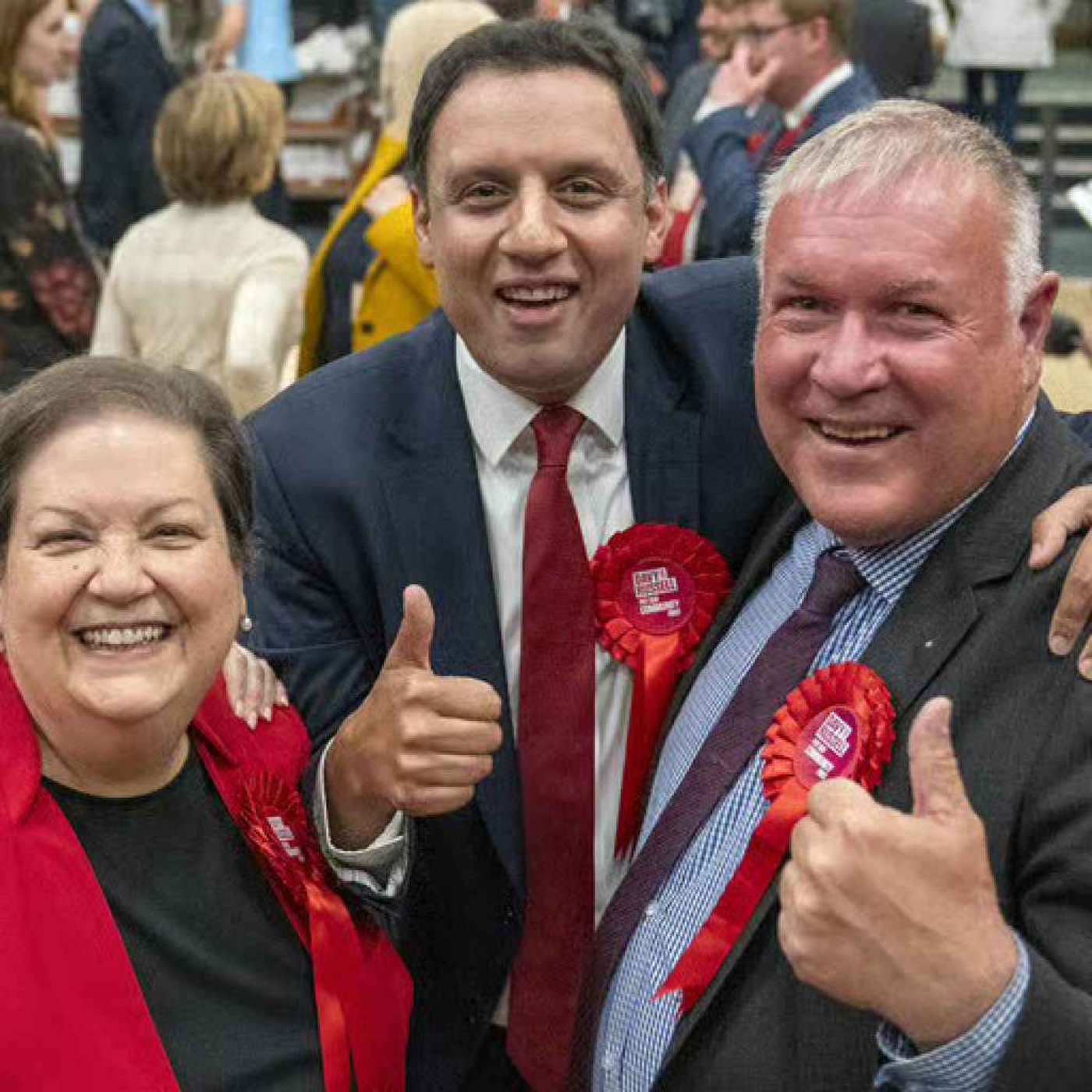
Today Labour’s Davy Russell narrowly defeated the SNP to win the by-election in Hamilton, Larkhall and Stonehouse, with Reform coming a close third. The Standard’s chief political correspondent Rachael Burford has the latest.
And in part two, Rachelle Abbott meets the founder of hip hop band Cypress Hill, B-Real, to discuss the band’s new album with the London Symphony Orchestra, which was recorded at London’s Royal Albert Hall and was inspired by an episode of The Simpsons.
Hosted on Acast. See acast.com/privacy for more information.


