
 Ask ChatGPT



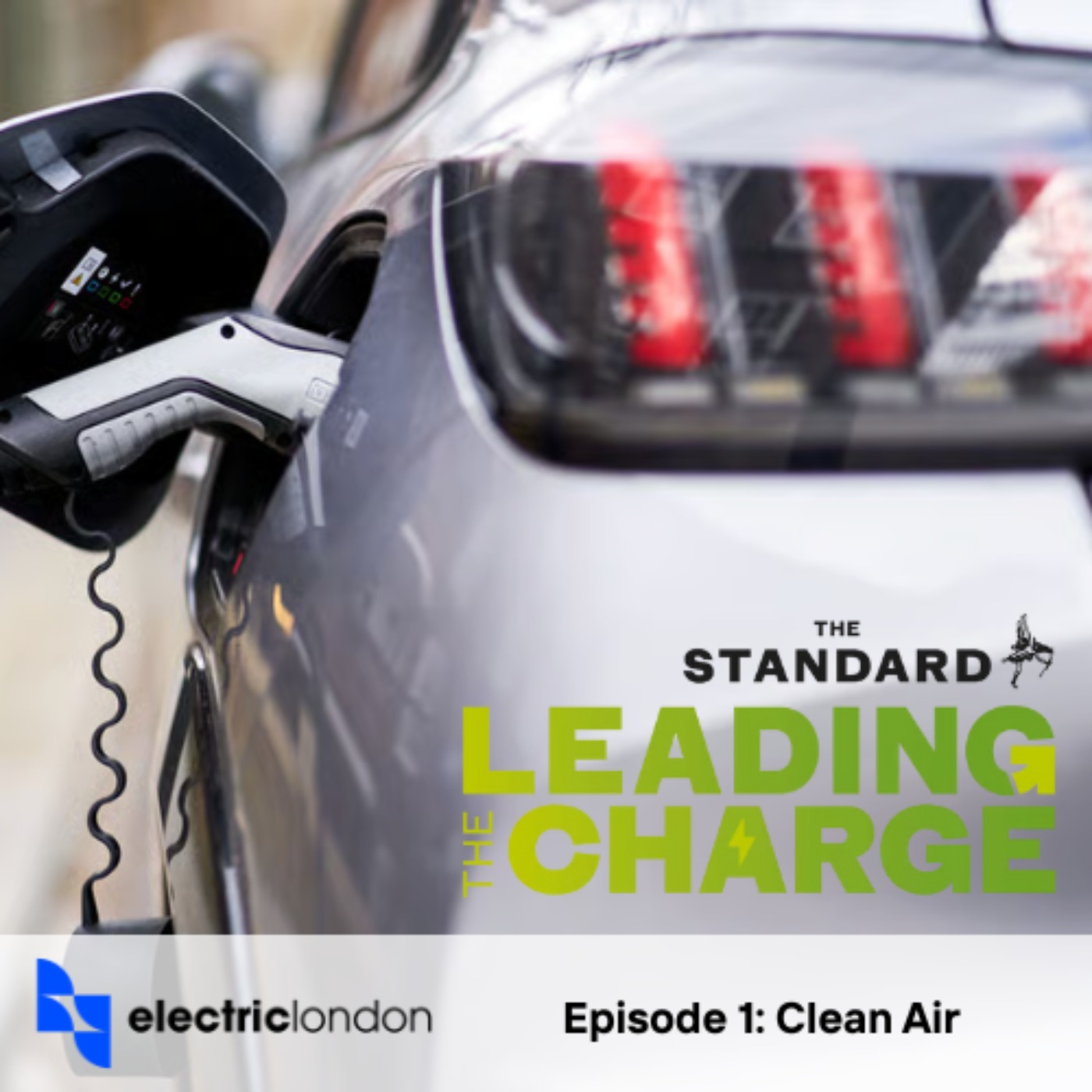
In this episode of The Standard, we explore London’s advancements in air quality, the impact of electric vehicles (EVs), and the proposed changes to the Cleaner Vehicle Discount, which may lead to EV drivers incurring congestion charges beginning Christmas Day. The conversation features insights from various experts, including Georgina McGivern and Valeria Pensabene from the London Clean Air Initiative, and Nick Smith from the Clean Air Fund.
Written by AI. May contain mistakes.

Get the gist, explore an idea or ask about something said.
 Claude
On The Standard, what are the key points of this episode?
Searching your listeningAutomatic transcript. May contain errors.
0:05From Brixton to Barking, Croydon to Clerkenwell or Wembley to Walthamstow, getting from A to B in the capital isn't always easy. More than 3.6 million Londoners regularly travel across this busy, bustling city, and increasingly this has been using hybrid or electric vehicles. However you get around, by four wheels or two feet, there's no escaping the city's air pollution. For years, London's cleaner vehicle discount has allowed electric vehicles to travel through the congestion zone for free. This has encouraged thousands of London's businesses and residents to invest in going electric, delivering cleaner air for the entire city, with 90 % of the clean air benefits felt outside the central area.
0:51But proposed changes from Transport for London mean that from Christmas Day this year, drivers of electric vehicles will no longer be exempt from paying the city's congestion charge. Drivers of electric vehicles will have to pay up to£13.50 a day to enter central London, and investment in charging infrastructure could also be put at risk. That's why the Electric London Coalition, following the standards of leading the charge campaign, is calling on London Mayor Sadiq Khan to reverse the decision to scrap the electric vehicle's exemption from the congestion charge. Over the course of three special episodes, we'll be exploring what it all means for the air we breathe, the city's electric vehicle infrastructure and the people most affected.
1:32To kick us off, I spoke with Georgina McGiven and Valeria Pasabene, Programme Directors at the London Clean Air Initiative. We began our conversation with how much London's air quality has changed over the past few years. So London's air quality has seen real improvement actually in recent years, particularly on the two main pollutants, which are nitrogen dioxide and particulate matters. So particularly in central zones, these have fallen significantly. We would say that key drivers of that have been bold policies like the EULES, but also greater investment in active travel and public transport.
2:11Also the healthy school streets and low-traffic neighbourhoods and community action such as the one that we work on. The EULA's report for the full year 2004 came out in March and the numbers were very strong. It's estimated that roadside nitrogen dioxide concentrations were down 27 % in the whole of London and 54 % in central London itself as compares to what it would have been like without Eulers. So we're very pleased with that. Electric vehicles have been exempt from the congestion charge thus far. What role has this played in the improvements you've mentioned in London's air quality? The discount has been a big incentive, of course, because it's a financial one.
2:55And I think there's quite a real risk of slowing down that momentum in terms of transitioning to electric vehicles, particularly among small businesses and sole traders and charities. Because I think, as I said, it's about cost. It's not often a question of ideology, but actually, you know, it is about cost. So that reduction of the discount, which will lead to a £9 congestion charge for a fully electric van, can add up to more than£3 ,000 a year. So it's quite a significant burden and we do worry that it could put people off switching to electric altogether. So I think the incentive has played a big role.
3:32We understand, of course, that there is the need to reduce overall traffic and congestion and congestion is a growing issue and EVs do still take up road space and contribute to that tyre and bradic pollution. But we do have slight concerns about how that change is being made. The uptake of electric vehicles has been much higher in private vehicles than commercial ones. Diesel vans now make up a significant portion of emissions that we breathe in the city. If electric vans also have to pay£9 a day to go into central London, do you think this will disincentivise businesses from making the switch to electric?
4:08I think you hit the nail on the head, Jonathan. That's the area that we are most concerned about and where our reaction is mixed. The uptake of electric vans is the slowest and And TFL data shows that electric brands only make up 2 % of vehicles in the congestion charge zone on a typical day. Therefore, that is the group of vehicles that we want to support in their transition the most. And that is why we support a more tailored or tapered approach. We should continue to charge private vehicles, even electric ones where appropriate. but we are in support of maintaining the full discount for small businesses and for charities and for those essential freight vehicles that keep the city going.
4:54That way, we send the message that we want to keep pushing towards a mode shift while continuing to support electrification. As you say, we're still in consultation mode. But if these new charges do come into force in the new year, what sort of impacts do you think that's going to have? I think many people and businesses will feel disappointed. You know, there are those that have made these forward looking, environmentally responsible choices. And often that has been at a financial cost. So I think that maybe a sudden change to those rules could feel like, you know, that the rug's been pulled out slightly, which could deter many as well from following in the lead of those that have made those early changes.
5:33And for those still deciding, you know, it does remove that key motivation, especially in tough economic times. So I do think there'll be a feeling of disappointment within those that have made that transition and in one of deterrents as well for those wanting to still make that shift. TfL's argument is that unless there's some sort of reduction in the discounts, then the congestion charge and all that's been achieved will just be diluted by the sheer number of electric vehicles coming into central London as people convert to EV alternatives. Therefore, some sort of disincentive is needed to stop people driving into central London.
6:08How would you respond to that argument? I think we agree. Ultimately, it's in the name. The congestion charge is there to reduce congestion. So we think that ultimately the direction of travel is that we should reduce a car dependency. And that is absolutely essential because we want to create a healthier and more sustainable London. Vehicles are needed, but they are no longer predominant. And so our work is very much about encouraging and promoting active travel and increased use of public transport and, again, lesser dependency on vehicles. So we definitely want ultimately the exemption to be phased out, but we are arguing for a more tapered approach.
6:52And so maybe, again, it's not our job to throw numbers, but from 100%, maybe going to 75 and 50 and 25 rather than from 100 to zero. There's clearly very strong feelings and passion on both sides of the debate. Both people worried about air quality and others more focused on the costs and so on. and as things stand it does now look like the EV exemption, 100 % exemption, is going to end in the new year, subject to consultation. So what would you like to see happen next? Are there other measures that could be taken to protect London's clean air legacy? We really believe that there's definitely a balanced compromise that is possible.
7:29Our suggestion would be to retain the 100 % discount for electric vans and HEVs and quadricycles that are operated by those SMEs and charities whilst as we said, gradually reducing that discount for private cars, especially for companies and households that can absorb the cost more easily. This would reflect the fact that electric vans serve a different function. They enable work, deliveries, community services, and they still represent a very small percentage of traffic. So yeah, we do believe that a compromise is possible. The precedent already exists with the ULS scrappage scheme, which was targeted specifically as smaller businesses.
8:06So, you know, we're not asking for a major structural shift. It's just a bit more nuance, I think, to support those who are making the transition and who keep the city moving. Yeah. And the example from Norway is clear. I think Norway has a 95 % rate of, oh, 98 % rate of electric vehicles. And whilst there are no longer subsidies for the purchase of electric vehicles, these are still being supported in various other ways. So again, And it comes back to this gentler approach of holding the hands of the population and doing it gravelly. As the proposed changes in the cleaner vehicle discount sparked debate, questions remain about the wider implication for London's air quality and its standing among global cities.
8:52Nick Smith, head of the UK at the Clean Air Fund, explains how London compares internationally and why maintaining progress on air pollution remains critical. all? So I think in the UK, London's air quality, it's in line with many of the other cities in the UK. Now it used to be a lot worse than other cities, but due to this set of policies that have been introduced, it has improved faster. So now we're not too far off from most of the other cities in the UK. And if we look globally, pollution levels in London are better than many parts of the world. So air pollution is an issue that is growing in developing economies versus some of those, London's air quality now is reasonably good.
9:29It may be an obvious question, but why should we care about air quality? Yeah, so poor air quality is a major health risk. I think around the world it leads to something like 7 million deaths a year that it's associated with in the UK. That's about 30 ,000 deaths a year and it has health impacts on all elements of the body. So that can be through things like lung disease and cancer. It can contribute to heart disease, But it also, increasingly, we're getting information about how it contributes to many other diseases as well that previously it wasn't associated with, things like dementia. It can also really have a big impact on babies and young children.
10:03And it can even affect things like low birth weight as associated with poor air quality. So it really has a huge amount of health impacts on the body. And it also contributes to climate change as well. So that's another reason that we should be focusing on this. Could you explain in a bit more detail what difference electric vehicles make to overall air quality in cities? Yeah, so electric vehicles are one part of the solution in terms of improving air quality. They're not the whole part, though, because they do still contribute to some emissions. But they do make a big difference because they essentially eliminate emissions from the tailpipes of exhaust.
10:37So that really helps reduce some pollutants. And we've seen the benefits of that in London through more electric cars, electric buses, electric taxis. So we should support this electrification. However, they're not the full solution. They do still emit some particulate matter from the brakes and the tyre wear. So we want to see investment in public transport, walking and cycling, as those are ultimately going to deliver the biggest benefits for air quality, health and climate change. London has made significant progress in improving air quality over the past decade. But with the cleaner vehicle discount now uncertain, it could challenge the progress the city has made in tackling air pollution.
11:14In the next episode, we'll look at what those changes mean for London's electric vehicle infrastructure and whether the city is ready for what comes next. Thanks for listening.
London has made huge strides in cleaning up its air – with nitrogen dioxide and particulate matter levels dropping sharply thanks to bold policies, investment in public transport, and the rise of electric vehicles. But proposed changes to the Cleaner Vehicle Discount could see EV drivers paying the congestion charge from Christmas Day, raising questions about the city’s next steps.
It’s why the Electric London coalition, following The Standard’s Leading the Charge campaign, is calling on London Mayor Sadiq Khan to reverse the decision to scrap EVs’ exemption.
In this 'Clean Air' episode, The Standard's Business Editor, Jonathan Prynn, speaks with Georgina McGivern and Valeria Pensabene from the London Clean Air Initiative, and Nick Smith from the Clean Air Fund, to explore what this shift could mean for businesses, residents, and the future of London’s air quality.
Hosted on Acast. See acast.com/privacy for more information.


