
 Ask ChatGPT


 The Standard
10 Oct 2025 · 17m
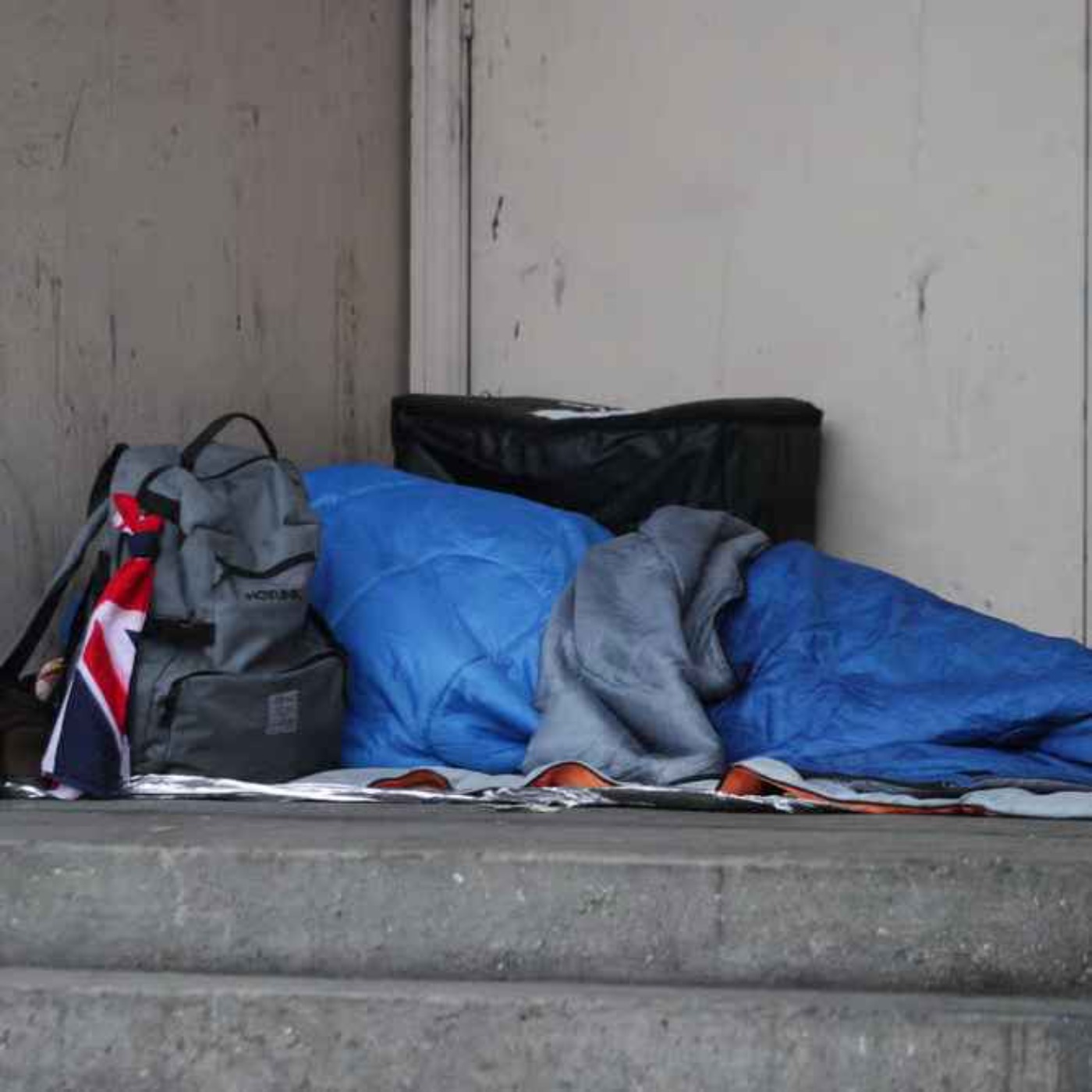
London gets £36.5 million boost to tackle homelessness as council costs soar
On World Homeless Day, the government announced a £36.5 million funding package aimed at assisting Londoners facing homelessness this winter. The funds will support families in temporary accommodation amidst escalating costs. The episode features Minister Alison McGovern discussing this initiative and its implications. The second part of the episode explores the Hidden London destination, St Dunstan in the East, with guest John Darlington from the World Monuments Fund.
Written by AI. May contain mistakes.

Get the gist, explore an idea or ask about something said.
 Claude
On The Standard, what are the key points of this episode?
Searching your listeningAutomatic transcript. May contain errors.
0:02Hi, I'm Charlie Duffield and welcome back to The Standard Podcast. If you're new here, hit follow and give us a rating. For all the latest news, head to standard.co.uk. Coming up later in the show, this week's hidden London destination involves a cherished medieval saint, the Great Fire of London, and the late great British architect Christopher Wren. It's a really marvellous example, if you think of that intertwining of ancient heritage. So here's a church which in its origins is a thousand years old with a very modern need. And that need is that in London we need green space. We need a space for nature.
0:45So this place offers that. It's a very special place, which is extremely unusual. This kind of high built environment of the oldest part of our city. But first, today on World Homeless Day, it's been revealed that Londoners facing homelessness will benefit from a new£36.5 million funding package, which has been announced by the government ahead of winter. The money will be directed towards supporting families in temporary accommodation and helping them to cover essential costs such as food, school travel and laundry. It comes after London boroughs revealed they were collectively spending a staggering£5.5 million a day to tackle homelessness.
1:29The cost, up from£4.2 million a day in 2023 to 2024, is mainly down to temporary accommodation and illustrates the dire state of the capital's housing market. Joining us now is the government's Minister for Local Government and Homelessness, Alison McGovern. Alison, there was a 26 % increase in the number of people living on London streets between April and June this year. How will this money help bring down the increasing number of people forced to sleep rough in the capital? People sleeping rough on the streets of London is a really serious problem and the causes of it are pretty long standing.
2:10We've had 14 years of a Tory government that created the circumstances for that rise to happen. But it's an urgent problem. So as well as building more homes in London, which is the long term solution and making sure that people have got decent jobs and enough money to pay for those homes, we need to take some really urgent steps to get people more help. And that's why the government has identified some money that we can allocate to London this year to help make sure that we've got the people on the ground to assist people who are rough sleeping or who might be at risk of being homeless. And what that money will do is increase the number of people we've got available to go and help people who are rough sleeping or who are at risk of homelessness, trying to help get them to somewhere stable, put a roof over their head, and then to help them take the steps to rebuild their life.
3:02And so this is urgent steps that we're taking because it's just not acceptable for Londoners to be at risk of homelessness or lots of people out there really worry about the situation with rough sleeping. And that's why we've taken these urgent steps to address it. A record number of people, 1 ,611, died while homeless in the UK last year, with London recording the highest number of deaths. Do these figures worry the government? What can be done to protect people sleeping rough and stop them falling into homelessness in the first instance? These figures are heartbreaking. They make me so angry and so upset on behalf of Londoners and everybody across the country who worries about somebody sleeping on the streets at night.
3:47We can fix this problem. We've done it before as a country. You know, when I was growing up in the 80s, I remember the cardboard cities of those days. We fixed this problem before. How is it allowed to get this bad again? The answer is make sure that councils and the voluntary community sector and others have got enough resources to help people move on with their life, get them somewhere stable and then start to rebuild from there. In the long term, we've got to, as a country, build the homes that we need. And the government set out a plan to spend nearly£40 billion on affordable and social housing over the years to come.
4:22But this problem is now urgent, as those terrible figures on the number of deaths on our streets showed. We can't just stand by, which is why the government's identified extra resources this year in our cities to make sure that people have got the help that they need to find somewhere stable and to move on with their life. We also know that councils with a high number of migrant hotels, such as Hillingdon, are seeing an increasing number of rough sleepers when people's asylum applications are rejected or they're not eligible for housing support. What's the government doing about this problem? In the end, we need to get down the backlog of people waiting for asylum decisions.
5:00That will help us make sure that we don't use hotels anymore in that way, which is what the government wants to do. This money can be used to support people who are at risk of homelessness or who are rough sleeping, which includes people who might have been made homeless for a whole host of reasons. It's urgent resources that we're making available in the capital and elsewhere to deal with a problem that has big structural causes in our society, but that has got a lot worse over the past few years. So we need to make sure that we're not using hotels anymore for asylum seekers. And we've got plans to do that using other locations and so on.
5:41We need to get the backlog down and make sure that the people are there on the ground. If somebody is raw sleeping, that there's somebody there who can help them, get them to a stable place and help them rebuild their life. As I mentioned in the introduction, councils in London are spending an extraordinary £5.5 million a day to tackle homelessness, which is primarily going on temporary accommodation for families. How will this extra money you've announced alleviate their financial pressures on the capital's town halls and help people living in temporary housing? So when it comes to temporary accommodation, particularly for London's children, I am really furious about the impact that this is having on our kids.
6:23If you're a child in temporary accommodation and you can't do your homework properly because you haven't got the space, that is going to have a limit on you for the rest of your life and it cannot go on. So the government already has a number of programs that we're working on to try to get children out of B &Bs where that's still happening to help try and stabilise this situation with temporary accommodation. It's extra resources that will be available for the capital and we'll try to stop families becoming homeless in the first place and where we have got kids in temporary accommodation to try to help them find a better, more stable option.
6:57We'll have more to say on this in the homelessness strategy that's on its way. And we're working very hard on that at the moment as a department and as the whole government to try and get that strategy for the years to come clear. But this urgent money is about trying to help make sure that families don't become homeless. But if they do, we can get them to a more stable situation as quickly as possible. The use of temporary accommodation at the moment is really bad for our kids. It's really bad for families and it's bad for taxpayers because it's so expensive as well. So this money is about making sure that we mobilise every possible opportunity to get families into more stable accommodation.
7:33Finally, what long-term solutions are you proposing to solve the housing crisis in the city and ensure Londoners have safe, affordable homes? The solutions to homelessness is to build the homes that this country needs and to get people the level of income for their family that they can afford those homes. So my colleague, Matthew Pennycook, a Greenwich member of parliament, has set out our investment plans, and he's worked very closely with London to identify opportunities to build more homes. And through the child poverty strategy, we've already taken measures to lift families' incomes, changing the way that universal credit handles debt, for example.
8:11But we need to go further, and the child poverty strategy is on its way to make sure that families have got the incomes that they need to put a roof over their heads to. Let's go to a break. Coming up in part two, from faith to flora and fauna, we're heading towards the Tower of London, where the remains of a medieval ruined church have been turned into a garden for the public to enjoy. We'll see you back here in just a moment.
8:42Welcome back. London is famed for its parks and open spaces, but they can still be tricky to find. One spot you might not have heard of before is St Dunstan in the East, where leafy ruins are all that now remain of a blitz-damaged church. But behind the tranquil oasis in the heart of London's financial district, there's an extraordinary story that reflects the wider history of our city. And to find out more, I spoke to John Darlington, Director of Projects at the World Monuments Fund. So, John, remind us where we are visiting this week. So, this week we're going to a sort of outdoor, indoor place, which is the Church of St Dunstan's in the east, which is an absolutely fascinating church which kind of encapsulates many of the things which happened to London over literally a thousand years.
9:33If you imagine that in London, prior to the Black Death in the 14th century, the population of the square mile of London, so everything within the city's walls, was 80 ,000 people. That's actually the same density as modern-day Manila or Mumbai, so an incredibly dense population living within the walls. And to service that population, you need churches. And so by the 14th century, or just before the 14th century, there were literally 100 churches in this tiny area and 100 parishes. That makes a parish roughly the size of four football pitches, so absolutely tiny. Today, only 9 ,000 people actually live in the city area, although half a million visit and work in it.
10:16So the number of active churches have halved and some have had to find new uses. So that's the kind of origins of our story. Okay, so who is this guy, St Dunstan? In terms of St Dunstan himself, he's a fascinating character. born in 909 AD. He was born in Glastonbury, and he was a very talented blacksmith and goldsmith and a scribe. And I'm very pleased to say that he was an extremely talented musician, because if you come from Glastonbury, you've got to be a good musician. But his real calling was God and the church. And because he was bright and talented, he quickly rose through the ranks of the church to become the Bishop of Glastonbury Abbey, one of the most important abbeys in the area.
10:58And then in 960, so what's that, almost 50 years later, after he was born, he gets the top job. And the top job, of course, is the Archbishop of Canterbury. He then dies almost 30 years later, and he's made a saint. And he's fascinating because when he was sainted, he was one of the most popular saints of his era, of the medieval period, actually. He was only eclipsed by Thomas Beckett, who was martyred in 1170. And the consequence of being martyred is that you have churches named after you. And there are two London churches named after Dunstan. One on St. Dunstan's in the West, which is near Fleet Street.
11:36And the other is by the Tower of London, which is the one we're particularly interested in. Now, before we discuss this church, tell me about this sort of folklore myth, which tested St. Dunstan's faith. I mentioned the fact that he's a fantastic blacksmith, as well as a man of the church, and a silver and bronze smith. And there's a lovely story about him working at his forge, and the devil comes in disguise to tempt him away from his godly existence. And the devil, he recognises, he sees the devon's split hoof from underneath his gown. And he takes the tongs from his hot forge and he grabs the devil by his nose.
12:14The devil screams and runs out and declares that he will never darken the doorsteps of any place which has a horseshoe outside of it. So that thing about having a horseshoe outside your house may, and I say this very hesitantly, may have its origins in this St Dunstan's myth. And I love the fact that there are, again, if you look at their pub names around the country, which have St Dunstan and the devil. And I just like that, that human connection. Let's return to this hidden London site. What do we need to know? So St Dunstan's in the East was built around 1100 on the site of an earlier predecessor.
12:52and as the city grew, so too had the church got to grow. Over time, the major repairs take place as is inevitable. And in 1631, there's a major repair which cost about£2 ,400, I think. And that is around the equivalent of£600 ,000 today, so not an insignificant amount of money. Unfortunately, that repair in 1631 is negated by the fact that in 1666, We have, of course, one of the great events which impacts upon London's entire history, and that's the Great Fire of London. And St Dunstan's is a church which is not completely destroyed, so it's not destroyed to the extent that it needs pulling down, but it does need fixing.
13:38So who do you call in if you want to fix your church in 17th century London? Well, of course, you call in Sir Christopher Wren, who's already been involved with redesigning many churches in London and, of course, is deeply associated with St Paul's Cathedral. At St Dunstan's, he creates this kind of the top to the tower, a beautiful, slender and elegant spire with a sort of lantern underneath it so that the spire is perched on four pedestals so the light can actually go into the tower below it. through these lantern windows. And the unusual thing about this is it's actually really a gothic design.
14:14Wren is not a gothic designer. He loves the Baroque, so he loves that fiddly new design of the period. And his thoughts on the gothic design, which is kind of medieval, is that he calls it a heap of confusion. But we think why he's designed in the medieval style is that he's respectful. He's respectful of this ancient church. He's respectful of St. Dunstan, and he wants to design in the style, which is respectful for that. So he fixes the church. Unfortunately, 19th century, late 19th century happens. The roof is very heavy and it pushes the walls out. And so you can imagine they get the fixers in and the fixers come and look at the church.
14:49They go, yes, their notebooks saying this is going to cost you. And of course it does. So the little local repair turns out to be a significant rebuild, costing I think about£36 ,000 then, which if you want that in today's money, that's three million pounds today. But the church was much bigger. It could seat 600 people. So maybe that's good value for money. Finally, how did it end up as a public garden? Final parts of our story are that the blitz happens in 1941 and the walls and roof of the church are severely damaged. Thankfully not Wren's steeple, that still survives. So there's a big debate about, shall we fix this church one more time?
15:29And the answer actually comes back that No, we shouldn't. And it's then, in 1967, the City of London Corporation chooses to turn this shell of a church into a public garden. And that's what you can see today. You go there today and you can see ferns and climbing vines and oleanders weaving their way through the tracery. The roof is filled with trees. There's a green canopy. There's birdsong. In my view, it's a fantastic solution because the city has always been the least green part because land values are such that most people will immediately build a building rather than create green space. So here, by using St Dunstan's in a much more modern framework, we've created a new green space.
16:10A garden has been created. And you go there today and it's filled with tourists taking photographs, people taking wedding photographs, all the office workers coming in and eating their sandwiches. And I love it. I think it's, you know, the church is still there, still breathing, but instead of incense in the air, it's pollen and the perfume of a natural garden. What's not to love?
16:36And that's The Standard. For all the latest news, head to standard.co.uk. If you'd like to get in touch, please do drop us a line at podcasts at standard.co.uk. We'll be back here on Monday at 5pm. We'll see you then.
On World Homeless Day, the government has announced a new £36.5 million funding package to help Londoners facing homelessness this winter. The money will be directed towards supporting families in temporary accommodation, and comes after London boroughs revealed they were collectively spending a staggering £5.5 million a day to tackle homelessness. The New Homelessness Minister Alison McGovern is here to discuss today’s announcement.
And in part two, John Darlington, Director of Projects at the World Monuments Fund, joins us to talk about this week’s Hidden London destination, St Dunstan in the East.
Hosted on Acast. See acast.com/privacy for more information.


