
 Ask ChatGPT



Written by AI. May contain mistakes.

Get the gist, explore an idea or ask about something said.
 Claude
On The Standard, what are the key points of this episode?
Searching your listeningAutomatic transcript. May contain errors.
0:02Hi, I'm Charlie Duffield and welcome back to the Standard Podcast. If you're new here, hit follow and give us a rating. For all the latest news, head to standard.co.uk. Coming up later in the show, she's South Africa's first global pop superstar who brings the infectious energy of Soweto dance floors to the world. And now Tyler is gearing up to perform to 50 ,000 adoring fans in the capital this weekend at All Points East Festival. One of the key things that stood out for me from being on the shoot with Tyler for the London Standard cover is that I've been on quite a lot of shoots with quite a lot of artists and interviewed them and they've all been amazing but I don't think I've seen anyone turn on for the camera as much as she did like she just knew what to do she performed she just hit every pose she nailed every shot the whole room was kind of gasping in awe I've never seen anything like it and I think that really speaks to her global popularity as well and shows that being a pop star is not just about the music obviously it's a big part of it and you need to be able to make good music to reach that level but it's also about having that charisma and what you might call the x factor and I think Tyler definitely has that.
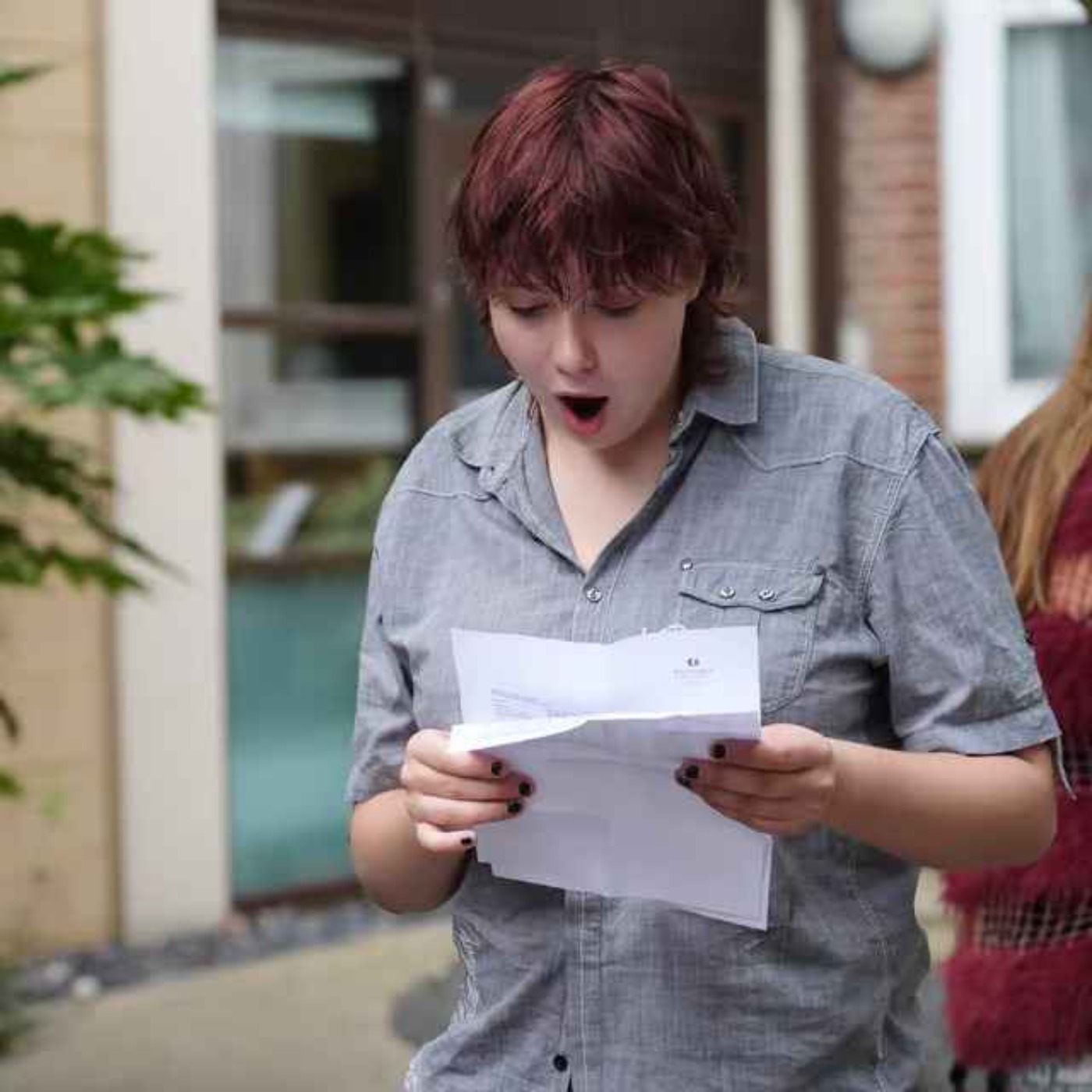
1:21But first it's GCSE results day for the class of 2025 and as millions of teenagers nationwide received their results London is further ahead of any other region in the country when it comes to achieving at least a 7 or an A grade. But that's not the whole story. Whilst the overall GCSE pass rate has fallen slightly, there has been a rise in the pass rate in Wales and Northern Ireland. Northern Ireland's Education Minister, Paul Given, was thrilled with this year's results. I'm delighted with the results across Northern Ireland. We've improved on last year and we've widened the gap with England and Wales.
1:58So I think it's a tremendous set of results for Northern Ireland. 83.5 % of our pupils have received A star to C grades. That's up on last year. And I was like many a parent today, up earlier than normal, anxious as to see how one of my own children had got on. And I think my emotion was, first of all, probably one of relief and then excitement for my own daughter. And I know that's the case for many parents out there. But for some, it mightn't have been the day that they wanted. But there are many pathways and opportunities. as I've been talking to the young people here at the school, that you can pursue to get ultimately to where you want to.
2:35And it's who you are as a person that will define you. Today isn't a defining moment in anybody's life. It's what makes up the rest of your person, your character. They're critically important to be able to be successful. And the gap in pass rates across the regions has shrunk, but it's still higher than before the pandemic. The GCSE gender gap is the smallest it's been since the year 2000, with boys slowly closing in on the lead set by girls. Joining us now is Afia Poko-Amanfo, a researcher at the Institute for Public Policy Research. Afia, what do today's GCSE results reveal? While we're seeing the attainment gap closing across the regions and also across gender as well, significantly different to what we saw with A-level results last week.
3:20And overall, we're seeing the pass rate in particular for core subjects like English and maths fall. So we're seeing the kind of attainment gap closing, but the kind of overall pass rate for core subjects actually falling. Those core subjects can really shape the choices and decisions that young people will make after age 16. So many young people today might be worried or fear that they're going to be left behind with less opportunities as a result of not reaching that pass rate. The other week we spoke about regional disparities in the A-level results. What does this look like at GCSE level? If you look across the years from, let's say, 2019, so since the pandemic, we're actually seeing that that gap between kind of the highest grades and maybe like the lowest grades across the region from the northeast, East Midlands, Yorkshire, the northwest, southwest, that gap in comparison to London and the southeast, which year on year tends to see the highest grades, that gap is gradually closing.
4:11I won't say that the gap is closing so radically that we can say that there's no longer a kind of regional divide. There very much is one. It's gradually sort of closing or has closed this year since last year across the regions in the UK. Devolved nations such as Northern Ireland and Wales have actually done a bit better this year, in some ways slightly better than England when it comes to their pass rates. So do you think this is progress then? When you see the attainment gap close, that's great. But what we want to see is that young people are continuously achieving higher grades universally.
4:42We should obviously be concerned because we have a much bigger backdrop context of what's happening with young people right now, which is that there's actually almost a million young people that are not in employment educational training. And that statistic starts to begin from age 16 all the way up to age 25. a lot of young people that might not be feeling like they have a clear direction or next step right now as a result of maybe their grades today might be at risk of becoming neat if there aren't clear opportunities and options for what their next step might look like. It's a real concern and as we know there's kind of social and emotional mental health needs that have been on the rise since the pandemic and if young people don't necessarily feel that sense of kind of success in this current moment then that can really have a kind of negative impact on their emotional and state and their self-esteem and their ability to feel like they can take the next step and contribute to society in a meaningful and fulfilling way.
5:32And how important do you think GCSEs actually are? It does feel still incredibly important when it comes to kind of getting those past grades, English and maths and even science too, that that's the kind of last opportunity that young people have in the kind of formal educational sense to achieve those grades in those core subjects that kind of translate into skills that you need in the labour market and in the workplace. However, I don't think that necessarily if you don't achieve that pass rate, that means the cost to your life should be as high as it sometimes is for young people. A lot of young people obviously re-sit their exams, but even if young people choose not to re-sit their exams, there should be a range of alternative options and guidance and work experience that is offered to them so that they can feel like they have ways that they can contribute to society that might not be from kind of things that they might have learned in their formal education.
6:24It might be things that they've learned in their extracurricular activities that are really important or other skills that might not have been necessarily identified or enhanced through their formal education. So there are a lot of things that young people have to offer that aren't just limited to what their GCSE grades are. And that should be definitely acknowledged when we're having these types of conversations. However, we shouldn't lower our expectations for young people. We still want every young person to do as well as they possibly can in their GCSEs. So they are still very much important.
6:55The cost to your life and your future as a result of maybe not achieving the grades that you might have liked to shouldn't be as detrimental as it has been. And it still somewhat is for young people today. The number of entry level apprenticeships, for example, that's an alternative route to maybe formal education. the number of entry-level apprenticeships especially for like disadvantaged young people has actually plummeted in the last decade as the UK's kind of training landscape has actually shrunk despite like some of these programs being actually an essential tool to enable social mobility and to stop young people from becoming a statistic under kind of a neat statistic a lot of young people still not being prioritized for apprenticeships and employers themselves don't feel able to take on younger people to kind of upskill them so the government should really start to look into that a bit more through their work in the youth guarantee.
7:42The support that they can give to employers to kind of recruit and train young people with perhaps like something like a wage subsidy program. Finally do you have anything else to add? Boys are doing better than previous years and while that gender gap is clearly closing girls have historically done really well when it comes to GCSEs. Girls are not necessarily doing as well anymore so it does highlight the question and it did come up last week with A-levels as well with boys doing a lot better than girls which is quite unprecedented and we don't tend to see that that's great for boys and I think that's something that a trend that we hope to see increase but we hope there isn't a kind of detrimental cost to girls as a result and that I hope that our kind of focus it still remains on girls educational experiences and making sure that we're paying like close attention to the social emotional mental health needs that girls have the unique needs and vulnerabilities that girls have Let's go to a break.
8:35Coming up in part two, Tyler's bringing her party spirit to London. We'll see you back here in just a moment.
8:46Welcome back. Hey, sorry I'm a shakur, but yeah, I guess we can meet up tonight. I'll see you later.
9:08That was a clip from the song Water by the 23-year-old South African singer Tyler. She's this week's cover star on The Standard and is set to perform at All Points East this bank holiday weekend. She'll be joined by fellow pop-it girls Ray, Dochi and Jade on one of the year's most hyped festival lineups. But can she hold her own? Freelance writer and editor Olive Permetsi met the superstar herself to find out. And she joins me now. Olive, Tyler has really become an international breakout act, hasn't she? In the past two years, she's really blown up and become this kind of global phenomenon. Cemented herself as one of the biggest pop stars in the world.
9:46She has been actually making music for a couple of years since she was pretty young. And she released her first track, Getting Late in 2019, just after finishing high school. Her hometown is Johannesburg and she grew up in South Africa. It's very much that inspires her music and she was kind of slowly building an audience locally. But in 2023, she had this phenomenal global breakthrough, which I think for a lot of people outside of South Africa probably seemed like it came out of nowhere. This is like mostly down to her track called Water and also the accompanying dance routine, which went super viral.
10:19The dance routine involves her pouring a bottle of water over herself while she's twerking. So it's very primed to go viral and very shareable and everyone wanted to recreate it. It just blew her up completely. That song was inescapable that summer. As of today, Water has more than a billion streams of Spotify, which is an incredible statistic. She also won a Grammy and she's been on the cover of British Vogue, Dazed, Elle, so many more. She's one of the leading players of the kind of Gen Z pop hierarchy. Was she always destined to work in music, do you think? I think it definitely seems that way.
10:50She has talked about how she wasn't always sure she was going to be a pop star, but she comes from a very musical family. So her grandma was a singer. She herself admits growing up she was a little diva. She's always wanted to be in the limelight. She was signing herself up for talent shows, taking any opportunity to perform, making sure that all eyes were on her at all times. Eventually that led to her singing covers of songs like Adele, Whitney Houston and Ariana Grande, posting those online, which kind of led to her getting discovered. I will say as well I think aside from the musical influences I think she is a very determined person which is a quality that pop stars need because pursuing your passion like that kind of takes that relentless determination and self-belief and there was a point around 2021 that even though she was slowly building this career in South Africa her parents did give her an ultimatum kind of saying she had a one year to make the pop star thing really work otherwise she had to go to uni and study mining engineering and she really took that and ran with it and within three years her parents are being flown to LA to watch their daughter win a Grammy so I think that speaks for itself.
11:55She's been called South Africa's first true global pop export tell me more about that. I think the thing that makes her really distinct is the influence of Amapiano in the track so Amapiano is a South African music genre it was really big in South Africa for a while but it emerged globally around 2021, 2022 it really soundtracks a lot of post-lockdown parties. Tyler blends this genre with pop music really well She also experiments with other genres like afro beats and dancehall Amma piano is her kind of calling card and what she's become known for A lot of people call her the queen of pop piano And she really kind of innovated that genre That is what makes her different and what makes her stand out And also how she represents her hometown on the global scale And she also took a risk with that sound She kind of talks about how early on in her career people were encouraging her to make more straight pop because they thought it would be a quicker route to success.
12:49She really didn't resonate with the tracks that she was making like that and when she finally landed on this pop piano sound that was what felt true to her as an artist and she carried on and pushed it and persisted with it. And outside of the music she's also always finding ways to rep Joburg and South Africa on a global scale. So the title of her new EP We Want a Party for example. That is a well-known chant in South Africa that she references. And this was a performance that she did on TV where she referenced load shedding, which is this thing that happens in South Africa because of the energy crisis.
13:22There was often blackout. So she referenced that in a performance. So she's always got those kind of little winks and Easter eggs for her South African audience, which I think is really amazing to see on the global stage. And what do you like about her music? It's really that crossover appeal. I am a huge pop girly. I am like the biggest Ariana Grande fan ever. So she really merges that musical vocal style with African influences, which really resonates with me. And then on her new record, I'm also really into the attitude. So there are a lot of songs like her lead single, Is It, kind of opens with Is It the fucks that I don't give?
13:55And it really feels like she's embracing this new energy of owning her presence and owning her achievements. I love listening to that in the morning. It It helps get me hyped up, you know. This weekend is a big moment for her. How do you think she'll be received by Londoners on stage at All Points East Festival? It is coming the day before Carnival. She's definitely had big performances. So she's performed at Coachella. She's also done like a lot of big industry performance. So she performed at the Victoria's Secret Fashion Show and stuff like that. So she's had those really big moments, but I don't think she's had that moment in London.
14:27This is her first British festival. So it's going to be huge. And I think Tyler as well really resonates with the kind of London spirit. The African News Borough really vibes with Tyler. They get it. They get that merge of like Western and African influences. It kind of just feels right for the city and the energy.
14:47And that's The Standard. For all the latest news, head to standard.co.uk. If you'd like to get in touch, please do drop us a line at podcasts at standard.co.uk. we'll be back here tomorrow at 5pm we'll see you then
It’s GCSE Results day - and London is further ahead of any other region in the country, when it comes to students achieving at least a 7 or an A grade. We’re joined by Efua Poku Amanfo, a researcher at The Institute for Public Policy Research (IPPR) to discuss.
And in part two, freelance writer and editor Olive Pometsey joins after interviewing the South African pop superstar Tyla, who is performing at this weekend’s All Points East festival in the capital.
Hosted on Acast. See acast.com/privacy for more information.


