
 Ask ChatGPT



This episode discusses the alarming trend of public toilet closures in London, driven by councils selling off facilities for profit. Hosted by Charlie Duffield, the podcast features John Darlington, Director of Projects for the World Monuments Fund, who provides insight into the historical significance and societal need for public toilets.
Written by AI. May contain mistakes.

Get the gist, explore an idea or ask about something said.
 Claude
On The Standard, what are the key points of this episode?
Searching your listeningAutomatic transcript. May contain errors.
0:02Hi, I'm Charlie Duffield and welcome back to The Standard Podcast. If you're new here, hit follow and give us a rating. For all the latest news, head to standard.co.uk. Coming up later in the show. We're travelling back in time and if you've ever wondered what the Romans did for us, they created the earliest ever recorded communal latrines.
0:30But first. Today we're discussing a very public inconvenience in the capital. the lack of toilets.
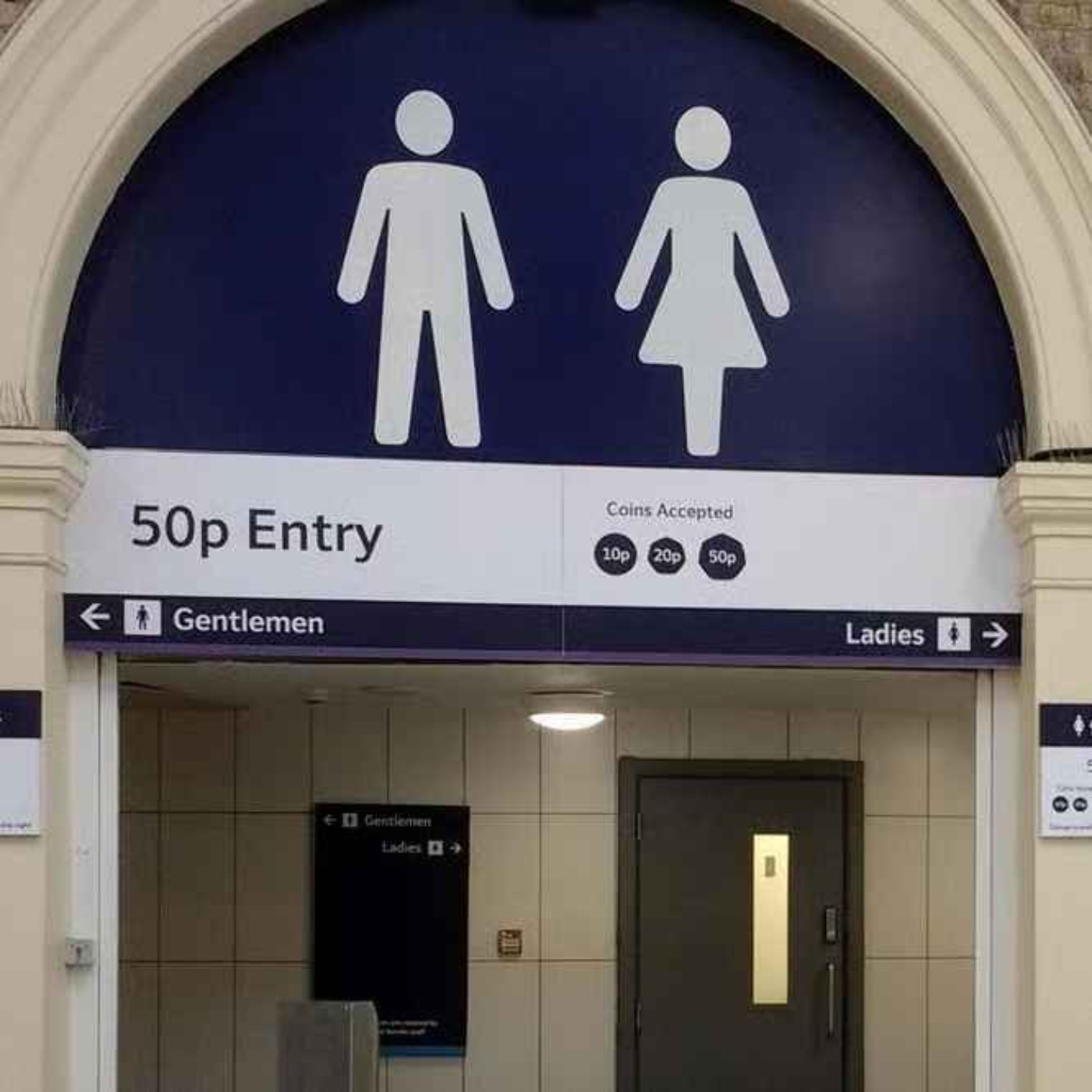
0:42Last year, AGK's Lifting the Lid report found that in the last decade, at least 97 council-run toilets have shut across the capital, and closures outnumber openings three to one. Seven London councils now manage fewer than 10 public toilets in their entire borough. The recent sales of public toilets at West Norwood and the Isle of Dogs illustrate a worrying trend in which cash-strapped councils would rather save a penny than let us spend one, as the saying goes. And a former Soho toilet, admittedly once labelled the top cottaging spot in the UK, looks set to be used either as a cafe or for retail space in the latest stage of an ongoing saga.
1:28The new submission, filed on behalf of Westminster City Council. The local authority has however been criticised due to there being a lack of local public toilet facilities in the borough. Lucy Hain, acting chair of the Soho Society, said that with increasing footfall in the area, we want a public realm to meet demand, which includes public toilets. Councillor David Boothroyd, Cabinet Member for Finance and Council Reform at Westminster City Council, said the application is about making better use of a former public toilet and creating a safer and more welcoming environment in the West End. But Councillor Tim Barnes, a Conservative representative of the West End Ward, said, The public toilets in Soho were a key issue in the 2022 local elections, and Labour promised they would all be reopened within months.
2:21But instead of opening them as toilets, they are all being sold off to become coffee shops. Just another broken promise from this appalling council. Joining me now is John Darlington, Director of Projects for the World Monuments Fund. John, can you first remind us why we're talking about public toilets today? There was a recent incident in the news which has sort of sparked this discussion, is that right? This was Peter Mandelson, who effectively was caught short whilst he was visiting a friend in Notting Hill. So he was caught short and therefore basically he relieved himself in the streets. And I guess from my perspective, that's rather embarrassing for him.
3:05Excuse the pun, he made a great exhibition of himself. The reason I say great exhibition of himself is because actually, if we had adhered to the technology of the great exhibition of 1851, then most likely there would have been a public convenience nearby. So my story really starts back then. It starts 175 years ago. Okay, so tell me what happened next. It starts at the Great Exhibition in 1851, where we had first examples of mechanical cooling, so foreshadowing the modern fridge. We had the first large-scale prefabricated building itself. That, of course, became the Crystal Palace, the great exhibition building.
3:51We had the first major display of photographs as art. So lots and lots of firsts. But the one which is most pertinent here is that this was the first time ever that the public could use a public flushing toilet. And over 800 ,000 people effectively spent a penny to spend a penny at the Great Exhibition because of this innovation, this innovation by someone called George Jennings, who was a master plumber. I shouldn't take all the credit for this for London, because the idea of a public convenience, a public loo, is not solely London that can claim this particular kind of first. Because actually, there's that wonderful thing where a Monty Python sketch, and that really shows my age, but a Monty Python sketch, which goes along the lines of what have the Romans ever given us?
4:42One of the things the Romans actually did give us was the first public conveniences. So over in the second century before Common Era. And then Paris also gets itself into the game. So by the 1830s, the Parisians could use something called a Vespasienne. They still exist today. They're kind of metal modesty screens in the streets of Paris where men could have a pee. But to be honest, they leave very little for the imagination and they are so useful for men, not for women. So London is very much a kind of improvement on all of that in creating these really rather beautiful facilities which are buried underground, which are tiled as if they are little chapels which have these beautiful mahogany fittings.
5:28You have to pay, but you pay a small amount of money. And then an attendant is there to make sure everything's right and proper. And that's the trajectory of the start of my particular story. And a key individual in this story is a man named Basil Jed. After the Great Exhibition in 1851, London was grappling with what was called the Great Stink. Imagine London, this great burgeoning Victorian city with literally millions of people, industry. It's just this thriving place. And where you have people, you have waste. Literally, the sewers are overflowing, cesspits are overflowing, the Thames is getting polluted.
6:11and the city is becoming unlivable. Someone called Basil Jett, he sold a great deal of this by creating these huge intercepting sewers so that all the waste is taken away, but public conveniences are not resolved. So essentially, if you're caught short in public, where do you go? And that's effectively where George Jennings steps into the breach. He's flushed by his success the Great Exhibition, and he lobbies the London Council to adopt his pay-as-you-go system. He makes the argument not as a luxury, not as something that, you know, this is something for a luxurious thing that people might need, but actually, he makes the argument that this is integral to public health.
6:53And he then builds, of course, he's the one who's there with his ceramic range. And he effectively builds the first public convenience facilities in the Royal Exchange, in the Strand, on Fleet Street and Oxford Street. So he creates these new facilities. Unfortunately, those don't survive, but others do. So fast forward to nowadays, and the capital is suffering from an extreme lack of conveniences. What sort of state are we in now? By the 1950s, there are literally a thousand public toilets across London. Today, there are 700 and there's been, what, a 1.7 million increase in Londoners. So it's not exactly as if London is getting smaller and therefore the facility is getting smaller.
7:42let's go to an ad break coming up the public toilets that tell a past civic pride serving a much-needed purpose and an ambition to improve public health we'll see you back here in just a moment welcome back john are any of these public toilets architecturally significant do they enjoy national protection through listing? Of those 700, there are about 24, if I recall, which are listed. So essentially, they're the highest categories of architecture in the whole country. So whether there are mainly grade two listed, I think there's one grade or a couple of grade two star. So these are recognised as historically very important.
8:31But the examples I'd give are, There's a wonderful one at Bromley by Bow, which is built in 1899. And it's a low ground facility. And you essentially descend the steps and you go through the gates, which are marked WEG. And that's William Gladstone, whose statue stands above the facility. And you go inside and the space is a beautiful space. It's white and cream glazed bricks and a green dado rail. and this sort of russet coloured marble urinals, each with, of course, have got the Jennings stamp. Let's make no mistakes about Mr. Jennings. He was a very astute businessman. So that would be one of my favourites I'd pick out.
9:16The other one would be Bruce Grove, which is in Tottenham. And the reason I like this one is that it was built first in 1910, and it's an underground facility in 1910. But in 1922, a half timber cottage is added above it, and that was solely for the use of women. And if you think in this Victorian world, the men always did better than women. So by the early 20th century, there's acknowledgement that women need these facilities very much as men need them. So those would be my two that I'd pick out as two little gems. And can you explain a bit more about this public loo sell-off? Why is it happening?
9:57Some of these facilities have been sold, some have just been closed down. And so the argument is maybe when you have churches which are no longer needed or pubs which are no longer needed, it's fine for them to be converted to a new use, whether it's a residential home or a cafe or a bar or a nightclub or whatever it might be. But my counter-argument to that would be that for churches, church worship in its traditional form, the congregations are dropping. Pubs are going out of use because people are using them less. And unless I'm mistaken, there's been no great human change, which means we need to pee less.
10:35It's just not the case. So with more Londoners, the need for those facilities increases. And I think that that's the shame. We have this amazing heritage, these beautiful little porcelain palaces, and yet the pressure is to close them. Councils are essentially saving a penny rather than letting us spend a penny. And that's a great shame because the solution is still there. We still have these amazing Victorian and later public conveniences with a little bit of forethought and with a little bit of better management, better lighting, the way in which they're looked after and the same manage. then these provide part of a solution to a time when people coming into London, they don't stop needing to go to the loo.
11:22So is there any sort of solution here? One of the things which, if looking after public conveniences, are a council responsibility, then you can see why they look at those and think, well, it's maybe better to close them and sell them off. We can make some more money from them in that way. To be honest, It's a false economy. As I say, it's a management issue rather than a masonry issue. If there's better management, better lighting, people will still pay to go to these places. So there are solutions here which don't involve either selling off these public conveniences or enclosing them down altogether.
11:59So there are solutions. Finally, do you have anything else to add? When you visit a city or a bit of countryside, there's some basic needs that people have. If you are with visitor organisations, the things which they like to fix first, the things people complain about the most if they don't get it, are a view, a brew and a loo. And London does really well with the view and the brew. The loo, we need to get that sorted. And London's good enough and big enough to do that. and that's the standard for all the latest news head to standard.co.uk if you'd like to get in touch please do drop us a line at podcasts at standard.co.uk we'll be back here tomorrow morning we'll see you then
Peter Mandelson recently made headlines after being caught urinating against a wall, having spent the evening at George Osborne's Notting Hill home. But is it any wonder, when so many public loos are being sold off for profit, for example in West Norwood and the Isle of Dogs?
Last year, Age UK’s Lifting the Lid report found that in the last decade at least 97 council-run toilets have shut across the capital, and closures outnumber openings three to one. Seven London councils now manage fewer than ten public toilets in their entire borough.
With the public loo under threat, John Darlington, Director of Projects for the World Monuments Fund, joins us to discuss the origins and history of the toilet - and argues that unlike other infrastructure, it still serves a much-needed and essential purpose.
Hosted on Acast. See acast.com/privacy for more information.


