
 Ask ChatGPT


 The Standard
11 Aug 2025 · 14m
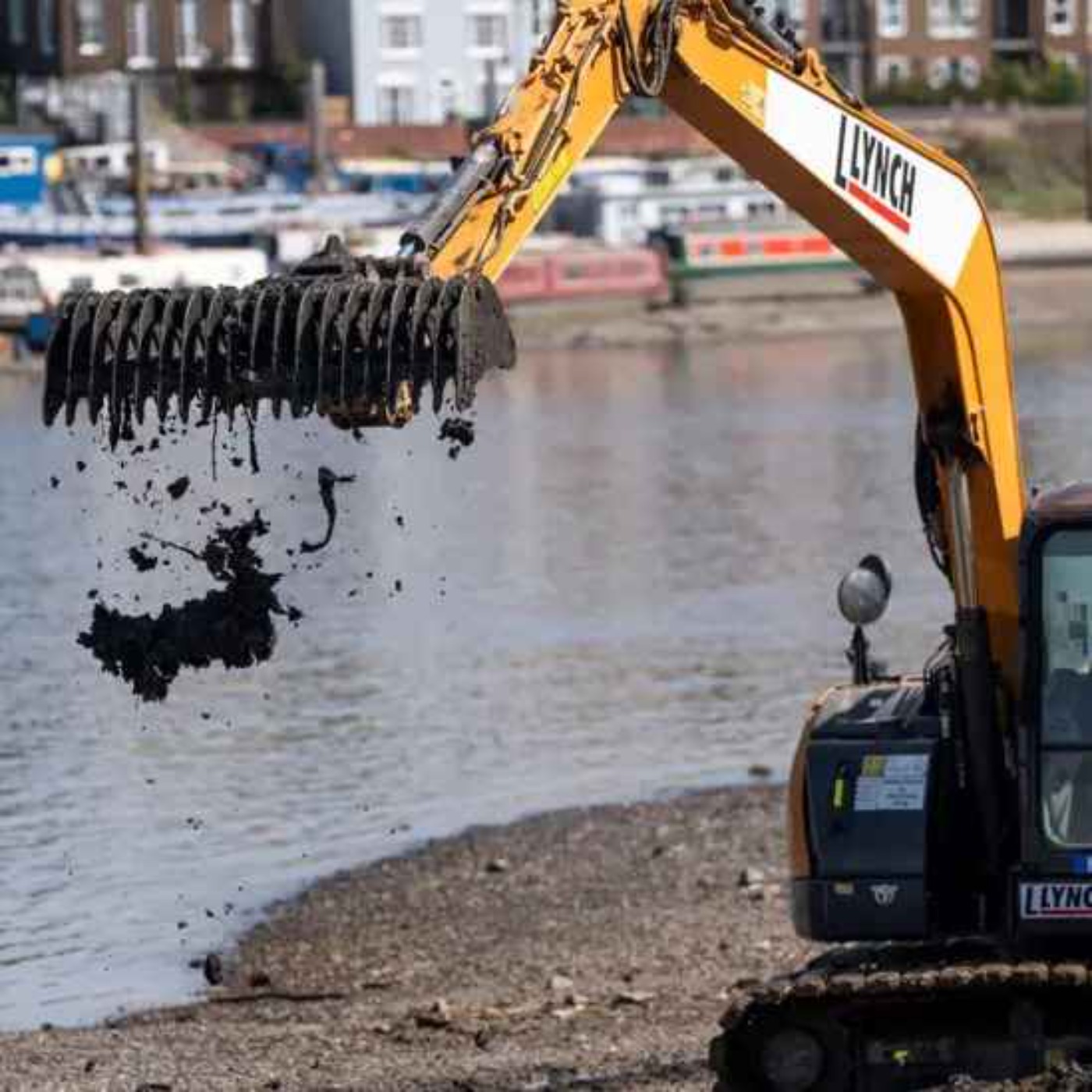
In this episode of The Standard, hosted by Charlie Duffield, the discussion revolves around a significant environmental issue in London: the removal of "Wet Wipe Island" from the River Thames. The episode features insights from experts about the impact of wet wipes on the environment and discusses a new sci-fi series related to the Alien franchise.
Written by AI. May contain mistakes.

Get the gist, explore an idea or ask about something said.
 Claude
On The Standard, what are the key points of this episode?
Searching your listeningAutomatic transcript. May contain errors.
0:02Hi, I'm Charlie Duffield and welcome back to The Standard Podcast. If you're new here, hit follow and give us a rating. For all the latest news, head to standard.co.uk. Coming up later in the show, find out how an alien egg has ended up at London's Natural History Museum.
0:29But first, work has started to get rid of a build-up of wet wipes along a stretch of the River Thames in West London, near Hammersmith Bridge, known locally as Wet Wipe Island. The Port of London Authority has said it will remove approximately 180 tonnes of congealed wet wipes, the equivalent to the weight of 15 double-decker London buses. The island is about the size of two tennis courts and has changed the course of the river and potentially harmed the aquatic wildlife and ecology in the area. To date, efforts to clean wet wipes from this unique natural environment have relied on people removing them by hand, such as volunteers at the environmental charity Thames 21, which has been monitoring the island since 2017.
1:16The Port of London Authority decided to take a lead in coordinating larger-scale action to remove the unsightly and harmful mess. Thames Water recently announced a further£1.8 billion of investment to improve river health across London and last year connected its 4.6 billion Thames Tideway Tunnel to support the reduction of sewage discharges into the Thames. The Thames Tideway Tunnel is the third phase of an improvement programme by Thames Water to improve the quality of the tidal Thames. It has 20 interception sites, 21 if you include Abbey Mills as well, and we anticipate it's going to collect maybe 15 to 16 million tonnes of sewage that would have gone into the river from the combined sewer overflows every year.
2:03The Thames Tide by Tine is now complete. With phases one, two and three, we're able to intercept 95 % of the volume that would have gone into the river via a combined sewer overflow because the system wasn't big enough. We're intercepting 95 % of the volume that's gone into the River Thames. That was John Sullivan, Thames Waters Head of Tideway Integration Group, speaking to Rachel Abbott over on our Tech and Science Daily podcast. He also spoke about what needs to happen now to prevent another wet wipe island forming? I think together the silver bullet would be this construction and a change of habit by ourselves, me included.
2:39We mustn't throw wet wipes down the toilet. If we don't put them in there in the first place, they're not there to be discharged into the river. As well as not being discharged into the environment, wet wipes themselves just this year have created 24 ,000 blockages within our network. Place of disposal for the wet wipe once we've used it is the bin, not the toilet. and we take out the equivalent of about 3.8 billion wet wipes per year from our network. And if we just didn't put them in there in the first place, we wouldn't have to take them out and we'd save£18 million a year. And joining us now is Emily Carr, Policy Advisor at the independent think tank and charity Green Alliance.
3:18What's your reaction to this news? Obviously, it's great news that it's going to be removed, but I think my initial reaction, like many people, is disgust that it existed in the first place. It's a real symptom of our throwaway society and something that should never have been allowed to get this bad. The government's really been dragging its feet on banning wet wipes containing plastic. We've got about 18 wet wipe factories in the country and around half of them contain plastic. And this is despite the fact that the government had said it would introduce a ban at the end of 2024. And only Wales has done that so far.
3:51And so what we've seen is this flow of plastic wet wipes continuing and causing the problems like what we've seen in the Thames. So great that it's being cleaned up, but it's definitely the symptom of a bigger problem. So do you think another wet wipe island could develop? Yeah, I think that's definitely the case. I think at the moment, until we introduce a ban to prevent the production and sale of these products, we're just going to see this continuing. and I think it's kind of self-evident that if your bathtub's overflowing you turn off the tap that's what needs to happen and the British people support this as well people really want to see action against waste Green Alliance has done some polling recently showing that four out of five British people want a less throwaway culture and I think wet wipes which are designed for one use are really like an emblem of that and two-thirds of those respondent sources said they'd change their lifestyles to achieve it so they'd be open to those alternative solutions different ways of living things like reusable products.
4:47So unless we see those changes, I think what's going to happen is we're going to keep seeing more of these fat bugs and these blockages formed up of those plastic wet wipes. More broadly speaking, what needs to happen to improve the health of London's waterways? Wet wipes are part of a much bigger picture where we see far too many disposable products, things like fast tech, fast fashion, these products that we only keep for a short time and then discard. And we know that waste is really awful for nature. It's really awful for the climate and action needs to be taken to change that. You can design waste out of the system and that's what we should be doing.
5:25Eco design regulations. So these regulations to ensure that products are designed in the most environmentally friendly way are a really important tool to do that. And we're actually falling behind the EU on this. We committed in 2018 to say that we would match or exceed what the EU is doing and we're just not doing that. So we keep having products like these single-use plastic wet wipes that really aren't designed in a very environmentally friendly way and we need to change that and start designing waste out of the system so that we can have the kind of society that we know British people want, that isn't so throwaway, that isn't so wasteful.
5:59There are already some reusable alternatives out there, things like cheeky wipes or other products where you can keep reusing them. Then there's also wet wipes that don't contain plastic. As I said, around half of the wet wipes that British factories are making do contain plastic, but there are those that don't. So those are alternatives too. But I think it is very important to say that it's not the fault of parents. They have the right to expect good eco-friendly products that reflect what they want. And so we do need to see those changes coming in from the government and from manufacturers first.
6:31Finally, do you have anything else to add? The positive is that the government has the powers to act on this. So in the Environment Act, they took powers to introduce bans on particularly harmful products. And they also have powers to introduce these kind of eco design regulations to make things better. So if they listen to public appetite, there is really a chance to make this happen and make these changes. It's not an impossible situation. And we know the tools that should be being used and the government would be able to do that. Let's go to a break. Coming up in part two, sci-fi fans are in for a treat as the Alien franchise returns.
7:10We'll see you back here in just a moment.
7:21Welcome back. Now, one of the biggest questions asked of science is, are we all alone in the universe? More than ever before, scientists believe that life could exist beyond planet Earth. Tomorrow, Disney's Alien Earth series is released. It's a prequel to the original Ridley Scott film that echoes its brilliance and takes the Alien franchise into new territory to tackle contemporary tech angst. Here's a clip from the trailer. How's our girl? She's ready. You're going to be the first person to transition from a human body to a synthetic. Because I'm special. That's right. You're very, very special.
8:14We have a downed spacecraft. I want what's on that ship. We can do it. We're fast, we're strong, we don't break.
8:28It's like a zoo, but the animals got out. This ship collected five different life forms from the darkest corners of the universe. Monsters. Alongside the space show, the Natural History Museum has launched its own blockbuster exhibition. It features one extraterrestrial exhibit, an alien egg, from the Alien franchise itself, which will be in pride of place until the 22nd of August. Joining us now is the Standards Head of Culture, Martin Robinson. Martin, first of all, can you tell us a little bit about this latest space exhibition? So the Natural History Museum, we've got an exhibition on at the moment called Space, Could Life Exist Beyond Earth?
9:15Which is kind of a collection of artefacts and scientific research that is sort of about the search for aliens. And it's been enlivened somewhat this week with the presence of an actual alien egg, which is not actually real. So tell me more about this alien egg. It's about three feet high, I think, something like that. But what it is, is a replica egg from the popular film franchise Alien. As part of the publicity for Alien Earth, which is a new TV show coming to Disney, have basically put one of the eggs from the show into the National History Museum. Cleverly link the new show and the National History Museum's exhibition.
9:58And what's inside the egg? So in the alien films, very famously, especially the first one, what happens is John Hurt goes down to an alien planet, finds one of these eggs, has a little look at it. From out of this alien egg comes what's known as a facehugger alien, which is like a parasite which attaches itself to your face and puts an egg or an embryo of an alien inside your chest. And then at a later date, perhaps when you're having lunch or something, then the alien will burst out and kind of run amok and kill your entire crew. Or at least that's what happens at an alien. So hopefully that won't happen to anyone at the museum, but no guarantees.
10:35Now, you gave the Alien Earth review five stars, which is a real rarity. So what makes it so great? I'm very, very cagey with my stars, but Alien Earth is an absolutely brilliant show. It's the first TV show that the Alien franchise has done. So there's been loads of Alien films through the years. There's been prequels. There's been Alien versus Predator kind of spin-offs, all sorts of things. Most of them have been really terrible. Alien Earth is this huge budget,$250 million show produced by FX, and it's been shown on Disney Plus over here. And it basically is set just before the very first Ridley Scott alien film, which is the all time classic one.
11:20It's set just before that and kind of without giving any spoilers away, involves the alien or xenomorph making its way down to Earth. So this is the original film was all about in space. No one can hear your screen. But this puts down this incredibly threatening alien on Earth. It's proper sci-fi, it's real horror, but it's really got some brains as well, and it's surprisingly good. And what do you think viewers will make of Alien Earth? What's the appeal? Alien is a hugely popular franchise, despite some of the ropey films that there's been. It's still much loved by sci-fi fans. It's kind of, you know, the first couple of films, Alien and Aliens, are classics.
12:02I think, obviously, with them spending so much money on the series, they kind of want to do all these clever little ways to market it. I think the Natural History Museum one is quite a fun way to do it with the iconic eggs from the films. But it kind of shows you that these days, there's so much cash being thrown into prestige TV, and they really need to go to town with all the marketing on it. Sometimes that can work out quite badly if you've just got a load of stunts. But actually, in this case, you've got such a great series that will not disappoint anyone. I think it just suddenly becomes in the spirit of it.
12:34It suddenly becomes like all part of the fun. So I'm sure people will go, I'm sure little kids will be interested in the alien when they go along to the National History Museum. What I would say is that the TV show is not for children. It's barely for adults. It's so gory, it's unreal. Despite its 18++ rating, it's well worth seeking out. Finally, do you have anything else to add? We also have an interview with the lead actress in it called Sydney Chandler, who's sort of picking up the Sigourney Weaver role of being this strong female character at the centre of it. she's actually playing not human like Ripley, but a hybrid.
13:16She's kind of was a sick, sick little girl who was then transported somehow by the magic of future technology into an adult robot body or synthetic as they call it. So it's quite an interesting premise. So you've kind of got a lot of these kind of hybrids that just look like normal adults, but inside the children. So you've got them doing some quite amusing things as, you know, really acting impulsively and as playing around basically like kids while at the same time battling the most evil species in the universe so it's all good fun we've got an interview with her coming up
13:52and that's the standard for all the latest news head to standard.co.uk if you'd like to get in touch please do drop us a line at podcasts at standard.co.uk We'll be back here tomorrow at 5pm. We'll see you then.
London’s disgusting Wet Wipe Island is finally set to be removed from the Thames, with work under way to excavate the estimated 180 tonnes of congealed waste near Hammersmith Bridge. We hear from John Sullivan, Thames Water’s Head of Tideway Integration Group, and Emily Carr, policy adviser at the independent think tank and charity Green Alliance, about how to prevent more waste from accumulating in the capital’s waterways.
And in part two, The Standard’s Head of Culture Martin Robinson joins us to discuss FX’s’s Alien:Earth series, which is released tomorrow, and the accompanying alien egg on display at London’s Natural History Museum.
Hosted on Acast. See acast.com/privacy for more information.


