
 Ask ChatGPT



Met Police Cuts: what £260million shortfall means for London
The Standard podcast delivers insights on pressing topics in politics, culture, sports, and fashion through discussions with top news insiders. Hosted from London, the podcast features award-winning journalists and celebrity guests.
Written by AI. May contain mistakes.

Get the gist, explore an idea or ask about something said.
 Claude
On The Standard, what are the key points of this episode?
Searching your listeningAutomatic transcript. May contain errors.
0:06Hi, I'm Suze Cooper and welcome back to The Standard Podcast. If you're new here, hit follow and give us a rating. Coming up, a Hollywood actor who defined a generation of big screen blockbusters has died. He was huge. You could not go to a cinema and not see his face. You know, he was really a stalwart of the silver screen. We reflect on the life of the Hollywood actor Val Kilmer, who gave us Iceman, Batman and more.
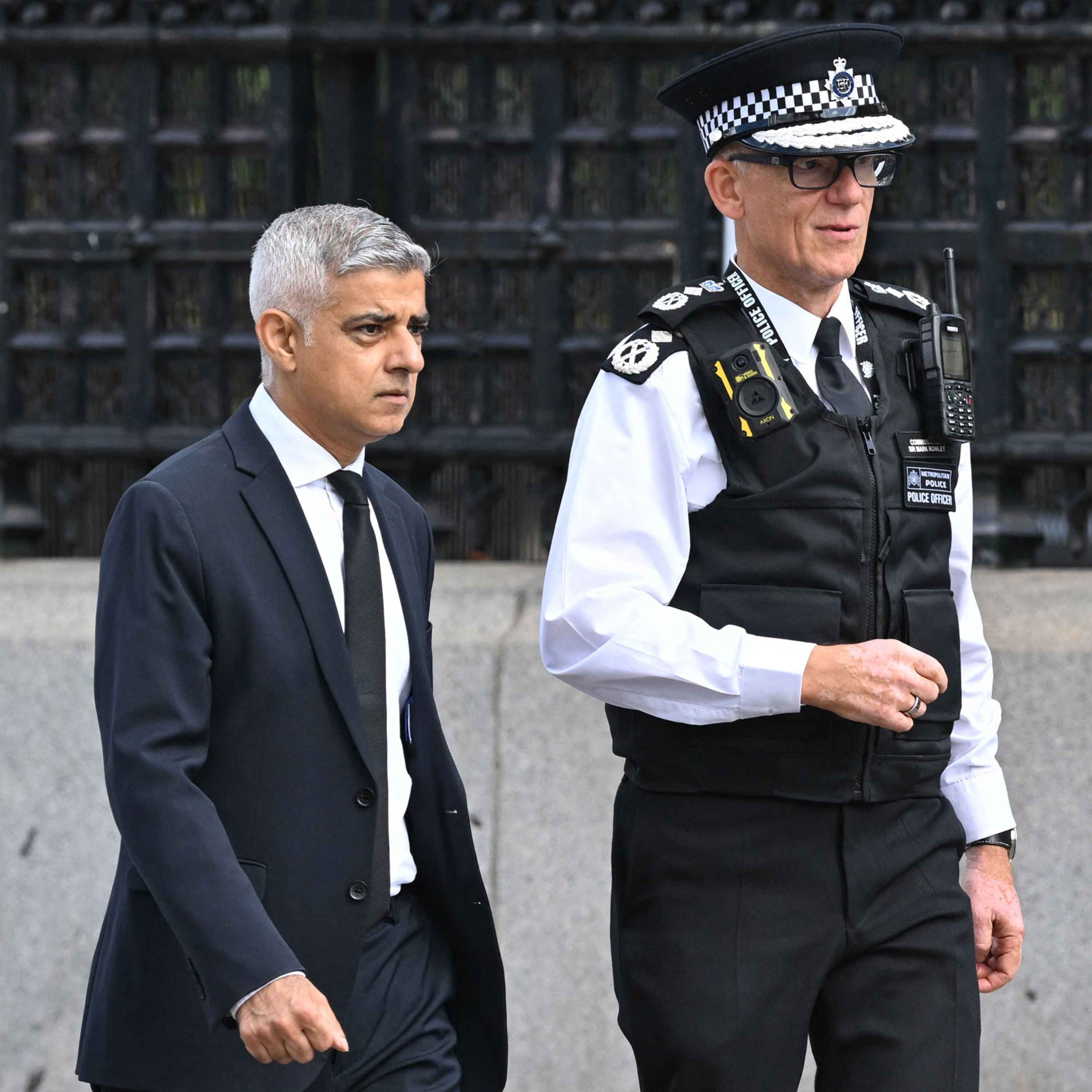
0:38But first, a£260m budget gap has left London's police force planning sweeping cuts. 1 ,700 Met Police jobs are set to go from officers to support staff and PCSOs. London Mayor Sir Sadiq Khan's promised to protect frontline response teams and invest more from City Hall. But with rising crime and growing pressure on the Met, tough decisions are being made. And while the force says it's doing what it can, it's also warning the impact will be felt. The announcement raises big questions about how policing is funded, what services Londoners can expect and what's being prioritised. And it comes at a time when public trust in the Met is already under strain.
1:20Well, we're joined by the London Standards crime editor, Anthony France. Anthony, just how serious is this shortfall? Well, this is a terrible state of affairs for the Metropolitan Police. And if anybody ever wanted an idea of just how thin the thin blue line is, you know, you hear words that you don't normally hear, you know, substantial tough choices, rapidly shrinking met. You know, these are words that we don't really hear. So how's it got to this situation? What's the mayor saying about it? The mayor is saying about this particular shortfall that it is about government underfunding, chronic underfunding for many years.
2:00You know, his critics will say that he hasn't done enough and he's concentrating more on vanity projects than actually, you know, the cool things that the police do. So the police has always been underfunded. I think certainly what's happened over the last 10 years, obviously, the police are not immune from economic pressures that all other businesses suffer from, wages and things going up and just the cost of things. So, you know, all of these things sort of conspire against leasing. I think that the commissioner, you know, he's fought a good fight. He says he's very grateful for the funding that he has received, both from local and central government.
2:39But if there was ever a pot of money somewhere that could be found, I think he'd be even more grateful. We've got phone snatches and street crime on the rise. It seems like a bit of a backward move, but it's essential by the sound of it. Yes, it's very much essential. So the Met have announced from the new budget from City Hall, 1700 police, staff and community support officers will go. There's actually a£260 million budget shortfall. And when you look at some of the things that are going to go, you know, officers who are in schools, MO7 task force, which tackles moped and e-bike robbers alongside gang related.
3:18The dogs unit, the mounted branch, you know, even the cold case detectives that we see on television all the time, you know, they're going to have their budget cut by about 11%. And of course, the Royal Parks Police, you know, I think for the Met, it's now about keeping those core services when people die on 999 and everything else, you know, there are no sacred cows. Yeah, it seems like there's a real tension between maintaining that emergency response and cutting back on the longer casework of solving serious and older crimes. Is that right? Yeah, I think so. Yeah. I mean, I think with just those words, you know, when the commissioner is talking about, you know, eye-watering choices that we are now at the stage of it is just really those serious crimes, the 999 things that they really just have to respond to and get right.
4:10So you mentioned a few of these earlier, but which cuts in particular do you think are going to be felt most immediately by Londoners in their day-to-day lives? I would definitely say, you know, the closing of front counters, you know, that face-to-face 24-hour that you could go and speak to the police at front desks. I mean, the police will tell me that front desk, you know, they're not used that very often. But just having that presence that if something happened, that there will be somebody there to open a door if you needed sanctuary or something like that. I think that's what most Londoners would feel most.
4:43I think that, you know, not having officers in schools, you know, for me, that's very short sighted. You know, if you're talking about trust and confidence amongst young people, interactions from a very early age with police officers is really important. You know, you don't want your first interaction with a police officer being when they're arresting someone on the street or potentially arresting a family member or a friend or something like that. You know, you need to win that confidence battle in schools. And, you know, for those of us of a certain age, we certainly remember that, you know, the old police officer in our schools.
5:20So there's a lot of opposition as well to the closing of the Royal Parks Police. And that's not just really about residents in London, that's about visitors to London, tourists, you know, if they don't feel safe in our parks, you know, again, are people going to make that choice of coming? So yeah, so there's a lot to do. Yeah, we see summer concerts and big events happening in the Royal Parks each year. Do you know what will happen there? I guess some of that is private security, but it must have a knock-on effect somewhere. Yeah, I think so. Yeah, it will have a knock-on effect. You know, summer festivals, you know, British summertime, you know, the police officers who police the Royal Parks, they know all about the legislation, they know all about the bylaws, they know all of those thousands of square feet.
6:08I think the suggestion that you'll be able to get neighbourhood officers who are literally running from incident to incident to be able to turn up on a Saturday and plan for big events. It's not just those concerts, it's also, you know, the changing of the guard. To me, anyway, the suggestion that these people will be able to turn up and know exactly what they're doing from day one is a little bit short-sighted.
6:35Let's go to a break. Coming up in part two, the death of US actor Val Kilmer has prompted a wave of tributes. We'll hear from the London Standard celebrity correspondent Lisa McLaughlin about what made him so unforgettable. At his peak he was everywhere, action films, dramas, comedies. Top Gun catapulted him to fame as the cocky, but cool Iceman. We'll see you back here in just a moment.
7:04Welcome back. Val Kilmer, one of the most recognisable faces of 80s and 90s Hollywood, has died at the age of 65. The US actor was best known for standout roles in Top Gun, Batman Forever and Heat. His daughter, Mercedes Kilmer, confirmed he'd died from pneumonia. Kilmer had been diagnosed with throat cancer in 2014 and had largely stepped back from the spotlight in recent years. News of his death has sparked a wave of tributes from fans, actors and directors. To reflect on his career and legacy, I'm joined by the London Standard celebrity correspondent, Lisa McLaughlin. Lisa, Val Kilmer had a huge presence in 80s and 90s cinema.
7:46Can you give us a sense of just how big a star he was at his peak? Yeah, he was one of the defining stars of the 80s and 90s. A true A-lister who, I suppose, brought intensity and charisma and a touch of mystery to his role. You know, at his peak, he was everywhere. action films, dramas, comedies. Top Gun catapulted him to fame as the cocky but cool Iceman. But he didn't just stick to blockbusters, as we know. He played Jim Morrison in The Doors with eerie accuracy. And also he starred in Real Genius in 1985 and took one of the most famous roles on in pop culture as Batman in Batman Forever. There's also Heat, which he starred alongside Pacino and De Niro.
8:28It really proved that he had some serious acting chops. And I suppose overall, he just had that mix of leading man looks and a character actor's commitment, which made him a really compelling actor to watch. Well, there'll be lots of people hearing the name Val Kilmer for the first time at the moment. Do you think he gets enough credit today for how famous he really was back then? He was huge. You could not go to a cinema and not see his face. You know, he was really a stalwart of the silver screen. The one thing, though, I have to touch on is that his reputation did precede him at the end of the 90s and then into the 90s between his fallout with the director of Batman Forever with Joel Schumacher and then also his fallout with one of his co-stars from Heat.
9:16And so, yes, we can remember him as a really big star. But I think also in later years for the next generation, maybe his star wasn't as shining so bright at that stage. So what can you tell us about his career? Where did he start out? You know, he actually started out in theatre. He trained at Juilliard and was actually the youngest person accepted into their drama school division at the time. He was only 17. His first big break on screen then came in Top Secret in 1984. It's Booth where he played a rock star. And then from there, his career took off. And by the late 80s and 90s, he was firmly in the A-list club.
9:51We know he was diagnosed with throat cancer in 2014. How did that affect his later life and career? Yeah, that changed everything really for him, you know, he underwent radiotherapy and chemotherapy, as well as having a tracheoscopy to help him breathe. The treatment ultimately affected his voice. And in his own words, he said it left him sounding something between a squeak and a voiceless roar. And that obviously made acting more difficult, you know, but he didn't retrieve from the spotlight. It became more introspective. He focused on art, writing and even made a very deeply personal documentary in 2021 called Val, which gave fans a look at his life and his career.
10:34And he did return briefly to the screen as Iceman in the 2021 Top Gun Maverick movie, didn't he? They used AI there to recreate his voice. How significant was that for fans and for his legacy? Do you know what? That was a hugely emotional moment for fans, you know, and his co-stars as well. They spoke about that in depth. I suppose AI was used to recreate his voice, allowing him to speak on screen despite his real life challenges. It wasn't just a nostalgic cameo. It was a testament to his legacy and the industry's respect for him. It also showed how technology can help preserve an actor's voice and actually preserve it in a meaningful way.
11:12Also, I suppose for fans, seeing him share the screen with Tom Cruise again was just really powerful and a full circle moment. Do you think that Top Gun moment was seen as a kind of goodbye or was it a reintroduction to the big screen? Upon reflection, you know, it really does feel a little bit like it was his swan song from the screen. Not necessarily from any of his other hobbies and pursuits like art, which he was just still doing a week ago and was posting about on Instagram. But when it came to screen, it did really feel like that. And there's been a big response to the news of his death.
11:46Lots of posts on social media, which have really stood out. You know, there really has been a huge response between fans, co-stars and filmmakers. I think one of the most touching came from his friend and fellow actor, Josh Rowland, who said, you were a smart, challenging, brave, uber creative firecracker in a really touching Instagram post. while his heat director Michael Mann described his passing as a tremendously sad and praised the late actor. I think also we have to have a moment for the fans who've been posting an inordinate amount of clips of his most iconic scenes online between his haunting performances, Jim Morrison in The Doors, his shout out in The Heat and of course his legendary You Can Be My Wingman anytime from Top Gun.
12:31And that's The Standard. For all the latest news, head to standard.co.uk and please do drop us a line at podcasts at standard.co.uk. This podcast returns tomorrow at four. We'll see you then.
The Metropolitan Police is facing a £260million funding shortfall, prompting sweeping cuts across the force. 1,700 jobs are at risk, including officers, PCSOs and support staff. London Mayor Sir Sadiq Khan has pledged to protect frontline response units and increase funding from City Hall, but public trust and service levels could be under pressure.
The London Standard’s crime editor Anthony France joins us to explain how the Met’s finances reached this crisis point, which units are most vulnerable, and what it all means for policing in London.
Plus, Hollywood star Val Kilmer has died aged 65. From Top Gun’s Iceman to Batman and Heat, we reflect on his iconic screen moments and lasting legacy with The London Standard’s celebrity correspondent Lisa McLoughlin.
Hosted on Acast. See acast.com/privacy for more information.


