
 Ask ChatGPT


 The Standard
22 Aug 2025 · 16m
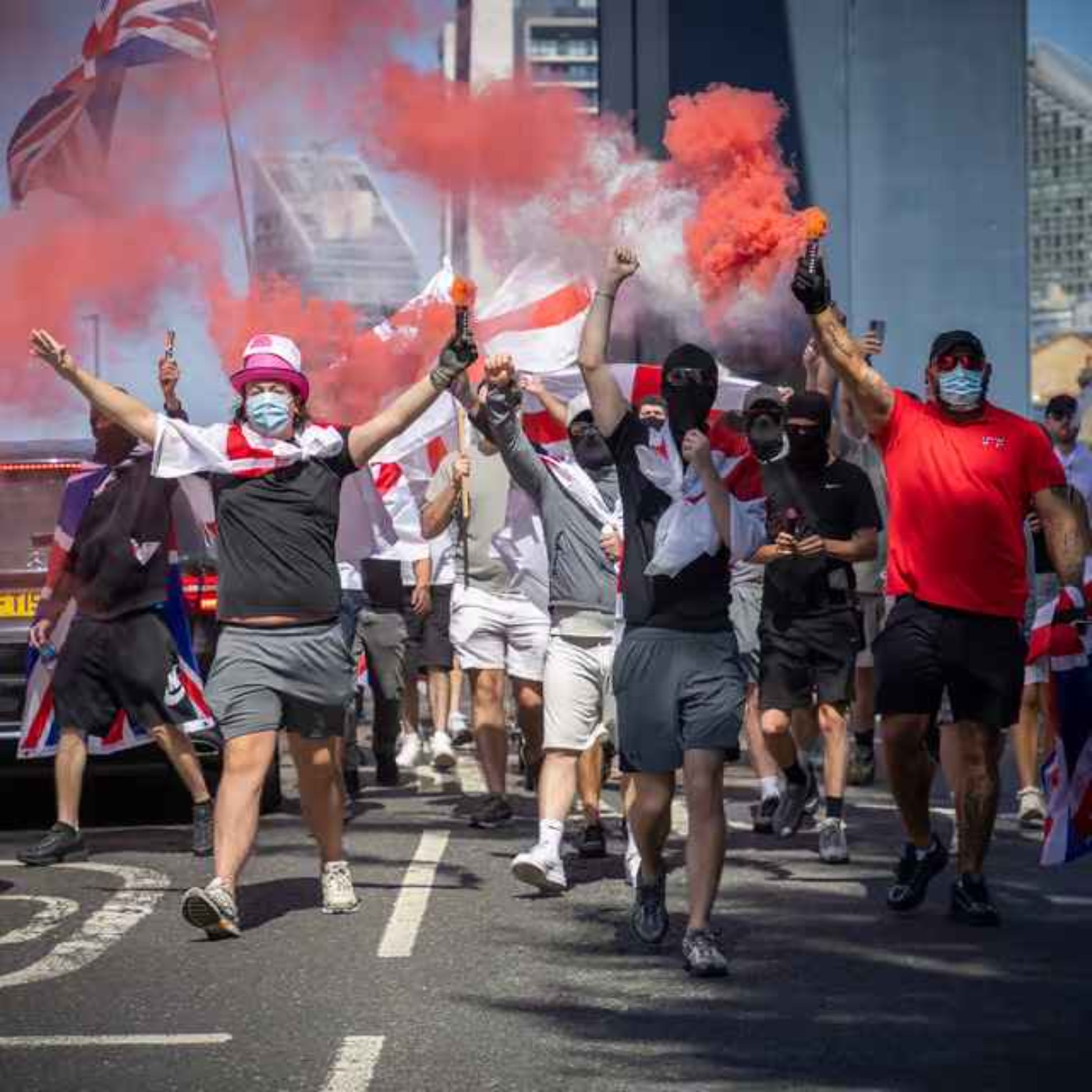
This episode of The Standard delves into two significant topics: the upcoming protests against hotels housing asylum seekers and the return of the Notting Hill Carnival, a vibrant celebration in London.
Written by AI. May contain mistakes.

Get the gist, explore an idea or ask about something said.
 Claude
On The Standard, what are the key points of this episode?
Searching your listeningAutomatic transcript. May contain errors.
0:02Hi, I'm Charlie Duffield and welcome back to The Standard Podcast. If you're new here, hit follow and give us a rating. For all the latest news, head to standard.co.uk. Coming up later in the show, the world's second largest street festival returns this bank holiday weekend as London welcomes the 58th edition of Notting Hill Carnival. Stay tuned for our insider's guide. For me, carnival is my baby. I like hearing what other people think about my culture. So you see them come the first day and they eat the food and they're coming back the next day and they're telling you that they're standing in line again for that food.
0:43I'm putting my culture out there.
0:48But first, dozens of anti-migrant demonstrations are expected over the weekend outside hotels that are used as temporary accommodation for asylum seekers amid mounting tensions over the issue. Two are being staged by a group of protesters known as the Pink Ladies in London, one in Cheshand on Friday night and another in Canary Wharf on Sunday. Nearly 30 protests are believed to be taking place over the next three days, with demonstrations planned from Aberdeen to Exeter, according to The Times. Meanwhile, anti-racism groups are scrambling to coordinate counter-protests, warning that towns and cities could experience the worst disorder since the riots last summer.
1:49It comes as figures released by the Home Office on Thursday showed there are more than 32 ,000 asylum seekers in hotels, which is a rise of 8 % during Labour's first year in office. Shadow Home Secretary Chris Philp said that people have every right to protest over asylum hotels in their area. Joining us now is Khabar Seussu, Director of Survivor Empowerment at Freedom From Torture. He came to the UK as a refugee himself in 2005 after fleeing persecution in Chad. In 2020, he received an MBE for his work. How does it make you feel seeing so many anti-migrant protests? It kind of reminds me a little bit of my time when I came here, seeking protection.
2:32You know, that vulnerable feeling, you know, unprotected and I feel unwelcome. And I've been here for a while now, but I had a feeling that even now, not welcome. And I made this country as home. It raised that feeling, maybe I'm not home yet. Can you describe what your experience was like of coming to the UK as a refugee? It's a journey that I would not like to put anybody through it. So much dangerous and potential that you don't make it and constantly you're on guard. Constantly you may be facing people that can use you and the potential of you being killed is higher too. And you're constantly going through that fear.
3:22It's not easy. And also, whatever that country you step your foot on, you don't have any right. And they may treat you like you're not a human being. You don't have humanity. And then you get somewhere. You think, I reached a final destination. I may be able to think about rebuilding your life. And then you face completely opposite of what you respect from that country too. And then what about when you reached the UK shore? When I arrived in the UK, initially I felt a sense of relief, civilised country, compassionate, after seven months of thruster journey. And I was thinking, at least I'm going to start a new process in my life and try to rebuild my life.
4:08And initially I was put in a hotel somewhere in Margate, because when I came, they said that they could not process me and then they sent me to the hotel. They told me, no, no, we're going to send you to another place, like a better place. You'll be secure. You'll be protected. We're going to give you toothpaste. You're going to have breakfast, lunch, dinner. You can go to the library and all those things. And you have a doctor there. I said, okay, yeah, that's fine. And, you know, they said, okay, can you sign this paper? I was in English at that moment. I wasn't speaking English. I said, okay, yeah, that's fine.
4:39I signed the document. And after signing the document, they took me through a passage. and that's what I realized oh there's something that's not right and then from that passage like underground passage I end up in a prison like van and that's what I thought what's happening and then I was I was put in the immigration detention center and I was there for about a week or something like that and it was really really damaging for me at that moment where my mental capacity has collapsed and I start really experiencing the trauma nightmare PTSD I was released from the immigration detention centre and then they put me in another hotel.
5:17I was in that hotel for six weeks of destitute and then I became homeless for some time. Again, before I was referred to freedom from torture and able to be referred to supported houses. So do you understand what's driving this unrest and why people are protesting asylum seekers staying in hotels? I'm not sure that people really understand why somebody like me come to the UK. I think, you know, the issue of refugee is the narrative is so whipped by, you know, by the government, by the politician. People are not able to put food on the table, people struggling to access, you know, NHS, you know, housings or all those kind of things to divert the conversation, to divert attention away.
6:01You know, saying that it's those refugees that come in, all those resources are lacking because of those people. That's far from the truth people feel afraid the existence is is under threat people think that we is the hotel is like a five-star hotel you know you have your own room no you know in those hotels would four or five people in the same room where you know you share same room you share same toilet you cannot cook people think that how can we suffer and then you put all those people that come in here in luxury i understand people are frustrated people don't see change then therefore people think that oh yeah of course then we are right if the government also you know using that language is to mean that those people are the problem and if the government is not doing the thing that needs to be done so we're going to do it to ourselves you know that's what is happening and people attacking you know hotel and so and so but the government is not taking a strong position against it so then people feel that they have legitimate position to do that but i also say that i think it's also fueled by racism as well.
7:03When the war in Ukraine started, many people in the UK opened the door for refugees from Ukraine, right? Many people opened the door welcoming refugees, the ones give accommodation to people. And the rest of us, we don't look like European or so and so. We don't receive the same treatment. What is different between a refugee from Ukraine and a refugee from Afghanistan? If you treat one with compassion, then treat other ones also with the same compassion. I really give full responsibility to the government about the situation that's really happening now, about the divide within the community, anger that people have against refugees.
7:43It's not only refugees that are struggling with accommodation, it's local people that are also struggling with accommodation. That's the government that needs to do the work that needs to be done. Finally, is there anything else you want to add? I think the majority of us coming here what we want is to feel safe and so that we can rebuild life and so we can contribute to the community where we aim to belong and we want to be part of it we want to be positive light to to the society sometimes when i talk to people people say oh you know we don't mind a refugee like you but then i said to them by when i came in the beginning i was like any other refugee that you're against today.
8:24I was put in the immigration detention center to be deported. And like a few years back, I was given an MBE by the late Queen for the work that I do for torture survivors and sexual violence survivors in the UK and also globally. So if I was not given that opportunity, how would I be able to even get the MBE? Now you see that I'm a good refugee, but that's not the case. Every refugee, all what they need is just an opportunity in order to feel safe so they can be part of a society, so they can contribute positively within the society. And I think that's all what we want. Let's go to a break. Coming up in part two, it's that time of year again when West London is transformed for three days into one enormous party.
9:12We'll see you back here in just a moment.
9:19Welcome back. It's Carnival time this weekend. Despite the murmurs of cancellation and rumours of ticketing, the festival is back for another year. The annual celebration attracts 2 million people and contributes as much as£300 million to the economy. Notting Hill Carnival has been taking place since 1966 and is rooted in British Caribbean culture and community. Here's the CEO of Notting Hill Carnival, Matthew Phillip, speaking about a very significant building, the Tabernacle. The Tabernacle is in the heart of North Kensington, which is where Carnival happens, so it's inevitable that it's always going to play a kind of pivotal part in the development of Carnival.
10:01The Tabernacle is almost the beating heart of Carnival. Lots of meetings happen throughout the year in this space. Bands rehearse here. We have events throughout the year that highlight and showcase Carnival arts. Over the years it's always been an essential space, almost like a hub of the community. For people from all different backgrounds, North Kensington is a very mixed area. The Tabernacle as a community hub welcomes people from all walks of life who use the building and a lot of those are contributors and the producers of Nottingham Carnival, whether they're sound systems, mass bands, steel band players etc.
10:39or even just people from the local community that have an interest and love and support carnival. Whether it's people learning how to play steel pan or making costumes are all what lead up to and tie into Notting Hill Carnival. We're building up to a big crescendo at the end of August. Decades on, Europe's biggest street party is still as important as ever and The Standard has been speaking to some of the people who make it the iconic event that it is. Here are the founders of food truck, Sun Valley Jerk. I'm Michelle. Hi, I'm Omar. And we are Sun Valley Jerk. We founded our business in 2018. Basically just out of the mere love of cooking and wanting to make people feel good about what they're eating and to introduce a lot of the Caribbean stuff as well to people who haven't tried it.
11:26It's Jamaican, predominantly Caribbean. We do like jerk chicken, we do jerk pork, oxtail, curried mutton. It's just taking all the spices from Jamaica and just serving it on a plateau for people to appreciate our culture. We started Carnival in 2016. That was a funny story. No experience. We just wanted to try it. I was in bed and I said, oh, let me apply. Didn't know the magnitude of what was to come. We were naive. What do I expect on the first year? But we've gained experience over the past, what is it now, nine years. We went to the same university in Jamaica. Food was always in my background.
12:11My mother had a restaurant in Jamaica. We met with a mutual friend. Yes, the matchmaker. Actually, me and my friend, we shared a house and she went to visit the friend and we met. And it's just been magic ever since. The weight of a man's heart is through his stomach. So, he's been captivated by my cooking since. I moved to London 20 years ago. I came here in 2014. I'm coming from a banking background. The company that I was working for, they made me redundant. And because we're doing this cooking on the side, we thought that, you know what, let's just see where this takes us. We didn't want 20 years down the line to say, I wonder what would have happened if we tried the business.
12:52So, we're giving it a go. and we've been on the road since, going from strength to strength. You'll do like probably two weeks work in two days. That's what you're doing at Carnival, really. The prepping, just being on the ground, getting everything organised. It's just a lot of work. If you're planning on attending Carnival yourself, regular attendee Soleil is here with some of her top tips. It can get messy. Hi, I'm Soleil and this is my insider guide to Notting Hill Carnival. wear comfortable clothes do not wear any nice clothes because you're gonna end up feeling uncomfortable with the sweat the heat the body beat around there is paint there is chocolate drinks drinks are gonna get spilt if someone's rum punch drops on my t-shirt i'm not really gonna get vexed because i'm probably gonna end up throwing it next tip i would say buy your drink before you get in here what i do i get a backpack from amazon the running running bag like it's got a little straw.
13:52I pre-make rum punch. I put it in my bag and I will be carrying that and that will last me the whole day. Don't pee in a corner. Someone will take, I don't know, but someone might take a photo. If you keep walking up Portobello Road, there is a sound system in like one of the corners, but they have paying toilets for like two, I think it's two pounds, two pounds. The toilet's clean all the time. If you don't want to smell like things that you just don't want to smell those toilets are great for it. My next tip is always to carry cash. There's literally no service here. You'll get one minute of service to text your friend and it's gone after.
14:28Most likely if you want to get food and stuff they will not accept it because their car machines are not working. So carry like at least 20-30 pounds cash. Bring a portable charger if you're here the whole day and some people are here from 9am your phone will die. Also stay hydrated. Always bring a bottle of water. If you drink, you're going to be drinking the whole day. Your body's going to ask for water. There's different types of music in carnival. In my opinion, I always recommend to go firstly through the floats, feel the vibe. If you do see any side road, go through it because you're going to find anything and everything.
15:04And that's one thing that I like. If you're into a bit of techno, there's some place in a corner that plays techno. There's some places that play soca. There's some places that play bashment. In here near Portobello, there's a place every year you walk past, there's people dancing salsa, which I love. And that's one thing that I love about Notting Hill Carnival. You just come here and you're literally feeling the vibe of what London is, which is many cultures and communities just coming together. And it's really good.
15:35And that's The Standard. For all the latest news, head to standard.co.uk. If you'd like to get in touch, please do drop us a line at podcasts at standard.co.uk. We'll be back here on Tuesday at 5pm. Have a great bank holiday weekend.
A wave of protests outside hotels used as temporary accommodation for asylum seekers is set to take place over the weekend. It comes as the latest figures showed there were more than 32,000 asylum seekers in hotels, marking a rise of 8 per cent during Labour’s first year in office. Kolbassia Haoussou, Director of Survivor Empowerment at Freedom from Torture shares his own experience of fleeing from Chad to the UK as a refugee.
And in part two, Londoners are welcoming the 58th edition of Notting Hill Carnival this bank holiday weekend. Ahead of the celebrations, we hear from CEO of Notting Hill Carnival, Matthew Phillip, founders of food truck Sun Valley Jerk, Michelle and Omar, and regular carnival attendee Soleil.
Hosted on Acast. See acast.com/privacy for more information.


