
 Ask ChatGPT



In this episode of The Standard, hosts Helena Wadia discusses two pressing topics:
Written by AI. May contain mistakes.

Get the gist, explore an idea or ask about something said.
 Claude
On The Standard, what are the key points of this episode?
Searching your listeningAutomatic transcript. May contain errors.
0:03Hi, it's Helen Awadia here and welcome back to The Standard Podcast. Coming up, new data has revealed the shocking rate of phone snatching in London, as one phone is stolen in the capital every seven and a half minutes. These devices are very valuable, they're very easy to steal, and that's why we're seeing the numbers. Also, how many people get caught? Well, it's only really one in ten. So you can immediately see there the attractiveness of this crime. We'll be joined by Anthony France, crime editor for the London Standard, to discuss why the number of handsets stolen has more than tripled in four years and the tips and tricks for Londoners to help them avoid phone snatching.
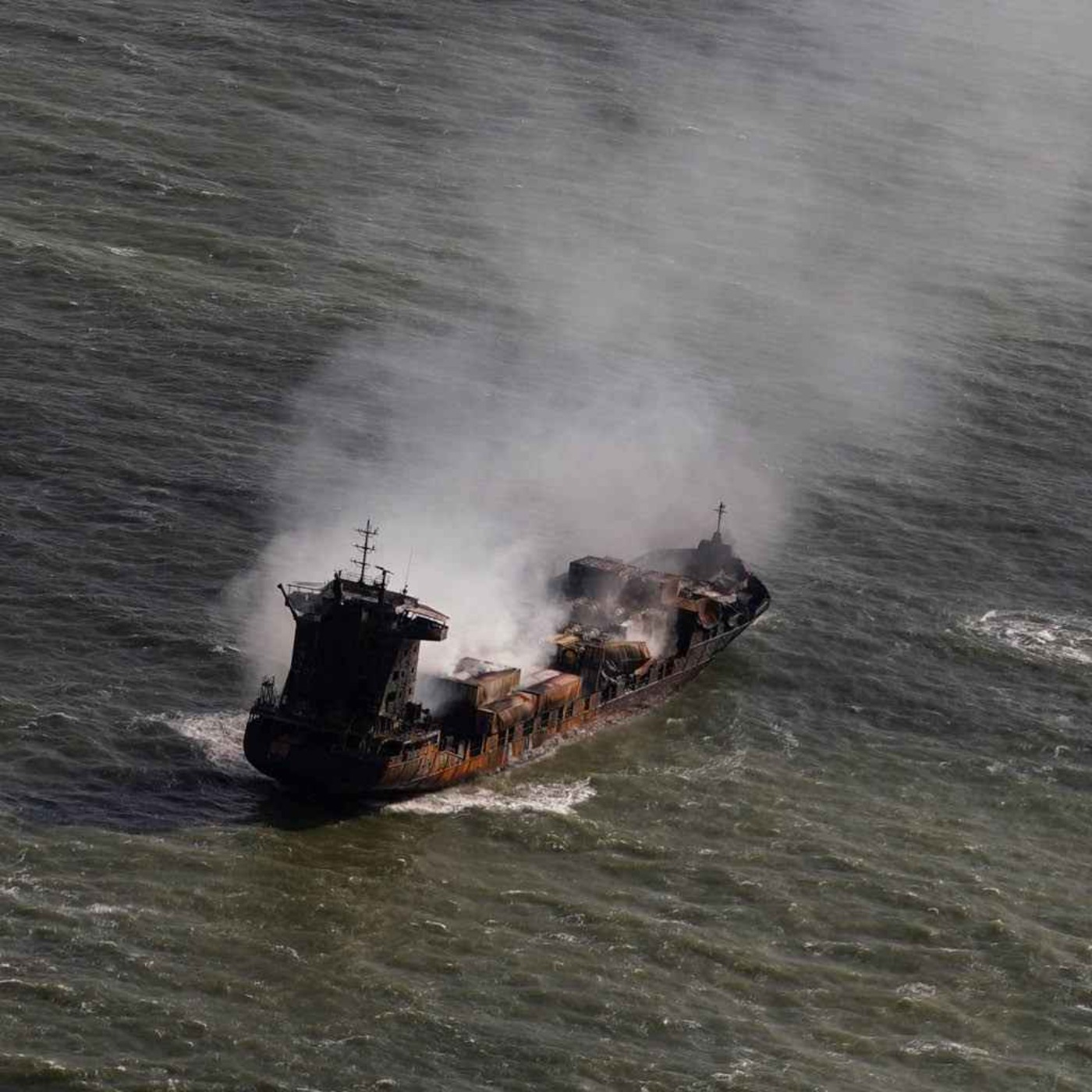
0:50But first, a cargo ship has hit a tanker carrying jet fuel for the US military off the coast of England, setting both vessels ablaze and sending fuel pouring into the North Sea. A major emergency response off the coast of East Yorkshire near Hull is still ongoing. The Stena Immaculate, an 183-metre-long US-flagged chemical and oil products carrier, collided with an 140-metre Portuguese-flagged container ship called the MV Solong on Monday morning. The Solong's owner said one of its 14 crew members was still missing, with the Coast Guard ending its search for the missing crew member. All of the 20-strong crew from the Senna Immaculate are safe and accounted for.
1:37Now, many wildlife and conservation groups have raised concerns about the potential environmental impact of the incident on marine wildlife in the area. Analytics estimate the tanker was carrying about 130 ,000 barrels of jet fuel, some of which is now leaking into the sea. Aside from concerns about the jet fuel, environmentalists are also worried about 15 containers of the chemical sodium cyanide the Salon was carrying, among other cargo, although it is unclear if any of this has gone into the sea. With concerns of the impact on protected areas, joining me now is the Chief Executive of the Marine Conservation Society, Sandy Luck.
2:19Hi Sandy. Hi Helena. Just tell us quickly what the Marine Conservation Society does. The Marine Conservation Society is a charity that really tries to protect the sea. We are all about helping the sea recover to good health. And we work on pollution, especially from chemicals. So this is actually a very key incident for us. We work on making sure that the seas are effectively managed. And we also work on projects that help the sea to regenerate and recover. We have a lot of volunteers who do a lot of beach cleanups, for example, or go and dive to gather data to help protect particular areas. And we also do a lot of work, actually, especially in the area affected by this spill, working with schoolchildren so that they get more aware of the marine environment and help protect it.
3:13So tell us, in what ways can oil spills directly harm marine wildlife? We've got a lot of experience with a lot of oil spills over the years, and they can have catastrophic consequences. They can be devastating for marine environments, or they can't be that bad. It really, really depends on what's being spilled, what the currents are and the wind is. So what we're looking at with the tanker disaster, the collision yesterday, is that there's definitely been jet fuel spilling. There's probably going to be engine fuel going into the sea as well. And then there's this chemical sodium cyanide that we don't really know yet, or I don't know at least whether it has spilled into the sea.
3:59So all of those are really toxic substances, and they could do horrendous damage to the amazing wildlife in that area. Well, let's talk about the wildlife in that area. A lot of the spill is concentrated around the East Yorkshire coast. what type of animals do we see around there? They're really, really important seabird colonies. There's hundreds of thousands of seabirds there and you get puffins, you get avocets. The biggest colony of gannets in England is at Bempton Cliffs. You also get a lot of Atlantic grey seals and they've got their pups. There's a lot of migratory birds in that area and obviously the harbour porpoise also move around a lot.
4:43And both of those could be affected. That could mean that we see those pictures that we've seen before of birds and seals, etc, covered in oil slick, which is really damaging and can wipe out entire populations of birds. So it's a very, very wildlife rich, special, precious area for the marine environment. How important is it to have a fast cleanup response? The faster you can clean up, the less damage there will be. So a fast response is important, but obviously you can only start that once the conditions are safe and there's no danger of air pollution and damage because we don't know what the toxic substances are in the air.
5:25So then a quick response is important if one is required. It might, though, be that the authorities decide that they don't actually have to do anything and that they just let everything disperse naturally. So it really depends on an assessment of the damage. I think it's interesting also that there is an international system that provides compensation for damage from oil pollution, from oil disasters. It's all set out in a series of international conventions. But those conventions don't cover what happened yesterday because it doesn't cover jet fuel and it doesn't cover chemicals. But there is a convention, an international convention called the H &S Convention, which does deal with that and would provide compensation and would provide for cleanup and to cover cleanup activities.
6:18but it's not in force it's been around for years decades really but not enough states have signed up to it and i think that's something interesting because it could be a really useful way to help address the damage and we also know that the more companies know that they're going to be liable for something, the more they try and prevent damage. So I would say that it would be a really good idea for states to take this convention that's been sitting around for years seriously and sign up to it so that it can be used should something like this happen again. Could there be a longer term impact of this oil spill on food chains?
7:03Yes, again, it's so difficult to say at the moment because we just don't know exactly what's happened yet. But we are talking about potentially toxic chemicals. They could accumulate, they could enter the food chain, they could affect reproductive cycles down the line and over time. So we just don't know yet whether those effects are going to happen, but they could. And it's also very possible in the immediate aftermath that fisheries will be closed for a while just to make sure that there's no impacts on the fish stocks and the safety and the food of the fish. Do you feel that there is enough attention on the impacts on the wildlife and the environment when these type of oil spills happen?
7:49I think when oil spills happen, the first thing that is important is to make sure all people are safe. Once the oil spills happen, there is a lot of attention on the damage to the marine environment that happens and there are attempts to clean all that up but really what we should be doing is doing absolutely everything to prevent them from happening in the first place and that's something that we really need to focus on because the busier our seeds get and they are getting busier the more we need to pay attention to how we plan the use of the season how we manage that so that we do everything we can to prevent disasters like this from happening
8:32let's go to the ads now in part two we'll be joined by the london standards crime editor anthony france to discuss the shocking rate of phone snatching in london and if there are any solutions we'll see you back here in just a moment
8:53Welcome back. Mobile phones are being stolen in London at a rate of one every seven and a half minutes as the number of handsets snatched has more than tripled in four years. Figures from the Metropolitan Police, released as part of a Freedom of Information request, show criminals took over 70 ,000 devices last year. To tell us more about why this crime seems to just keep on rising and what, if anything, can be done about it, I'm joined now by the London Standards crime editor, Anthony France. Hi Anthony, thank you for joining us. Hello, hi. So were you in any way shocked or surprised by the new statistics that an average of 192 phones a day are stolen in London?
9:38This is a problem that is only getting worse and worse. Every time statistics come out about the number of mobile phones snatching in London, we're now up to 192 a day. So the latest figures are showing that the number of handsets being snatched in London has tripled in the last four years. And it's now at the rate of one every seven and a half minutes in London. 70 ,000 devices were stolen in the capital last year. These are from the Metropolitan Police who, along with the City of London Police and British Transport Police in London, cover the capital. So it's a pretty good indicator of just how bad the problem is getting.
10:21So tell us, why is this such a common occurrence now? It's a common occurrence because many of us, we have a device in our pocket that's worth about£1 ,000. and to the criminals that is extremely lucrative it's a very easy thing you ride past somebody either on an e-bike or a moped you snatch the phone and if the phone is open not only have you got the device but also you've got access to their banking to their personal data and you can use that if you're a criminal for fraud you know to siphon people's bank accounts or if there's something on there that somebody would not like people to know about.
11:00You can also use it as a sort of blackmail tool as well. So these devices are very valuable. They're very easy to steal. Also, how many people get caught? Well, it's only really one in 10 people are ever caught stealing mobile phones. So you can immediately see there the attractiveness of this crime. The Metropolitan Police have estimated that phone thefts are now a 50 million pound underworld industry. Now, a lot of these phones are sent to China. Can you explain what is likely to happen to a phone when it's stolen? Yes. So if you've got a phone and it's been stolen, and let's say the device is open and they're able to get onto your iCloud credentials, so they can turn that off, turn the Find My Phone off if you like.
11:48And then of course, the raw materials and the device itself are very useful because you want to go and reset the device. I mean, we see these devices turning up, particularly in parts of China, also parts of the Middle East and Africa as well. And, you know, they are very valuable pieces of kit. Where are the hotspots in London for phone robberies? So very much in London, the hotspots are around the very centre of London, westminster and the west end particularly outside tube stations or train stations where people are more likely to come out of a tube station hold up their device looking for directions to where they're going and as i said if you're on one of these particularly these e-bikes you know you can you can snatch it and you could be away and in the 10 minutes it might find you to find somebody who could ring the police, well, that person could be in North London by that time on one of these electric bikes.
12:47Well, then let's get on to tips and tricks for how to avoid these snatchings, and also for how people can protect their phone. So what's the best way to avoid a snatching? Well, the best way to avoid a snatching is being very aware of your surroundings. So for example, if you are going to a destination that you've not been before, plan ahead. You know, if you're going to the theatre, don't take your phone out as you're walking up the street. And we see it all the time, people walking up and down the street, you know, looking for directions on their phones. So that is a very good one. Keep your phone to yourself, be very aware of your surroundings.
13:24If you've got Find My Phone or some other similar thing, turn it on. City of London Police are now doing a new thing where you can get a sticker that is impossible to remove and put on your phone. And also, if unlikely event that your phone gets stolen, you know, compare the market who did this particular bit of research, getting the new figures. They're saying, well, check that your phone is covered by your existing home insurance. And if not, you should buy separate cover. And if your phone does get stolen, what are the first things that people should do? So if your phone gets stolen, the very first thing you should do is contact the police, because a lot of people will wait 30 minutes to contact the police.
14:07If you see somebody that you, you know, you can immediately trust nearby, a police officer or whatever, you know, signal to them. Or if it's the case that you've had to ask a friend or a member of the public to call the police, because those vital first minutes are really crucial for the police to catch these offenders. Well, we've spoken about how to avoid phone snatchings, but many people are likely to be very frustrated by this because it puts the onus on the victim to avoid the crime rather than on the criminal themselves. So as an example, my phone got snatched last year in the about 10 seconds I took it out to check bus arrival time and I reported it to the police and then the very next day they told me they were closing the case because even if they bothered to retrieve the CCTV they wouldn't be able to see who the person was who snatched it because he was covered from head to toe, wearing a face mask and sped away on an e-bike so really my question is can phone snatching ever be stopped by the police or are phone snatchers just so brazen now because they know they'll get away with it i mean as you say the frustration for a lot of people who get their mobile phone snatch is the fact that they won't do anything the police won't do anything about it this is all down to the manufacturers I mean, they can literally design out this.
15:28If you were to introduce, which I know the police are lobbying and the Home Office are lobbying the boat, if you can produce a kill switch on these phones where literally you ring that number from someone's phone and that device cannot be used again, it can't go to China, it can't go anywhere else. This problem, I mean, I remember when I was writing about this last year, we're talking about 50 ,000 phones. At the end of last year, the deputy commissioner was talking about 64 ,000 phones. Now we're talking about 70 ,000 phones. Unless this issue gets designed out, it's just going to increase and increase year after year.
16:08And in terms of police powers, are there any new powers being introduced to give police a greater chance of catching these criminals? Yeah, so the government are looking at introducing powers that the police will have so they don't have to get a search warrant. If, for example, a phone is bleeping to say that it is a particular address. Now, that sounds very good because obviously police, you know, by the time the police have gone to a magistrate to get a warrant, you know, the phone might have been moved on. So if the police have got evidence or you have evidence to say your phone is an address, you ring the police, police go and they retrieve it.
16:43The only problem with this is that, of course, if it's a house, a block of flats or a house of multiple occupancy, the location may not be as accurate. We hear it all the time, frustration from people. My phone is at this address. The police can't go and get it. And it could be a solution to that.
17:06And that's The Standard. For all the latest news and to read more about the stories featured in this episode, head to standard.co.uk. If you'd like to get in touch with us, we'd love to hear from you. Drop us a line at podcasts at standard.co.uk.
A US military fuel tanker and a cargo ship that collided off the coast of England, setting both vessels ablaze and spilling jet fuel into the North Sea, has raised concerns about the environmental impacts. How bad is the damage, and what happens next? Helena Wadia speaks with Marine Conservation Society CEO Sandy Luk about the potential risks to marine life and protected waters.
In part two, we join The London Standard’s Crime Editor, Anthony France, to discuss the shocking rate of phone snatching in the capital.
Figures from the Metropolitan Police show one phone is stolen in London every seven-and-a-half minutes.
Hosted on Acast. See acast.com/privacy for more information.


