
 Ask ChatGPT


 The Standard
20 Jun 2025 · 17m
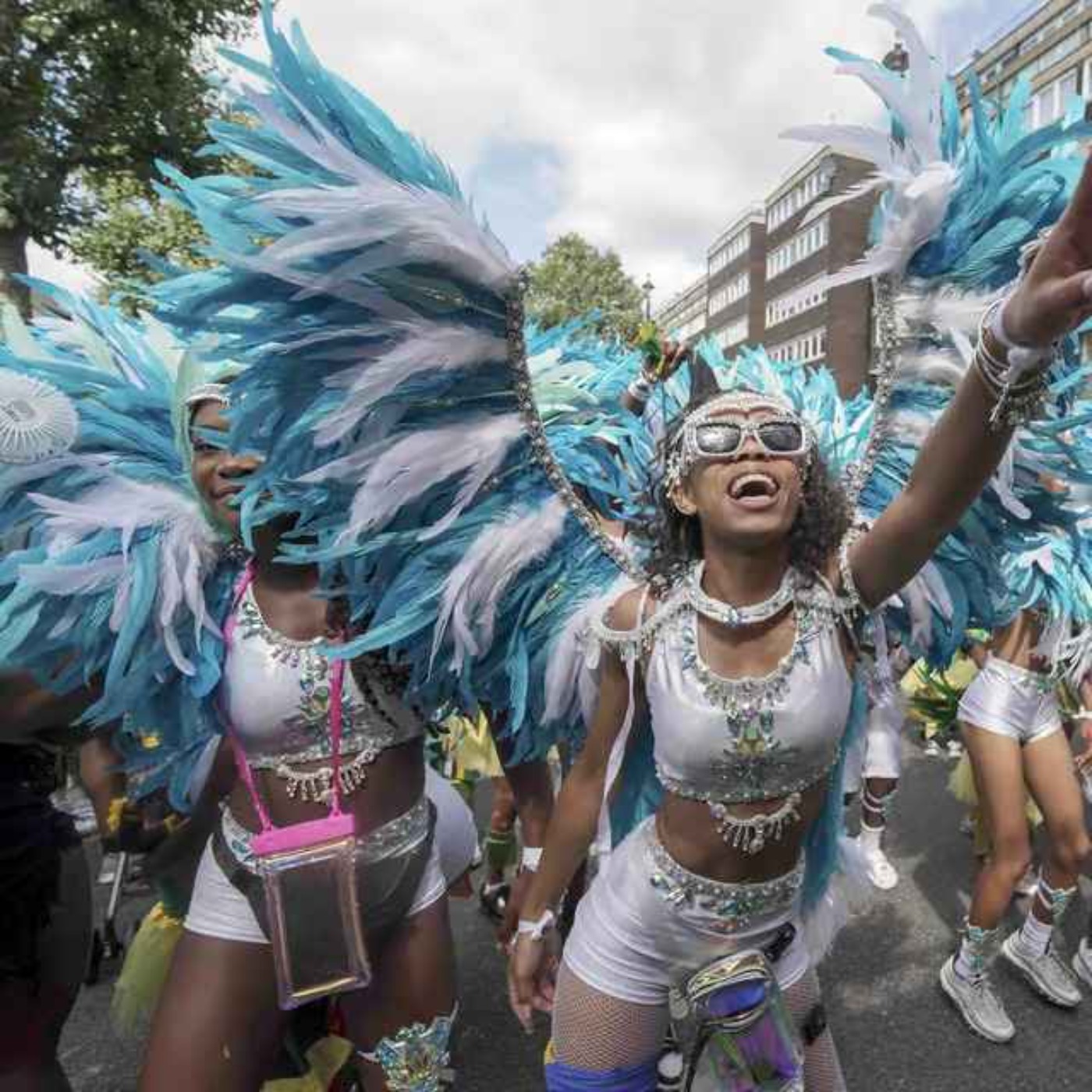
Notting Hill Carnival under threat - plus Jack Guinness on LGBTQ+ stories
the potential cancellation of the Notting Hill Carnival due to public safety concerns and a conversation with Jack Guinness about his book, The Queer Bible, which highlights the importance of sharing LGBTQ+ stories.
Written by AI. May contain mistakes.

Get the gist, explore an idea or ask about something said.
 Claude
On The Standard, what are the key points of this episode?
Searching your listeningAutomatic transcript. May contain errors.
0:02Hi, I'm Charlie Duffield and welcome back to The Standard Podcast. If you're new here, hit follow and give us a rating. For all the latest news, head to standard.co.uk. Coming up later in the show, why London will always be LGBTQ plus friendly. At its core, it is a place where you can come and be yourself, be your true self and find your tribe, your chosen family. That's what London represents to me.
0:44But first, the future of Notting Hill Carnival is in doubt after a review identified critical public safety concerns due to huge crowds. It comes after London Mayor Sadiq Khan was urged to rescue the carnival following a warning that it could be cancelled without urgent funding. Here he is speaking at City Hall on Thursday, sharing fears expressed by the Metropolitan Police about the risk of a mass casualty event. I've seen images of some of the crowds at some parts of the day and watching them made me frightened. One of the advantages we have is expertise based on the tragedy of what happened at Hillsborough and God forbid we now know there's a concern around crushing and actions weren't taken to ensure we did whatever we could to minimise the possibility of that happening.
1:41The Carnival is held annually over the August bank holiday weekend in the streets of West London, and it's the second biggest street festival in the world. Joining us now is the Standard City Hall and Transport editor, Ross Lydell. Ross, tell us more about Notting Hill Carnival and why the police are concerned. Carnival has existed since 1966 its roots go back to the sort of West Indian community that came to London during and after the sort of Windrush generation and it was very much an event that sprung up with showing the great pride that this community had in being in London and wanting to celebrate its roots as well it's obviously outgrown that but it's still seen as a key event at the scale of it is absolutely enormous the political dimension may have changed in the modern times and it really has become an issue about how to keep this many people safe at such a big event where essentially it's organised slightly on a voluntary basis.
2:41So unlike going to see a massive concert at Wendley Stadium, this is a trickier event to police and to manage. And also the other factor here is that many of the residents don't really like it. Notting Hill is a very affluent neighbourhood in general and what you tend to see several days before Carnival gets going is that flat and house upon house are boarded up by the councillor, by their owners, to prevent the houses being damaged by antisocial behaviour. And many of the residents and many of the older people actually flee for a long weekend. Some of them actually taken out of London by the local council.
3:17It's probably not my cup of tea, but many, many thousands do enjoy going. It's always been a community event, but it's in narrow streets. Obviously, Ladbrook Grove itself, the main focus of Carnival, is a wide, long boulevard to all extent, linking Holland Park Avenue and up to sort of Kenzo Green. But many of the other streets all around Portobello Road are very narrow. The crowds get crammed and there are various pinch points. And this is the biggest concern of the Metropolitan Police. It says that, yes, there were two murders there last year and multiple violence. And many police officers are said not to actually enjoy working there.
3:53But the bigger concern to the police is the risk of what they call a mass casualty event. So why is Carnival under threat? For many years now, there has been a serious issue about violence at the Carnival and also more recently about overcrowding. After last year's event, when there were two murders that took place either during or alongside Carnival and general levels of violence, including more than 100 knife attacks, the Metropolitan Police made clear its very serious concerns, particularly about a sort of major crushing incident that would lead to what it called a mass fatality event. The Met Police then essentially ordered the organisers of the carnival, a sort of local community trust, to conduct an independent review of safety.
4:41That came back a month or two ago, and since then quite a row has broken out over the forthcoming carnival this August about how it's essentially made safe for about the new people or so who attend the event. And what has London Mayor Sadiq Khan said? So Sadiq Khan was asked about the carnival and plans for the 2025 event at Mayor's Question Time on Thursday at City Hall. He said that he shared the concerns of the Metropolitan Police about safety and security going forward. And crucially, he also said that he had viewed the CCTV footage of the 2024 Carnival. He said he found that footage frightening.
5:23And also he made mention of the Hillsborough football disaster. Back in 1989, 97 football fans died at a FA Cup semi-final involving Liverpool, which actually is his team. So anybody who knows anything about football knows about the Hillsborough disaster. and to hear it compared in a similar vein to the carnival was quite stark. What he was saying was, knowing what we know about what happened at Hillsborough and now knowing what we know about last year's event, we cannot, in all good sense or a sort of duty, allow things to progress to have any sort of risk that there's some sort of repetition of what happened at Hillsborough.
6:02So he is very concerned. OK, so what happens next? So the current state of play is that there's a standoff between City Hall and the government. The Carnival Trust, following this independent report, essentially says it needs more money to help provide more stewards. City Hall says it already provides about a million pounds a year to help the Carnival go ahead, primarily money that's spent on stewarding and all sorts of safety. Obviously, the cost of the Metropolitan Police of providing thousands of officers over the weekend as well is vast. Both local councils, Westminster and Kensington and Chelsea, provide money as well.
6:38But the latest development is that the Metropolitan Police Commissioner, Sir Mark Rowley, has said in his report to next week's London Policing Board that he remains significantly concerned that with just a matter of weeks to go until this year's event, that essential funding has not been secured. And what Sir Mark also said is that with each week that passes, the ability to improve and to implement these recommendations on how to make carnival safer are becoming more challenging because event management companies will hesitate to take on such a big event at such short notice. So in short, it's really quite a mess.
7:17As it stands just now, police are very concerned. There doesn't seem to be anywhere obvious for money to come apart from the government. And both sides are at a bit of an impasse. Finally, do you think Carnival will get cancelled? Will it continue? Probably. But safety is paramount and measures really need to be taken here to make sure that a disaster is not about to happen. Let's go to a break. Coming up in part two, the importance of queer stories as LGBT rights are rolled back. We'll see you back here in just a moment.
7:58Welcome back. The rainbow flags are out, which means that this June is Pride Month 2025. The official theme this year is Threads of Connection, which emphasises the strength and unity of the LGBTQ plus community. And for Jack Guinness, London's pride doesn't switch off when the parade ends. His collection of essays, The Queer Bible, is a rallying cry to bring LGBTQ plus stories that for too long have been erased or hidden out into the light. As the paperback edition is released, I spoke to Jack about his work, his love for the capital, and how difference is a superpower. Jack, tell me why you wrote your book, The Queer Bible, and what inspired it.
8:46It is a collection of essays by my heroes writing about their queer heroes. It's my love letter to the queer community. When I originally wrote it, I had no idea how far we would backtrack as a society and a culture. We've seen the Supreme Court judgment that defines a woman as biological sex. We've seen Trump bring in so many repressive laws. Yesterday, they said that they were renaming the Harvey Milk Naval Ship. So we're witnessing LGBTQ plus erasure. And the reason why I wrote the book, it started out really as me wanting to kind of commemorate and share incredible stories from history about people that I thought everyone should know about.
9:31I really wrote it for my younger self. I grew up during Section 28, which was the conservative government policy that meant that homosexuality couldn't be promoted in schools. That created a culture of silence where teachers, staff at schools, the pupils, everyone was terrified to talk about homosexuality, let alone non-binary identities or gender identities or transgender gender identities. So that meant that I grew up completely cut off from any history or mention about my community. So hilariously or sadly, tragically, if you want, I grew up thinking, oh my gosh, I'm the first person to ever feel like this.
10:13As I grew older, watching Channel 4 late at night or going through the library and reading people like E.M. Forster and Oscar Wilde, I started to learn that not only was I not the first person that was gay, but that I was descended from a line of fabulous, amazing people. So in the beginning, this book was just about sharing some of those stories. So who will readers hear from? The queen of the gay mafia, Elton John, very kindly agreed to contribute. Graham Norton, heroes like Monroe Bergdorf, Lady Phil, who's the founder of UK Black Pride, Mae Martin, the brilliant comedian, Paris Lees, whose show What It Feels Like for a Girl has just come out on BBC iPlayer.
10:53How has the purpose or intention of your book changed since it was published? So my book started out as a celebration and now it's more of a rallying cry. We've seen this wave of hatred towards LGBTQ plus people, especially trans people. And we've also seen the forced erasure of LGBTQ plus identities. You know, on the government website in America, on the Stonewall memorial page, They've removed any reference to trans people. Now, trans non-binary people, Black people, Latino people were at the forefront of the Stonewall uprising. They were the first people that said no to police oppression and fought back.
11:36And that was the seeds of what we now think of as pride celebrations, which have become very commercialized now. But their roots were really in uprising, in resistance, in politics. And so what we're seeing now is a kind of a looking back to that time where trans identities, where LGBTQ plus identities were erased. And we've seen in history what happens when you start removing names. First it starts with names, then it starts with histories, and eventually it leads to the erasure of people. And we've seen that happen in history. We know going all the way back to ancient Rome and Greece, there have been gender expressions and sexuality expressions that differed from what we consider now the norm.
12:24The queer Bible is about saying, no, we've always been here. This is quite a kind of modern, puritanical, colonial view to try and erase it all. My fear is we are seeing a huge rise in violence and homophobia against our community. And it's terrifying to think where this might end up. The Queer Bible is now me trying to memorialise and capture these stories in the face of forced erasure. Let's talk about London. What does this city mean to you? London has always been a melting pot. That's why I love London. That's London's strength. It's all these different cultures coming together. It's like loads of pieces of straw that maybe are stronger when they're wrapped into a rope.
13:07And that's what London is. That's when it's at its most beautiful. It's the vibrancy of the music, of the culture, of the food, of the difference coming together. It's beautiful that we're different. I don't want everyone to be like me. It would be boring. And I find myself really annoying. And so do my friends. But we're also similar. And I feel that in London, more connects us. We have more in common. Our interests intersect more than they diverge. I was interviewing Munro Bergdorf for her film called Munro Bergdorf Love and Rage, which charts her career, especially over the last three years, because she's been at the forefront of Black Lives Matter, of having really difficult conversations about race, receiving a huge amount of online hate, and then now in the face of the culture wars and seeing rights for trans people being rolled back.
13:55And I was amazed that she said how much she still loves London and that London feels like a relatively safe place to be a trans woman. And that made me so proud that in the face of very difficult political climates and really scary times and a rise in attacks on our community online and unfortunately physically in real life, that London still is that beacon of joy. And I'm very privileged I got to grow up here, but I know friends that get the train down to London and the anticipation and the excitement and then moving here and the power of finding your tribe, of your chosen people, that's not unique to LGBTQ plus people.
14:40We all do it. As teenagers, we all feel alone. We all hate our families and our siblings. And we look around at our school and think, I hate all these people. I want to go and find my tribe. And that's what London represents to so many people, not just in the UK, but around the world. You've written about how in these bleak political times, younger generations give you a lot of hope. Can you tell me more? Absolutely. The next generation feels so politically activated. Potentially the cost of living crisis has meant it's so impossible now for young people to get on the property ladder that they're really freed from the hamster wheel that so many other Londoners are in.
15:22And they're just like, do you know what? I'm going to challenge the status quo. I'm going to be politically engaged. I'm going to call for social justice. And I'm really feeling that punk energy coming through in younger people, that their music, the content that they're creating online and their political engagement is incredibly inspiring. And finally, what can we all learn from the LGBT community? We see young men, the highest cause of death for them is suicide. It's so sad. Toxic masculinity cages all of us in a society. It's the root cause of misogyny, of homophobia, of transphobia, of violence against women, which is what we should actually be talking about instead of access to bathrooms.
16:07The queer experience, LGBTQ plus identity, is about freeing us all to be our true selves, living without fear and experiencing joy. And I feel that London is the place to do that.
16:24and that's the standard for all the latest news head to standard.co.uk and if you'd like to get in touch please do drop us a line at podcasts at standard.co.uk we'll be back here on monday at 4 p.m we'll see you then
The future of Notting Hill Carnival is in doubt after a review identified ‘critical public safety concerns’ due to vast crowds. The Standard’s City Hall and Transport Editor Ross Lydall has the latest.
And in part two, to celebrate London’s Pride month, Jack Guinness talks about his book ‘The Queer Bible’, his love for London and the importance of sharing LGBTQ+ stories.
Hosted on Acast. See acast.com/privacy for more information.


