
 Ask ChatGPT



Description: From London, The Standard podcast features discussions from top news insiders on pressing topics, including politics, culture, sports, and fashion. It airs Monday to Friday at 4 PM.
The episode covers the proscription of the campaign group Palestine Action under anti-terror laws and features a discussion with singer-songwriter Floweroverlove.
Written by AI. May contain mistakes.

Get the gist, explore an idea or ask about something said.
 Claude
On The Standard, what are the key points of this episode?
Searching your listeningAutomatic transcript. May contain errors.
0:02Hi, I'm Charlie Duffield and welcome back to The Standard Podcast. If you're new here, hit follow and give us a rating. For all the latest news, head to standard.co.uk. Coming up later in the show, meet the London-based singer-songwriter, opening for Olivia Rodrigo at the British Summertime Festival in Hyde Park.
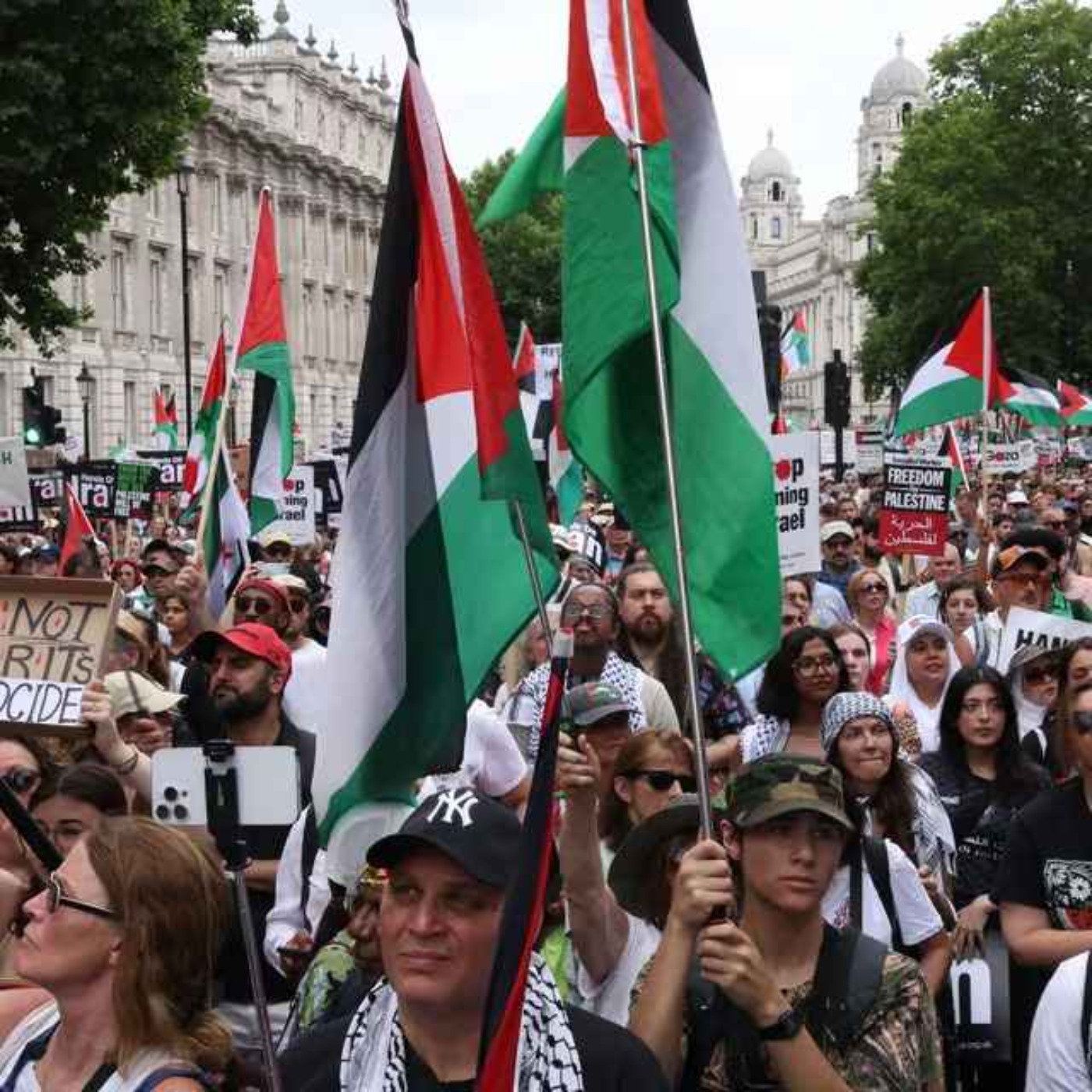
0:34But first, the Metropolitan Police Commissioner Sir Mark Rowley expressed his shock and frustration today over a planned protest taking place in Westminster in support of Palestine action. This afternoon, the government banned the campaign group under anti-terror laws following its vandalism of two planes at an RAF base. Here are the protesters in action earlier today.
1:09A spokesperson for Palestine Action previously accused the UK of failing to meet its obligation to prevent or punish genocide. The Home Secretary Yvette Cooper updated Parliament today regarding the government's intention to prescribe Palestine action, confirming the move to ban the group. A prescribed organisation is an organisation or group that is illegal to join or show support for because it has been identified as being concerned in terrorism. The former Scottish First Minister Hamza Youssef previously said the government was abusing anti-terror laws against pro-Palestine activists, but Campaign Against Antisemitism and the former Home Secretary, Suella Braverman, have welcomed the news.
1:57Before the announcement, I spoke to Ruth Ehrlich, Head of Policy and Campaigns at the civil liberties and human rights organisation Liberty, to find out what it could all mean. Ruth, what's your reaction to the news that Palestine action could be prescribed? We were really concerned by reports over the weekend that the government is intending to proscribe Palestine action, which essentially deems its activists and those who support it as terrorists. We have concerns that this decision is not proportionate. So we're calling on the Home Secretary to explain how she's come to the conclusion that Palestine action should be prescribed.
2:39The process of prescription uses a really broad terrorism definition. And while there is a framework for the Home Secretary to then kind of assess the individual circumstances to see whether it's proportionate to then prescribe it and that the effect of that is going to mean that many people risk being labelled as terrorists and that's going to have a really chilling effect on how people make their voices heard through protest. What has Palestine Action said about their reasons or motivations for using spray paint on two RAF planes? It's not about the specific actions of Palestine action. I think this is a broader conversation that needs to take place about direct action, something that has taken place for years and years and years and years.
3:22If you look back to the suffragettes, they are known for direct action, for activities that caused criminal damage, disruption, things considered to be really unacceptable at the time. Direct action is something that has been a part of protest movements for as long as protest has existed. So it's really important when we have these conversations to put them in the broader context of if this is happening to one organisation, one protest movement, whether or not you agree with it, it may then be applied to another protest movement that you do really agree with. These things are very, very principled.
3:57And it's therefore important that we have quite strong scrutiny and scepticism of when powers are brought in that restrict how those groups can act. And in this really extreme case, in whether or not they're labelled terrorists. OK, but can you explain a bit more about what Palestine Action has done, which has prompted the government to react in this way? I'm speaking with the kind of publicly available information that's available to everyone. Obviously, I'm not privy to other sensitive kinds of information. But what we've seen from Palestine Action is activity that's caused criminal damage. We saw the action at the RAF base last week.
4:35Activity that absolutely falls under the direct action category is the type of action that we've seen from other protest groups over the years, and obviously has caused some damage, which has also resulted in criminal arrests, because that tends to be what happens to direct action is intentionally causing some kind of public disorder that then results in arrests, and that's kind of part of the strategy. So we know that this is something that Palestine Action has been doing for several years now. What the real escalation is, seeing the Home Secretary use these counter-terror powers in response to a direct action group whose tactics mirror those of protest movements gone by.
5:14What will happen to the group's members if ministers do go ahead with this? The number of people who are carrying out this kind of direct action, These are obviously small numbers, but in terms of people who support Palestine Action, that support is massive. On social media, they have hundreds of thousands of followers. In any protest movement where there are different groups and subsections, there's not going to be real delineation between who's organising what and who's standing where in which march, etc. So it's perfectly possible that people are expressing their solidarity through multiple different protest movements and groups, social media channels, marches, community groups.
5:51and may inadvertently be caught up in something that they absolutely otherwise wouldn't want to be or would be very scared of being associating with people who have been branded terrorists. You know, regardless of whether or not that decision is correct, that puts people in a really difficult position. Can you remind us how the government has been trying to crack down on protests in recent years? We can't divorce what's happening to Palestine action from the broader context, which is significant clampdowns on how people can make their voices heard through protest. The last government brought in two massive pieces of legislation, which made it much harder for people to make their voices heard.
6:29So firstly, the Police Crime Sentencing in Courts Act of 2022, swiftly followed by the Public Order Act of 2023, which introduced loads of new police powers, new criminal offences, increased sentencing, increased fines, and made it much harder for people to protest and take to the streets without fear of being penalised in some way. What I would say is that, yes, this announcement today that is probably coming on prescription is part of that context, but it's also the police have powers already to deal with criminal activity. So where protest action crosses a threshold, you know, we've seen protesters arrested for criminal damage, for other things that might have crossed that threshold.
7:11The powers are there, this extra step to brandish people, tarnish people as terrorists is a really unnecessary and worrying escalation. So what sort of precedent does this set? This is one of the things that we want to discuss with the Home Secretary because there is a list of prescribed groups. When you look through them, I'm not sure that many of them have been prescribed just for causing criminal damage, which is one of the criteria in the terrorism definition. Again, I don't think for many people, the definition of terrorism constitutes just causing criminal damage and isolation. And it's really important that we are alert to the risks of misusing counter-terror legislation in a way that captures otherwise behaviour that is undesirable, inconvenient, or disruptive, or however negatively people may perceive some of that action or experience it.
8:05Is it terrorism? That's a very big question, and we have to be very, very careful about how we ask it and answer it. Finally, do you have anything else to add?
8:40right to freedom of assembly and the other ways that people can come together to make their democratic voice heard. It's very, very dangerous if we start labelling people as terrorists for taking part in protest activity and by prescribing one organisation for a small number of people carrying out very specific direct action that actually really risks a serious chilling effect which will put people off taking to the streets and taking action in other ways.
9:09let's go to a break coming up in part two the new pop star about to break big we'll see you back here in just a moment
9:28welcome back now breakup anthems are all too common in pop music but there's no feeling quite like having a crush. And for the up and coming London based singer Flower of Love, that's what inspires her lyrics. To find out more, I spoke to The Standard's culture writer, India Block. India, who is Flower of Love and where might people have heard her music before? Flower of Love is a London based singer. She's very young. She's still in her teens. And her real name is Joyce Sissy. You may have heard her if you were at Glastonbury last year. She played a show there. Her music has also been in some big sort of cultural touchstones.
10:10So her song Love You was featured on Heartstopper, which was a big Gen Z Netflix show, episode eight of season three. She's also had her music featured in an advert for R.O.D., beauty brand of Hayley Bieber, obviously Justin Bieber's wife. So she's definitely already been around. You may have heard her music and not knowing who she is. And I think she's about to get a whole lot bigger. How did she break into the industry? So she actually began her creative career modeling. When she was 15, she was signed to some pretty big shows. She walked in Paris Fashion Week. She's done campaigns for Gucci.
10:48So she comes from quite a visual aesthetic background, but says that her one true calling has always been music. And so she's been making music and is signed to Capitol Records. Who are her musical influences? She says her inspirations are very nostalgic sort of music she grew up listening to, but also the music she wishes she had heard growing up. So ABBA, obviously nostalgic for a lot of us, but also remember, she's very young. Justin Bieber for her, I think, was a big soundtrack to her younger years. all the sort of pop, romance, singers. But yeah, nostalgia, your mileage may vary as to whether that's the music of your 20s or your early years.
11:36Can you tell us a bit more about some of the unique iconography she uses? Yeah, so I think this is a really interesting theme, especially with women who are making music at the moment, is what I think on the internet we'd call Easter eggs. So we know Taylor Swift is really good at dropping hints and clues for fans to decipher. And what Joyce uses as the term is lore. So that's L-O-R-E. So a backstory, almost a mythical world that she is creating that fans can engage with. And because of her fashion brand, she often sends these coded messages through her outfit. So her big thing at the moment is socks.
12:16So she'll often have little snippets of text hidden in her socks in her shoots and her music videos. And those are sort of blues for the dedicated fans to follow. If you've been following Sabrina Carpenter's Short and Sweet tour, you'll know that she wears tights that have lyrics printed around the thigh area, almost as a garter. So this sort of multi-sensory world that women and music are creating at the moment. What sort of themes feature in her songs? So she sings about love, but I think the interesting thing is, whereas a lot of the music we're hearing at the moment is about heartbreak and people getting messed around, Joyce loves to sing about crushes.
12:58Very fun, upbeat, that kind of effervescent feeling of having a crush on someone, which I think is a motivating force for a lot of people. So what's next for her? So she is going to be playing at British Summertime Festival at Hyde Park this Friday. So I'm going to go down and see her there, which I'm really excited about. She'll be opening for Olivia Rodrigo, who is, again, one of her sort of icons. So she's really excited about that. She's been opening for Halsey in her North American tour. And she's going to be playing at Lollapalooza in Chicago. and she's teased that she's got some new music that's going to be coming out sort of towards the end of summer and the autumn.
13:42And finally, do you have a favourite song of hers to recommend? I think her Valentine's Day drop is a really good one. It's called I've Seen Your Ex. Also would really recommend the music video for that. It's very fun and very fashion.
14:00And that's The Standard. for all the latest news head to standard.co.uk if you'd like to get in touch please do drop us a line at podcasts at standard.co.uk we'll be back here tomorrow at 4pm we'll see you then
The campaign group Palestine Action has been proscribed under anti-terror laws. Before the announcement was confirmed, Ruth Ehrlich, Head of Policy and Campaigns at the human rights organisations Liberty, explained what it could all mean.
And in part two, The Standard’s culture writer India Block tells us about Floweroverlove, the London-based singer-songwriter who is opening for Olivia Rodrigo at the British Summer Time Festival in Hyde Park.
Hosted on Acast. See acast.com/privacy for more information.


