
 Ask ChatGPT



In this episode of The Standard, host Charlie Duffield discusses key political developments from the Labour Party Conference in Liverpool. Chancellor Rachel Reeves emphasizes her commitment to not raising taxes on working people while addressing the economic challenges facing the UK. The episode features insights from Chief Political Correspondent Rachael Burford and a reflection on the Netflix series House of Guinness by author Jack Guinness.
Written by AI. May contain mistakes.

Get the gist, explore an idea or ask about something said.
 Claude
On The Standard, what are the key points of this episode?
Searching your listeningAutomatic transcript. May contain errors.
0:02Hi, I'm Charlie Duffield and welcome back to The Standard Podcast. If you're new here, hit follow and give us a rating. For all the latest news, head to standard.co.uk. Coming up later in the show, Jack Guinness on the strange experience of watching the lives of his ancestors played out on screen. Seeing the gay subplot in House of Guinness made me go back and do my own research. I think it's fascinating that we're all descended from heroes, villains, gay people, straight people. We don't necessarily know these stories. I have the incredible unearned privilege of having a lot of this history written down for me.
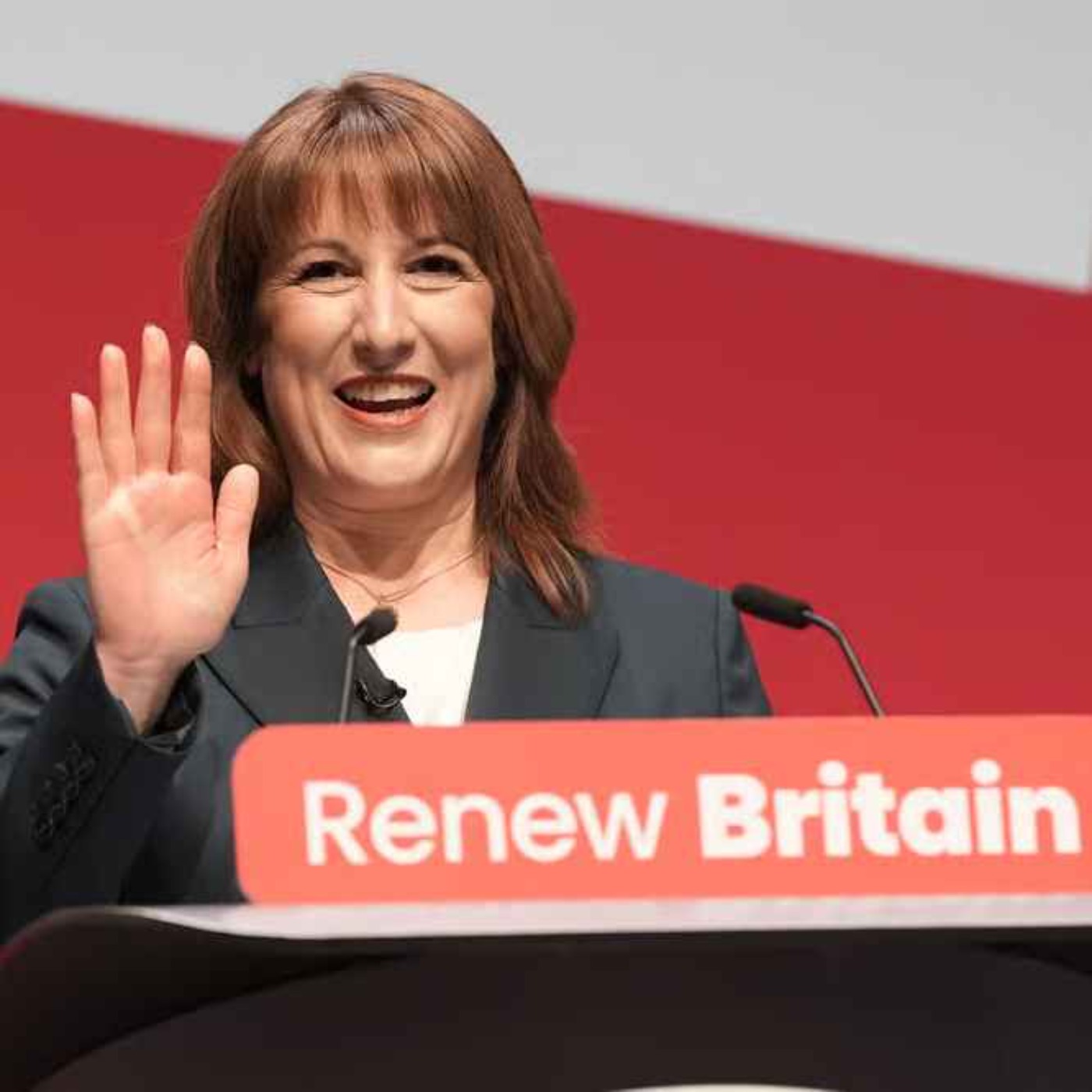
0:44Yes, it's brilliant to watch the show, but it was also really exciting then to set me off on my own journey of research to find out the historical accuracies or inaccuracies of the show and go and learn more about my own history. But first. Today, Chancellor Rachel Reeves delivered her keynote speech to the Labour Party annual conference in Liverpool and has vowed not to raise taxes on working people in her autumn budget, despite rising borrowing costs. She faces having to plug a£40 billion black hole in the nation's finances when she lays out her economic plans in November. Here she is speaking earlier today.
1:23In the months ahead, we will face further tests with the choices to come made all the harder by harsh global headwinds and the long-term damage done to our country, which is becoming ever clearer. Our first year in power was about fixing the foundations. Our second must be about building a renewed economy for a renewed Britain, a renewed economy that works for working people and rewards their contribution. A renewed economy where we reject austerity and support our public services. A renewed economy that supports investment, that gets inflation and borrowing down, and where we build growth in every part of Britain.
2:02The Chancellor also announced a youth guarantee that will mean young people who have been out of a job or education for 18 months will be offered a guaranteed paid work placement and face losing their benefits if they turn it down. Reeves wrapped up her speech by saying that the Labour government will deliver a better Britain and she branded Nigel Farage's agenda as the single greatest threat to British people's livelihoods. She accused the Reform UK leader of pushing falsehoods and easy answers. Joining us now is The Standards' Chief Political Correspondent Rachel Burford. Rachel, what are the key takeaways from Reeves' speech?
2:41Rachel Reeves gave a pretty wide-ranging speech at Labour conference today. What was interesting about it is we've seen, you know, a lot of senior Labour politicians in recent days leading up to this conference really sort of take Nigel Farage and Reform UK on, like really head on. Rachel Rees brought him up in her speech. She accused Nigel Farage of being the single greatest threat to British people's livelihoods. She accused him of pushing falsehoods and easy answers when it comes to the economy particularly. This is something we've seen from quite a few Labour politicians over recent days, really sort of challenging Nigel Farage.
3:18Nigel Farage talks about immigration a lot and the Labour Party have got a reputation for sort of shying away from those debates in recent years. But now they are really challenging reform and comes obviously as Nigel Farage polls show that he is on course to be Prime Minister if an election were held tomorrow. There was a big poll that came out for Labour Conference that showed reform perhaps wouldn't get an overall majority, but they wouldn't be far off. and they've certainly overtaken Labour and a lot of opinion polls for voters. That was a sort of interesting part of Rachel Reeves' speech.
3:48She acknowledged that the economy was not in the situation that perhaps she would like it to be just yet. But she said she would not be taking any risks with the trust of the British people. She's got her big budget coming up in November and she said she will be making choices to take our country forward is the phrasing she used. And whatever tests come our way, whatever tests come my way, I will make this commitment. I will take no risks with the trust placed in us by the British public. She wants to deliver an approach of secureonomics is what she branded it. She says she's running the economy differently and she knows that household bills are too high, but she has to sort of stick to these financial rules that she set herself and not overspend.
4:30Obviously, this comes with a big sort of backdrop of rumours that there's going to be tax rises at the budget. Labour have said they won't increase taxes on what they call working people, but ultimately you know if you increase taxes elsewhere on businesses or VAT or things like that it is ultimately working people do pay the price of those as they trickle down. Obviously the backdrop of her speech is kind of floundering economy and Labour floundering in the polls as well so she did sort of tackle some of the criticisms that her and her party have faced in recent weeks head on. Did she speak about what Labour has achieved so far?
5:05She was interrupted by a pro-Palestinian protester about 10 minutes into her speech who accused, stood up and started shouting and accused the Labour government of being complicit in the mass starvation of Palestinians and supplying arms to Israel. And she defended her party's approach to that war in Gaza. She said, we understand your cause and we are recognising a Palestinian state, but we are a party in government, not a party of protest now. She did talk then about some of the things the Labour government have achieved as well. She talked about free breakfast clubs for children. She was proud that she'd increased the minimum wage, introduced free breakfast clubs and free school meals, overseen five cuts to interest rates.
5:47So she'd sought to promote the positive things that the Labour government has done so far in its first year. But obviously, it comes amid this backdrop of people actually feeling poor because energy bills are still extremely high, rents are extremely high and cost of food and cost of living in general is still going up. So it was a sort of, she tried to promote the things that the government has done, but ultimately it comes among this backdrop of perhaps the general public still feeling poorer. So what can we expect from the rest of the Labour Party conference? The speech that a lot of people will be keeping an eye on is Shabana Mahmood, the new Home Secretary.
6:26She's expected to set out a series of conditions for those seeking, for migrants seeking indefinite leave to remain status in the UK. She is promoting herself as taking quite a hard stance on immigration and this is all part of the Labour Party's plan to take on reform and show that they are doing something about immigration which is obviously an issue that a lot of voters are bringing up as what they see as a problem. She's later this afternoon at conference and she's expected to say that migrants who want to remain in Britain will have to learn English to a high standard, have no criminal record and volunteer in their communities.
7:02Asylum seekers would also need to be working, paying national insurance and not claiming benefits under proposed Labour changes. I think she's going to set out this hard line on immigration but also I think Labour are quite keen to say there is actually a dividing line between the government's proposals and that of Reform UK's. Nigel Farage last week announced this plan to scrap settled status for all non-EU migrants as a way to stop what they're calling the Boris wave of all those immigrants that came into the country when Boris Johnson was prime minister, stop them essentially claiming indefinite leave to remain here.
7:36So I think her speech will be the one to watch because that will be seen as the direct fight back against Nigel Farage and his reform party. Let's go to a break. Coming up in part two, Netflix's sexiest new dynastic drama, House of Guinness is proving quite the talking point. We'll see you back here in just a moment.
8:04Welcome back. Netflix's House of Guinness series is filled with political tension, violence, riots and sex and is based on the story of Sir Benjamin Guinness and his four children, to whom he leaves a vast empire on his death in 1868. It's been described as like succession, but set in 19th century Dublin from the creator of Peaky Blinders, Stephen Knight. Here's a clip from the trailer. I, Sir Benjamin Lee Guinness, hereby give all my brewery concerns to my two sons, Edward and Arthur, jointly and equally. We expected something more. I feel it wise not to burden Benjamin and Anne with the temptations that come with fortune.
8:45Do you really think you can just put it in a safe piano painting like it appears? The death of your father has served to poke a stick in a hornet's nest. A gift from Mr. Guinness. From a representative of the Dublin poor. The children Sir Benjamin leaves behind are weak and divided. Now is the time to use that weakness. And for Jack Guinness, author of The Queer Bible and host of the Queerphoria podcast, he's had the unique experience of witnessing his family tree brought to life through the show. And he joins me now. Jack, what did you make of this show? Was it what you were expecting? I don't think anyone has any idea what they're expecting from a show made about their ancestors.
9:39I think what I was most excited about was seeing what the makers of Peaky Blinders were going to do with it. It's really interesting to see a historical show that isn't your mother's period drama. This is not a kind of gentle retelling of history. It's so sexy. It's so immediate. So I think I was shocked by quite how modern it was, but still very excited. Tell me more about the show's central storyline. So the show follows the children of Benjamin Guinness. They're kind of fighting over the inheritance and who's going to have control over the brewery. So it's reminiscent of Succession, which is fascinating because that's a huge show.
10:22And I think we're all really interested in these dynastic dramas and power struggles. What I love about the show is how grounded it is in the personal journeys of the siblings. I don't want to give any spoilers, but there is a gay subplot, which is fascinating for me as a gay Guinness myself. That sounds like a funny title, Gay Guinness. But all my work is focused on bringing out queer stories that have either been hidden or erased from history books. So to see an LGBTQ plus narrative being brought out into the light so it can be explored and celebrated was so moving. and the fact that it was one of my ancestors was just really strange to see.
11:00It's a story I didn't really know much about. That subplot seems to be an amalgamation of two characters from Guinness lore. But just seeing an LGBTQ plus story in a period drama, which is something we're just not used to seeing, was mind-blowing. And then realising that it was connected to my family was quite a healing, moving experience. So do you think if this show had been made perhaps five or 10 years ago that subplot would have featured? I'm not sure it would have been. Culture's changing so quickly, both positively and negatively. We're seeing more LGBTQ plus stories being spotlit, but then the pendulum's obviously swinging the other way and we're seeing really repressive laws coming out, especially regards to the trans community.
11:41So on the one hand, it's a really positive thing, but then we're also seeing huge pushback, especially in America and now in the UK. I think for me, I think back to when I was a child and how few LGBTQ plus stories were being told. I had to watch Queer as Folk sat really close to the television, ready to change the channel in case my parents came in. And now with a show like Heartstoppers, we're seeing really beautiful coming of age tales being included in mainstream TV shows. So there's definitely a sea change going on. I think the idea of going back into history and uncovering these stories is really powerful because we're seeing present day LGBTQ plus tales being told.
12:22But to go back into history and uncovering hidden stories is really exciting and moving. And I want to see more of that. And you say that one of your favourite Guinness stories isn't included. Tell me more about that. One thing that the House of Guinness does brilliantly is to centre the women's stories. And I think so often history is written by white cis men. And naturally, or maybe unnaturally, they ignore the stories of the women. So House of Guinness really centers those stories. One of my favorite tales, which isn't included in the show because it starts a couple of generations down after Arthur Guinness, the founder, creates the brewery, was about an ancestor of mine called Jane Kramer.
13:06and she was married to a man called Captain D 'Astair. And by all accounts, from what I can gather, he was a bit of a blowhard. He was a bit of an idiot. And he gets into a fight with Daniel O 'Connell and it escalates so that they have a duel. And in the duel, Daniel O 'Connell shoots Captain D 'Astair, mortally wounds him. Captain D 'Astair dies. And Guinness legend has it that his widow comes incredibly depressed. I think she's away in Scotland and she goes down to a river and she considers drowning herself in the river. And at that moment, she hears a shepherd boy whistling and she's struck by the beauty of his music and the simplicity and joy that he has in life.
13:45And she decides that she's going to not drown herself and she's going to return to Dublin and start a new life. And upon her return, she meets one of my ancestors, a Guinness, marries him, has children, and I'm descended from that line. So if Daniel O 'Connell hadn't shot this guy in a duel, I wouldn't exist, which is really strange. And then it also set Irish history on a different course because Daniel O 'Connell was so devastated at killing Captain D 'Astair that he committed his life to non-violence and became a huge part of the Irish fight for independence from British rule. So it's a lovely example of how Guinness law is so intrinsically connected to Irish political history.
14:26And that's something that the show does not shy away from. And it's really interesting seeing the political storylines of House of Guinness through a modern lens where the fight for Irish independence is shown in a really positive light, which is, again, another emphasis that the show focuses on, which is very much through a modern lens, which probably wouldn't be the exact story that they'd be telling if this was 20, 30 years ago. So did you learn anything new about your family or gain a fresh perspective? There's a bit in the show where the more religious Guinnesses have a real issue with the gay character in the show.
15:01And my dad's a vicar. My uncles are vicars. My grandfather was a vicar. Every man in my strand of the family is either a vicar or a missionary. So I had a huge amount of trauma and processing to do about being gay and also part of a really religious family. And so watching the show and that storyline, I think, is either going to be a healing experience or slightly traumatizing for me. But I can call my therapist about it. It's quite funny to have to call your therapist and go, oh, I've been really triggered by a Netflix show about my ancestors. Finally, is there anything else you want to add? No, just that I'm really excited and I hope it gets a second series.
15:35The Guinnesses are all fascinating people and their stories carry on throughout the centuries. I doubt they'll get to modern day like The Crown, but if they do, I hope someone good plays me.
15:50And that's The Standard. for all the latest news head to standard.co.uk if you'd like to get in touch please do drop us a line at podcasts at standard.co.uk we'll be back here tomorrow at 5 p.m we'll see you then
Chancellor Rachel Reeves has branded Nigel Farage’s agenda the “single greatest threat” to British people’s livelihoods at her Labour Party Conference speech in Liverpool. She vowed to stand by Labour’s manifesto pledge not to raise taxes on working people - but has left the door open to changing VAT rules. The Standard’s Chief Political Correspondent Rachael Burford is here with the latest.
And in part two, author and podcast host Jack Guinness reflects on his family history after watching Netflix’s House of Guinness, which tells the story of Sir Benjamin Guinness and his four children, to whom he leaves a vast empire in nineteenth century Dublin.
Hosted on Acast. See acast.com/privacy for more information.


