
 Ask ChatGPT



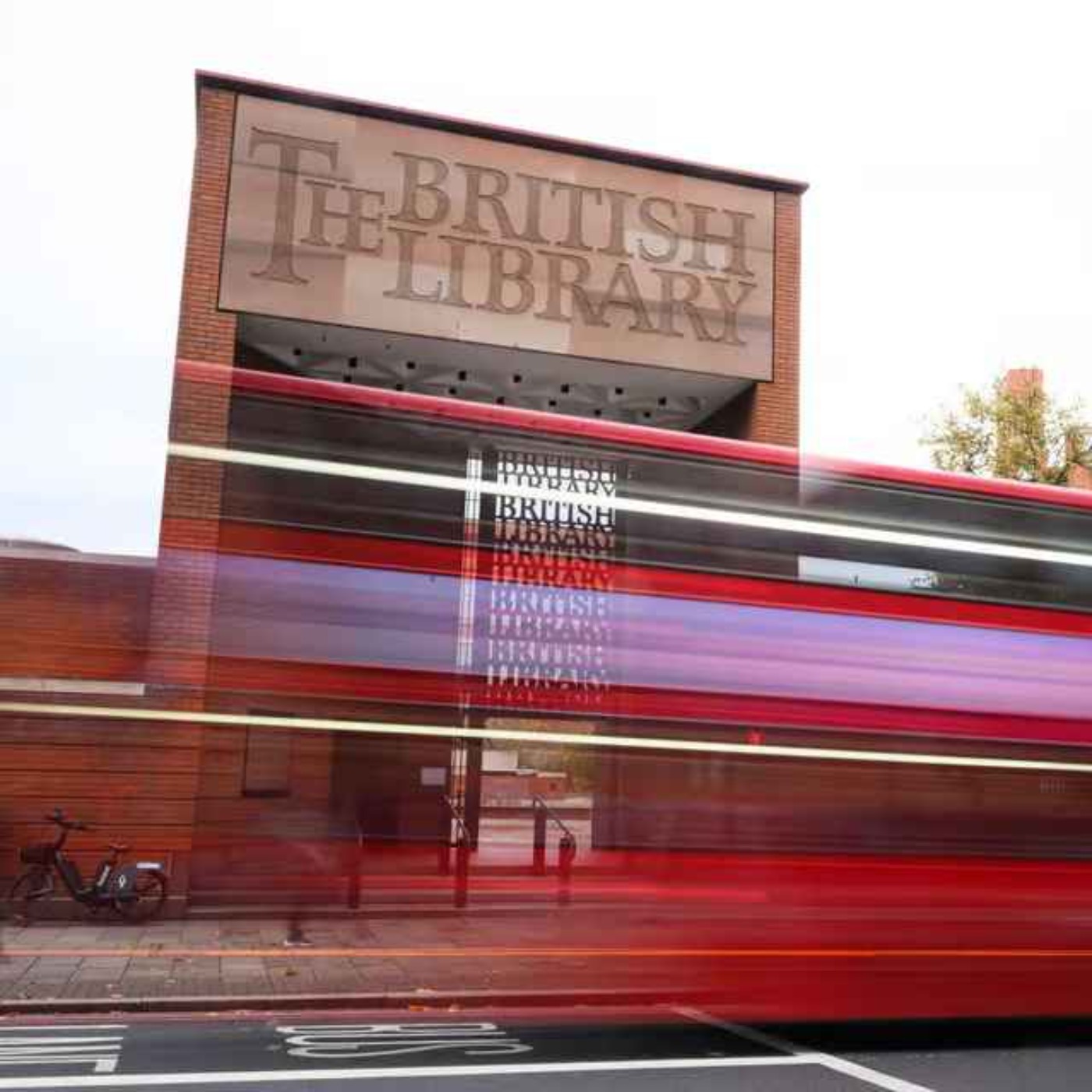
In this episode, the focus is on the British Library, a vital cultural institution in the UK, currently facing significant internal strife. Staff are working longer hours for less pay under deteriorating conditions, leading to strikes backed by the PCS union. The discussion extends to broader implications regarding the access and benefit to cultural institutions in the UK.
Written by AI. May contain mistakes.

Get the gist, explore an idea or ask about something said.
 Claude
On The Standard, what are the key points of this episode?
Searching your listeningAutomatic transcript. May contain errors.
0:01Hi, I'm Charlie Duffield and welcome back to The Standard Podcast. If you're new here, hit follow and give us a rating. For all the latest news, head to standard.co.uk. Coming up later in the show, how much value is placed on the UK's cultural institutions, such as the British Library? I was actually speaking to Richard Ovenden, who's the head of the Bodleian Library in Oxford, and he was saying that libraries across the UK are chronically underfunded, but when you do fund libraries, people really respond to it. He said they want them, they need them and they use them. And so this feels like a bit of a warning shot for the government to kind of pay attention and actually start giving our cultural institutions the respect and funding that they deserve.
0:50But first, it's a cold December morning at King's Cross Station and outside the Red Brick British Library, striking staff are making a racket. Realistically speaking, since I've worked here, we haven't actually had meaningful pay offers. in reality that's a real terms pay cut. I had to negotiate with my landlord the last time he cut up my rent. I had to plead with him basically saying I'm a public sector worker, my pay hasn't gone up in line with inflation. That was a clip captured by London tour guide Jenny Draper who happened to stumble across the march. Around 130 employees expressed a profound sense of exasperation as they're forced to work longer hours for less pay.
1:34Here's what they had to say. I am a leading library assistant, so I work in the storage area, which is where all the collection is kept. We are striking because this is the second year running that we've got a below inflation pay rise. We were offered 2.4%, 3 % pop, but 2.4 % for our members in the main. And quite frankly, that's not good enough. It's below inflation. It's half of what food inflation is currently. So I'm kind of trapped, essentially, doing a job that I'm really passionate about, that I really enjoy, but I'm being paid not a fair wage to do it. Our members are using food banks.
2:11They're struggling on their day-to-day living. So it's been a real difficult time for us as a collective. You know, I had a lot of aspirations that I was going to be working with amazing heritage, with amazing people. I'm very, very passionate about my role at the library, and that has obviously remained true, but I've realised that that doesn't necessarily mean that it should be worth less. Just because I love what I do, it doesn't mean I'll do it for any less money. The 11 reading rooms of the library closed for the week of the strike, leaving users to work on their laptops in the cafes or corridors.
2:44But regulars have grown used to the disruption. The library is still recovering from a devastating cyber attack two years ago, which raised many of its core services to the ground. With over 200 million items in its collection, the British Library's catalogue is the largest in the world, and it even includes Shakespeare's first folio. But currently, it's a national treasure in crisis. Impoverished staff on strike, a devastating cyber attack, multiple changes of leadership, and poorly protected books. To find out more, I spoke to The Standards' culture writer, Claudia Cockerell, who has been investigating what's going on for this week's special report.
3:27Claudia, first of all, I'm wondering how you first came across this story. So this story's been going on for a while, really. It's been two years that the British Library has been facing a variety of challenges. So in October 2023, there was this massive cyber attack, which rendered many of the British Library's core services unusable. That's obviously had a massive impact on both users and staff. And then more recently, staff have been striking over what they describe as poverty wages. many of them use food banks some of them are taking up second or third jobs because they say that the pay in the British Library is woeful those two things have kind of coalesced to create what staff describe as a really quite miserable atmosphere at the library and so I wanted to look at this kind of two years of reckoning that one of you know Britain's biggest cultural institutions is having the British Library has 200 million items in its catalogue which makes it the largest in the world.
4:32It has all sorts of one-of-a-kind things. It has one of Shakespeare's first folios, it has a Gutenberg Bible, and then it also has these curios like Jane Austen's glasses and her writing desk, and then a lock of Percy Shelley's hair. So it's got this real range of one-of-a-kind priceless items and books, but then it's also a legal deposit library, one of six in the UK, which means that it holds every single book published here since the 1600s. which means that its physical collection is just enormous. It takes up 400 miles of shelves. And these are spread across the library's London site in King's Cross and then also Boston Spa, which is this storage facility in Yorkshire.
5:15And then on one Saturday morning in October 2023, what happened? The library tweeted that they were experiencing technical issues. By later that day, the Wi-Fi was down, users couldn't use the catalogue, Staff couldn't access their emails. The library realised that they had been subject to a cyber attack, some sort of bad actors had made their way into the library systems. And then about two weeks later, this ransomware group called RISIDA claimed responsibility for the attack. So they are this quite shady group. No one quite knows where they're based, but they have links with Russia. Other targets have included hospitals across the USA and the Chilean army.
5:56They later attacked King Edward VII Hospital in Marlebone and said that they'd got hold of the medical information belonging to the royal family. So what the hackers had done is stolen these tranches of employee data, thousands and thousands of files. And as they'd made their way through the library's digital infrastructure, they'd destroyed and encrypted things as they went. So this is a way to kind of cover their tracks, but also cause an enormous amount of damage. So two things happened. And all these employees had their sensitive data stolen, passport details, employee documents, passwords, all this kind of thing.
6:33But then also the servers which the library is built on were just completely gone. And then what happened next? After Rosita claimed responsibility for this attack, they tried to extort the library for the return of the data. The library didn't give into this. So then Rosita launched this auction for all of the data on the dark web. The starting price was 20 Bitcoin, which was about almost£600 ,000 at the time. But then no one actually took the bait. So it seems that no one did because the following week, all of the data was dumped on the dark web for free. So this had a massive impact on staff.
7:07The staff I spoke to told me they still get these endless marketing and scam calls. One library assistant I spoke to in her 50s said that she got this email the other day and it used her mailing name which she hadn't used since she joined the library as a staff member about 25 years ago and they claimed that they had some sex tape of her and she was kind of laughing about it and saying I'd like to see that. Staff have had to change their passports, lots of their data on the dark web. They said at the time that senior management weren't very apologetic about it. So before all that there was a manifesto published, can you tell me a bit more?
7:39In 2023 the executives published this manifesto called Knowledge Matters and they set out this seven-year plan for growth and modernisation. It included all these slightly jargony values like openness, honesty, compassion, equality and fairness. This was a few months before the cyber attack, so it feels a little bit, there's a bit of dramatic irony now, knowing following the cyber attack, the library was reduced to this kind of pre-digital state. Its whole catalogue was down for months. Users couldn't request books. But the staff really aren't happy. What did they tell you? In the first two weeks of December, staff went on strike.
8:16This was the second time in a month over pay that they describe as woeful. They also tell a story of really poor management of the library. These senior executives on six-figure salaries who are completely out of touch with the day-to-day running of the library. So yeah, I went down to the picket line of the strike earlier this month and spoke to multiple members of staff. They're represented by the PCS trade Union. And the staff on the picket line who I spoke to said that their wages are phenomenally low. And that was everyone from security guards to cataloguers and curators. I spoke to one man who's worked for the library for 20 years, who said that he was earning more money in the early 2000s working at a newspaper than he was now, and that they've lost really talented and clever people because they just can't afford to support themselves.
9:07So the library is actually a living wage employer. But often this doesn't apply to many of the staff there because they might be working part time. The reason they're on strike is because for two years in a row, the library has offered below inflation pay rises. This is partly because the cost of the cyber attack to recover from is massive. They've said that they're facing rising costs across the board from electricity to recovering from the cyber attack. But this means that staff in real terms are facing cuts to their salary. They tried to negotiate and the PCS, who represents staff, received a 3.8 % minimum pay increase.
9:46But this was rejected on the grounds that it wouldn't make up for the below inflation pay rises that they've had for the last two years. Let's go to an ad break. Coming up, what's next for the British Library? We'll see you back here in just a moment.
10:07welcome back so it sounds like they've just got to a stage where enough is enough yeah and i think it's really galling for them to see the salaries of the executive board so for example the chief executive salary is around 165 000 pounds which is five times as much as the average member of staff and the british library is publicly funded so it receives 80 of its funding from the department for culture, media and sport and 20 % from donations. It's also underfunded as an institution. So while the DCMS funding for the library appears to have been steadily climbing over the last two decades, when you adjust that figure for inflation, it's fallen by about a third in the last 20 years.
10:50Is this more of a widespread issue across other cultural institutions? This isn't just a problem with the British Library. Staff at the Tate are actually on strike as well over low pay. Underfunding of public arts institutions is pervasive across Britain. We've decreased our culture budget by 6 % since 2010, while countries like France and Germany have increased theirs by up to 40%. So this is symptomatic of a wider issue, what's going on at the British Library. So who exactly is running the institution and what has their response been? Despite these big salaries at the top, the library has been facing this real crisis of leadership.
11:29It's had three chief executives in the last two years. Rowley Keating stepped down in 2024. He was replaced by a woman called Rebecca Lawrence. She was a former head of the Crown Prosecution Service. And she only lasted in the role for about 10 months. She actually stepped down in November during the staff's first set of strikes this year. She didn't give any reason, but she stepped down with immediate effect. So there's now this interim chief executive called Dr. Jeremy Silver. He was on the library board. But one thing that I heard a lot from people in the kind of library field was a sense of surprise that three times in a row, the chief executive who's been appointed has not had a library background.
12:15and in fact the library doesn't even have a chief librarian so its former chief librarian Liz Jolly left her role in the summer ahead of what staff said was a restructuring program brought about by the previous chief executive and that really matters because the chief librarian gives focus to the collections and to the library as a kind of library rather than as a business so that really shocked staff when she stepped down the interim chief executive told the standard in a statement that they'll start looking for a new chief librarian when a permanent CEO is elected. And he also said that the library is proud to be a living wage employer and they would like to continue working with members of the PCS union to try and find a way out of the pay dispute.
13:00And what's next for the British Library? Do you think there are any signs of improvement? Yeah, so after this kind of two-year period where its services were massively reduced, There was no catalogue for the last two years. There was this kind of interim version in place. It was almost like a backup. And it only had books and articles and items on it from up to, I think it was April 2023. So when you searched for a book that has been published in the last couple of years, nothing comes up. And you also couldn't request material online like you used to. So many of the scholars, researchers and authors I spoke to who rely on the library for their work said that their work was either delayed or completely scuppered because it was like going back to old times.
13:45You had to manually request books on pieces of paper, hand a slip to a librarian. They'd often take much longer to find. You couldn't do multiple things at once. Some items were completely inaccessible. As I mentioned, there's about two thirds of the collection is held up in Yorkshire. And that site is run by these robot librarians. Everything was automated. But following the attack, all of that was kind of thrown into disarray. That lasted for a really long time, until last week when the library put into place their new catalogue. And that seems to be working well. But I think the impact that the strike has had, we might not even know about it for years to come, because it's just derailed so many people's research.
14:26Finally, do you have anything else to add? Many of the staff that I spoke to said that the only reason they could afford to stay in the role was because they had a partner who earned more than them. They also all stressed how passionate they were about their jobs, how they had a real sense of camaraderie and a real dedication to helping people. Children who come to visit the library or authors or researchers, all of them kind of said that they really care about what the library is and what it should be. And that's what keeps them in the role. But I think when you're underfunding, when you're not paying staff properly, and also on a broader level, when the government is not funding its cultural institutions properly, that has a massive impact on society, because these are places that we can all use.
15:07One researcher I spoke to said that the cyber attack, it was attack on Britain as a whole. It's a hub of knowledge and research. And if you don't use the British Library, for example, then you're not affected by this. But as one academic told me, this isn't just ivory towered researchers whose obscure PhD has been scuppered. It's the Zadie Smiths of the world. It's authors that we read and love. Anyone can go there and use these services.
15:38And that's The Standard. For all the latest news, head to standard.co.uk. If you'd like to get in touch, please do drop us a line at podcasts at standard.co.uk. We'll be back here on Monday morning. We'll see you then.
The British Library is one of the UK’s greatest cultural institutions.
However, behind the scenes, the staff who make it function are working longer hours for less pay, in worsening conditions. Now, with help from the PCS union, they’ve decided to fight back.
But what does this means more broadly in terms of who is able to access and benefit from our cultural institutions?
The Standard’s Culture Writer Claudia Cockerell is here with the findings of her special report on the subject - alongside footage of the strikers in action, from London tour guide Jenny Draper.
Hosted on Acast. See acast.com/privacy for more information.


