
 Ask ChatGPT


 The Standard
24 Jun 2025 · 12m
Written by AI. May contain mistakes.

Get the gist, explore an idea or ask about something said.
 Claude
On The Standard, what are the key points of this episode?
Searching your listeningAutomatic transcript. May contain errors.
0:04Hi, I'm Rachel Abbott and welcome back to the Standard Podcast. If you're new here, hit follow and give us a rating. For all the latest news, head on over to standard.co.uk. Coming up later in the show, tips on how wannabe entrepreneurs can navigate the current economic climate.
0:28But first, the UK may be the startup capital of Europe, but not when it comes to women. The past decade has seen an increase in female self-employment, but the number of women starting and scaling businesses remains much lower than that of men. A lack of access to funding and networks, sectors and skills, plus primary care responsibilities are just some of the factors holding women back. and currently just 19.1 % of active UK companies are female-led. Up to£250 billion of new value could be added to the UK economy if women started and scaled new businesses at the same rate as UK men according to the online centre Pro-S.
1:15But whether you've recently started a new venture or have always had a brilliant idea for one, now could be the time to make it happen. The AXA Startup Angel Competition from AXA Business Insurance in partnership with The Standard is back for its fourth year. This year's competition offers six opportunities to win, with the two most impressive ventures each receiving the top prize, which includes£25 ,000, expert mentoring from the AXA Startup Angels and more. I met Sharma Dean Reid, who has been an AXA angel for several years and is on the judging panel. Sharma Dean is a founder, writer, creative consultant, and the award-winning entrepreneur behind Warnel's Beauty Stack and Stack World.
2:03She was the first black woman in the UK to receive over£1 million in venture capital funding, and through Stack World works to support thousands of women on how to grow their economic independence. In 2015, she was awarded an MBE. Here's what she had to say. So, Sharmadine, what prompted you to set up The Stack World, which is your global media and community platform for women at work? During the pandemic, I found that a lot of our customers and community from Beauty Stack were really searching for community, connection, information about how they could grow their businesses. They were really anxious at the time, like many of us were, about their economic standing.
2:50And we effectively launched with a series of talks and workshops that were helping young women to think about their ambitions and their businesses, but also to look after themselves holistically. And in your own career, what are some of the biggest obstacles you've faced? I feel the main challenges that I faced in my career are to do with managing my time and energy. Like if you are a public facing founder, you have a lot of demands on your time. And because I always want to support the women in our community, I definitely gave away a lot of my time and still continue to give away a lot of my time.
3:27And it is this finite resource. So I think managing my time and energies is an ongoing challenge for me. How have you overcome that? So the method for me to manage my time is that I operate on quite a strict calendar basis. Like if it's not my calendar, it doesn't exist. I spend December and January at the beginning of every year, pretty much mapping out my entire year, plotting in family commitments, school term dates, etc. And then working through the cadence of the events that we have with the company, with the stack world, and then roughly what I want to do in terms of rest and rejuvenation.
4:08Being able to look at it as a full year, I can visually see where my energy is going to peak and trough and peak and trough and prepare accordingly. So it means that I don't get to the stage of burnout anymore because I anticipate it before it's going to come. So if I can see my calendar, I've got like, for example, Today is the beginning of three weeks of quite intense public work. So I've already told my assistant that I'm not going to do anything the last week of June and the first two weeks of July. Do you get what I mean? It just allows me to manage accordingly instead of feeling incredibly overwhelmed.
4:44And is there anything else you do to better manage your time and energy? I try and mentor at scale. So rather than mentor people on an individual basis, I host Staff World events, answering the most common and popular questions that are asked to me and I also write a newsletter. So I feel like I am still supporting and giving away my time, but in a structured and scalable way. Let's talk about burnout. It's something that seems to affect a lot of people. How have you experienced it? So I think that burnout comes in all shapes and sizes. To me, it's not a physical thing, it's a mental thing. So it's not about, you know, I'm overworking.
5:29It's more that I mentally don't feel supported in my work. I can't achieve anything I want to achieve and it's almost like a dark star or something, like a star's just collapsing in itself. I've always had a high productivity and high work ethic. It's more that do I have the support I need to achieve the things I want to achieve? And I think for an employee, it's exactly the same. Like as an employee, do you feel supported by your team or your boss, whoever is around you to enable you to do your work in the best way? But yeah, for me, it's definitely mental. And then it shows up as a physical thing.
6:06Do you have any tips on how people can avoid burnout at the start of their career when you're trying to prove yourself? I've never burnt out as an employee. I've always burnt out as a leader because I think it's like when you're young, you want so hard to please your bosses and you want so hard to get that recognition. But fundamentally, I think if you're young, like seeing every role that you have as a learning experience is the way that you avoid putting too much pressure on yourself. Do you know what I mean? It's like when you're young and early in your career, you're not running the company necessarily.
6:47If you're an employee, you are a worker bee. So just use it as an opportunity to gain experience and to learn, not to take on that mental responsibility. But it's easier said than done, I think. Let's go to a break. Coming up in part two, Sharmadine shares her advice for budding entrepreneurs and how the AXA Startup Angel Competition can help turn business dreams into reality. We'll see you back here in just a moment.
7:22Welcome back. Being an employee isn't for everyone so what advice would you give budding female entrepreneurs? What I would say to young female entrepreneurs is really to try and figure out from the get-go the size of the business that you want to build. Do you want to build a business that you're going to sell for 10 million or 100 million? Because I think that really changes the way that you approach business and changes the way that you set up your operating system. So even just yesterday, I wrote on my newsletter about how I've set up my social media accounts in order to be prepared for scale.
8:00I've set them up so many times in the wrong way that I was like no I'm gonna I'm gonna do it properly this time do you get what I mean and it's just like the things that you spend the time on versus the things you don't spend the time on I just think these things are like very different depending on what type of business you're building a lot of the times women start businesses or people in general start businesses and they're thinking of the outcome or like their brand or their launch so just think about the size of the business that you want to build and how you're planning on getting there.
8:34How are you going to grow? What challenges do you think female business owners experience? I think women don't have issues starting businesses. They have issues growing them. Women are naturally entrepreneurial because if you are a mother or if you have options close to you because of your gender or your race or your sexual orientation, you do what you can to survive. So hustling and entrepreneurialism is very natural to women. They're never supported to be able to grow those businesses accordingly. And that's where funding and network are really, really important. How is the world's current economic climate affecting business right now?
9:16I think it's affecting everyone mentally because there's a feeling of hopelessness. Like I've been reading so much about how people are planning on leaving the UK. I personally have left London. I didn't find it a place where I was thriving. So naturally, the migration of people does affect businesses. And I think everyone's in the same boat, but in very different ways. Is it holding people back? How would you navigate this time? I think that if you're going to be a founder, you're going to be a founder, no matter what the economic climate is at the time. I'm such a big believer of that. But I just think, try and see what you can do without raising money.
9:59We're in an era at the moment. Everyone's quite obsessed with fundraising. And actually, it's a relatively new thing to be able to go out and fundraise, right? And I think people have grown to rely on fundraising instead of trying to rely on their business acumen. My advice to young people starting businesses in this economic climate is focus on profitability from day one and see how far you can get without raising any money at all. What could someone gain by entering the Access Startup Angels competition? What they'll definitely be able to gain is having a rigorous process of going through their business and seeing where the holes are.
10:40I always say this, like doing a pitch deck is something you should always do. Even if you're just doing it for yourself, you should do it because it allows you to structure all of your thoughts around your business in the formal way. Finally, what do you love about being a judge? The ATSA Startup Angels competition has given me an amazing opportunity to network with other founders. I've built such a good relationship with the other judges and actually I've really enjoyed browsing through the entries, being really strict on the criteria and then anointing the winners. You can just see what a difference it's making in their life.
11:22And that's the standard. For more information and to enter this year's AXA Startup Angel competition, visit standard.co.uk forward slash AXA Startup Angel. Entries close July 6th. For all the latest news, head to standard.co.uk. This podcast returns tomorrow. We'll see you then.
The UK may be the start-up capital of Europe, but not when it comes to women. Currently, just 19.1% of active UK companies are female-led.
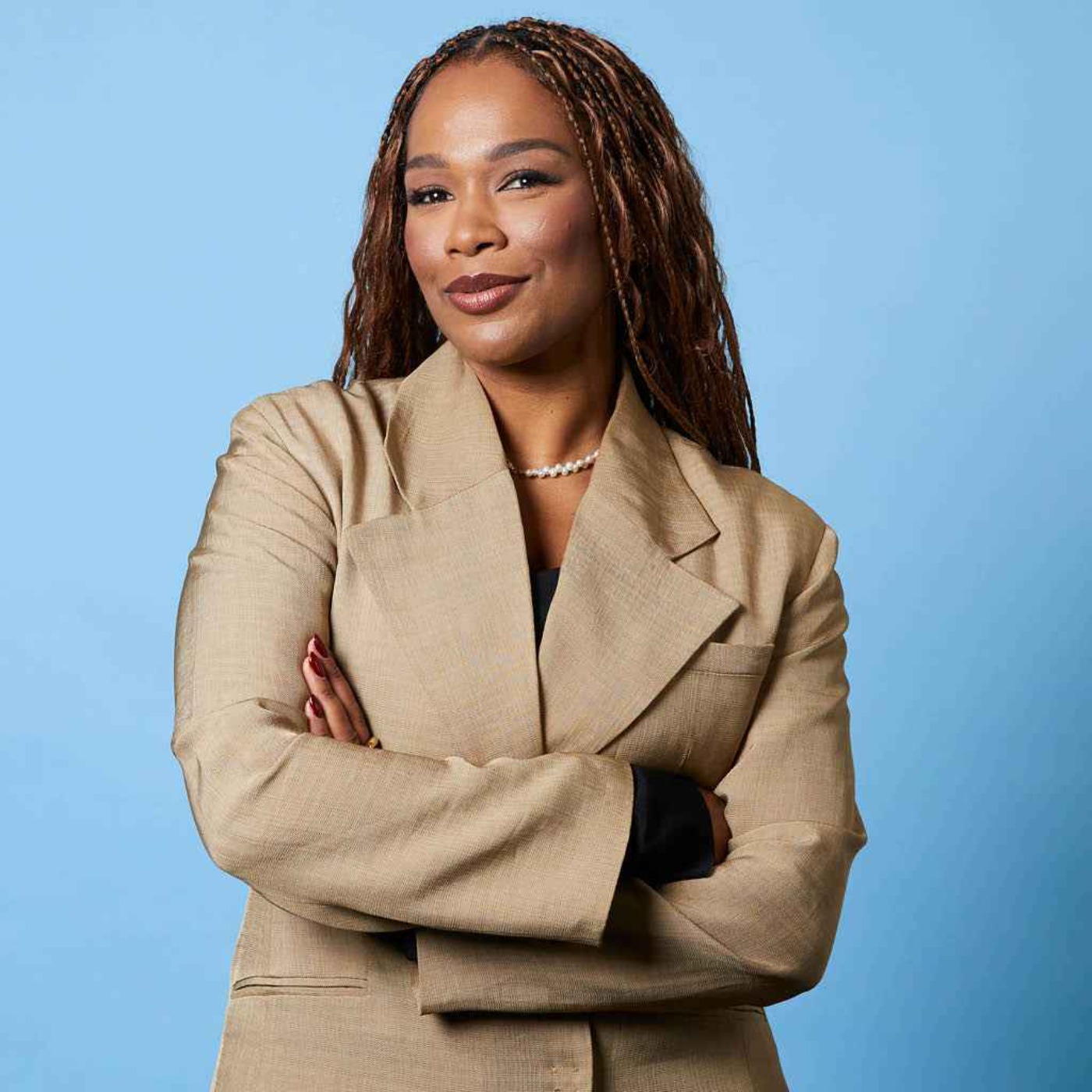
Sharmadean Reid, an award-winning entrepreneur, founder of Stack World, and AXA Startup Angel judge, joins us to discuss the obstacles faced by female entrepreneurs in the UK.
'Hustling and entrepreneurship come naturally to women'
Sharmadean told us women don't have issues starting businesses; they have issues growing them, due to a lack of funding.
Sharmadean shares insights on the importance of mentorship and advice for those starting and scaling businesses.
Plus, she also discusses the current economic climate and how it's leaving business owners feeling "hopeless".
For more information and to enter this year's AXA Startup Angel competition, visit standard.co.uk/axastartupangel.
Entries close July 6th.
Hosted on Acast. See acast.com/privacy for more information.


