
 Ask ChatGPT



Podcast Description: The Standard podcast features discussions by top news insiders on current topics including politics, culture, sport, and fashion, hosted from London. Episodes are available Monday to Friday at 4 PM.
The episode addresses new research indicating that over half of London’s short-term holiday let properties are rented unlawfully. Noah Vickers, a Local Democracy Reporter, discusses the implications of these findings. Additionally, John Darlington, an archaeologist and author, shares insights on Strawberry Hill House and its influence on gothic fiction.
Written by AI. May contain mistakes.

Get the gist, explore an idea or ask about something said.
 Claude
On The Standard, what are the key points of this episode?
Searching your listeningAutomatic transcript. May contain errors.
0:04Hi, I'm Julie Banks and welcome back to The Standard Podcast. If you're new here, hit follow and leave a review. Coming up, how a house in southwest London inspired one of the most popular genres of literature. Archaeologist and author John Darlington will be here to share the history behind Strawberry Hill House. He creates this utter fantasy house, this white, almost ice confection of his imagination of a reconstructed Gothic medieval castle.
0:42But first, for visitors and tourists heading to London for a short stay, renting a holiday let is a popular solution. However, new research has discovered that more than half of these properties are being rented out unlawfully. The London Standards local democracy reporter, Noah Vickers, is with us to explain what's going on. So Noah, who's behind this report and what were its main findings? This is a report from Central London Forward, which is a kind of partnership of 12 inner city boroughs, sort of using their collective voice to speak out on issues that matter to all of them. And this is a really interesting new piece of research looking at short term lets in the capital.
1:22They found fundamentally that this is a market that's grown really quickly over the last decade or so. And really, in London, it's become highly concentrated in a particular patch of central West London. It's become a very professionalised industry and it's highly profitable. It's something that landlords are making an enormous sum of money from. In Westminster alone, which is really the borough that we could say is at the epicentre of this issue, landlords took in£450 million in 2024. What kind of problems is this causing then for local communities, residents and indeed the local authorities?
1:57It's causing a lot of issues because fundamentally this is an issue of balance. You know, when the scales tip too far towards the holidaymakers and the tourists, local services, which are designed to cater to local people, won't have as many customers and might suffer as a result. But really, I suppose for neighbouring residents, the real problem can be noise, inconsiderate tourists staying in these lets, making a lot of noise late at night and not really having the common courtesy of recognising that they're staying in a residential building with long term people living there. And also it can cause a lot of rubbish to pile up if the landlord isn't really taking a kind of hands on approach to managing the holiday let.
2:38That can be a real issue, waste piling up in communal parts of these buildings. If there's a high turnover of guests, that can obviously produce a huge amount of waste. And really for local authorities monitoring this, they don't have, first of all, the resources. They're massively underfunded to really police any of this. And also they don't have the data. they aren't able to see the scale of the issue. So that's the problem really when it comes to enforcement. What are the rules and regulations then around how many days properties can be let for? Well, in London, you aren't allowed to let out a short-term let property on one of these websites for more than 90 days in a year.
3:15But we know that that's basically being breached in more than half of cases. More than half of the 117 ,000 short-term lets identified across the capital are breaking this rule as far as central London forward are concerned. So are most of these properties being rented out by individuals or is it that people are buying up numerous properties and then basically running it as a full-time business? This is a key question because obviously when the sector first emerged a decade or so ago in the sort of Airbnb, Vrbo format, it was very much pitched as, you know, you might have a spare room, you can rent it out in a very casual way.
3:52This is something that the report from Central London Forward has looked at. And what they found is that only 1 % of hosts own portfolios of more than 21 properties, which is obviously a huge portfolio, but almost 25 % of total listings are owned by those hosts. So what we know is that a significant proportion of hosts are basically businesses rather than individuals. The report has been endorsed by Tom Copley, who is Sir Sadiq Khan's deputy mayor for housing. What's he had to say about the matter? He's very concerned about it. I mean, before he became deputy mayor, he was a member of the London Assembly who had taken quite a close interest in this issue.
4:29He'd done a report, I think, back in 2018 of his own, which found that at that stage, there were only 60 ,000 lets. So in the space of something like seven years, they've almost doubled across the city. And really, from his perspective, he's got responsibility for managing housing. It's a massive crisis in this city. The number of households in temporary accommodation is really concerning to him. Something like 65 ,000 London families, I believe, households staying in temporary accommodation at the moment. You know, these are families being piled into hotels, bed and breakfasts, because they've got nowhere else to live.
5:01And if residential buildings are being hollowed out to this extent, that they're being used as highly profitable holiday lets, that's obviously a concern for him. And he basically said as much at this summit where the report was unveiled, he said he thinks these properties need to be brought back into use for Londoners. And so what are local councils asking to be done to try and address this issue? Local councils want two things. They want to have a better picture of what actually is going on in their areas. They want to be able to know where exactly are these short-term lets and how often are they being rented out.
5:33That's the main thing that they can't accurately see because letting websites aren't required to share detailed data of that sort to local authorities. So I think the government should really be forcing them to do that. They should legislate in much stronger terms because they feel that the regulations have become outdated. This is an industry that's really run away over the course of 10 years. And they also want stronger enforcement powers. And that means basically, in large part, more money. They want to be able to have teams of people dedicated to actually going out there, knocking on doors, checking what the situation is in some of these places.
6:05And basically, they also want a register nationally of all short-term lettings that would just in one place have all the information that they need when it comes to policing this sector. Are there any consequences for someone who's looking to come and stay in London who rents one of these properties without realising that it's being done unlawfully? I think probably not for tourists. I think the onus in terms of legal responsibility will always fall onto the landlord who's doing this. They should basically be aware that these limits are in place for a reason. If you want to rent out your property for more than 90 days, you actually you planning permission, you need to apply to your local council.
6:43Obviously, the reason people might not do that is because they might not get permission. You know, local council might think, actually, there are quite a lot of hotels on that street. Why do we need another there? So that's really where the responsibility lies.
6:58Let's go to a break. Coming up, how Strawberry Hill House became the inspiration for gothic fiction. We'll see you back here in just a moment.
7:14Welcome back. If you're looking for inspiration on where to go out and about in the capital over the long weekend and you have any interest in the gothic horror fiction genre, our next guest has the perfect location to visit. As part of the Standard's Hidden London series, archaeologist, author and director of projects at the World Monuments Fund, John Darlington has been down to Strawberry Hill House, just on the edges of Twickenham in southwest London. and he joins us now to share why it's so unique. John, tell us the history of this magnificent building and how it came to be connected with horror stories.
7:49This in itself is a fabulous story. So Horace Walpole, who is the owner and in fact the creator of Strawberry Hill House, he goes on tour, on the grand tour across Europe in the 18th century and he's inspired by what he sees. He's inspired by these magnificent medieval cathedrals as well as the ones he knows back from home. And when he gets back home, he has to, at some stage, build a house not in London but outside London. He's got his London home, but he needs something outside of town. So he essentially thinks, well, what kind of house am I going to build? And because of this inspiration from essentially medieval European architecture, he creates this utter fantasy house, this white, almost ice confection of his imagination of a reconstructed Gothic medieval castle.
8:40And this is completely contra to everything else at the time. So at the time, everyone's interested in the classical, so the Greeks and the Romans, so everything's very uniform and very symmetrical. And this place is just the complete opposite. So that's the house he builds. And he builds this in the 1740s in a number of different phases. And then when he's in the house, he's a man of letters, he writes all the time. He's an author, an antiquarian. And when he's in the house, the story goes that he has a dream one night, and the dream is of a massive fist coming down in the middle of this new house that he's built, this gothic house, this fist coming down through the staircase.
9:19And it inspires him to write a novel. And the novel is called The Castle of Otranto. And The Castle of Otranto is essentially the first Gothic novel. It's all about mystery. It's about romance. It's about the picturesque. It's about things which scare you as well as things which inspire you. And that's the first one. So that happens in 1764. And you can therefore link everything from Buffy the Vampire Slayer to older versions. So Edgar Allan Poe through to Shelley, Frankenstein, etc. You can link all of these to this one book, which started it all. So it's kind of amazing. So you've got in London, the start of the Gothic novel.
9:57So if you're in Gotham City, Batman's Realm, you know, you can actually trace it back to Twickenham. As we've been talking about literature, I wanted to ask specifically about the library, which I believe took its inspiration from other iconic London landmarks. What's it like? That's probably the most traditional Gothic room in the house. So if you go in, it's got windows filled with heraldic glass which actually predate the house by a century or at least a century so he's collected this heraldic glass from the low countries from the Netherlands and Belgium he's collected it and put it into his house to make it look even older and then the actual the inspiration for the room comes from part of it comes from old St Paul's Cathedral so you get this magnificent finials and pointed arches across the whole room everywhere so each library panel opens out and you've got this kind of arched frame in front of it you've got a fireplace which takes its inspiration from Westminster Abbey and Canterbury Cathedral so you can see he's taking his references and he's copying them in his own specific way if you go into the probably the most dramatic flamboyant room is the Great Gallery and that takes its inspiration from the chapel of Henry VII at Westminster Abbey so you can see these points of reference all the time.
11:15They're not necessarily 100 % accurate, but you can call them inspired by. As mentioned, Horace Walpole was a writer, and as well as leaving a legacy of inspiring Gothic novels, he's also responsible for several words we use in the English language. Tell us more about that. Yes, there's some words which we don't really use. So if you go to Strawberry Hill, there's a very dark, gloomy room, and he invents this word called gloomph, which describes actually that room perfectly. And there are other words like riant, which describes the garden much more light and airy. But the one I particularly love is serendipity.
11:50So that word which means, you know, just unexpected fortune. That's a completely invented word. And it's invented by Horace Walpole. And the story behind it is that Walpole comes across quite an old story about the three princes of Serendip. And Serendip is, by the way, it's Sri Lanka, the Persian name for Sri Lanka. and these three princes of Serendip just you know they keep on bumping into things which they never expected to find and it's it's fortunate accident like oh well that's good so he takes this idea of the three princes of Serendip and creates this word serendipity and now it's you know it's in the English language and we think that it's been around for years centuries.
12:32So John what's your favourite thing about Strawberry Hill House? Well I've been involved through World Monuments Fund because we put Strawberry Hill House on the World Monuments Watch way back in 2004, actually. And the tragedy of Strawberry Hill is that there was a massive sale in the 19th century. So all the artefacts which were in the house, all the paintings, the majority of them actually were sold because the family's fortunes were in decline. So given that part of the Strawberry Hill experience is in not just the exterior, but everything inside it, the Strawberry Hill Trust were very keen to recreate as many of the things which were inside the house that are no longer there.
13:11So World Monuments Fund worked with an organisation called the Facto Marte Foundation to recreate a particular picture. And it's a picture by Joshua Reynolds, which Walpole commissioned, called The Ladies of Aldergray. So it's this beautiful Reynolds picture, if you're into your sort of classic British artists, artists which is now I think in Edinburgh and essentially Factor Mate with our support copied this picture but it's not just a kind of photocopy this is a copy which is down to the last micron and it's a copy in three dimensions so you see every brush stroke that Reynolds made so that for me that painting the ladies walled a grave is my favourite piece.
13:49And it's very much a place for all the family to visit isn't it? Absolutely all the family can visit if Walpole when he wrote his own guidebook to the place, he said absolutely no children whatsoever and only four guests at one time. In fact, there's a lovely quote, which is worth reading, which he says, and this is from his letter, take my advice, never build a charming house for yourself between London and Hammersmith Court. Everyone will live in it but you. So you can see it's slightly grumpy. But today, of course, everyone is welcome, particularly children, maybe not vampires.
14:25And that's The Standard. For all the latest news, head to standard.co.uk. And of course, if you'd like to get in touch, do drop us a line at podcasts at standard.co.uk. This podcast will be back on Tuesday at 4pm. Until then, enjoy the long weekend and thanks for listening.
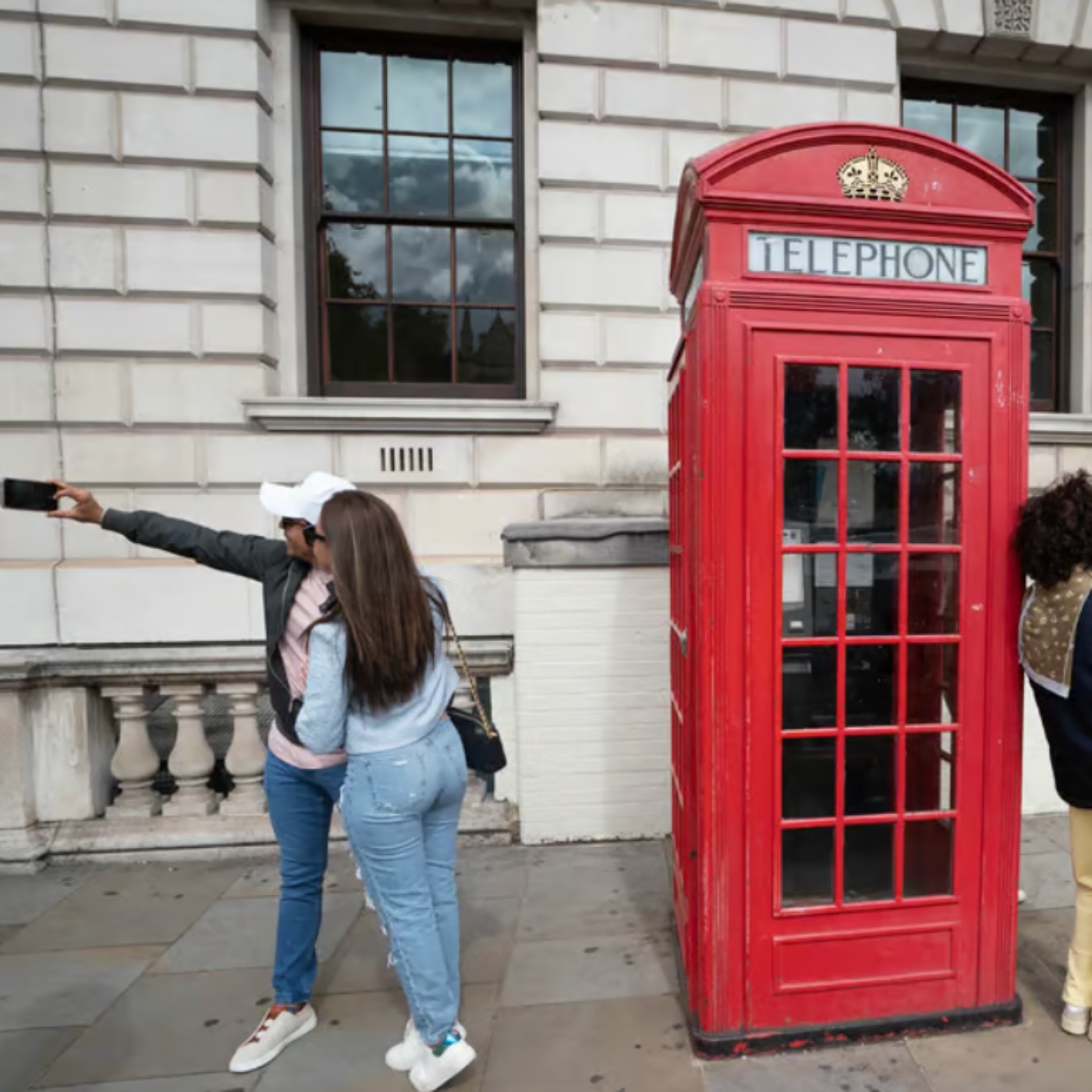
The Government has been urged to take action after new research has found that more than half of London’s short-term holiday let properties are rented unlawfully.
The London Standard’s Local Democracy Reporter, Noah Vickers, is here to explain the rules around these sort of property rentals and examine why they are causing issues.
Plus, as part of The Standard’s Hidden London series, archaeologist, author and Director of Projects at the World Monuments Fund, John Darlington joins us to share the story of Strawberry Hill House including how it inspired the genre of gothic fiction.
Hosted on Acast. See acast.com/privacy for more information.


