
 Ask ChatGPT


 The Standard
29 Apr 2026 · 32m · 14 chapters
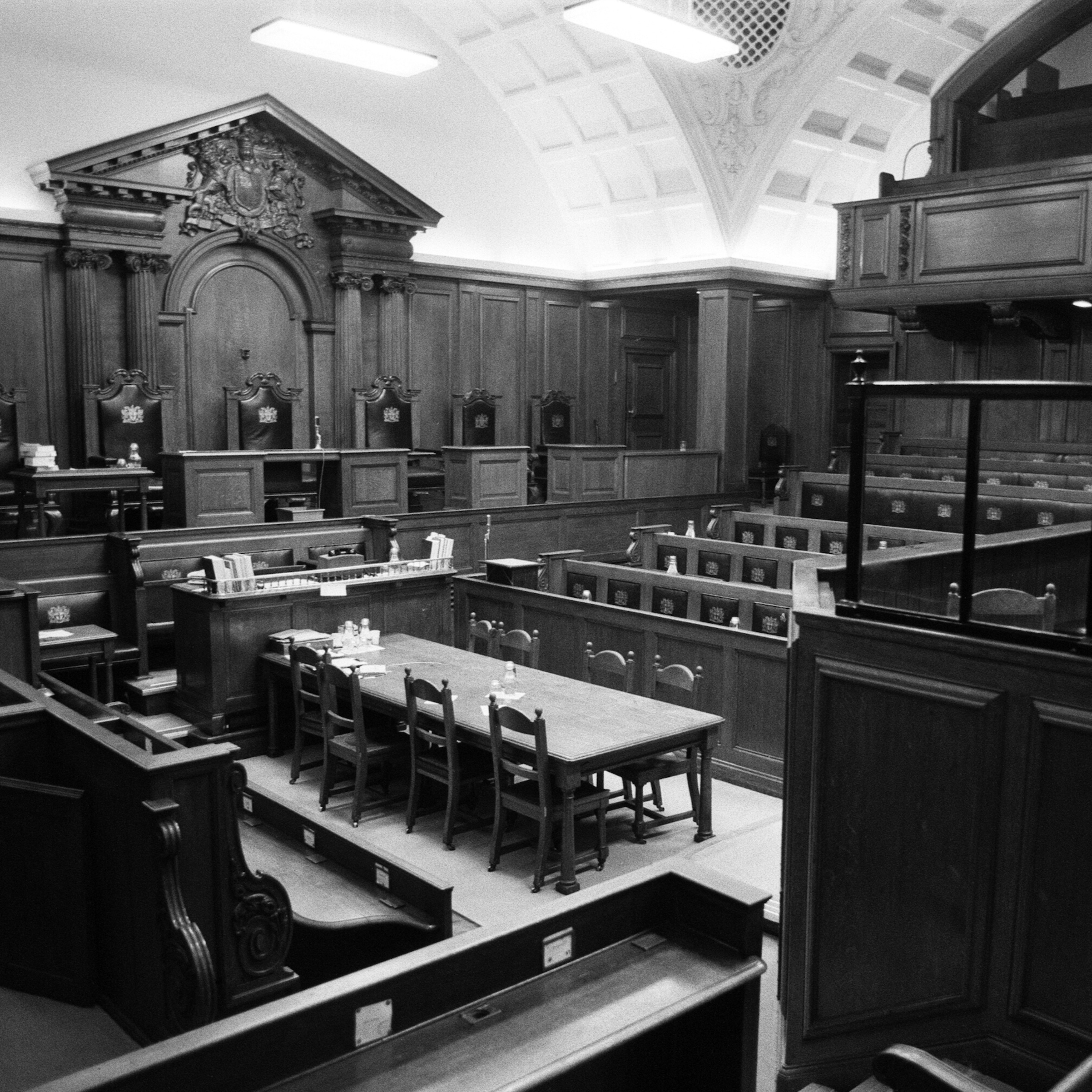
Whether “serious crimes” should be tried without juries to reduce England and Wales Crown Court backlogs; includes impacts on fairness, miscarriages of justice, and sentencing/appeals.
Andrew Thomas KC, criminal barrister and vice chair of the Criminal Bar Association; prosecutes and defends, mainly murder, manslaughter, fraud, drugs importation. Geoffrey Robertson KC, founder of Doughty Street Chambers; former judge and UN judge; represented figures including Keir Starmer and David Lammy.
Juries are vital for fair verdicts, community “life experience,” and mercy; removing them risks weaker justice and more miscarriages. Government delay-reduction impact is minimal (Institute for Government estimate: 1–2%). Expanding magistrates’ powers and judge-only trials could create a “perfect storm” (inexperienced magistrates, legal-advice shortages, harder legal aid). Jury access could become perverse via sentence-based triage.
Post Office scandal (miscarriages of justice in Crown Court); lockdown “single justice procedure” described as “conveyor belt” justice; rape cases typically waiting about a year; magistrates sentencing appeals upheld at ~49%.
Written by AI. May contain mistakes.
Discussion on the surge in court backlogs and the proposed changes to jury trials.
“Do all serious crimes need to be tried with a jury?”
Insights from Andrew Thomas on his role and the importance of juries.
“I'm a king's counsel, which means that I tend to do the more serious cases.”
Andrew discusses the significance of juries in understanding evidence and delivering fair verdicts.
“Overall, how helpful have juries been in returning a verdict that seems fair?”
Analysis of the government's proposals to change how serious crimes are tried.
“justice is currently considering a proposal to scrap jury trials for some criminal cases in order to ease the case backlog there are two changes two fundamental changes that are going to be made.”
Discussion on the impact of proposed changes on justice quality and delays in court cases.
“the outcome of the case, it can take a year or 18 months or even longer.”
Exploration of how sentencing predictions can affect jury trial rights.
“And the proposal to have trial by judge alone, as opposed to trial with a jury, they think would make a difference of about one or two percent to the delays in criminal courts.”
Discussion on the implications of recruiting more magistrates and their training.
“Yeah, it's very odd that for the same crime, in terms of how your case is dealt, you know, it's just completely different circumstances.”
Learn about the implications of increasing magistrate numbers and their training on justice quality.
“as someone who's got a bad criminal record it's bonkers.”
Explore recent government initiatives aimed at improving the justice system, including funding for special courts.
“I'd like to touch on some of the positive moves this government has made in terms of improving the quality of the justice system.”
Discuss the potential scrapping of jury trials and the political responses to these proposals.
“We have been working very closely together with our colleagues at the Bar Council and the Law Society.”
Delve into the value of jury trials and the potential negative consequences of reducing their use.
“So Geoffrey, you founded the legal chambers that has housed Keir Starmer, David Lammy to name a few.”
Exploration of the differences between jury verdicts and judge rulings.
“There's not, if it's going to be an individual judge, then that individual judge is going to be spotlighted.”
Discussion on the backlog of cases and its implications for the justice system.
“You know, we have a lot of pressure on the system.”
Ideas on how to reduce the case backlog without affecting jury processes.
“But I have no doubt that there are ways of reducing the backlog to an acceptable point that do not involve cutting back on juries.”

Get the gist, explore an idea or ask about something said.
 Claude
On The Standard, what are the key points of this episode?
Searching your listeningAutomatic transcript. May contain errors.
0:00You've got social dialed in. Search is doing its thing. So why do your marketing results look the same as six months ago? That's because you're fishing in the same pond as everyone else. Podcast listeners are a different audience entirely, more engaged, harder to reach through traditional channels, and ready to act when someone they trust makes a recommendation. We're Acast, and we put them right in front of you. Browse thousands of the world's leading podcasts, book host reads or run your own ads, and track every conversion in real time. Same skills you already have, brand new results. Acast.
0:35Acast.com slash advertise.
0:57The government is considering dropping juries for certain criminal cases in an attempt to reduce court backlogs. But can and should justice be accelerated? And could this move undermine the British justice system? Hi, and welcome back to The Standard Podcast. I'm Tamara Kormornyk. For all the latest news, head to standard.co.uk. Coming up. Do all serious crimes need to be tried with a jury?
1:34Court backlogs across England and Wales surged at the end of last year, with more than 80 ,000 cases waiting to be heard in the Crown Court in December. Although that number is falling after a much-needed cash injection for the courts, the government is now looking at further ways to speed up justice, including scrapping juries for some trials. To understand the effect this move could have, I speak to former Judge Geoffrey Robertson KC, founder of Doughty Street Chambers, where Keir Starmer, David Lammy and Attorney General Richard Herman have all practised. But first, to hear the view from the council's table, I'm joined by criminal barrister and vice chair of the criminal bar association Andrew Thomas KC who both prosecutes and defends for the crown here's my conversation with Andrew hi Andrew thanks so much for jumping on the stand of podcast it's great to speak to you today hi Tamara now before we continue you have a fascinating line of work could you tell listeners a little bit about the ins and outs of what you do.
2:43Well, I'm a criminal barrister. I prosecute and defend. I'm a king's counsel, which means that I tend to do the more serious cases. So these days, mainly the sort of cases I do are murder, manslaughter, fraud, and drugs importation, cases like that. Andrew, I'd like to know about your experience with juries. You've been on both sides, prosecuting, defending. Overall, how helpful have juries been in returning a verdict that seems fair? We are always hugely impressed with the work that juries do. And we see it because very often jurors ask questions. And from that, we know that they're engaged with the evidence, they're understanding the issues, and they're identifying things that they need help with.
3:38I've dealt with cases where we've had people who've got relevant experience from their professions on a jury. We get people from all walks of life. And we live in a diverse society. The issues that come before Crown Courts are hugely diverse. And we get the full range of people with their range of experience who you will always find someone who can understand and empathise with the things that are being discussed and an issue in that trial. And I imagine as well, having a juror with relevant experience or understanding the nuances of an industry, you know, relating to a particular case, that can also pay dividends when the jurors get together and they look at the evidence and they make that call.
4:29Jurors can influence other jurors' decisions and they often do. I'm speaking as somebody that has done jury service myself. So I think it can actually bolster the delivery of justice. Jurors bring life experience as well. And it's very important that we don't just have a select group of invariably older people, predominantly white people middle class people who are the judges and magistrates but people who've got a full breadth of their experience and might have some understanding and empathy of a witness or a defendant talking about their experience in that sort of situation so life experience is just so important and having a full range really matters
5:25well in the time that you've been working in the court system so much has changed the ministry of justice is currently considering a proposal to scrap jury trials for some criminal cases in order to ease the case backlog there are two changes two fundamental changes that are going to be made. The first is to increase the powers of magistrates courts. And in the magistrates courts, mostly they are cases decided by volunteers sitting three together, members of the public who generally devote something like 15 or 20 days a year as volunteers to go in and decide cases. At the moment, they have the power to deal with cases where the likely sentence is up to 12 months.
6:15Until very recently, it was six months. The suggestion is that it will be increased to two years, which means they're going to be dealing with more serious and more complex cases. And those are things like some sexual assault cases. It's things like burglary. A lot of fraud cases will fall within it. And take, for example, the post office scandal and what happened there. Those cases were dealt with in the Crown Court and miscarriages of justice occurred. Under these proposals, that kind of level of case would likely end up in the magistrate's court with amateur judges deciding the case. And so there is a concern that there's a risk of an increase in miscarriages of justice through that change.
7:08The second change is that it's suggested that a proportion of the cases in the Crown Court would be tried without a jury. So you would have a professional judge, but the professional judge wouldn't just decide the issues of law, but decide who's telling the truth, decide whether or not someone has been honest or dishonest, and take the sorts of decisions which traditionally have been taken by juries. again that's going to deal with a lot of cases of serious assault sexual offenses and offenses of theft and dishonesty as well. Now the government claims they want to make the justice system fairer and they've cited the case backlog and you know also court waiting times for complainants and defendants.
7:57Most of the defendants are on bail but some are in prison and you know for both parties the outcome of the case, it can take a year or 18 months or even longer. So what do you think is fairer for complainants and defendants at this stage? A case being seen quickly without a jury present or having to go through the ordeal and the rigmarole of your life really being held up for that time period? Well, practising in this world, as I have done for many, many years, We are very familiar with the impact of delays on people. And I see both sides of it. I'm involved on behalf of both the prosecution. So I'm going to court, I'm speaking to victims, families of victims, and I see the impact on them.
8:50And I've had to sit down and explain to people, well, I'm afraid your case won't get heard now for another 18 months. I defend as well and go to see the client in prison and we're discussing waiting for the case to come on. So we do see it and we do really feel it. And we care about the work that we do. But we can't compromise the verdict in a criminal case by rushing cases through using systems that are not tried and not tested with dealing with complex cases. And that's the fundamental thing, that the quality of justice can't be weakened in order to save a few pounds and pounds. There is no real evidence that these proposals are going to make any significant difference to the delays in the criminal courts.
9:45An independent body, the Institute for Government, has gone through the government's own data. And the proposal to have trial by judge alone, as opposed to trial with a jury, they think would make a difference of about one or two percent to the delays in criminal courts. Now, typically at the moment, in a rape case, people are having to wait about a year for their trial to be heard. So a difference of one or two percent might mean that your trial will be three days or a week earlier. It's not a significant difference. There are other things that we can do that would make a real difference to that.
10:30But this isn't it.
10:38So, Andrew, under the new proposals, there's what I understand is a type of triage system where magistrates will be able to sentence up to two years. A judge alone will be able to sentence up to three years. What's interesting about the cases that are seen by a judge only is that character references and previous criminal records come into play here and can actually affect whether the case is just seen by a judge or that the defendant has the right to a jury trial. That's right. And this is one example of the injustice of the current proposals. At the moment, someone charged with something more than a minor offence has a right to a trial by jury, and it's been that way for hundreds of years, you can say before the magistrate's court, I elect to have a trial by jury.
11:38And clause one of the government's courts and tribunal bill will take that away. And it will replace it with a test based on the predicted sentence in your case. And if your sentence is likely to be 18 months or two years, your case will be dealt with in the magistrate's court under what's called the summary procedure. If it goes to the Crown Court, there'll then be a test. Is the likely sentence going to be less than three years or more than three years? And so someone who's never been in trouble before, someone who's got good character, someone who makes a great contribution to their community, has references to show what a value to society they are, never been in trouble before, are likely not to have a trial with a jury because they would receive a shorter sentence.
12:36By contrast, someone who's been in trouble many times before, 10 previous convictions for burglary, five previous convictions for robbery, an awful criminal record, they will get a more severe punishment because of their previous record. that gets them over the three years. And so they're the ones who'll get a trial with a jury. And that's perverse. You'd have thought it would make more sense to make sure that the best quality of justice is provided in the cases where it's going to make a real difference to someone's life. Because if you've never been in trouble before, to be sent to prison for three years will change your life altogether.
13:21So it's a bizarre, bizarre system. Yeah, it's very odd that for the same crime, in terms of how your case is dealt, you know, it's just completely different circumstances. We've always recognised there's a particular sensitivity, because that first conviction, losing your good character, that can change your life. I mean, imagine if you were a school teacher, imagine if you had responsibilities to care for young people to have a criminal record could bar you from your profession but under these proposals you wouldn't get the same treatment as someone who's got a bad criminal record it's bonkers.
14:03The government are considering recruiting more magistrates in order to make this feasible and also reducing their training in half from one year to six months. There's a very well-known investigation that The Standard did. Tristan Kirk, he exposed the single justice procedure that was used to prosecute offences regarding breaking lockdown protocols. And he discovered that it was a conveyor belt justice system. And he uncovered evidence of magistrates convicting and fining defendants, in some cases in less than a minute, with key evidence missing or overlooked, and also thousands of prosecutions were conducted entirely in secret.
14:49How convinced are you that taking on more magistrates and pushing more cases towards these magistrates will uphold the quality of justice in England and Wales? I think we're moving towards potentially a perfect storm of problems. The government has set very ambitious targets to recruit more magistrates to deal with this. We think what they're doing is moving the problem from one area, the Crown Court, to another area, the Magistrates Court, where there's just as bad a problem with backlogs. There's 370 ,000 cases in the magistrate's court backlog already. The perfect storm is that we will have inexperienced magistrates who've been recently recruited, magistrates who've been put forward through a speedy form of training.
15:46There is a shortage of professional legal advisors in the magistrate's court because magistrates, when they sit, will have someone who is in an advisory role who can advise them on the law, although they take the decision themselves. And there's a recruitment drive for those. So we're going to get newly qualified lawyers doing that role. And then the third problem is that in the magistrate's court, the thresholds to qualify for legal aid are different in the magistrate's court. It's more difficult to qualify for legal aid to fund your representation. And the idea is that more complex cases will be allocated to the magistrates' court.
16:34So we've got all these things together, inexperienced magistrates, inexperienced legal advisors, lack of legal representation, but dealing with more complex cases where the outcome is going to be more serious. And that's a disaster waiting to happen.
16:59I'd like to touch on some of the positive moves this government has made in terms of improving the quality of the justice system. For example, the extra funding to special courts to see more domestic violence and rape cases. This also helps with reducing waiting time. Are there any other positive moves that you've seen? So it's a shame that we have fallen out with the government over this proposal around jury trials. That's pretty much the only thing we disagree with them on. When David Lambie became the Justice Secretary last autumn, one of the very first things that he did was to get the investment to increase the number of sitting days.
17:47And that's already starting to make an impact. There's also a system called Blitz Courts that's being used, being deployed now at Snaresbrook, where certain types of offence can be targeted, put resources into that, try to get short trial dates for those so that the cases are heard within three or four months. and that system is bringing down the delays in certain areas of work and domestic violence has been targeted that way. Yeah. Andrew, do you see proposals to scrap jury trials for some cases? Do you see this going through? We're hopeful that we'll be defeated. We have been working very closely together with our colleagues at the Bar Council and the Law Society.
18:39we've been working with people from across parliament to oppose these changes all of the opposition parties are against these changes we've demonstrated that what sits behind this is flawed thinking we know that people do care about juries the difficulty is no one likes to make a U-turn. So we are hopeful that the government will screw up its courage and accept they've made a mistake here. And when they stand back and they look at it, they can see that they will just do damage if they stick with these proposals. So yes, we're hopeful. Well, it's not like Labour hasn't made many U-turns in the past few years.
19:28Well, thank you so much for all of your expertise on the topic, Andrew. It's been great to speak. Thank you very much, Tamara. We'll take a quick break here. Coming up, I speak to an outspoken critic of the Ministry of Justice's proposals, Geoffrey Robertson KC, who is a former Crown Prosecution and United Nations judge, and he's the head of Doughty Street Chambers. We'll be back here in just a moment.
20:04Do you have a great idea for a business? Or maybe you've recently started one? Then why not enter the AXA Startup Angel competition where we'll help you start up with confidence. I'm Izzy Obeng, founder of FounderVine and I'm thrilled to be joining this year's AXA Startup Angel competition in partnership with The Standard. There are six chances to win including two top prizes of£25 ,000, expert mentoring, business insurance for a year, thanks to AXA and more. Entering is easy, just send us a short pitch video and answer three questions about your business idea. Search AXA Startup Angel to find out more and enter before the 21st June 2026.
21:03Mother's Day is coming, and Benny Honig just made it easier to celebrate in style. Buy a$50 gift card and get$10 back. Buy$200 and get$60 back. This deal won't last long, so don't sleep on it. Treat Mom to hibachi, sushi, handcrafted cocktails, and a dinner table show she'll be talking about all year. Make the night unforgettable. Gift cards are available now at benihana.com. That's benihana.com. You've got social dialed in. Search is doing its thing. So why do your marketing results look the same as six months ago? That's because you're fishing in the same pond as everyone else. Podcast listeners are a different audience entirely.
21:47More engaged, harder to reach through traditional channels, and ready to act when someone they trust makes a recommendation. We're Acast, and we put them right in front of you. Browse thousands of the world's leading podcasts, book host reads or run your own ads, and track every conversion in real time. Same skills you already have, brand new results. Acast. Acast.com slash advertise.
22:21Welcome back. Here's my conversation with Geoffrey. Hi Geoffrey, thanks so much for joining me on The Standard Podcast today. It's really great to have you. Good to be here, Tamara. So Geoffrey, you founded the legal chambers that has housed Keir Starmer, David Lammy to name a few. The joke is that we are to the Labour Party what Eton is to the Tories. And so there we are. We train the Labour side, but not train them too well because they're going about abolishing juries. which in jury system for centuries has been one of the great proudest boasts of Britain. You know, we have 12 good men and women and true who decide on guilt or innocence.
23:21We don't have hardened judges like they have. if you get tried for shoplifting or anything in Russia or in China, you have a 99 % chance of conviction because these are judges who decide, state lixpitals who think the local police are always right. But in Britain, we don't have that system. We have a jury system that can show mercy to people who deserve it, who don't have to convict if the law is not appropriate. So there's a lot to be said for juries and for Labour to cut them in half. So there'll be at least half of the jury trials will end if this Labour proposal goes through. Geoffrey, I want to hear what you think about the possibility that magistrates might gain more powers.
24:35That's right. I mean, people who become justices of the peace are well-intentioned, but they tend to be rather upper class and rather out to look down their nose at workers. You see, only 3 % of magistrates are manual workers, and no magistrate is unemployed. Well, you compare that to a jury, which does have unemployed people called up for jury service, and does have manual workers. So magistrates are not representative. And at the moment, 49%, almost half of the appeals against magistrates sentencing on the basis that their sentences are too heavy, 49 % of these appeals are upheld. So I'm afraid we're going to have a lot more prisoners, thanks to magistrates' prison sentencing powers, than we need because prisons are fearfully overcrowded at the moment.
25:57And Geoffrey, you condemned the plan restriction of jury trials in England and Wales as a betrayal of the values for which Labour purports to stand. and some Labour politicians actually have an ideological stance against juries. What do you make of these positions? It's strange for Labour, a party that pretends to be in favour of the poor and those who've had a bad time in life. And they are the kind of people that jury trial will assist by, if they deserve it, not convicting them. And so I think it's odd that certain Labour ministers and politicians, I hope that they're thrown out of their constituency parties because it's offensive and objectionable that they should be turning their back on history, on a history that has favoured the poor, has favoured those who are badly done by, and getting rid of the jury, which is the basis for having mercy as part of our justice system.
27:28And Geoffrey, you spent many years as a judge. How do you feel about judges receiving more cases to make judgments on without juries? In other words, how helpful are juries to judges? Well, they're enormously helpful. And I think judges are very worried because juries present 12 anonymous, randomly selected people who deliver the community's verdict. There's not, if it's going to be an individual judge, then that individual judge is going to be spotlighted. and maybe will suffer reprisals. People may be moved to kill him or her because they disagree with the verdict. But at present, with the jury bringing in the verdict, no jury has ever been attacked.
28:34But there has been, back in the 1970s, I think, as a judge from Preston Crown Court, was attacked and killed. So the judges are concerned, but the funny thing is, and this goes back to Richard Crossman, who was a Labour cabinet minister, he said secrecy is the British disease, and secrecy is what has been imposed on the judiciary. They've been gagged. I think most judges are opposed to these reforms for one reason, good reason or another, but they're not allowed to say so because they're not allowed to comment on government policy. And this is crazy because a policy relating to the criminal justice system judges the most expert people who can comment and yet they're not allowed.
29:42And Geoffrey, just to wrap up, I want to know, in your view, can justice be accelerated? You know, we have a lot of pressure on the system. The case backlog's high. Junior barristers, their pay hasn't risen meaningfully for a long time. You know, the government have to do something. Of course it does. And the backlog is appalling. and it's got to be speeded up. But it has nothing to do with juries. This backlog goes back to 2010 when the Conservative government decided on a policy of austerity. The Department of Justice had the weakest department of all and so it became the target for cost-cutting.
30:37And then came COVID. And of course, a lot of courts were closed because it was thought that trials would put people together and they'd catch the disease. So the backlog increased fourfold during the COVID period. And so the jury itself had no effect on the delays. The backlog is being reduced, thank goodness, by more money being poured into court infrastructure. I mean, the terrible thing was they cut hundreds of court cases by closing courts, and those courts have now opened. Someone has suggested appointing a team of retired judges to examine the cases in the backlog, about a third of which don't need to be prosecuted, and weed them out.
31:45So that's another way. But I have no doubt that there are ways of reducing the backlog to an acceptable point that do not involve cutting back on juries. Well, thank you so much, Geoffrey, for your time. It's been great to speak to you on this. All the best tomorrow.
32:14and that's the standard now it's time for some thank yous from me it has been a real privilege to host and produce this show and shed light on london's biggest conversations i've had the chance to speak to mps mayoral candidates nightclub owners restauranteurs culture critics drag queens and even an Alpine Olympian, just to name a few. Thanks to all of the contributors who have made us sharper, more curious and even more enamoured with London. Thank you to my fellow Standard journalists who kindly contributed their reporting to the show. Shout out to podcast regulars Jonathan Prynne, Ross Lydell, Nick Cecil and Rachel Burford.
32:57Thank you to Alan Lear who hosts Tech and Science Daily for the audio troubleshooting, sound engineering tips and the fellow podcaster camaraderie. And finally, thank you for listening and for sharing the show. You can find me on LinkedIn at Tamara Komornik, that is T-A-M-A-R-A-K-O-R-M-O-R-N-I-C-K or on Instagram at Tamara.records. You can continue to get the latest on London via the Standards website, print edition and social media channels. We'll see you there.
33:58We'll see you next time.
34:03digital precision, post-read authenticity, and performance data that proves it worked. Don't fight for attention. Buy it with ACAST. Learn more by visiting acast.com slash advertise.
The government is considering dropping juries for certain criminal cases in an attempt to reduce court backlogs. Will this move undermine British justice?
In this bumper episode, host Tamara Kormornick speaks to a vocal opponent to the plans, Geoffrey Roberts KC, former judge and founder of Doughty Street Chambers, where Keir Starmer, David Lammy and Attorney General Richard Herman have all practised. She also hears from criminal barrister and Vice Chair of the Criminal Bar Association, Andrew Thomas KC, who both prosecutes and defends for the Crown, for his view on whether the British justice system needs as many juries.
Photograph: Getty Images
Hosted on Acast. See acast.com/privacy for more information.


