
 Ask ChatGPT



The episode discusses the rising trend of unqualified cosmetic practitioners operating in Harley Street, a renowned center for medical excellence in London. Host Tamara Kormornyk interviews Niva Yadav, a trainee journalist who has researched the issue of rogue aesthetic practitioners.
Written by AI. May contain mistakes.
Learn about the multifaceted strategies for addressing youth mental health issues.
“Youth mental health is a complex challenge that requires comprehensive solutions.”
Understand the growing popularity and risks of cosmetic tweakments.
“For all the latest news, head to standard.co.uk.”
Insights into the investigation of cosmetic practitioners on Harley Street.
“In today's episode, I'll be speaking to Neva Yadav, the Standards Trainee Journalist, who has been investigating the world of rogue cosmetic tweakment practitioners in Harley Street.”
Explore the dangers of unregulated cosmetic procedures and lack of training.
“On first glance, no, it's not a problem.”
Learn about common procedures and the risks involved with low standards.
“to perform procedures on patients which can cause significant problems.”
Discussion on the need for regulation and the potential government's licensing scheme.
“My perfect day as sand, salt, water, and friends, but my moderate to severe plaque psoriasis can take me out of the moment.”
Examine if Harley Street is unfairly blamed for the issues in cosmetic practices.
“to signify the risk of different cosmetic treatments and whether they require medical supervision in order to be performed.”
Learn about the difficulties of enforcing regulations in the cosmetic industry.
“And then also when it comes to enforcing a licensing scheme, is it going to be local councils who are doing it?”
Explore how renting spaces in Harley Street affects practitioner credibility.
“So if you are in the market for a non-surgical treatment and you want to see someone reputable, which questions should you be asking?”
Find out what questions to ask to ensure you're seeing a reputable cosmetic practitioner.
“Typically a patient would have to have a face-to-face consultation with a prescribing physician.”
Recap of essential advice regarding cosmetic procedures and practitioner selection.

Get the gist, explore an idea or ask about something said.
 Claude
On The Standard, what are the key points of this episode?
Searching your listeningAutomatic transcript. May contain errors.
0:00Youth mental health is a complex challenge that requires comprehensive solutions. We must strengthen after-school programs. We must make digital literacy tools available in our schools. We must work with mental health professionals to support children. And we must empower mentors, educators, and parents to keep kids happy. Learn more about our commitment to finding lasting solutions at empowerourfuturecoalition.com slash solutions. Paid for by the Coalition to Empower Our Future. Hi, this is Matt from P1 with Matt and Tommy, and this episode is sponsored by eBay. The cars you'll find on eBay are just different.
0:37They come with a story that you can't wait to share. Like this 1973 Dodge Charger on eBay that's been tucked away in an Arizona barn for over 40 years, only 55 ,000 miles, and somehow in great running order. It even has a rare sunroof. Suddenly, a car that was hidden for decades is being delivered in just a few clicks with eBay's secure purchase. All the paperwork handled. There are thousands of cars on eBay, from unique finds like the Pontiac Grand Prix SJ to daily drivers, and now with a new way to buy them. eBay. Things people love.
1:24London's Harley Street is best known as a centre of medical excellence. But are unqualified estheticians threatening its long-held reputation? Hi, and welcome back to The Standard Podcast. I'm Tamara Kormornyk. For all the latest news, head to standard.co.uk. Coming up, should Harley Street hot desking be halted?
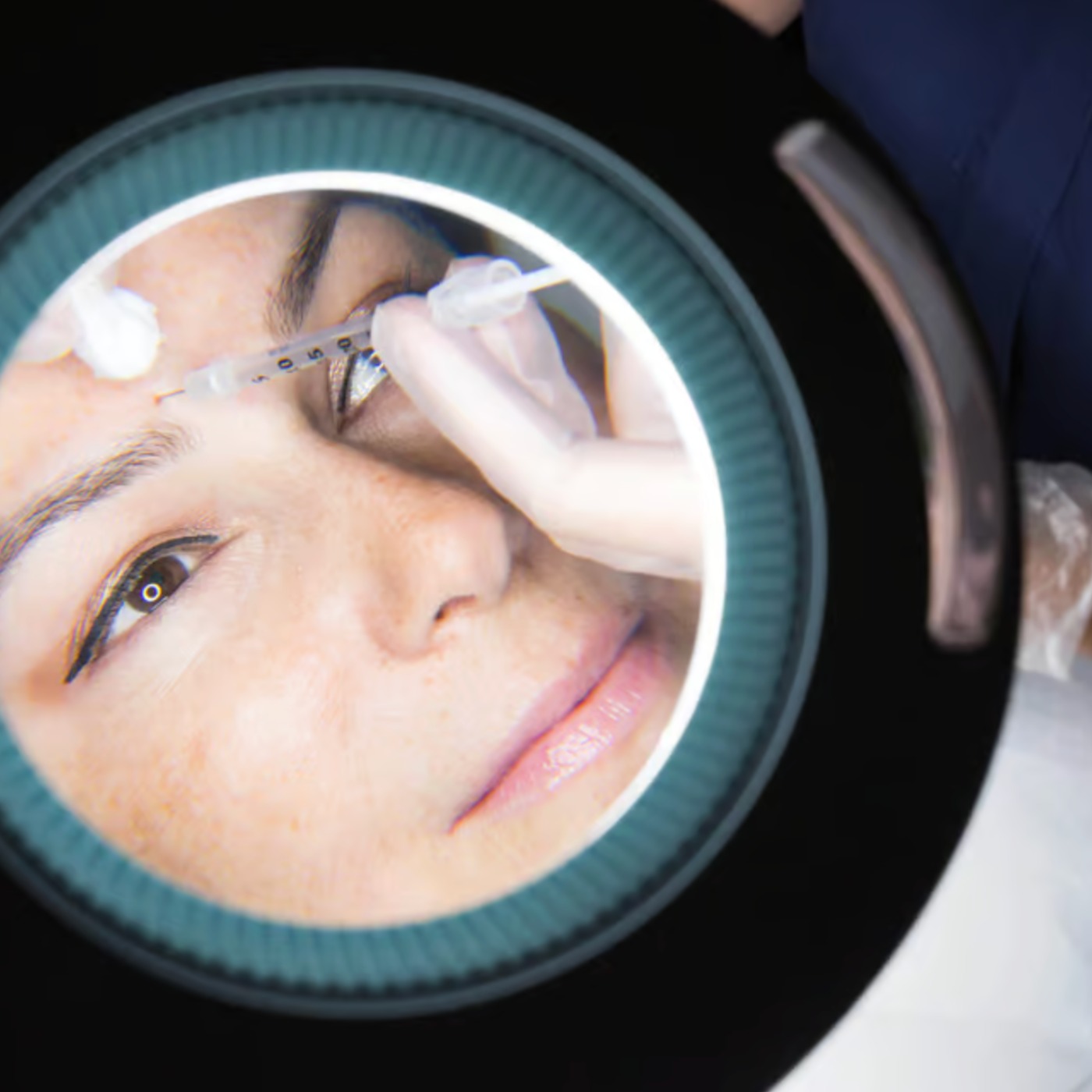
1:55Cosmetic tweakments have become more commonplace than they ever have been. Hollywood actors are beginning to look 10 years younger, and Instagram face, the permanently filtered aesthetic IRL, is becoming easier and cheaper to obtain. So, what are the risks?
2:18In today's episode, I'll be speaking to Neva Yadav, the Standards Trainee Journalist, who has been investigating the world of rogue cosmetic tweakment practitioners in Harley Street. Here's my chat with Neva.
2:37Hi Neva, it's great to have you back on The Standard Podcast. Hi Tamara, thanks so much for having me. So Neva, this story really caught my eye and my initial thought was how you got the idea for the story. Yeah, so back in October I was in the market for some lip filler and when I was looking at practitioners across social media but also online the same kind of Harley Street addresses kept popping up and it just made me wonder surely not all 15 of these people can be practicing out of the same address or can they? So that rang some alarm bells what was the next step in your investigation? The next step then was to ask why were all of these practitioners practicing out of these same locations and actually it began as something far less sinister because rents in London are so high and hot desking in many industries is very much the norm so kind of cosmetic surgery also wasn't exempt from this many surgeons practitioners beauticians cosmeticists rent out these Harley Street addresses by the hour so that they can have a presence in London without having to fork out the astronomical rents.
3:57So lots of practitioners are using the same locations on Harley Street. Is this a problem? On first glance, no, it's not a problem. But where the problem lies is in the government's really lax regulations on the tweakment industry. As it stands, it's not illegal to administer filler from a public bathroom. It's not illegal to do it at an Airbnb, a hotel. You can practice absolutely anywhere. Well, you can understand why people might want to go to Harley Street. But really, is using Harley Street as an address just a way of legitimizing a business? It's exactly that. People are hiding behind the postcode to legitimize the services that they provide.
4:41And even though they are no more qualified than when they were when they were practicing from a public bathroom. Now that they have this address, this fancy office, they're still able to administer these services with no more training than they initially had. And some of them have not even a day's worth of medical training.
5:00One of the biggest issues with tweakments is the ease of accreditation. There is a huge variety of aesthetics training courses, varying in quality and length, and some are even completed online. This is one of the biggest gripes of medically trained Harley Street practitioners like Dr Ed Robinson, who is a General Medical Council registered doctor and NHS anaesthetist. There's no standardisation for these courses and there are no rules about what they should be teaching and how they should be doing it. 24 or 48 hours is not long enough to teach someone how to safely perform injectables. This is effectively the medical branch of plastic surgery.
5:41It's a medical specialty within itself. It takes years of understanding anatomy, physiology, how these medications or treatments work and a healthcare background as far as I'm concerned is essential so that you can tailor these principles to the patient that you see in front of you and I think it's completely irresponsible that these sorts of courses are allowed to practice when they are enabling people who aren't sufficiently qualified to perform procedures on patients which can cause significant problems.
6:16Neva, which are the most common and actually the most problematic treatments or tweakments, should I say, for these cowboy administrators? So among the most popular procedures are dermal filler and botulinum toxin which is commonly known by its brand name Botox and because there are no restrictions on who can administer these treatments for botulinum toxin you do need to have a prescription so that is one thing to know but anyone could administer it I mean you could administer it I could administer it there are no kind of restrictions on who can do that in fact filler you can buy online for 20 pounds well is there a black market for this type of substance There are definitely unlicensed versions of the drugs going around.
7:07The BBC did an investigation a couple of months ago about Korean Tox, which was an unlicensed product that kept popping up on the market. The Harley Street practitioners I spoke to, who have a medical background, often flagged that they would find they were being sent boxes of unlicensed product, but also that they were being contacted by non-medical practitioners who were looking for a prescription and hoping that they would prescribe it to them so that they could pass it on to their clients illegally. And let's talk a bit about fillers because these are incredibly popular. I mean, we see them in celebrities and it's becoming more and more normal to have these.
7:53Yes, the dermal filler is incredibly popular. It's made up of hyaluronic acid. It's classed as a medical device in the UK. It can literally be administered by anybody. It's also the same thing which is used in the very controversial treatment, the Brazilian butt lift. but botulinum toxin and botox is actually far safer than dermal filler which not a lot of people know um botulinum toxin if you inject it in the wrong place you might have a wonky smile you might look a little bit unlike yourself but actually it's not it's not super dangerous whereas filler I mean it can cause things like abscesses you can get um necrotic tissue and even in some examples was blindness.
8:46We'll take a quick break here. Coming up, Neva and I discuss whether introducing stronger regulation around cosmetic tweakments would make a difference, as well as advice for those of us thinking about getting a treatment ourselves. We'll be back here in just a moment. Thank you. with an expert about automating your business finances and get a$250 gift card as a thank you. That's bill.com slash proven. Terms and conditions apply. See offer page for details. My perfect day as sand, salt, water, and friends, but my moderate to severe plaque psoriasis can take me out of the moment. Now I'm all in with clearer skin.
9:52Thanks to Sky Rizzy. Rizzen Kizum at RZA, a prescription only 150 milligram injection for adults who are candidates for systemic or phototherapy. With SkyRizzy, most people saw 90 % clearer skin and many were even 100 % plaque-free at four months. SkyRizzy is just four doses a year after two starter doses. Don't use if allergic to SkyRizzy. Serious allergic reactions, increased infections, or lower ability to fight them may occur. Before treatment, get checked for infections and tuberculosis. Tell your doctor about any flu-like symptoms or vaccines. Thanks to SkyRizzy, there's nothing on my skin.
10:26And that means everything.
10:31Ask your doctor about SkyRizzy, the number one dermatologist prescribed biologic in psoriasis. Visit SkyRizzy.com or call 1-866-SKY-Rizzy to learn more.
10:52Welcome back. Let's head back to my chat with Neva. so you're you know looking into getting a treatment and you want to know that someone has trained is there a database of registered practitioners and how rigorous is the criteria for this so save face is a government approved register for non-surgical cosmetic treatments and that's a really safe bet if you're looking to see where your practitioner are trained, if they have any training, what their medical background might be. But non-medical practitioners often obtain credentials through online courses, but there is real variation in the quality of these courses that you can find online.
11:38I mean, some of them are£300 and can be completed in two days. And with that, you can then say that you're qualified to go around injecting you know really dangerous things into people's faces and so there's a lot of questions being raised about do we need a more standardized system should non-medics even be allowed to administer filer and botulinum toxin there's lots of questions about what credentials you need and is the government doing anything about these very very thinly licensed practitioners is? Yes. So last year, the government did propose a licensing scheme to better regulate the industry.
12:20Bear in mind, the tweakment industry is projected to be worth more than 11 billion by the end of this year. And so it's a super lucrative industry. But this scheme might take years to come into action. And until then, non-medical practitioners can carry on administering treatment basically at the peril of their patients. The government is considering implementing a traffic light system to signify the risk of different cosmetic treatments and whether they require medical supervision in order to be performed. Currently, dermal fillers are to be categorised as low risk. Here's what Dr Ed Robinson has to say on this.
13:04personally i disagree with the concept of dermal fillers being categorized as a low risk procedure because the potential risk from fillers include vascular occlusion they include potential embolization so when bits of dermal filler move in the circulation of the face which can ultimately very rarely but very significantly at the same time cause an irreversible blindness And so I personally don't believe that anything that can cause that should be classified as low risk. While setting out regulation for the administration of dermal fillers sounds like a good idea for public health, it's worth considering how this might be enforced and whether punishments would act as an effective deterrent for unqualified practitioners.
13:48Here are some of the concerns Dr Ed Robinson has. The MHRA have said that they're going to start, you know, utilising the police and fining people or potentially you could end up with a criminal record if you're using black market Botox, but how are they actually going to police that and enforce it? And then also when it comes to enforcing a licensing scheme, is it going to be local councils who are doing it? Is it the CQC? Because it won't be the CQC because they only regulate healthcare practitioners. They're so stretched that there's no way they're going to be doing little like salons and stuff like that for non-medics.
14:26I think it's also worth noting that a lot of these non-medical practitioners are not subjected to scrutiny by kind of a higher body like the GMC in the example of doctors and a lot of them don't even have insurance and so the government really do need to kind of get a move on in looking at how we can better regulate the industry for patient safety. and um neva do you think harley street is sort of a scapegoat in all of this really because you know if someone registers their practice at harley street you know they rent a room there every so often then they are a harley street practitioner they can say i imagine is there a crackdown on the managers of these buildings or some of the property owners in harley street In of itself, renting out a room in Harley Street is not a bad thing because it allows practitioners, medical practitioners, to have a presence in one of the busiest and most reputable medical districts in the world, arguably.
15:35And the Harley Street estate is actually owned by Howard Awarden, and they've actually been limiting aesthetic procedures for many years. I think they only make up about seven percent of the work that goes on but what Howard de Warden don't have control over is in these kind of tweakment hotels who the rooms are being leased out to they're a property company and so they have no control over who's leasing out any of these rooms and the only thing that is really going to prevent those rooms being leased out to cowboy practitioners is better government licensing and government regulation. So if you are in the market for a non-surgical treatment and you want to see someone reputable, which questions should you be asking?
16:23So don't get me wrong, there are many, many great practitioners on Harley Street. But what you should look out for is insurance is a big one. but also most importantly is does that practitioner have a medical background are they a medical practitioner that's what you want to be looking out for one of the practitioners I spoke to Dr Satch he used to be a trauma surgeon and pivoted into into the cosmetics and tweakment industry and so that's what you should be really looking out for
16:56as part of her research into this story Neva spoke to Dr Satch Mohan a cosmetic physician and Harley Street Practice founder, who took her through the steps a qualified practitioner at his clinic takes during patient consultations for any cosmetic treatment. Typically a patient would have to have a face-to-face consultation with a prescribing physician. And we would see that patient perform a scan and then conduct a thorough medical and psychological evaluation of their past medical history before we then proceed to the cosmetic aspect of the consultation. We would assess the muscle function, the skin quality, and really address whether this is right for them.
17:48The options are whether we perform the treatment, whether there's an alternative, or whether we do nothing at all. So it's definitely worth doing extra due diligence on the practitioner for sure and also there's nothing wrong in asking which products they're using whether those products are licensed those are all questions the doctors I spoke to said they're very seldom asked but if you're having someone perform a tweakment which could potentially have life-altering effects on you those are the questions you should be asking
18:23well thank you so much Neva for coming back on the podcast and for giving us all words of fair warning about these procedures thank you so much for having me and that's the standard for all the latest news head to standard.co.uk if you're new here hit follow and give us a rating if you'd like to get in touch email us at podcasts at standard.co.uk we'll be back here tomorrow morning see you then
19:02did you know you can save up to 70 on your favorite brands every single day from rebel.com sells strollers, car seats, espresso machines, skincare, cookware, everything you need for your home, your family, and your life. All for way less. Here's how it works. Every day, Rebel drops thousands of new products for up to 70 % off. It's a non-stop feed of deals from brands like Upababy, Nuna, BabyBjorn, Nespresso, Breville, Wilson, Dyson, Caraway, and more. But every listing is one of a kind. So if you see something you love, you have to move fast. Why pay full price when you don't have to? From baby gear to tech to self-care staples, Rebel helps you save big on brands you know and love.
19:47Shop now at FromRebel.com. Hey, this is Adam Grant, host of TED's podcast, Rethinking with Adam Grant. Let me share with you why smart finance leaders turn to Bill. They know that clarity isn't just helpful, it's strategic. As the intelligent finance platform, Bill uses AI to automate the busy work for nearly half a million businesses so they can focus on intentional growth. Eliminate the friction and start scaling with the proven choice. Visit bill.com slash proven to talk with an expert about automating your business finances and get a$250 gift card as a thank you. That's bill.com slash proven.
20:20Terms and conditions apply. See offer page for details. My perfect day has sand, salt, water, and friends, but my moderate to severe plaque psoriasis can take me out of the moment. Now I'm all in with clearer skin thanks to SkyRizzy. Riz and Kizum at RZA, a prescription-only 150 milligram injection for adults who are candidates for systemic or phototherapy. With SkyRizzy, most people saw 90 % clearer skin, and many were even 100 % plaque-free at four months. SkyRizzy is just four doses a year after two starter doses. Don't use if allergic to SkyRizzy. Serious allergic reactions, increased infections, or lower ability to fight them may occur.
20:59Before treatment, get checked for infections and tuberculosis. Tell your doctor about any flu-like symptoms or vaccines. Thanks to SkyRizzy, there's nothing on my skin. And that means everything. Nothing is everything. Ask your doctor about SkyRizzy, the number one dermatologist prescribed biologic in psoriasis. Visit SkyRizzy.com or call 1-866-SKYRizzy to learn more.
London’s Harley Street is best known as a centre of medical excellence. Are unqualified “tweakment” aestheticians threatening its reputation?
In this episode, host Tamara Kormornick speaks to Niva Yadav, the Standard’s trainee journalist, who has been investigating the world of rogue cosmetic practitioners in Harley Street. The two discuss the medical status of dermal filler, whether the government’s attempts to regulate the industry go far enough, and tips on what to ask a cosmetic practitioner before undergoing a treatment.
Hosted on Acast. See acast.com/privacy for more information.


