
 Ask ChatGPT



Written by AI. May contain mistakes.

Get the gist, explore an idea or ask about something said.
 Claude
On The Standard, what are the key points of this episode?
Searching your listeningAutomatic transcript. May contain errors.
0:06Hi, I'm Suze Cooper and welcome back to The Standard Podcast. If you're new here, hit follow and give us a rating. Coming up... His pictures take the viewer places without the inconvenience of a long journey. We'll be joined by the British Museum's Project Curator for Japanese Collections to explore how a 19th century artist helped shape the way we see the world today.
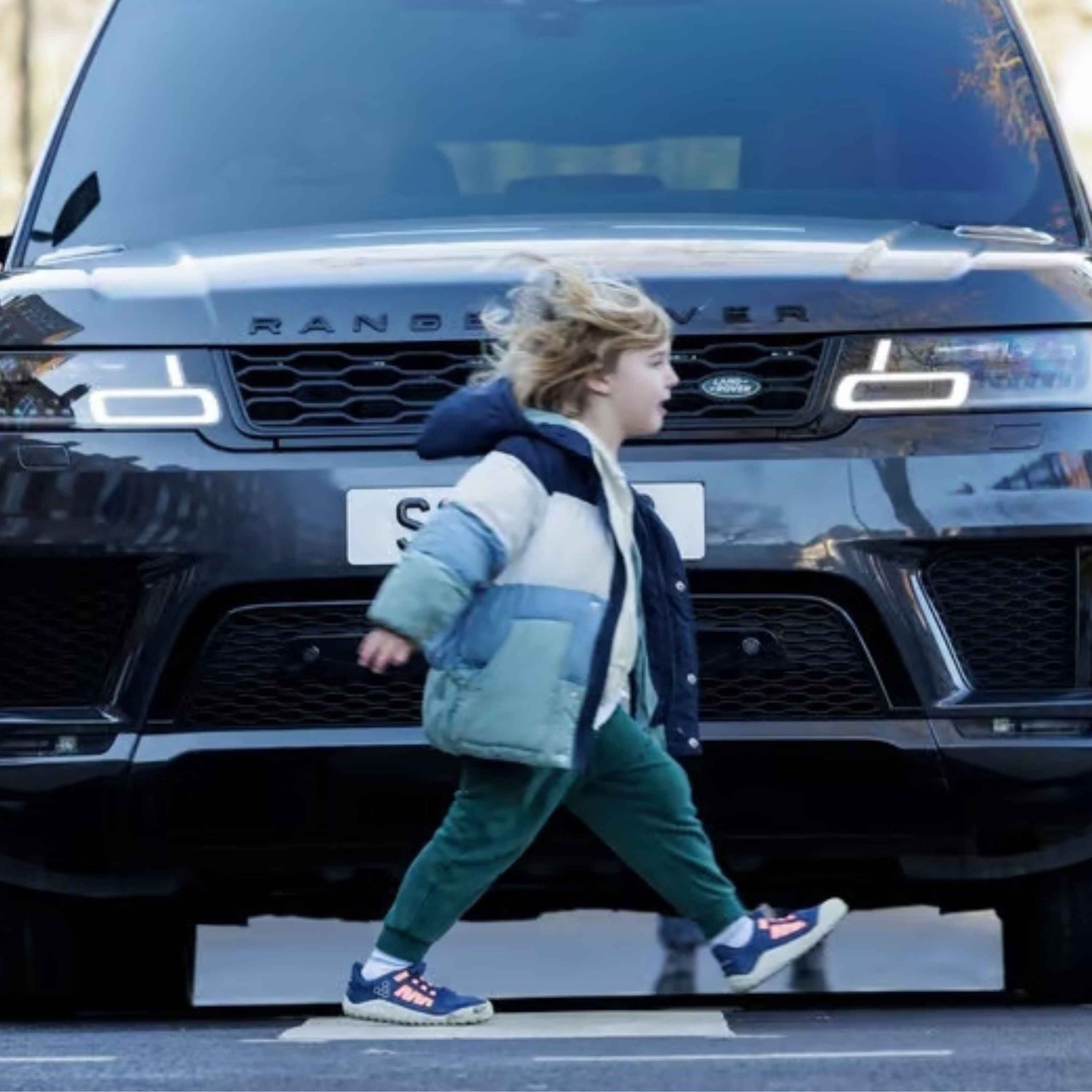
0:35But first, people hit by SUVs are much more likely to die than if they were struck by a conventional car, according to new research out today. A study by London School of Hygiene and Tropical Medicine and Imperial College London has found cyclists and pedestrians hit by so-called supersized cars are 44 % more likely to die. The risk is even greater for children. The London Standards Transport Editor Ross Lydell joins me now. Ross, these are worrying stats, aren't they? These are shocking figures, there's no doubt about it. What the researchers found was that if you're hit by one of these SUVs in comparison to a conventional car, then you are 44 % more likely to be killed if you're a pedestrian or a cyclist.
1:22Pretty much similar rates for both. But even more worryingly is the risk to children and they found that children are 82 % more likely to suffer fatal injuries if they are hit by an SUV and children under 10 are at a 130 % higher risk of death than if they were hit by a conventional car. So what is it about the design of SUVs that makes them more deadly in a crash? Well, there's two particular factors here. One is the weight of the car is much greater, probably around 40 to 50 % more than a conventional car. They're still essentially a family car, but largely cars these days are much bigger than they were 10 or 20 years ago.
2:10So the whole front end of the car, the design of the car, means it is much bigger and there's more of the car at a greater height. So if you can imagine a child standing in the middle of the road, whereas before the bumper of an old-fashioned car might strike the child on the child's knees and essentially then be at more of an angle and then would throw the child up onto the bonnet if there was a collision, these newer SUVs, the sort of supersized cars, as they're known by campaigners. There's much more of the vehicle to strike against the child or the adult or the cyclist and the vehicle strikes the person much higher in their body, quite commonly the waist or above.
2:59So you're essentially crashing into their ribs, into their lungs and most dangerously into their head. So because of that, this is why these vehicles are responsible for a greater sort of death rate to put it bluntly. It seems a bit ironic that many parents seem to choose SUVs because they feel safer inside them but statistically a child being hit by one doesn't seem to stand a chance. Yes I can understand why parents would choose to buy these cars in the sense that if you are a passenger in them then you feel like you've almost got a bigger and stronger metal cage around you and your family in general there has been a sort of decline in the number of passengers involved in road deaths which is a good thing the problem is it's passing on the danger or it's almost transferring the danger so yes the people within the car may be safer but the sheer size of the car means that pedestrians or cyclists that if there happens to be a crash or collision then these vehicles by their design and by their weight and size mean that they present a much bigger danger to people who they would crash into.
4:13And these cars seem especially popular in London but they aren't really built for city life are they? Back 20 years ago when we were talking about Chelsea tractors because then this was the idea that the affluent types in Chelsea and other bits of West London who could afford to drive around in Land Rovers and Range Rovers, but actually had no countryside or farm track to go up. These cars were designed as 4x4. All the wheels are driven by the engine. Well, there have been discussions in the past around charging SUV drivers more to park or taxing them higher. Do you think that would help? Ken Livingston, when he was mayor of London between 2000 and 2008, he recognised the problem of these huge cars.
4:56Primarily then it was seen as a problem with these cars not only being huge, but also been very polluting. In the interim years, these cars have got slightly cleaner in terms of their engines. What Ken wanted to do, and he was really rather ahead of his time here, he wanted to charge them almost, or actually slightly more than three times the rate of congestion charge for these Chelsea tractors. Back then, it was£8 a day to pay the congestion charge, but he was going to charge drivers of Chelsea tractors£25 a day. I can't imagine Sadiq Khan being keen to charge motorists more money for anything, to be honest.
5:34He feels like he's done the ules and doesn't really want to go anywhere near the wider issue of road user charging. But I think this is an issue that many Londoners, especially Londoners with young children, would welcome. I think there's a very good argument to charge drivers taxis on the basis of the size of the car. There have been calls from some campaign groups, such as the Clean Cities campaign, for a sort of supersized SUV tax, where either the likes of the parking permits issued by councils would charge you more if you have a bigger sized car, or perhaps the road tax that's charged by the government to license your vehicle is greater.
6:18Now, the most polluting vehicles are currently charged more. Perhaps we need to look at a situation where the vehicles that present the greatest risk to other road users are charged more. And certainly from the response I've received since posting this story on my social media channels today indicate there's widespread support for that idea.
6:44Let's go to a break. Coming up in part two, how did Hiroshige's prints take viewers on a journey without them ever leaving their homes? We'll be joined by the British Museum's curator of Japanese collections to explore the craftsmanship and collaboration behind these remarkable works. We'll see you back here in just a moment.
7:11Welcome back. Before the world had cameras or film, one Japanese artist captured the mood, movement and atmosphere of Edo Japan all through woodblock prints. 19th century artist Utagawa Hiroshige was the son of a shogun firefighter and showed great promise for painting from an early age. He's now considered one of Japan's most important landscape artists. Now, a new exhibition of his work, given four stars by the London Standards art critic Martin Robinson, is about to open at the British Museum. The museum's project curator for Japanese collections in the Department of Asia, Alfred Haft, joins me now.
7:49Alfred, Hiroshige's early artworks focused on kabuki actors and beautiful women, popular subjects at the time, but in the 1830s he turned to landscapes. Was this a turning point in his career? So he depicted famous places in around the late 1820s and right around 1830, famous places in his home city of Edo, which we now call Tokyo. Popular sites to visit along long rivers for viewing cherry blossoms, but Hiroshi's views of these places were very understated, and it was perhaps that mood that caught the eye of several other publishers of the time who then encouraged this line of a subject as possibility for a wider market and also not just views of Edo, but views of Japan.
8:34So around the early 1830s, he had an opportunity to design a series, and that publisher actually only commissioned three prints. But a couple of years later, Hiroshige found a commission for a series on the stations of the main highway that connected Edo in the east with Kyoto, which was the imperial capital at the time, in the West. 53 stations, plus one print for Edo and one print for Kyoto. So that's a total of 55. And these designs that Hiroshige came up with were so inventive and captured such a feeling of place and mood and weather that that series established his reputation as a landscape artist.
9:17Well, our reviewer, Martin Robinson, describes the work as cinematic, and I'm getting a sense of that just hearing you speak about it. What do you think makes these works so visually appealing? Hiroshiki not only is the dynamism of his compositions, which are the journey from Edo to Kyoto, or from Kyoto to Edo, through 55 stations that he suggested in these series of prints, is not a continuous narrative. Each picture stands on its own. So each one is a kind of moment that you can engage with and enter into. For example, travelers on a road scurrying for cover in a pouring rain or trudging through piles of snow.
9:58He always has a sense of mood and atmosphere for that place. Now, whether the place always had the specific features that he depicted is not always the case. But the idea was not absolute verisimilitude, but to create a feeling of place, a feeling that a viewer looking at the picture would be able to engage in and it was commented both at the beginning of his career, at the end of his career and he himself commented that his pictures take the viewer places without the inconvenience of a long journey. Can you explain a bit about the processes of these artworks because they're prints aren't they?
10:37How would they have been put together? Yes so it's a very collaborative process that Hiroshige produces the design, a brush design on a piece of paper, all of this is under the management of the publisher who commissions Hiroshige, who commissions the block cutter, and then commissions the printer. So the process is that Hiroshige produces the design brushed onto paper. That piece of paper is then pasted down onto a woodblock, and the block cutter traces on either side of the lines. So these are brushed lines, as thin as you can imagine, as thin as any kind of thread or cord. And the block cutter's responsibility is to trace the outline of that brushed mark, keeping the feeling of the movement of the brush.
11:24That's really a challenge. So sometimes the block cutter had to make decisions. Where did the line end and where did the background begin? So there's lots of judgment involved in this process. So once the lines are cut into the block, he removes the unwanted areas of wood on either side of the lines so that you're left with a matrix of raised lines. Then you take a print from that, the artist marks on the proof what colors go where, and then a block is created for each of those colors so that you end up with a set of four, five, six blocks, sometimes cut on both sides, and that set of blocks goes to the printer.
12:02How is it possible for the printer to manage to locate the color exactly where it should be in each design. That's the key. And that's accomplished by a mark, a registration mark on every single block in the same place. So when the printer places the paper down onto the block, the printed area is exactly where it should appear in the design. That's a very simple idea, but it was a Japanese invention. And that's what has made all of colour woodblock printing in Japan possible. Such skill at every stage, incredible. So why has the British Museum chosen to display these particular works at the moment?
12:42So it's a very auspicious time for the British Museum. We're very fortunate to have received a gift of 35 prints by Hiroshige on loan from the American Friends of the British Museum as a gift from the collection of Alan Meadow, who is a very important collector, and a very dedicated collector of Hiroshige. He's been collecting only Hiroshige for the past 50 years, and has a very discerning eye. And the museum has benefited from his experience and knowledge. And the balance much of the rest of the exhibition is then alone from his collection. So we're bringing together these two important moments.
13:22Hiroshige was also important in terms of influencing other artists, wasn't he? Van Gogh, for instance. Is that touched on in the exhibition? The majority of the exhibition is about Hiroshige. But a very important component is not just Hiroshige himself and his interest. Of course, the period is of interest, his art is of interest, but that also he himself is of interest to other artists and has been since the late 1800s. And that is the last section of the exhibition. But for me, it is integral to the aims of the exhibition, to show that his work is not just of historical interest and of interest as a sort of curiosity, but he's also of active interest to practitioners of this field.
14:12And that refers to both his approach to composition, the techniques, and also the subject. So we hope that people will feel in visiting this exhibition that there is a dialogue going on between themselves and the culture of the time between themselves and Hiroshige, but also to sense that they're overhearing a long-term dialogue between artists and Hiroshige. Hiroshige Artist of the Open Road opens tomorrow at the British Museum and runs until Sunday, September 7th. And that's The Standard. For all the latest news, head to standard.co.uk and please do drop us a line at podcasts at standard.co.uk.
14:54This podcast returns tomorrow at 4pm. We'll see you then.
New research that reveals people hit by SUVs are 44 percent likely to die than if they were struck by a conventional car, while children are 82 per cent more likely to suffer fatal injuries. But SUVs are some of London's most popular vehicles. The London Standard’s transport editor Ross Lydall joins the podcast. (edited)
In part two, Hiroshige: artist of the open road, at the British Museum. The exhibition has been given four stars from The London Standard. To find out more we join the museum’s project curator for Japanese collections in the Department of Asia, Alfred Haft.
Hosted on Acast. See acast.com/privacy for more information.


