
 Ask ChatGPT



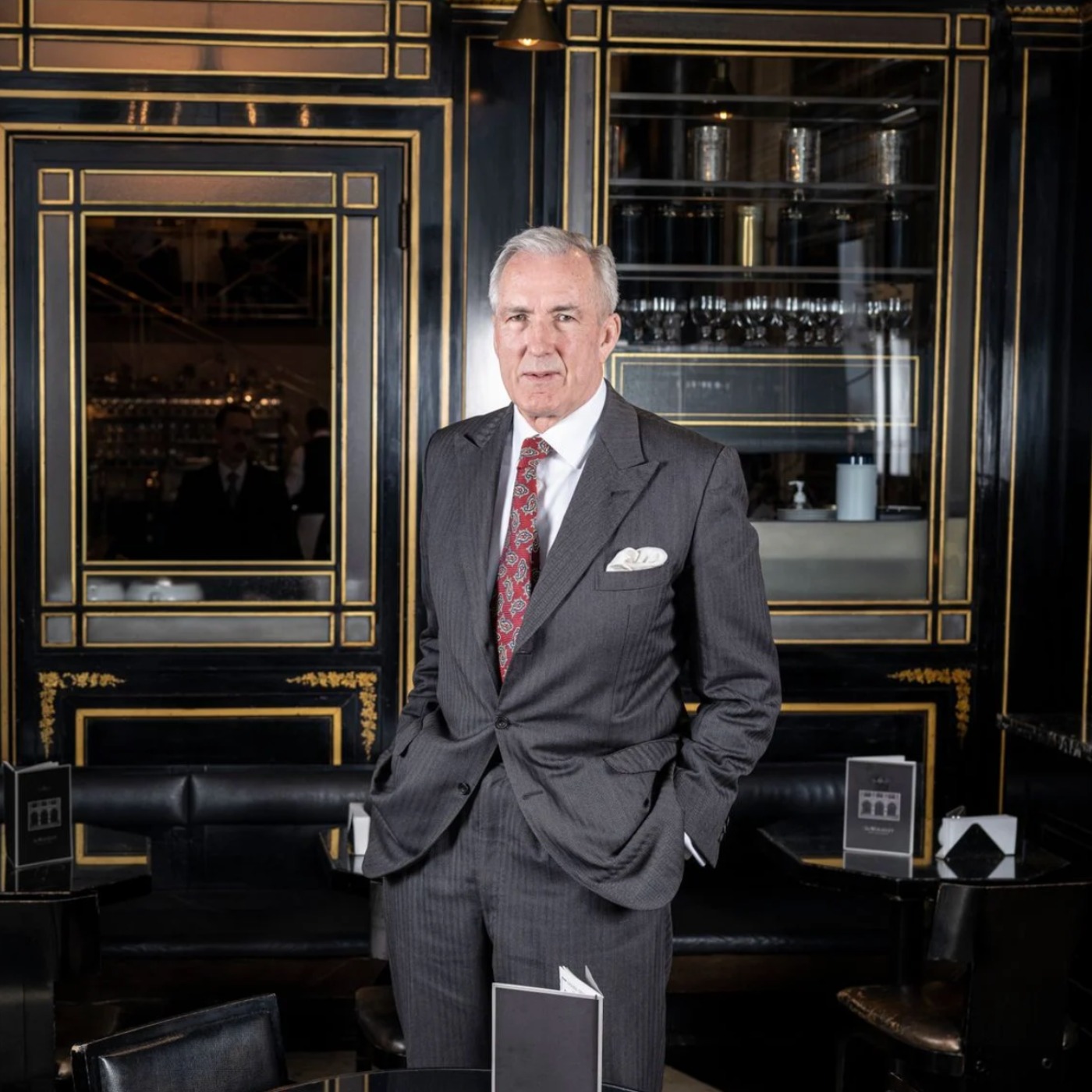
Guest: Jeremy King
In this episode of The Standard, host Tamara Kormornick discusses the impact of social media influencers on the dining experience, featuring insights from legendary restaurateur Jeremy King, who expresses his frustrations with disruptive influencer behavior at his restaurant, The Park. The episode also includes commentary from David Ellis, The Standard’s Going Out editor, regarding the pros and cons of influencers in the restaurant industry.
Written by AI. May contain mistakes.
Jeremy King shares his experiences and frustrations with disruptive influencers in his restaurant.
“Hi and welcome back to the Standard Podcast I'm Tamara Kormornick for all the latest news head to standard.co.uk Coming up, should restaurants ban influencers?”
Discussion with David Ellis on the effective and disruptive nature of influencers.
“Coming up, I speak to David Ellis, the standards going out editor and restaurant critic, about whether or not influencers are a good thing for restaurants and the wider hospitality industry.”

Get the gist, explore an idea or ask about something said.
 Claude
On The Standard, what are the key points of this episode?
Searching your listeningAutomatic transcript. May contain errors.
0:03If you have a social media account, it's almost impossible to escape the influence of, well, influencers. especially food influencers and we've all done it we've all stood in stupidly long queues to get the latest viral croissant or stayed up late to refresh a restaurant booking page to get a table in three months time but are influencers actually a good thing for restaurants? Hi and welcome back to the Standard Podcast I'm Tamara Kormornick for all the latest news head to standard.co.uk Coming up, should restaurants ban influencers? With Jeremy King.
0:47Legendary restaurateur Jeremy King has had enough. His latest venture, The Park, located in Paddington, has seen one too many disruptive influencers come through its doors. So should more restaurants be banning influencers? In this episode, we'll hear what Jeremy King has to say about the behaviour of influencers in his establishments. Plus, I talk to The Standard's Going Out editor and restaurant critic David Ellis about his take on whether influencers help or harm restaurants.
1:21So, Jeremy King has been in the restaurant business for over 50 years, and documenting a good night out is nothing new to him. Here's what he told The Standard in a recent interview. There's always been a tradition of photographs in restaurants, and I used to hate it when we had flash photography only available into restaurants because it disturbed everybody. And I even had to tell Andy Warhol that I had to ask him not to take photographs because it affected. And we were very firm on the rules. I was very happy when the smartphone came along because it enabled people to take photographs. But there's a difference between taking photographs of yourself in the course of enjoying a meal and taking photographs of other people in the restaurant.
2:11So Jeremy told us that his new restaurant, The Park, has been particularly popular with influencers, which has led to some chaotic scenes. What we've had is a phenomenon of people effectively doing fashion shoots unofficially in the restaurant. but even had a situation where there would be two groups trying to do it on the same staircase and getting irritable when people tried to pass through it. We've had as many as ten influencers in their entourage in the ladies' loo, blocking other guests from coming in and impacting on them, playing music, laying out clothes and so on. A group the day before had come in and there was a tactic where they would order food, not much food, and then when it arrived we'd depart downstairs to the loos and then we'd have to entice them back up to the table.
3:10When they got to the table they then complained that the food was cold and refused to pay for it. I've even had one influencer couple turn up and get outraged that they couldn't just set up a tripod and start taking shots without any concern for the restaurant and certainly without purchasing anything. It kind of pushed it just too far and particularly when guests were complaining. We tried everything. We tried extra security and so on. It seems to be receding, but let's see. So Jeremy had to resort to putting up notices, asking people to take photos only of their own plates and people at their own table and essentially just not affect anyone else's dining experience.
4:02But restricting photography and tightening rules on dining etiquette is not a decision he's taken lightly. but it is understandable as he has a lot of regulars that include celebrities, people in the public eye who are known to eat at his restaurants. I have no obligation to accommodate people trying to make a career. The sad thing is about any of these things it's quite fun for people to do photographs a lot of restaurants and particularly at this time when restaurants are going through real challenges it can help them. But I'm afraid it's not my obligation to provide them with their livelihood.
4:49And when on another occasion I had another woman tell me that most people are grateful and I should be grateful and what the hell was I doing making a fuss about it? and worse things. I've been sworn at, I've been accused. The staff have had their photographs taken, which is illegal. And if there's no mutual respect, then you have to stop it altogether. Ultimately, for Jeremy, it comes down to respecting other patrons. If you have a very loudly crying child in a restaurant, one would expect a parent to try and assuage that upset or move them around. We love working with people. We love to be known to be friendly to everyone.
5:41But I'm afraid the influencers are pushing me, pushing my patients beyond all bounds. We'll take a quick break. Coming up, I speak to David Ellis, the standards going out editor and restaurant critic, about whether or not influencers are a good thing for restaurants and the wider hospitality industry.
6:09Welcome back. Let's head to my chat with David. So, David, do you think influencers are a force for good or a force for evil on the London restaurant scene? I think they probably can be both. I think if you're a diner and there's someone who comes in with sort of a light ring on and then they just stand up and they're all over it and then they're complaining to the waiter because the food's got cold because they spent so long taking a photo, then yeah, they're bloody annoying. But on the other hand, they do celebrate a lot of restaurants across the capital and in particular the sort of places that maybe restaurant critics traditionally wouldn't get to.
6:52and so that can help drive food trends, it can help drive sales so for a business's point of view it can be very good but I can also see that it can be a huge source of irritation for people and actually I can see with the Jeremy King thing they're profiteering off his restaurant it's a bit like selling drugs in someone else's you can't just sell them on someone else's patch and that's kind of where I feel like this is why Jeremy's annoyed it's like he created this beautiful restaurant He put in all the money with his investors and now other people are using that beautiful design to benefit themselves.
7:28And that's just not what the restaurant's for. Almost like the caricature artist by the Eiffel Tower. Yeah, exactly. So do you think influencers actually negatively impact dining experiences with photography, with bringing crowds, with ordering every single dish off the menu? Do you think that criticism of them is warranted? I think in that instance, when it's done like that, for sure, because it's not a fucking photo shoot. And so the food is very hard, notoriously hard to capture well, either as stills or as video. Especially on a white plate. Yeah. So that can take time and that can be very disruptive.
8:15But I will say that there are many influencers who, A, are very adept at it and are very adept at just using their phone. So it's not that intrusive. And there are others who do the majority of their filming outside the restaurant. And I think when it's done like that, that's really, really good. What I don't necessarily need is to sit somewhere and then just hear someone droning into a camera and then repeatedly do take after take after take. How crispy or buttery something is. Yeah, or just using the catchphrases of the day. So that kind of thing can be very irritating, but I do think that probably the majority of influencers have moved on from that format because they recognise A, restaurants don't want them in, and B, they're just annoying the hell out of everyone around them.
8:57And so that sort of new style of being outside, getting a bit of shots of the food and stuff like that, I think that's a lot less intrusive. One of the nice things about influencers particularly is that they obviously build up these communities online. And there are people whose weekend activity will be going to pursue that. And that's something that they really love doing. And fair enough. It's just because it's my job, I don't want to be spending my weekends trailing after the latest trend. And actually, I have other interests outside it. But I do like that there are communities who do follow their favorite influences and they find new stuff.
9:33And it's like, that's great. If you can build a community and bring people together, as sort of sentimental and mortgaged as that is, it's rather nice. It's just not for me. Yeah, and if you're supporting the London's hospitality industry, then... Yeah, absolutely. Although this does bring on another point, which, sorry to ramble, but this is actually slightly the insidious side of it, is that if you are pursuing hype and viral fame, it will work in the short term. but the crowd that's going for that and goes just because it's popular not because they actually like the product um or whether or not they like the the product is sort of immaterial they will then move on to another thing that means you will be left behind so in pursuing that i think the restaurants that pursue that fame are far worse than the influencers who are promoting them because they're just trying to make a quick buck fine it's capitalism but they're not trying to open a good restaurant and those restaurants don't enrich the capital in any way and so when they invariably shut because six months later no one cares about a pie eaten out of a shoe then like they sort of deserve to whereas if a restaurant just happens to be brilliant and they put all their love heart song all the rest of it in um as trite as that sounds and then it does really well like it's a great restaurant it'll last people will go for years um so yeah I actually, I'm fine with influencers.
11:02I hate restaurants that chase them. Well, thank you so much for your time, David. Thanks very much for having me. And that's The Standard. For all the latest news, head to standard.co.uk. If you're new here, hit follow and give us a rating. If you'd like to get in touch, email us at podcasts at standard.co.uk. We'll be back here tomorrow morning. See you then.
Social media is flooded with food influencers hyping up viral dishes and sharing ‘hidden gems’. But rave restaurant reviews come with a cost — often the experience for fellow diners.
In this episode, Jeremy King tells The Standard about the behaviour of certain influencers in The Park, and the new policy he has put in place to thwart disruptive content creation. Plus, host Tamara Kormornick speaks to The Standard’s Going Out editor and restaurant critic, David Ellis, for his take on whether influencers help or harm restaurants.
Hosted on Acast. See acast.com/privacy for more information.


