
 Ask ChatGPT



Written by AI. May contain mistakes.

Get the gist, explore an idea or ask about something said.
 Claude
On The Standard, what are the key points of this episode?
Searching your listeningAutomatic transcript. May contain errors.
0:02Hi, I'm Charlie Duffield and welcome back to The Standard Podcast. If you're new here, hit follow and give us a rating. For all the latest news, head to standard.co.uk. Coming up later in the show, is the tide finally turning on regulating social media platforms for kids and teenagers? If it does work, if young people in Australia think that it's working, would you as a government in the UK be tempted to consider something similar? Yes, we would certainly consider it. if not only if it worked, but if young people, as you rightly said, believe that it was working and trusted that that was a solution.
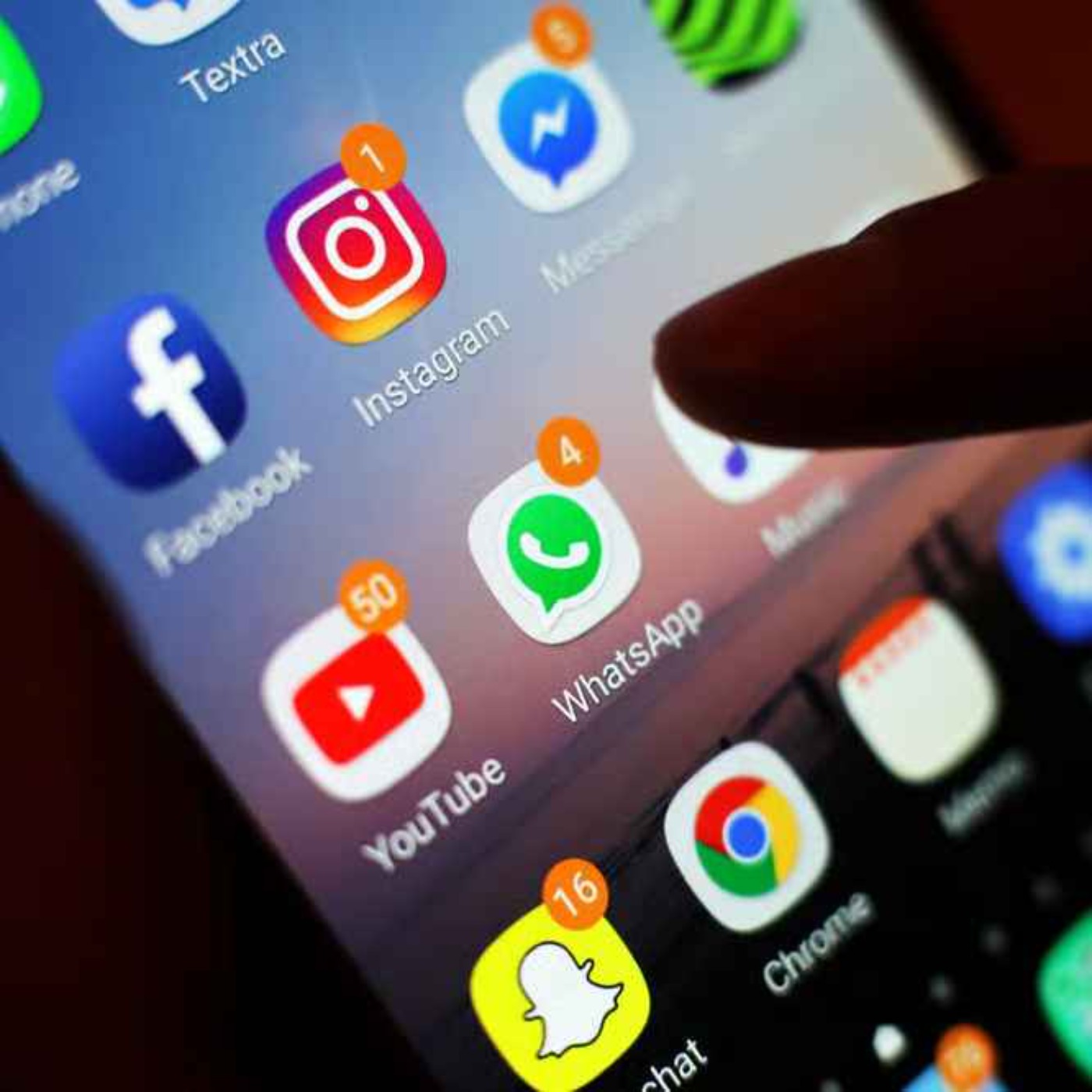
0:46But first, a new law in Australia has banned under-16s from using social media platforms. It's a bold move that many other countries are watching carefully, so could the UK follow suit? Millions of teenagers down under have now been shut out of their social media accounts, And interestingly, it's not parents and children who will be punished under the new rules, but tech companies themselves. They'll face fines if they don't take reasonable steps to prevent Australians under the age of 16 from opening social media accounts. Instagram, Facebook, X, Snapchat, TikTok, Reddit and YouTube are among the platforms required to enforce it, but that list could change in the future.
1:32However, the ban is already proving difficult to implement. Some children are said to be fooling age estimation technology by drawing on fake facial hair or using parents and older siblings to dodge the new rules. It comes as new Ofcom figures in the UK show that children between 8 and 14 are spending an average of nearly three hours online each day, often late at night. According to the data, almost a quarter of time spent by their age group on their four main social media services happened between 9pm and 5am. And 70 % of UK 11-17 year olds saw or heard harmful content online over a four week period.
2:16So might a similar set of restrictions be introduced in the UK? Well, right now it doesn't look likely. The Culture Secretary Lisa Nandy said there were no existing plans to introduce a similar measure due to concerns about enforceability. But she left the door open to future action if the policy proves to be a success. Joining me now is Daisy Greenwell, founder of Smartphone Free Childhood, a movement of families standing together to delay smartphones and social media. Daisy, what's your response to the action the Australian government has taken? It's a really big moment. Australia have done something that most people thought was impossible.
2:54They've stood up to big tech. They've showed that big tech isn't above the law and they've said that the current situation for children isn't acceptable. For over a decade, kids have been effectively lab rats in a global experiment with smartphones and social media. They did this long before we understood the consequences, but now we do. And so this move from Australia is really exciting, I think, for parents everywhere. How is this ban actually being implemented? All children under 16, their accounts on social media will be deactivated. Things like TikTok, Reddit, Instagram, Snapchat, children under 16 will no longer be on those platforms.
3:29And the onus is on the tech companies themselves to keep them off. For the first time, it's not on the shoulders of parents to fix this. Tech companies will have to figure out which children are under 16 and ensure that they're not on the platform. This feels really radical that tech companies are finally being forced to take accountability. Yeah, it is. It is. And I think there's so much money and power in these companies that it's been really difficult for governments to put in place any really effective legislation. Today marks a really big day. And in fact, Australia have always led the way many times on public health.
4:03So, for example, seatbelt laws, they were the first ones to implement those. Plain packaging on cigarettes, they did that too. And then many other countries followed suit. So I have a feeling that this might be a similar story. Can you tell me a bit about why you set up your own anti-smartphone movement? I mean, I didn't really decide to do it. It just happened. I wrote an Instagram post that went viral about not wanting to get my child a smartphone because kids in her class were starting to get one. And I'd started a WhatsApp group with a friend to sort of try and delay together because it felt like an impossible thing to do.
4:34When that post went viral, suddenly thousands of people started joining the group and then they kicked off all around the country. Within two weeks, there was smartphone free childhood communities in every county in the UK. Now, me and my husband and a whole team of people have been building this movement so that parents have some choice, basically. If they want to delay smartphones, which a lot of parents do, then they can do it together in their communities. Because the problem is that it's almost impossible to do it on your own. The network effects of these devices is so powerful. Everyone's on them because everyone else is on them.
5:02so if you find a way to just do it with a bunch of others in your community it makes it a lot easier to delay. And what are you trying to achieve? We just want to give kids a few more years to grow up free from these devices and platforms because kids have had these now when they first came out about 15-17 years ago we didn't know quite how addictive and harmful they would be but now there's a lot of data we've coming in every year that shows that they're not good for children's well-being and we can all see that in our own relationship with these devices too we know how addictive they are and we know that we see all sorts of stuff on there which is not suitable for kids so the aim of it is to give parents back some power in this i think because when it started it really felt like you had no choice you had to get your child a smartphone because you just couldn't leave them the only one without so what i feel like most pleased and happy about is that parents now have a choice they know that there's a movement to delay and if you want to be part of that you can join us and we are all across the uk there are 350 000 parents in this community now and 40 global groups have spun off since we started as well because this is something that families all across the world are struggling with.
6:07So what type of things do you hear from parents whose kids are using smartphones? What's really common to hear is that I gave my child a smartphone and they disappeared into it. I lost my child. Suddenly instead of wanting to be part of the family and chat they just disappear off and they're just swallowed up by that addictive tech essentially and that they're then subjected to all sorts of experiences on there which you would never as a parent sort of invite into your home, but because they have a smartphone in their pocket 24-7, your child is suddenly experiencing things like anorexia content or being shown porn, all sorts of things that your child might not even be searching these things out, but the algorithm throws them at children because they know that that's what maximizes engagement.
6:48And we know that the business model behind these companies is all about maximizing engagement. They don't care about kids' well-being. They just want them on there for as long as possible so they can harvest their data and sell it. So I think parents have just had enough and they've had enough of these companies getting in the way of their relationships with their children and they want better for their kids. Let's go to an ad break. Coming up, is a blanket social media ban really the answer to concerns about digital safety? We'll see you back here in just a moment. Welcome back. Daisy, do we know how young children are when they're starting to use these devices?
7:26Well, the Ofcom data shows that half of under 13s have a social media account, even though the age is supposed to be 13 and above. The average age to get a smartphone in the UK is nine. And in fact, 25 % of five to seven year olds have a smartphone already. So kids are getting them really young. And a lot of parents don't have the time and the tech knowledge to keep them safe when they're on there. Most of us are just trying to get a meal, the next meal on the table. You know, we can't spend our time figuring out all the super complicated parental controls across every smart device we have in the house.
7:56And it's, you know, it's whack-a-mole trying to ensure that your child isn't having these experiences online. Until this world is made safe, this digital world is made safe for kids, let's just delay it until for a few more years, until they're old enough to deal with what they will experience when they're on there. So what are the benefits of a phone-free childhood? I think it's just a childhood that children have lived for the whole of human history until the last 15 years. It's a childhood where you can just grow into who you're meant to be and develop your passions, whatever that might be, whether it's playing football, cooking, chatting to your friends, having all those real life experiences which are crucial to your healthy development into an adult.
8:32The problem with these social media and smartphone spaces is that they're digital ecosystems which are profit driven. They don't have children's well-being front of mind. It sort of twists the experiences of childhood, which are things that they really shouldn't be experiencing. Why is an outright social media ban necessary? Some people will say this blanket restriction is just too extreme. It's a blunt tool, but I think it's necessary because tech companies really could have made these platforms safer for kids. They really could have made sure that they don't have millions of under 13s on their platforms and they've just refused to do it.
9:04They've dragged their heels every step of the way. They've spent billions on lobbying to stop governments from regulating them. So Australians have to come in with this sledgehammer of a rule to force the tech companies to listen, sit up and listen, make it safe for kids. If we think about it, we've just normalised the abnormal, which is children spending five, six hours a day of phones scrolling rather than being in the real world. So I think that just doing a policy like this, which just levels the playing field, all kids off these platforms is really good and really effective and really necessary.
9:35And are there upsides to social media that we're not taking into account? Does this ban mean that young people are missing out on connecting with others? I mean, absolutely. The thing is, you know, social media is not like it's inherently evil. It's brilliant in lots of ways for lots of people, but there's too much on there that isn't safe for kids. And so until kids are old enough to deal with what they're going to experience there, it's better for them to be off it. For some people, they are crucial communities. So we need to make safe digital spaces for people who find unique communities there that they need, because all the data and stats show that the more vulnerable a child is, the more harm they will experience on social media platforms.
10:15So they aren't necessarily the best spaces for vulnerable communities to find the people that they want to meet. And has the UK government been responsive to your work? So far, they've shown very little interest in doing any legislation in this space. Been pushing on this for 18 months now. The Safer Phones Bill went through Parliament in the summer, which was to tackle some of the addictive design and to try and do something like raising the age, but it was a little bit less serious than that. But they just said no, they weren't interested, essentially. And they're so out of step with the public mood on this.
10:48Poll after poll shows that adults want this. 75 % of adults want this. 67 % of teens think that it would be better if we had rules like this in place. So I think it's time that the government really prioritised children's wellbeing and the mental health of a generation over the profits of big tech. So why do you think they're so hesitant to act? I think it's just that these companies are so powerful and so rich that they're more powerful than governments. And all of the governments around the world are competing to have their business. If Google or Snapchat or TikTok decides to do some of their business in the UK, whatever that may be, it brings huge amounts of money to our economy.
11:24So they've got a difficult tussle over protecting kids' well-being or making lots of money for the UK economy. I think a lot of it comes down to that. Earlier in the year, the TV show Adolescents prompted a national conversation about the dangers of social media, didn't it? Absolutely. There's an absolutely huge response to that. For us, we've got something called the Parent Pact, which is a way to connect parents who want to delay, they said they can agree to sign up to delay smartphones and see how many others in their school and class have delayed. And that jumped by 30 or 40 ,000 signups, which was about a third when adolescence came out.
12:00And a lot of people found our community at that moment. And I think talking to MPs and ministers at that time, they said, this is so powerful, the way that drama can push culture and push politics is absolutely massive. So I think that brought a lot of people into the movement and also got a lot of politicians sort of recognising, yes, this is a huge problem and yes, we can do something about it. Do you feel hopeful that momentum is now building on this issue? Definitely. I think it's inevitable that more legislation will come in. Now that Australia has sort of broken the spell that big tech had on legislation globally, other countries are starting to fall like dominoes.
12:37We've already got Denmark, Norway, Spain and Malaysia who said that they're going to raise the age to 16 or 15. And a lot of other nations are following suit. They've got legislation sort of being drawn up in Parliament, places like New Zealand, Papua New Guinea, Indonesia. And just a couple of weeks ago, the EU Parliament passed a resolution saying that all member states should raise it to 16. So I think that it's only a matter of time before this happens. And people have realised that this experiment on a generation of kids is not pretty the results. And we need to do more about it. We need to protect the next generation of kids from these ever increasingly addictive and toxic platforms.
13:14Should social media platforms be treated like other addictive substances with age restrictions such as alcohol or cigarettes? Absolutely yeah things like films, cigarettes, alcohol, even sunbeds we restrict them for certain age groups because we know that they need to be of a certain age before it's safe and there's no reason why social media shouldn't be in that. In fact every other product which is sort of aimed that children has to go through rigorous safety testing to prove that it's safe for kids. And why is it that social media is the only one that hasn't had to do that, even though it's the most powerful and sort of addictive of all of these products that kids are using?
13:52So we need to flip that on its head and make them prove that it's safe before they start profiting from all of our kids, which they've been doing, making billions for years and years now. And it's really time that we flip that and made them prove it and got kids off their platforms. Finally, is there anything else you want to add? The main thing that I'd want to say is that kids have their whole lives to spend on screens and childhood is the one moment they shouldn't have to compete with addictive algorithms. Australia has broken the spell and now we know that the status quo isn't inevitable. Countries everywhere should come together and start following suit.
14:32And that's The Standard. For all the latest news, head to standard.co.uk. If you'd like to get in touch, please do drop us a line at podcasts at standard.co.uk. We'll be back here tomorrow morning. We'll see you then.
A “world-leading” social media ban has been enforced by the Australian government, to prevent under-16s from accessing social media sites, including Facebook, Instagram, X and YouTube.
Platforms that do not comply risk fines of up to $49.5m.
Australian Prime Minister Anthony Albanese described the move as "the day when Australian families are taking back power from these big tech companies".
The ban has garnered worldwide attention, with several nations indicating they will adopt a ban of their own, including Malaysia, Denmark and Norway.
But could similar legislation be introduced in the UK? We’re joined by Daisy Greenwell - founder of Smartphone Free Childhood, a movement of families standing together to delay smartphones and social media - to discuss.
Hosted on Acast. See acast.com/privacy for more information.


