
 Ask ChatGPT



A proposal to charge overseas/international tourists admission fees to UK national museums and galleries, ending the “free for all” policy that has been in place since 2001.
Alison Cole, director of the Cultural Policy Unit think tank; helped devise the original universal free admission policy (including a VAT policy) from 1997–2001.
Charging tourists is a “very bad idea” that would undermine a landmark Labour policy, create discriminatory barriers and queues, and likely reduce overall spending. Tate modeling suggests charging tourists would make them lose money. Free entry is described as a top motivator for cultural tourism, generating about £1 billion a year, and supporting local spending.
Louvre queues as a deterrent; India’s locals-vs-international fee system (international visitors paying ~10x locals); “Quids in” campaign in the 1990s (even 50p deterred). Alternative suggested: a hotel levy (72% support; estimated £1.2 billion/year).
Written by AI. May contain mistakes.
Explore the impact of the UK’s free museum entry policy since 2001.
“Hi and welcome back to The Standard Podcast.”
Alison Cole discusses the current state of arts funding and its implications.
“In your view, are we heading towards a crisis point or are we already there?”
Debate on the potential proposal for charging tourists at museums.
“And I really want everybody to enjoy it, you know, now and in the future.”
Discussion of how admission fees affect visitor behavior and perceptions.
“you want the whole world to enjoy and actually have come from around the world, you don't want to erect barriers and have, you know, endless queues.”
Exploring hotel levies as a potential alternative funding source.
“Well, there's definitely a need, but we, I mean, we did a policy suggesting the introduction of a hotel levy and that is way more popular with British public.”
Alison Cole argues for the importance of free museum entry during economic crises.
“So it's not a way necessarily of increasing funding to the sector.”
Explore the arguments for maintaining free access to museums amidst economic challenges.
“It's also building a big new extension for contemporary and modern art.”

Get the gist, explore an idea or ask about something said.
 Claude
On The Standard, what are the key points of this episode?
Searching your listeningAutomatic transcript. May contain errors.
0:00You know what's wild? Most people are still overpaying for car insurance just because it's a pain to switch. That's why there's Jerry. Jerry's the only app that compares rates from over 50 insurers in minutes and helps you switch fast with no spam calls or hidden fees. Drivers who save with Jerry could save over$1 ,300 a year. Before you renew your car insurance policy, do yourself a favor. Download the Jerry app or head to jerry.ai.acast.
0:43the house of lords is considering a proposal to charge overseas visitors admission fees at museums and galleries with some institutions now reporting deficits could international tourists hold the golden ticket? Hi and welcome back to The Standard Podcast. I'm Tamara Komornik. For all the latest news, head to standard.co.uk. Coming up, should museums charge entry for overseas visitors?
1:19Since 2001, national museums and galleries in the UK have been free for everyone to visit. a landmark policy often credited with boosting visitor numbers and tourism. This year marks its 25th anniversary, but a new proposal could scupper those celebrations altogether. My guest for today's episode is Alison Cole, director of the Cultural Policy Unit Think Tank, who helped to devise the initial universal free emission policy. Here's my chat with Alison.
1:57Hi Alison, thanks so much for joining me today on The Standard Podcast. It's great to have you. Hi.
2:06So Alison, I want to kick off our discussion by gauging the state of arts funding in London. In your view, are we heading towards a crisis point or are we already there? I think some museums are in deficit, so there's definitely a real need for extra funding at the moment. I think, ideally, people would like the government to recognise that and adjust the funding, because it hasn't increased to acknowledge the need for some time. So, yes, there is. I mean, the National Gallery is a key example, which announced a big deficit recently. and I also know Tate has had a deficit. So it needs an injection of cash for these museums to be sustainable going forward.
2:58So Alison, tell me about your history with the free-for-all entries for cultural institutions. Well, as you can probably tell, I'm really passionate about it because I did the free admission campaign and in particular the VAT policy that allowed all charging museums to go free. So I spent from 1997 to 2001, four years of my life on it. I'm really proud of that. And I really want everybody to enjoy it, you know, now and in the future. Well, I imagine most listeners have been the beneficiaries of such a policy. So thank you for your work. Thanks.
3:45so let's talk about the potential proposal that's on the table at the moment potentially international tourists paying to enter cultural institutions now this is a massive massive move because cultural institutions have been free for any visitor to enter since 2001 so this would cover museums like the British Museum, Natural History Museum, Science Museum, highly, highly visited spots, as well as art galleries like the Tate and National Gallery that you've mentioned. Alison, what are your thoughts on this idea? I think I've gone on the record of saying it's a very bad idea. So I'll explain why.
4:28I mean, this is a landmark Labour policy. It's celebrating its 25th anniversary this year and it's been sustained by successive governments for a reason and that is because we believe our museums are pillars of education and inspiration for all wherever you come from and we don't just see them as visitor attractions and at the moment we know that our free national museum and gallery offer is the top motivator for tourists coming to this country in terms of cultural tourism, and that generates a billion a year. And we also know that because there is a very generous policy that people spend more in the cafes, the shops, the surrounding area.
5:16So, for instance, Tate have modelled what charging tourists would look like and they'd actually lose money. So there's lots of unintended consequences as well as, you know, that message it sends to the world. At the moment, we look confident, generous, welcoming, and it's part of our ongoing cultural exchange with whoever comes here. And what message do you think it sends to foreign tourists? Well, as I said, I think we're a very welcoming, diverse, tolerant nation, and it's a bit like setting up border control at museums. It just is discriminatory. There will be massive queues. I mean, look at the Louvre, for instance, and that actually deters visitors, not only sort of international visitors, but also domestic visitors.
6:10So it puts up barriers. And when you've got global collections that, you know, you want the whole world to enjoy and actually have come from around the world, you don't want to erect barriers and have, you know, endless queues. My first reaction to this story, it reminded me of when I went to India, I visited cultural institutions there and they have a system where locals pay a very different fee to international visitors. And in some of the institutions, I was paying about 10 times the ticket price that the locals were paying. Do you think introducing a system where foreign international visitors are paying puts Brits on a slippery slope, as there could be a case made for everybody to pay entry in a few years time?
7:03That's right. Once you erect barriers, it's very tempting to use them for all sorts of things. And I think, you know, there was a move back in the 1990s to have the British Museum start charging and it was going to just charge a pound to begin. begin with, it was called the quids in campaign. And that was a slippery slope, basically, because I know a lot of the people who are in favour of charging tourists say, oh, well, you know, they can afford one or two pounds. And the same with, you know, people here, they could afford a quid to get in. But what we found then was that even 50p was a deterrent because it's actually, it's perception.
7:42It's not what you're actually paying. It's your perception of, oh, there's a barrier therefore I won't just pop into there and also once you start paying you feel that you've got to do a visit in a certain way like you've got to stay for a couple of hours when people say well what about overcrowding and things people stay much longer when they pay to get their money it's worth whereas the moment we can pop in actually have a quality visit and not have that sort of oh well I've paid x therefore I've got to stay all day.
8:22We'll take a quick break here. Coming up I ask Alison about a previous attempt to scrap free museum entry as well as discuss what cultural institutions think about charging overseas visitors for admission. We'll be back here in just a moment.
8:47Are you noticing your car insurance rate creep up even without tickets or claims? You're not alone. That's why there's Jerry, your proactive insurance assistant. Jerry handles the legwork by comparing quotes side by side from over 50 top insurers so you can confidently hit buy. No spam calls, no hidden fees. Jerry even tracks rates and alerts you when it's best to shop. Drivers who save with Jerry could save over$1 ,300 a year. Don't settle for higher rates. Download the Jerry app or visit jerry.ai slash ACAST today.
9:29Welcome back. Let's head back to my chat with Alison.
9:39the arts institutions they're experiencing you know 30 cuts from you know the last decade and as you mentioned some of them have really started to struggle they're also you know rising running costs increased security measures do you think that imposing these entry levies would offset the balance that, you know, the extra staffing costs or facilities that would need to be put on to make the system actually work? Well, there's definitely a need, but we, I mean, we did a policy suggesting the introduction of a hotel levy and that is way more popular with British public. Like in a recent survey, 72 % of British public say they would prefer England to introduce a hotel levy for tourists to pay at their hotel or Airbnb rather than erect barriers and queues and charge foreigners at the museum door.
10:39And this, with our calculations, we reckon that would generate an extra£1.2 billion a year, which is over twice what the Arts Council gives a year to its organisations across the country. And there's also, of course, lottery money, which could be used for the big capital projects. Alison, I want to talk a bit about government-backed arts funding. So the Treasury were considering cutting free entry for international tourists, cultural institutions in 2025, but this was actually scrapped after pushback from culture ministers. Alison, were you involved with this decision? No, I wasn't involved. I mean, we're independent, but we made our view clear.
11:27And we also did a policy which was the value of free for all, which was shared with the DCMS. So I wish I could claim it, but I will claim to have kept campaigning on the issue and to have contributed the evidence towards sustaining free admission. But I think, unfortunately, this way, I think the argument from the DCMS, potentially, I mean, they're considering it, is that if you charge tourists, you could use that money to help civic museums around the country. The trouble is, if you charge tourists and government funding is withdrawn from national museums, it won't necessarily go to civic museums.
12:12It will go back into the Treasury coffers and then, you know, who knows what will happen. So it's not a way necessarily of increasing funding to the sector. But, you know, it takes some gumption for a Labour government to overturn one of their best achievements. which even the Tories have kept going, you know, all the way through. And it's the 25th anniversary year. So to ditch a policy when we should be celebrating its success seems perverse.
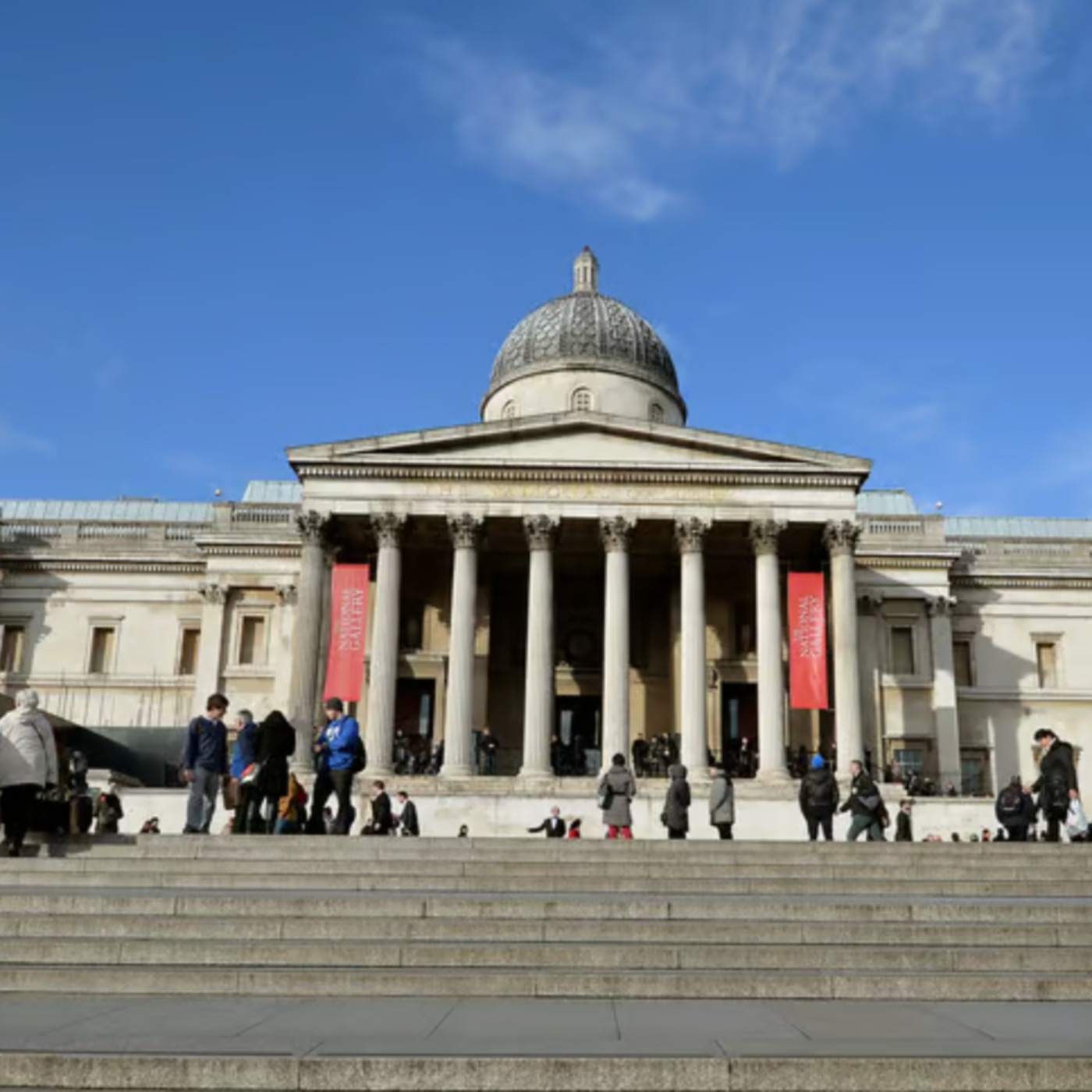
12:53Alison, I actually reached out to some of the most visited museums in London for comment. and quite a few declined or I just didn't hear back from. But I did, however, receive this statement from the National Gallery. They've said, since its foundation in 1824, the gallery has remained free to all and is proud of this legacy. However, given the significant financial challenges facing the sector, it recognises the need to consider a range of potential options. I think there's an expectation that a lot of these institutions should be hardline against this policy and that being free for all is something that is integral to their values.
13:43I'm kind of preempting this. Do you think it's fair to demonise institutions who might welcome charging foreign tourists for entry? I don't think it's a question of demonising, but I think probably at least sort of 90 % of the others would be wanting to uphold free admission. So I think the National Gallery obviously has gone public with its deficit. It's also building a big new extension for contemporary and modern art. So it's in a unique situation, I think. So I wouldn't demonise institutions, but I think the majority of national museums and galleries, she said sticking her neck out, do want to preserve free admission because it actually works.
14:30And what would you say to those who are looking at the state of the economy, cost of living crisis, state of the art sector and just on balance are thinking that free entry in museums is a nice to have and that it's unsustainable. What would you say to that view? I think particularly during cost of living crisis, the fact that museums are free and that you don't have to pay and that these belong to all of us. You know, this is part of our national pride and it's part of belonging. It's a pillar of our soft power abroad. They also have regenerated, you know, cities across the country. So I think people will be very pleased that there's something as wonderful as all these museums and galleries, free of charge, for them to enjoy and for their children to enjoy.
15:28Well, thank you so much, Alison, for sharing your views with us. Thank you very much. And that's The Standard. For all the latest news, head to standard.co.uk. If you're new here, hit follow and give us a rating. If you'd like to get in touch, email us at podcasts at standard.co.uk. We'll be back here tomorrow morning. See you then.
The House of Lords is considering a proposal to charge overseas visitors admission fees at museums and galleries. This year marks the 25th anniversary of the free entry policy, but with some institutions now reporting deficits, government ministers are looking to tourists to prop up cultural institutions
In this episode, host Tamara Kormornick speaks to Alison Cole, the director of the Cultural Policy Unit thinktank, who helped to devise the initial universal free admission policy instituted in 2001. Together, they discuss whether charging tourists could generate enough income to plug the gap in arts funding, and explore alternative ways to keep cultural institutions free for all.
Hosted on Acast. See acast.com/privacy for more information.


