
 Ask ChatGPT



Host: Helena Wadia
Rachael Burford (Chief Political Correspondent, London Standard)
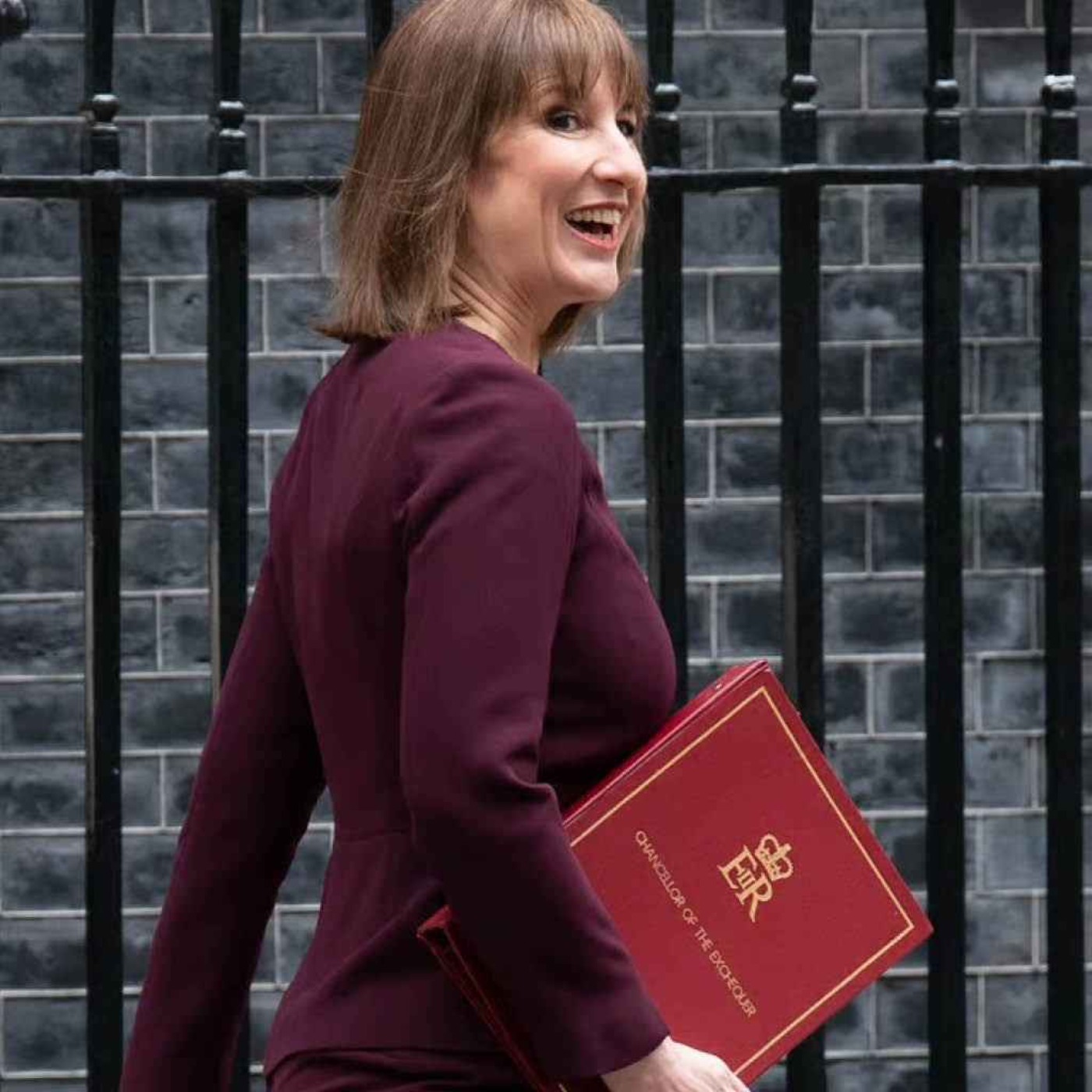
This episode covers the recent Spring Statement delivered by Chancellor Rachel Reeves, focusing on significant changes in welfare and defence spending, followed by a discussion on H&M's AI model replicas in the fashion industry.
Written by AI. May contain mistakes.

Get the gist, explore an idea or ask about something said.
 Claude
On The Standard, what are the key points of this episode?
Searching your listeningAutomatic transcript. May contain errors.
0:04Hi, it's Helena Nawadier and welcome back to The Standard Podcast. Coming up, H &M have announced they are creating AI Model Twins, digital replicas of models to use for marketing campaigns, despite acknowledging they don't know the full impact of their approach. They're going to try and swing it and make it seem like there's a way for models to benefit from this, but I just don't think it's really possible. I think it's a bit of an extinction-level threat to modelling, if I'm honest. We'll be joined by model Julia Campbell-Gillies about the impact of AI on the fashion industry.
0:45But first, the Chancellor presented her first highly anticipated spring statement to Parliament. After a controversial first autumn budget was revealed in October 2024, Rachel Reeves returned to reveal her latest financial statement. This Labour government was elected to bring change to our country, to provide security for working people and to deliver a decade of national renewal. That work began in July and I am proud of what we have delivered in just nine months. The spring statement was meant to be a routine update on the public finances. But Rachel Reeves made more extensive changes after her plans were blown off course by lower growth and higher government borrowing costs.
1:34The Office for Budget Responsibility, the government's financial watchdog, halved its growth forecast for this year to 1%. The Chancellor blamed instability, both globally and at home, arguing that the world was changing before our eyes and promising a new era of security and national renewal. The cost of living crisis is still very real for people in Britain. Global instability is holding back prosperity across the world. And countries across Europe are rightly having to spend more on defence. That is why today I have spelled out how we are going further and faster in delivering our plan for change.
2:11Well, two areas that the speech focused on were defence and welfare. The Chancellor promised an extra£2.2 billion for defence from next month. We are strengthening our nation's defences. with£2.2 billion as a further down payment on our plans to deliver defence spending worth 2.5 % of GDP by April 2027. We are seizing the opportunities of a changing world with a commitment to make Britain a defence industrial superpower, to create jobs, prosperity and opportunity in every corner of Britain. And Ms Reeves confirmed welfare cuts of£4.8 billion and was subsequently accused of balancing the books at the expense of the poor, as official figures showed 3 million households could lose£1 ,720 a year in benefits.
3:02Well, to run through the policies, the reactions and more, joining me now is the London Standards Chief Political Correspondent, Rachel Burford. Hi, Rachel. Thanks for having me. Hello. What would you say was the main focus of the spring statement? I wouldn't say there were many huge surprises. A lot of it had already been trailed. But what we did get was some details about those previous announcements that I think surprised a few people, most notably on benefit cuts. There was, obviously, a couple of weeks ago, the Secretary of State for Work and Pensions announced huge benefit cuts that the government said would add up to about£5 billion.
3:41We got the impact assessment of those benefit cuts and the Office for Budget Responsibility said that they wouldn't save quite as much as the government had predicted. So there was a few more benefits cuts announced by Rachel Reeves yesterday. And today, the Chancellor has been on the media round and there has been a lot of discontent, I would say, from people over these cuts. And she has been sort of responding to that today, mainly. As you said, there's been a lot of controversy about the welfare cuts and the welfare bill. Can you tell us which backbenchers are not perhaps in agreement about these cuts?
4:22Yes, obviously, there has been a lot of controversy about these reforms. For the last few weeks, we've had charities and health experts coming out and saying that, you know, these people will, be forced into poverty or even lose their lives over these cuts. There has also been a significant and sort of growing backbench rebellion about these two. We've had some notable backbench MPs talking about these and sort of really kind of criticising their own party about these cuts. Debbie Abrahams, who is the Labour Chair of the Work and Pensions Select Committee, she was one of the notable people that spoke out against him in the Commons.
5:02She said that all evidence points to the fact that the cuts to health and disability benefits will lead to increased poverty, including severe poverty and worsened health conditions. So there are quite a few backbench MPs saying, you know, what's the point of a Labour government if we're going to basically balance the books of the country on the poorest and most vulnerable in society already? Interestingly, the government's own impact assessment did warn that 250 ,000 people, and that includes 50 ,000 children, could fall into relative poverty as a result of slashing benefits payments. Rachel Reeves, the Chancellor, was out in the media around this morning and she was defending them.
5:39She said it hasn't been taken into account all the people that will go back into work after these cuts come into place. She said they want to support people back into work and back into jobs if they can work. And actually people that cannot get a job, cannot work because of a disability, they will actually receive more support. And she was quite adamant that, I think she actually is afraid, I'm absolutely certain that the reforms, instead of putting people into poverty, are going to get people back into work. And that hasn't actually been taken into account by the sort of assessments. And obviously, if you are in work, well, her argument is you are in work, you're much less likely to be in poverty than, you know, if you're not.
6:19Ministers are arguing that, well, we want to force people back into work, we want to get people back into work and that will make people better off. Obviously, there has been a lot of discontent about it. And it wasn't helped by Treasury Minister Darren Jones, comparing the benefits cuts to taking pocket money away from his children. Some people do really rely on these payments, not just to pay their bills, but to live a sort of more normal life. So the Chancellor had to sort of defend that as well and say, you know, it was a clumsy analogy to make, but that's not not exactly what he meant. So we heard that welfare was a big topic in today's spring statement.
6:59Another big topic was defence. Were the measures on defence expected? Yes, so the measures on defence had been trailed by the government the day before. So the Chancellor confirmed that because of the sort of changing world, you know, war in Europe, extra funding would be put towards defence. That's 2.2 billion. That is going to be funded by cutting foreign aid, essentially, which was also quite a controversial measure the government announced earlier this year. And that will help pay for some new technologies, long range weapons. It'll also be used to upgrade military personnel's housing and the naval base at Portsmouth as well.
7:36So a lot of money for defence. And it comes as the government aims to hike defence spending to 2.5 % of the UK's economic output by 2027. So that was sort of expected. but we've got more details about where that money is going to be used and what it's going to be used for. What has the reaction been from outside the Labour Party to the spring statement in general, for example, from union bosses or economists? Yeah, so there's been a sort of mixed reaction. I'd say a lot of, you know, charities and unions are quite sort of shocked at the level of the cuts. The Labour Party is seen as sort of friend of the unions.
8:13They are traditionally the party workers, but they are facing a bit of a war with unions about this. I mean, they're gearing up for pretty major fights with some union bosses, you know, accusing the government of reenacting a study that was introduced under the former Tory administration. We've had a lot of unions, the fire brigade union saying workers are struggling to afford basics. It's not acceptable to see falling living standards under a Labour government. You know, there's a lot of anger and tension and despondency about the announcements. So I think, yeah, the government is sort of gearing up for that fight that it's going to see with unions who do represent workers.
8:51Okay. And finally, tell us why on earth was the pop star Sabrina Carpenter mentioned at the press conference after the spring statement? Yeah. So the Travessor is now obviously announcing huge cuts across government, huge cuts to public spending, not just benefits, but there's going to be big redundancies within the civil service as she tries to cut down the spending of each government department by 15%. You've got people having their benefits cuts, you've got people losing their jobs. And it just doesn't look great if the Chancellor is then accepting tickets worth a lot of money to go and see Sabrina Carpenter.
9:26Rachel Reeves did defend that and said she is not a huge fan of Sabrina Carpenter, but a family member did very much want to see her. She's not in a position anymore as Chancellor of the Extreca to just go and sit in a crowd. She's got security and things so she needed to be away from sort of the normal crowd with her security team and that's why they got this box and I think she said this morning that she you know perhaps would think again before accepting free tickets in future. Let's go to the ads. In part two we'll be joined by model Julia Campbell Gillies to discuss H &M's AI model replicas and what it means for the wider industry.
10:11We'll see you back here in just a moment.
10:22Welcome back. Fashion giant H &M has said it is working directly with models and their agencies to create digital replicas of 30 different models this year that it will be able to use in AI-generated images for purposes such as social media posts and marketing campaigns. According to the company, the models themselves will own the rights to their twins and will even be able to let other brands use them, including H &M's competitors. However, the company acknowledges that it doesn't yet know all the impacts their approach will have on models, or indeed on those who work in the wider industry, such as photographers, stylists and hair and makeup artists.
11:06Well, model, artist and writer Julia Campbell-Gillies has been working as a model in London for over 10 years, and she joins me now. Hi, Julia. Thanks for having me. When you first saw the news that H &M would be using AI model replicas, what was your initial reaction? I'm not surprised, to be honest. I think they're going to try and swing it and make it seem like there's a way for models to benefit from this. But I just don't think it's really possible. I think it's a bit of an extinction level threat to modelling, if I'm honest, if it continues the way that it is. Is this the first time you've been aware of AI being used within your industry?
11:43No, I think that it's definitely been around for a while. And certainly in terms of, I mean, not just modelling, but in the fashion industry as a whole, it's definitely a tool a lot of people reaching for now and you said that it's an extinction level threat can you explain a bit about what you mean by that in my experience these kinds of corporations are never going to innovate in any way except to benefit productivity and ultimately profit and i think you know if there's a way for them to streamline producing imagery of their clothing so that they can produce more sell more and have you know fewer sort of impasses to that I think that eventually it'll be possible for them to just generate models who don't exist.
12:27And if consumers accept it, then there's just no reason for them to pay the money, basically. H &M have said that the models themselves own the right to their AI twins. Does this make you feel safer in the face of AI technology? No. And I think it makes sense why they would sort of try and make it seem like that's going to be beneficial. but I mean if copyright laws are the way that they are and you only need whatever it is six or eight changes to a design to make it an original design it's very easy to make six to eight changes on a person's appearance to say oh no that's not you um so I don't know I wouldn't trust these companies in that way I don't think that they're doing this as a favor to models definitely.
13:12H &M themselves you know they've even acknowledged that they don't know the wider impacts that this will have on the fashion industry, including on photographers, stylists, makeup artists, etc. And what do you think the impact could be? Well, as I said, I think, I mean, you know, call me a pessimist and I'll answer, but I think it's definitely, it doesn't bode well. It doesn't bode well for certainly an element of the industry that is the photographic side of advertising clothes. That is generally where models make the most money, is in sort of regular e-commerce photo shoots and also campaign work.
13:46So I think it's a pretty scary moment. And I think that it's down to consumers to sort of hold these brands accountable, really. So I don't think that we have very much of a say. What would you like the consumer response to be to this? If, as you say, the power lies with consumers to fight against this? Well, I think it is a direct benefit for the consumers to see clothes on real people. And if anything, I think that consumers could become fussier about things like how things are shown and how things fit in images. And that will make them be able to purchase things with more information understanding of whether or not it's right for them.
14:26So I think that's it's it works both ways for models and consumers. Do you see any positive side to this change? As an example, one of the models featured said that models often have, you know, very busy schedules. And then this this is a way for her to grow her career because she can appear in a picture whilst perhaps walking down a runway in Tokyo for example do you see any positive side in this maybe on an individual level like that but I think they will also probably more likely benefit bigger names as models who are already celebrities who you know can't be bothered to get on a plane you know from Los Angeles I think that I don't think it's really going to benefit you know a girl from a an impoverished background who's modeling to put her sister through school.
15:11It's not going to help modeling as an equalizer, which it can be financially for a lot of people. If brands like H &M really did care about models' welfare or their protection, I think that we can start with the traditional model that we have now, which is very much an unregulated industry with not a lot of protection. So I think people should pause before they believe what a huge industry giant like H &M has to say about looking after models and making sure that they, you know, own the rights of their image. That's already not the case, the way that things are currently. So, you know, I think we should all just take a second and wonder if your job is maybe next.
15:54And that's The Standard. For all the latest news and to read more about the stories featured in this episode, head to standard.co.uk. If you'd like to get in touch with us, we'd love to hear from you. drop us a line at podcast at standard.co.uk.
The Chancellor has presented her first highly-anticipated Spring Statement to parliament. More extensive changes were made than expected, after Rachel Reeves' plans were blown off course by lower growth and higher government borrowing costs. Helena Wadia speaks to the London Standard’s Chief Political Correspondent, Rachael Burford, about defence spending, welfare cuts, and Sabrina Carpenter tickets.
In part two, H&M have announced they are creating AI model ‘twins’ - digital replicas of models to use for marketing campaigns. This comes despite acknowledging they don’t know the full impact of their approach. We sit down with London model, artist and writer Julia Campbell-Gillies to discuss the potential consequences on the wider fashion photography industry.
Hosted on Acast. See acast.com/privacy for more information.


