
 Ask ChatGPT



Description: A daily podcast delivering insights on current events from London, discussing topics ranging from politics and culture to sports and fashion.
This episode discusses the escalating concerns regarding national security in light of the China spy case involving alleged spies Christopher Cash and Christopher Berry, as well as the return of carvery trolleys to London’s dining scene.
Written by AI. May contain mistakes.

Get the gist, explore an idea or ask about something said.
 Claude
On The Standard, what are the key points of this episode?
Searching your listeningAutomatic transcript. May contain errors.
0:02Hi, I'm Charlie Duffield and welcome back to The Standard Podcast. If you're new here, hit follow and give us a rating. For all the latest news, head to standard.co.uk. Coming up later in the show, how carvery trolleys are bringing theatre back to West End dining. But first. Today, Sir Keir Starmer is facing further questions after a key witness to a now-collapsed spy case said in statements that China was carrying out large-scale espionage against the UK. Deputy National Security Advisor Matthew Collins also said that China presents the biggest state-based threat to the country's economic security.
0:49The Prime Minister ordered the publication of Collins' witness statements in a bid to clear up a row about how the case against two alleged spies collapsed. The Crown Prosecution Service dropped the case after deciding that the evidence did not show China was a threat to national security. But the statements reveal that the Chinese are carrying out spying operations against the UK, raising questions for the government and the CPS about why the prosecutions did not go ahead. The Tories have accused the government of allowing the case to collapse to avoid jeopardising economic relations with China, with Kemi Beidnok saying that the Prime Minister wants to suck up to Beijing and that the incident is a cover-up.
1:34Here's what she had to say. They should have provided the evidence to the CPS that showed that China was a threat. We had loads of evidence. We'd made repeated statements about that. There are examples that they could have pointed to about China hacking into a white hall government systems. They did not provide any of that. Instead, what they provided was a lovely statement about how great China was. That's an embarrassment. That's what the government was putting together. And they were informed that the spy case was collapsing. They could have intervened to stop it. They didn't because they're too weak to stand up to China.
2:07They're going to China looking to have better relationships with them. They wanted to get this off their desks, blame the last government. It's failing. And the witness statement is proving that what they have done has misled Parliament. We have said repeatedly that China is a threat. There are trade links with China. Lots of people do business there. but we have seen allegations of China spying on MPs who spies on people. We have seen China hack into government systems and so on. I am not in government right now, but when we were in government, we made it quite clear what was going on. We took steps to prevent it.
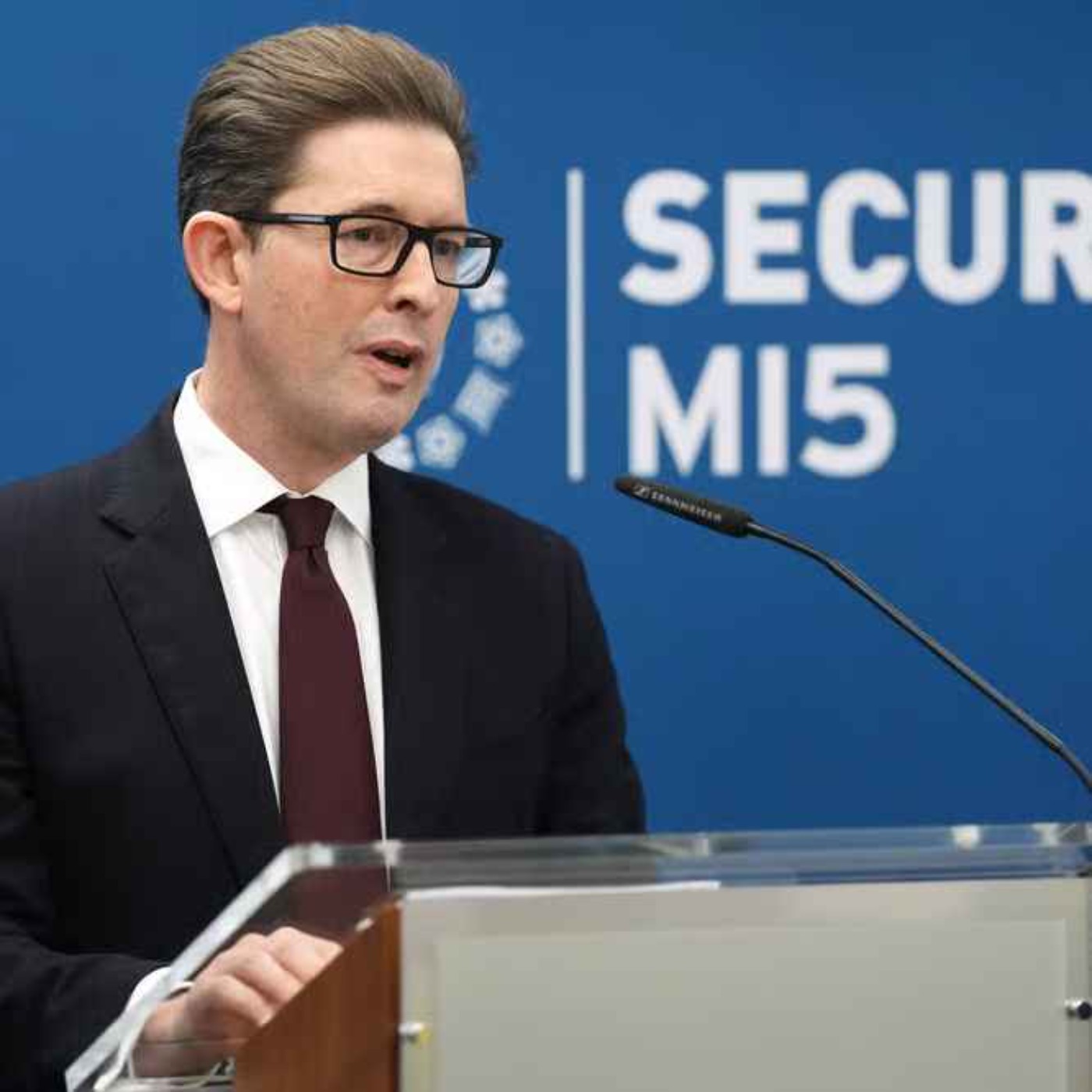
2:39I have no confidence whatsoever that this government is doing that. And today, the head of MI5, Sir Ken McCallum, also warned that Chinese state actors present a national security threat to the UK every day. Joining us now is The Standard's Chief Political Correspondent, Rachel Burford. Rachel, what was this spy case about? Two men were arrested, including former parliamentary researcher Christopher Cash, another man called Christopher Berry. They were both arrested on suspicion of passing secrets to the Chinese Communist Party in the UK. They both deny any wrongdoing. And early this month, it was announced the prosecution would not be going ahead and essentially had the case had collapsed.
3:20Now, the reason for the collapse of this case has been a major talking point in government. Essentially, the Crown Prosecution Service dropped the case because they decided that the evidence did not show that China was a threat to national security. The Conservatives have accused the government of allowing the case to collapse to avoid jeopardising economic relations with China, While the Labour government have blamed the previous Tory administration who were in charge at the time of the arrests and said that evidence sent to Deputy National Security Advisor Matthew Collins at the time is the reason for the collapse of the prosecution.
3:57And then yesterday at Prime Minister's Questions, Keir Starmer vowed to release the witness statements from the Deputy National Security Advisor, Matthew Collins. He said that would sort of lay out the case and show why it couldn't go ahead. However, they were released last night and they have raised more questions, I think, for a lot of people than they've answered. So why is this a problem for the government? Relations with China are obviously tense. Matthew Collins, in his witness statement, said that China presents the biggest state threat to the country's economic security. Obviously, you know, we have got in Britain, there are economic problems at the moment.
4:40Inflation is stubbornly high. The economy is not growing in the way that Chancellor Rachel Reeves would have hoped. Economically, there is a big financial black hole in the country's finances that the Chancellor has got to fill coming up to her budget in November. There's a lot of concern about tax rises and public spending cuts. And China is a country that does invest in Britain. We do need more foreign investment in the country to boost the economy. And it's been suggested that this case would have jeopardised that if it had gone to trial. We are relying on outside investment. The economic relationship that we have with China is quite important.
5:20And that is what the Tory administration is saying. They're saying this case has been dropped because the government didn't want this laid out in the courts. It would be embarrassing and they didn't want to ruin those kind of relationships that they have with China at the moment. So it has turned into quite a big row between the parties and there has been a sort of big fallout over it because it's kind of suggested that ministers are prioritising their economic relationship with China over national security. I think a lot of people are reading these witness statements and saying they do blatantly lay out that China is a threat to the country's economic security.
5:58And that has sort of raised more questions about why exactly this case collapsed. Tell me more about China's economic investment in the UK. China's economic investment in the UK is sort of focused around technology, infrastructure and real estate. It's kind of a small fraction of the sort of foreign direct investment, really. But obviously they make a lot of things that we do use. Total Chinese investment in the UK is about 4.3 billion, which is not overly huge. But obviously it's a big country that produces a lot of stuff. So the suggestion is the government don't want to jeopardise the kind of relationship that we do have with China.
6:36What else can you share about the witness statements? Christopher Cash and Christopher Berry were accused of collaborating with the Chinese Communist Party. Cash is alleged to have told, Barry, you're in spy territory now, according to the witness statement. But both men do deny any wrongdoing. Colin said that the UK's economic prosperity and resilience was threatened by China. And there were three witness statements in all. And they all sort of said that in one from this year, he restated the UK's view of the challenge that was posed by China. Obviously, as well, you know, at the moment, China are trying to build this huge super embassy in East London, which has been very controversial.
7:17They've bought the old Royal Mint Court, which is right by the Tower of London. There has been a lot of protests around that. The local council there, Tower Hamlets, they rejected the proposal. It's now up to the Secretary of State to make a final decision on it. The planning application they submitted did have redacted parts where it wasn't going to show what was going on in certain parts of the development. And there is a lot of suspicion around China and the threat that they pose to the UK. People that Hong Kongers have expressed their worries about persecution. and Hong Kongs and the UK are worried that China would use the embassy to essentially take political dissidents prisoner and essentially capture them and keep them there.
8:05It's sort of hard to express. China has obviously denied any political meddling in the UK and the Tories have accused the government of misleading discussions about whether China was deemed a threat to national security. The embassy is obviously a huge issue at the moment and they've delayed the decision slightly. It was supposed to be made by the previous Secretary of State, Angela Rayner. Obviously, she had to resign. It was supposed to be made last month. It's now expected to be made in November. So, you know, there'll be a lot of eyes on whether or not that does get planned permission. It's an absolutely huge site and it will be, I think, the largest embassy in Europe if it does go ahead.
8:45Finally, is there anything else you want to add? From the government's point of view, there does have to be some sort of relationship with China. They have totally denied that this case collapsed because they want to keep good economic relations with China. They've said that it was the previous Conservatives' administration's failure to say that China was a national security threat at the time these two men were arrested that has resulted in the collapse of the case. What I can say is there's also quite a lot of heat coming on the head of the Crown Prosecution Service, Stephen Parkinson, who is the Director of Public Prosecutions, a job that Keir Starmer previously held.
9:24MPs have suggested that there was sufficient evidence to put this case before a jury, but that he's sort of given in perhaps to government pressure and decided not to prosecute. So there's a lot of people having a lot of accusations thrown at them over this. And it's one I think that will rumble on for quite a few more weeks here. Let's go to a break. Coming up in part two, the return of glamorous ritzy mid-century dining in the capital. We'll see you back here in just a moment.
10:01Welcome back. High-end restaurants are reviving at-table theatre with the inclusion of the formerly much-loved set piece of London dining, the Carvery Trolley. Renowned restauranteur Jeremy King, who is masterminding the return of one of London's great dining institutions, has said the trolley will be back when it reopens its doors. The restaurant's owner, The Savoy, previously auctioned off its collection of silver-domed carving trolleys in 2023. To find out more, I spoke to The Standards' business editor, Jonathan Prynne. Jonathan, what exactly is a carving trolley and how are they used? So carving trolleys used to be a fairly regular part of the experience at sort of fine dining and upmarket restaurants and hotels, particularly in central London, but not by any means exclusively central London.
10:53So the idea was that the roast meats, the joints of meat, the Scottish beef or the Welsh lamb or the chicken or whatever would be brought to your table on a trolley, usually under a sort of rather spectacular, polished, sort of sometimes silver dome that would be withdrawn and there was the meat for you to see. And the waiter would, after sort of sharpening his carving knife, would then hack into the piece of meat and serve it at your table. And it was a rather wonderful theatrical piece of at-table theatre that sort of rather fell out of fashion. You would certainly see it in the 70s and maybe in the 80s and 90s.
11:32It started to fall out of fashion in all but the most traditional of establishments. And then the carving trolley almost disappeared, really. So it's very interesting that it now does seem to be making a bit of a comeback in the West End. With Simpsons in the Strand, who I believe were the carving trolley was originally invented. The history goes back to the early 19th century. but now we've got several other restaurants that may be following suit. Tell me a bit more about the history of the carving trolley. One of the restaurants where they're set to make a return next year is Simpsons in the Strand, which has been shut for five or six years since the pandemic and is reopening under Jeremy King, the great London restaurateur, early in 2026.
12:16He has very much promised the return of carving trolleys, which are an absolute hallmark of Simpsons in the Strand for many decades. In fact, It is said, and I don't know if it's true or not, but it's certainly said the carving trolley was invented at Simpsons in the Strand when it opened in 1828 as a chess club known as the Grand Divan. And the trolleys were introduced so the food could be brought up to the table where the players were playing and served very quietly so not to disturb their game. And so the carving trolley became an absolute sort of centerpiece of the experience at Simpsons in the Strand.
12:53when they closed, their beautiful domed carving trolleys were actually auctioned off in 2023. So that's going to be really interesting as well to see if they've updated the experience that diners used to enjoy so much. Do you know any other restaurants that are reintroducing the carving trolley and why they're doing it? Yeah, it's interesting, isn't it? I mean, the one that sort of sparked my story today, a restaurant that's due to open the first half of next year called Major's Grill, which will be at the new hotel, Cambridge House Aubergine Collection, which will be a very high-end, five-star hotel on Piccadilly.
13:32And I spoke to the MD yesterday about the new restaurant, and he said very much focusing on a traditional sort of British dishes, beef wellington, shepherd's pie, that sort of thing, but also the theatre of at-table service that he feels diners used to enjoy and has rather disappeared from the dining experience in the UK or in London. He very much hopes to bring the carving trolley back with all the sort of elegance and drama of the dome being sort of taken away. And there's these big, wonderful pieces of roast meat in front of you that you then get to see carved in front of your eyes. All rather dramatic.
14:13Also, he talks about bringing back flambe dishes. Crepes is probably the most famous one, where the waiter will pour some brandy over the dish, set it alight, and you've got this incredible flaming dish right in front of you, which you then go on to eat. That's very much a sort of 70s experience. But I think people seem to want that sort of theatre back in their lives, it would seem. It sounds like more of a spectacle than your typical dining experience. That's a very good word, a bit of a spectacle. Let's face it, eating out in central London is a horrendously expensive pleasure now. The prices have gone up way beyond inflation over the past 10 or 20 years.
14:53It's very hard to eat out in London and get much, and certainly in a fine dining experience, and get much change out of 100 quid ahead. So why not add on a little bit of extra spectacle and theatre and drama and experience to, at least if you are going to pay a huge amount of money to eat out in the West End, you've got, hopefully the food is good, but you've also got this amazing memory of quite an amazing experience as well.
15:24And that's The Standard. For all the latest news, head to standard.co.uk. If you'd like to get in touch, please do drop us a line at podcasts at standard.co.uk. We'll be back here tomorrow at 5pm. We'll see you then.
15:45Thank you.
Sir Keir Starmer is facing fresh questions over the China spying case after several newly released key witness statements raised further concerns about national security. The case in question relates to Christopher Cash and Christopher Berry, two suspected spies accused of allegedly passing sensitive data to Chinese intelligence. Meanwhile, the MI5 chief Sir Ken McCallum has warned that ‘Chinese state actors’ present a national security threat to the UK every day. The Standard’s Chief Political Correspondent Rachael Burford is here with the latest.
And in part two, The Standard’s Business Editor Jonathan Prynn is here to discuss the return of carvery trolleys to London’s fine dining scene.
Hosted on Acast. See acast.com/privacy for more information.


