
 Ask ChatGPT


 The Standard
31 Mar 2025 · 13m
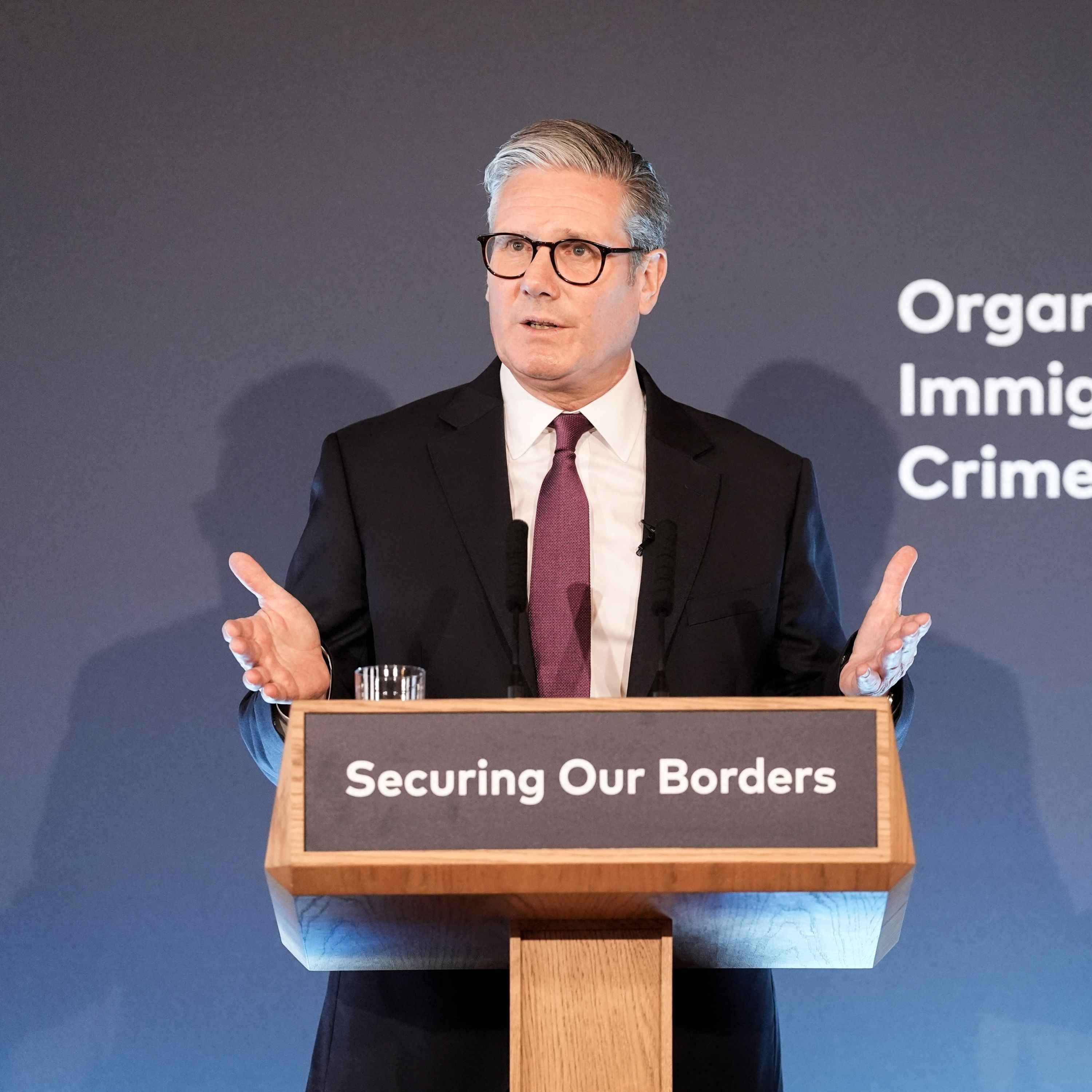
In this episode, Prime Minister Keir Starmer opens a significant summit focused on illegal migration at Lancaster House, London, with representatives from over 40 countries. The discussion highlights Labour's strategies to combat people smuggling and the role of social media in online exploitation. Additionally, the episode covers the implications of the newly opened £2.2 billion Silvertown Tunnel for commuters in London.
Written by AI. May contain mistakes.

Get the gist, explore an idea or ask about something said.
 Claude
On The Standard, what are the key points of this episode?
Searching your listeningAutomatic transcript. May contain errors.
0:06Hi, I'm Suze Cooper and welcome back to The Standard Podcast. If you're new here, hit follow and give us a rating. Coming up, what does the new Silvertown Tunnel mean for your commute? For many decades, East London's been plagued by the Black Hole, meaning it's unreliable, people don't have confidence in how they can cross the river on this part of London. So the Silvertown resolves those issues. We'll hear more from Transport for London's Director of Investment Planning, David Rowe, about the impact of the new tunnel.
0:42But first, record numbers of people have crossed the channel in small boats this year and the Prime Minister says he's angry. Angry at people smugglers, angry at a broken system and angry at the previous government for what he calls an open invitation at Britain's borders. Now world leaders and top officials from 40 countries have gathered in London for a major summit on illegal migration. Speaking at Lancaster House earlier today, Sir Keir Starmer said that disjointed policing and intelligence efforts had left the UK exposed. While the Standards' chief political correspondent, Rachel Burford, is covering the summit.
1:18Rachel, 40 countries in one room. It's not something we see every day. What's the main aim of this summit? Yeah, so this is all about tackling illegal migration, essentially. It's not just countries. We have got 40 countries, as you said, coming. That's, you know, the UK, China is there, the US, Albania, Vietnam, Italy. But also we'll see the representatives from some of the big social media companies like Meta, TikTok and X. They're all coming too. And this is about trying to tackle this problem of illegal migration that is affecting countries across Europe and the West at the moment. What did Keir Starmer say as he opened the talks earlier?
1:59He gave quite a strong sort of speech about illegal migration. And he said UK public services are struggling under the strain was the phrase he used of illegal migration. He said that it's basically a massive driver of global insecurity, and it's undermining our ability to control who comes here. And that is making people by people he means voters angry. And he also said it makes him angry because it's unfair on ordinary working people who pay the price. That's from the cost of hotels, which the countries are currently spending millions on hosting asylum seekers and people who come here in small boats.
2:36It's the cost of public services. And I think also it's worth pointing out, he did say it's unfair on the illegal migrants themselves. These people are making, you know, quite perilous journeys to get here sometimes. many losers have lost their lives and it's you know they're being exploited by vile gangs was the phrase he used so this summit it's not just about trying to stop people coming here for various reasons it's also about cracking down on those those gangs that are essentially trafficking people across countries. We've mentioned that the big social media platforms are being represented at the summit what's their role in this?
3:15They want to crack down on online adverts that people Smugglers are putting on these social media platforms like TikTok, like Twitter, Facebook, which essentially lie to people from poorer countries about the life they could possibly have in the UK. They then, you know, come here, they're trafficked here. And those jobs that they're promised, that life that they're promised does not materialise. So there is a crackdown on that too. So since Labour came to power, nearly 30 ,000 people have crossed the channel in small boats, more than 6 ,600 this year alone. Yet Starmer says they're making progress.
3:50What are some of the key changes Labour's putting forward? Yeah, so there's been an increase in raids on businesses that are suspected of hiring illegal workers. I think the government's also announced that£33 million will be spent to disrupt people smuggling networks and boost prosecutions. This includes paying foreign prosecutors to hunt people who are doing this trafficking. So money's being put into this and there is going to be crackdowns here and abroad, essentially. on illegal working, which is what a lot of people who do come to this country hope to do. They hope to build a better life for themselves and do that through working.
4:27But often the jobs that they end up in, they end up being exploited in. So in terms of outcomes, how likely is it that the summit will address the issues behind illegal migration? Are we expecting any major agreements or action? I'll have to wait and see. I think, you know, if you talk to charities that work with these migrants, they say that the way to tackle it is, you know, safe and legal routes. So people aren't exploited when they're here, give them the right to work, give them the opportunity to set up a life in this country, whereas at the moment they kind of spend their time in limbo, they may be put into a hotel funded by the Home Office, where they'll stay for months, sometimes even years before their asylum application is even processed.
5:10So I think the government is already trying to work to speed that process up. So we'll have to see what exactly comes out of this conference in terms of all the countries in Europe working together to try and prevent people crossing borders and perhaps making sure people don't actually want to come to this country because they can build lives in their own countries. I think there is a lot of things that we're doing in the UK that perhaps will also be done in other countries as well, like expanding right to work checks. But, you know, this conference is going on on Monday and Tuesday. So it'll be interesting to see what is finally agreed at the end of those two days.
5:50Let's go to a break. Coming up in part two, we go inside London's brand new£2.2 billion tunnel under the Thames. But is it a congestion buster or just a pricey detour? We'll see you back here in just a moment.
6:11Welcome back. Next week, a brand new tunnel opens beneath the Thames, the Silvertown Tunnel. It's designed to ease congestion, speed up cross river travel and even includes a shuttle bus for cyclists. Here's Transport for London's Director of Investment Planning, David Rowe. Typically on any one day, Blackpool caters for about 100 ,000 vehicles and we expect roughly about a quarter of those to transfer to use the Silvertown Tunnel. and that's traffic that's bound for areas like the Royal Docks or the Isle of Dogs. It provides an alternative to Blackwall to take away the queuing and obviously the environmental and the economic impacts that that queuing has provides a reliable alternative when we do need to close Blackwall and enables us to make a real change in terms of cross-river services.
6:56But the new route hasn't come without controversy. From the£2.2 billion price tag to the new toll that will hit drivers using both Silvertown and the Blackwall Tunnel. The Standard City Hall editor and transport editor Ross Lydell joins me now. Ross, is this the end of sitting in traffic at Blackwall? Sitting in queues approaching Blackwall Tunnel is a familiar feeling for many, many thousands of motorists, especially those heading north. The big pinch point for those using Blackwall Tunnel is trying to get from South London to North London, or essentially into East London, it brings you out on the sort of northeast side of the river.
7:34It should make it better and if it doesn't then some serious questions need to be asked because a lot of money will be spent by motorists over the coming 25 years paying for this tunnel so it really should make a difference. Now there's been a lot of discussion about the toll. Is this actually going to put people off going through the tunnel? I think the toll will put people off going through the tunnel. I think it's highly likely that many motorists will do all they can to avoid paying the toll. Many have a sort of aversion to paying to drive, whether it's paying to park or paying to use certain roads such as this.
8:13It's commonplace in the continent. Obviously, if you're about to go on your holidays to France, many of the roads there are tolled and also they're really good quality. The thing to remember about the Silvertown Tunnel toll is that this isn't the one that's really going to upset people. It's the Blackwall Tunnel toll that will cause the biggest amount of grief. Both tunnels will cost exactly the same price. The argument there is common sense because if one was cheaper than the other, then drivers would choose the cheaper one. But for more than 100 years, drivers using Blackwall Tunnel have not had to pay.
8:46They will have to pay now unless they're driving essentially after 10pm and before 6am. So what will that mean in practice? this? I think that the Rotherhithe Tunnel, which is a little bit further west, could get much busier. I think there could be the risk that some drivers try and perform some sort of U-turn as they approach the tunnel when they realise they'll have to pay. I think many won't realise they have to pay because obviously there won't be a man on the gate essentially with a bucket waiting for your £4 before he lets you through. You'll drive through and then only realise potentially afterwards if you've not been looking at the road signs when you get your PCN in the post a few weeks later that you'd forgotten to pay and that's£180 to transport for London thank you very much.
9:30So it's£8 a day for cars at peak time is that right? Yeah it's£4 per journey at peak times it will probably be a minority of cars that manage to catch both the peak northbound and the peak southbound but some will. The worst affected will pay£8 a day but I'd imagine drivers will look to try and avoid at least the peak times so at least they can go off peak times which is£1.50 which isn't great but it's it's not quite as bad as£4 per trip. And we can expect that all of that money is going towards the £2.2 billion that's been spent on the tunnel. Yes now David Rowe said today that any proceeds from the tolls would be used first to pay off the cost of building the tunnel.
10:16It will take 25 years to pay off this tunnel. It's almost like building it with a mortgage. So there's a lot of money going to the private firm that has built this for TFL. Any extra, it will be used to be reinvested in TFL's wider network. You know, you talked, for example, about extending the DLR to Thamesmead, which is one of TFL's key wishes, if it ever gets enough money. The problem is that drivers will pay around 100 million pounds a year in tolls and fines but the vast majority of that will be eaten up by repaying the pfi contract that was used to build the tunnel now to be fair to tfl the reason it's been done this way is essentially it didn't have much money previously and if it was to use its own money to build this tunnel it would essentially be putting tube fares up or bus up to help finance it.
11:10So the principle behind the PFI contract is that drivers who benefit from the tunnel, who will actually use it, are the ones who pay, not those of us stuck on the Victoria line or the Circle line. So yeah, fair enough, but it does seem a lot of money will have to be paid by drivers to use this new piece of infrastructure, and indeed a rather old one next door at the blackwall tunnel will drivers like it well we'll soon know because once you've paid the toll a few times you expect value for money and if you don't think you're getting your sort of bang for your buck and you've just spent four pounds and you're still stuck in traffic that ain't great especially if you're heading north from south london and you yeah you've got a lovely view of canary wharf up ahead but beyond that you've also got the view of somebody else's bumper and their exhaust sort of pumping fumes into your car it ain't much fun thanks ross well the silvertown tunnel officially opens next Monday, April the 7th, and the tolls come into force on the same day.
12:10And that's The Standard. For all the latest news, head to standard.co.uk and please do drop us a line at podcasts at standard.co.uk. Thanks for listening.
Prime Minister Keir Starmer has opened a major summit on illegal migration, bringing together officials from over 40 countries at Lancaster House in London.
In this episode we hear from The Standard’s Chief Political Correspondent Rachael Burford about Labour’s strategy to crack down on people smuggling and the role of social media in tackling online exploitation.
Plus, as London prepares to open the £2.2 billion Silvertown Tunnel, we hear from Transport for London’s David Rowe and The Standard’s City Hall and Transport Editor Ross Lydall on what the new river crossing means for commuters, congestion, and tolls.
Hosted on Acast. See acast.com/privacy for more information.


