
 Ask ChatGPT



The Standard podcast features top news insiders discussing the pressing issues of the day, including politics, culture, sport, and fashion.
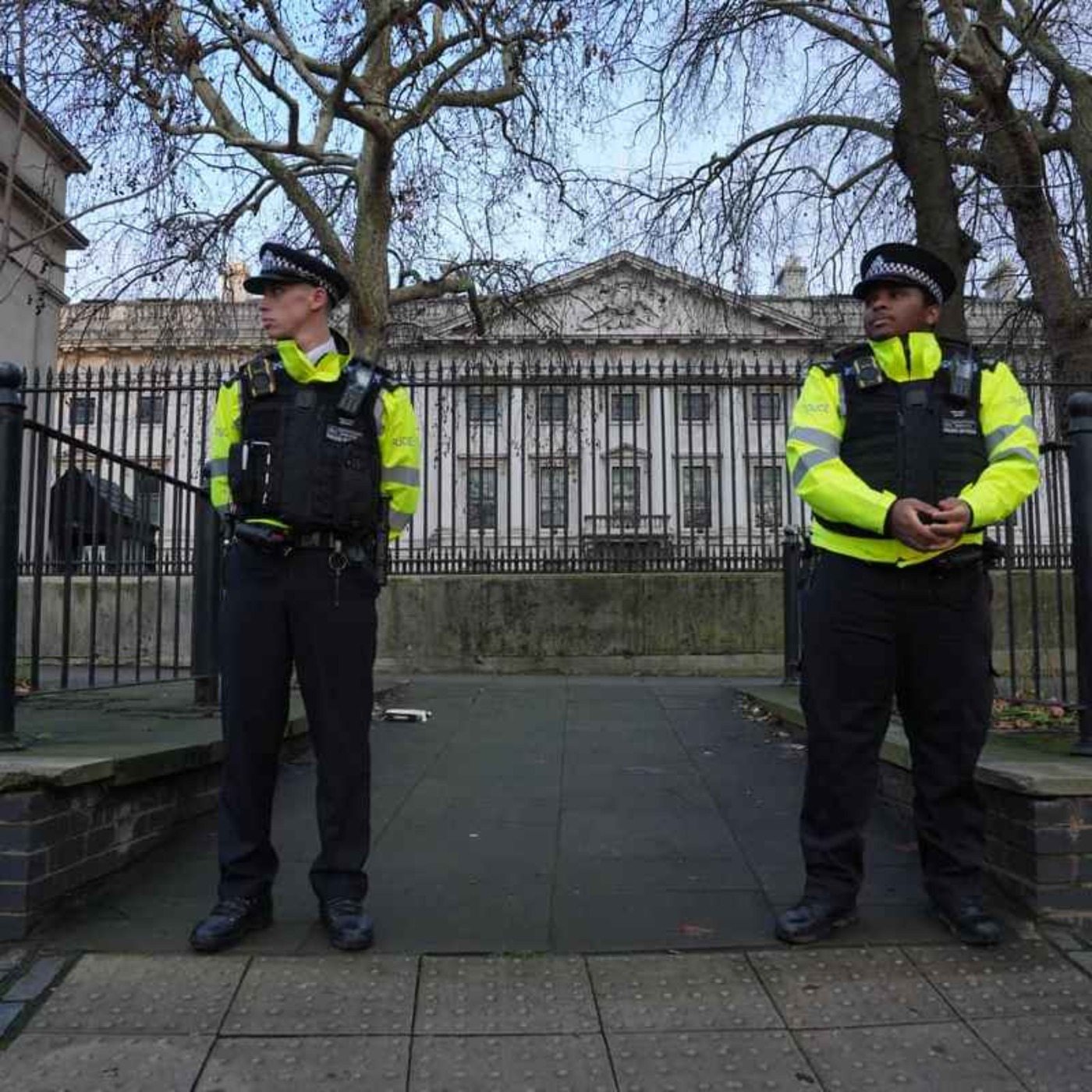
In this episode, the UK government has approved the construction of China's largest embassy in Europe, located in London near the Tower of London. This decision has raised significant national security concerns among critics, including former Conservative leader Sir Iain Duncan Smith. The episode features insights from Sir Iain and Dr. Tim Stevens, a cybersecurity expert, to assess the implications of this decision.
Written by AI. May contain mistakes.
Discussing the implications of China's new embassy location in London.
“amid heavy criticism from MPs and campaigners over its security implications.”
Dr. Tim Stevens weighs in on security concerns related to the embassy's location.
“Tim, thank you so much for joining us on The Standard Podcast.”
Sir Iain shares his strong opposition to the embassy, citing various concerns.
“As it happened, the plans of the basements were eventually leaked, and I think to the Telegraph, and have subsequently found their way to the security service.”
Analyzing the broader economic impacts of the embassy on UK-China relations.
“won't have a car industry by the time they're finished.”
Discussing the significant increase in China's naval capabilities and its implications for global politics.
“This is a mistake on a grand scale economically, culturally and ultimately in defence and political terms.”

Get the gist, explore an idea or ask about something said.
 Claude
On The Standard, what are the key points of this episode?
Searching your listeningAutomatic transcript. May contain errors.
0:06The UK government has given their approval for China to build its largest embassy in Europe, right here in London, next to the city. So is this an excellent opportunity for Britain to strengthen its ties with China? Or is it a colossal national security oversight? Hi, and welcome back to The Standard Podcast. I'm Tamara Kormournick. If you're new here, hit follow and give us a rating. For all the latest news, head to standard.co.uk. Coming up, the China Super Embassy debate.
0:43This week, Local Government Secretary Steve Reid greenlit the proposals for China to build a huge embassy complex at Royal Mint Court opposite the Tower of London, amid heavy criticism from MPs and campaigners over its security implications. One of the loudest critics is Sir Ian Duncan Smith, the former leader of the Conservative Party and sitting MP for Chingford and Woodford Green, who is today's guest on the podcast. He is currently sanctioned by the Chinese government and is far from convinced that Chinese diplomatic staff will act lawfully in their new home. Lawfully? Ha ha. China has never acted lawfully in these matters.
1:24They act as a law unto themselves. Now, Keir Starmer is clearly very interested in strengthening the relationship between China and the UK. and many have interpreted the approval as a diplomatic carrot ahead of his expected visit to President Xi Jinping in China as early as next week. We'll get to Sir Ian Duncan Smith in a moment. But first, I wanted to speak to an expert to understand what the new location of China's embassy could mean and whether its proximity to data cables running beneath the city raises national security concerns. Enter Dr Tim Stevens, co-director of the Cybersecurity Research Group at King's College London.
2:05Tim, thank you so much for joining us on The Standard Podcast. It's a pleasure. Thanks very much for having me. Let's get straight into it. One of the biggest controversies about the new Chinese embassy in London is the location of the site. There are worries that the Chinese government could spy on the capital's financial centre via data cables that run close to the site. In your view, is this a rational fear? Well, it's not irrational, but I would say that the physical proximity to those data cables is not what enables hostile powers or foreign interests or anybody, in fact, from tapping those cables in other ways.
2:51You don't need geographical proximity to be able to find your way into flows of data through more remote means. I understand the concern that, you know, literally these cables are five metres away from this new site. And there's some sort of cabling station or switching station adjacent to that site. But that implies that the Chinese would be able to find the physical way in order to tap those cables. And I suspect that's somewhat unlikely. So a hypothetical question. if the Chinese government were to use their new super embassy, as it's being dubbed, to spy on the city, how would they go about doing it?
3:35What do you think could be possible? I don't think that the new Chinese embassy really makes an enormous amount of difference to the way that we view the threat environment or indeed to the specific actions of China. They're already undertaking a variety of cybersecurity activities, including espionage and surveillance, and they will continue to do so, whether this mega embassy is built or not. And there's also something I want to clarify with you. So some of the opposition to this new building are worried about Beijing's refusal to present full internal layout plans to the British authorities.
4:11Do you think this is a top security concern? No, I don't. I think it would be very unusual for any planning, actually, application to go through with a blow-by-blow account of what exactly is going to be carried out in subsurface rooms. As it happened, the plans of the basements were eventually leaked, and I think to the Telegraph, and have subsequently found their way to the security service. But I wouldn't have expected an embassy or any country to say exactly what those rooms are planned for. So that's not to say, of course, that they might not be used for all manner of unpleasant things. But I suspect if you ask the British government to reveal what was in its placements in its various embassies in the world during the planning stage, it wouldn't give you the full function of those either.
5:04And ultimately, the function of what happens in an embassy is pretty much covered by the Vienna Convention anyway. So I understand the concern, but I don't think it's particularly unusual, shall we say. And do you think the government made the right call? I think given the political considerations, I think it was probably the sensible decision, although I don't want to predict that doesn't mean nothing untoward will happen as a result of it. Coming up, I speak to Sir Ian Duncan-Smith, who does not hold back in condemning the UK government's decision to give the Chinese super embassy the green light.
5:49ian duncan smith thank you so much for joining me on the standard podcast today no problems at all i'm very happy to do it yeah uh so ian in your recent article for the telegraph you described the government's approval of the chinese super embassy planning application as a terrible decision and a moment of utter weakness by the british government i'd like to start uh with you expanding on these comments? Well, first of all, a terrible decision because this is the wrong location. It always has been. This is a historic site. It's also in an area of significant tourism. It's opposite the Tower of London.
6:30In practical terms, this is a very bad decision. It will cause chaos, traffic chaos in due course. We had a couple of protests there and we blocked all the roads. It wasn't a deliberate attempt. They just spilled out onto the roads. There was no way of containing it. And the police know that. So that's the first bit. The second bit really about this is this embassy is going to have an extra 200, inverted commas, diplomats. And those diplomats almost certainly will increase transnational repression of many of those Hong Kong dissidents that have fled from Hong Kong when they trashed the Sino-British agreement and installed the national security law.
7:09That has now been a huge crackdown. We've seen that Jimmy Lye, of course, is languishing in prison, very ill, very sick, unable to get consular access. He's a British citizen, always has been. And others, too, have been tortured, etc., to get false information out. So it's the wrong place at the wrong time. And then the final bit is the cabling, which the government denied, denied, denied, basically lied about, first of all, there being any usage of cabling that was under threat. Well, since the last week and a half, they've had to confirm the cabling runs right beside the embassy grounds. And they're going to dig down to create these rooms, which they won't say what they're for, but I think we have a pretty good instinct to it.
7:49And the second bit of it is now, I'm gathered, that they've actually accepted that they're going to have to move the cables. So having denied the existence, they're now going to have to spend millions removing the cabling and redoing it somewhere else. this is terrible. And it's all about, I'm afraid, the government weekly on bended knee going to China say, help, help, help with growth. It won't. They'll just dump their products on us and we won't have a car industry by the time they're finished. So interesting, you picked up on the data cables. I've actually just spoken with Dr. Tim Stevens, who's the co-director of the cybersecurity research group at King's College London.
8:30And he says that the physical proximity to the data cables doesn't necessarily help to tap in. And he also, he takes the view that what happens in an embassy is covered by the Vienna Convention anyway. How do you respond to this view? I just don't agree, I'm afraid. The fact is that the government now is talking about moving the cables. You tell me why they'd be doing that. And the reality is that they denied the very existence of them for a long period of time. And it's more than that. It isn't always just about the cabling. The cabling is an important issue, but it's about the nature of what happens from that embassy.
9:08You know, we have Chinese pop-up police stations around there hauling in Hong Kong dissidents, having their families at the other end of the line, threatening them that they'll arrest them or torture them or execute them or whatever it happens to be. That goes on the whole time. We have a fact of life that every time China increases the scale of its diplomatic core, Or transnational repression increases dramatically, almost exponentially with the increases in the staffing. So all of those things are part of the problem that we have with China. And by the way, it's no good talking about the Vienna Convention to China.
9:45They break every damn rule in the book if they wish to, and nothing is ever done. The reality is there's a much wider range of things that go on. It's interesting that I think the Secretary of State, when he gave this announcement, he said in his letter that this issue of cyber and using cabling, etc., and attacking that, shouldn't cause a problem if China act lawfully. Ha ha. Lawfully? China has never acted lawfully in these matters. they act as a law unto themselves. And so the reality is that this is what concerns me desperately, is it will just increase their footprint and their activity, which will be detrimental to the freedom of British citizens.
10:33So you mentioned the UK embassy in Beijing undergoing their own planning applications. Wouldn't you say that the reciprocal approval of embassy plans is just part of a diplomatic relationship? the differences disputes are not tied together you know that you can't tie one embassy to the other the reality is uh that they've used china has used the embassy as a stick to beat the british government yeah stupid enough to have accepted that but that's the way it is so all of these things are will come together and i say judicial review will be there because we believe on a number of areas they've actually failed to tell us the truth about the planning thing and they've also given assurance.
11:14And I give you one particular example. When they last got rejected by Tower Hamlets before the last election, they made it very clear that they would not put in again unless they had absolute clear assurances that it would succeed. Now, you're not allowed to do that. So you'd say, well, in that case, they won't get put in for planning. But they put in for planning almost immediately the Labour government got into power. And that is an area that tells us that there were assurances given to them and all the way through. And the speed with which they called the planning application in, and also the sight of Starmer in Rio de Janeiro, sitting with President Xi, rather, I think, wetly saying to him, you will be pleased to see that we have called the planning in for your embassy.
12:04How the hell would President Xi know anything at all about calling in planning applications if there hadn't been some kind of fertilization of the information channels. So you mentioned Keir Starmer. He's reportedly traveling to China very soon. Arguably, the UK is still finding their feet trade-wise since Brexit. So do you not think it's a wise strategic decision to cozy up with China? And how would you suggest the UK manages that relationship? Well, they're not going to manage it this way, I can tell you that. The reality is that China doesn't really give a damn about the relationship. Their purpose in life is to export their product at a massive rate because their domestic economy has gone pretty flat.
12:51So they've been deliberately subsidizing industries to carry on producing at levels that happened before the collapse of their domestic economy. So they've got huge backloads of goods, materials, et cetera. They want to have the excuse to export. It's a one-way street of exports from China to us. I'll record on that from this appalling golden era that Osborne put together, which was an absolute disaster in my book. And now we're going to repeat the same failing. China's interested only in dumping its goods on us. The one thing we do do is financial services, but that's not affected by tariffs.
13:29So that's not the same as goods and products that we produce. So in goods and products, we hardly sell much to them, but they dump on us, and that's what they'll do. The European Union has actually said they're going to be putting tariffs, significant tariffs, on Chinese goods. We won't. So you just guess where they're going to be putting their product to us. We won't have a steel industry finished. It'll be gone. The car industry will disappear because their cheap electric cars will flood the market and make it impossible for British cars to be bought for the most part. So that industry will begin to go.
14:02This is a mistake on a grand scale economically, culturally and ultimately in defence and political terms. Do you think a strong relationship with China will be harmful for the UK and US's special relationship? I don't think it's dependent on the relationship with America. But America is very concerned about China and many of us are too. The nature of what China is doing is enormous. I tell you that they have been increasing the size of their naval capability dramatically. Any one shipyard in China today now produces more naval ships than the US does in a year. And they have about 130 times the capacity to build naval weaponry and naval ships and their armed forces than America does, or for that matter, the rest of NATO.
14:55And you've seen they've been threatening Taiwan massively recently. One thing you can say about Xi is he's never hidden what he's after. His view is that China will start the new world order. The new world order will be based on the way that they govern, and that he thinks that democracy and the concept of human rights and freedom is an aberration lasting about 200 years, that they will go back to what he calls the natural form of government. And he had this conference the other day where he had Kim Jong-un, and also Putin was there, and they were arm and arm, And he said, this is the start of the new world order.
15:29And you can see that because there's this axis of totalitarian states now forming. He supports Russia with buying their oil, also financially, also with weaponry. North Korea does the same. Iran is part of that process. And they've become bigger, more powerful, and ever more threatening. And I think the idea is to suddenly run to China at this stage, when China's only interest is of themselves and dumping their product, I think is a big mistake by the government. Thank you so much for your time today. My pleasure. Thanks. And that's The Standard. For all the latest news, head to standard.co.uk.
16:03If you'd like to get in touch, email us at podcasts at standard.co.uk. We'll be back here on Monday morning. See you then.
The UK has approved plans for China to build its largest European embassy in London, near the Tower of London – a controversial move that has triggered serious national security concerns.
As Keir Starmer prepares to visit Beijing, has the government misjudged the risks? On this episode, host Tamara Kormornick speaks to former Conservative leader Sir Iain Duncan Smith MP, who is a vocal critic of the planning proposal. She also talks to Dr Tim Stevens, the co-director of the Cyber Security Research Group at King’s College London, to assess the cyber and national security risks cited by opponents.
Hosted on Acast. See acast.com/privacy for more information.


