
 Ask ChatGPT



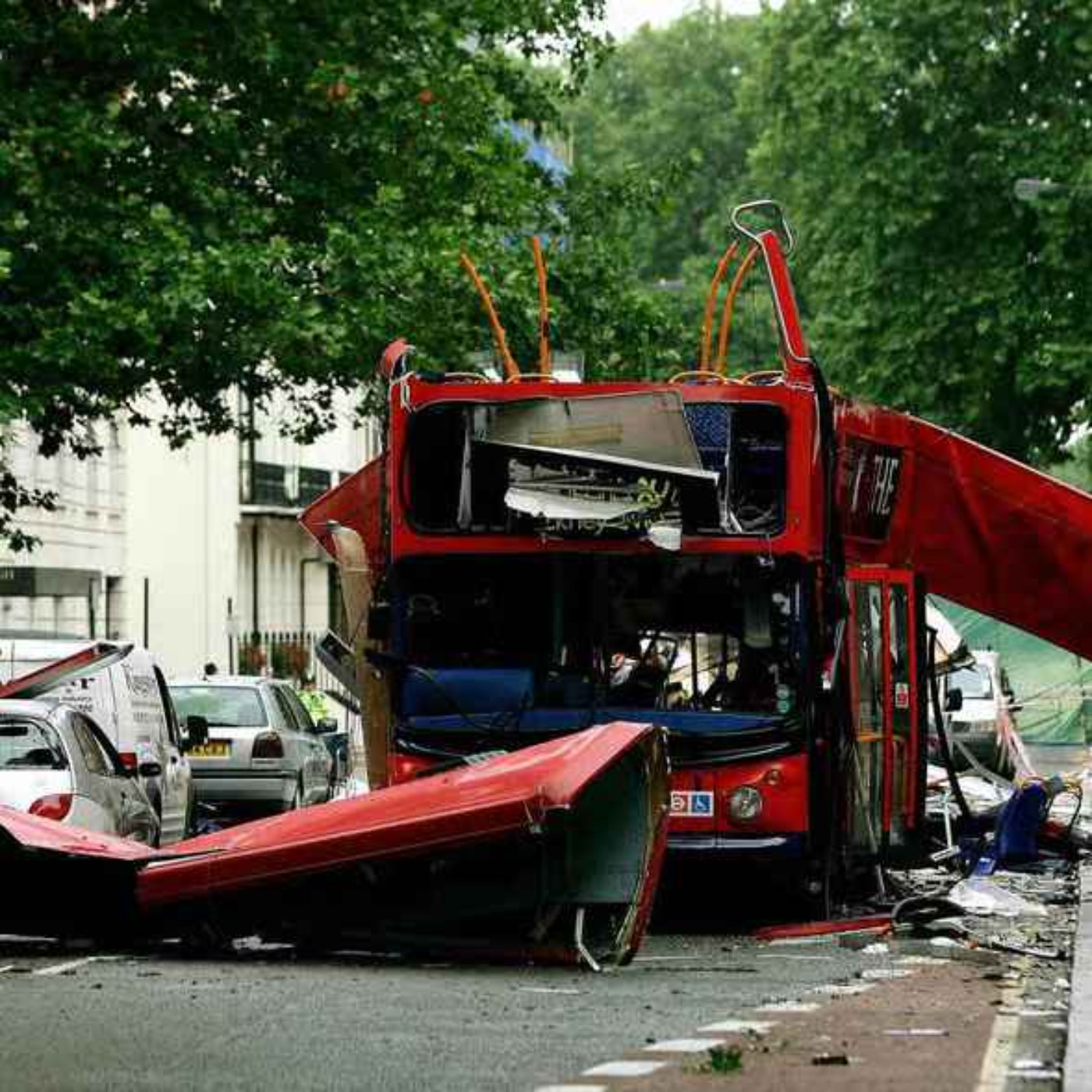
This episode reflects on the 20th anniversary of the July 7th bombings in London, a tragic event that resulted in 52 deaths and hundreds of injuries. The discussion includes personal accounts from survivors and expert analysis of the ongoing implications of terrorism in the UK.
Written by AI. May contain mistakes.

Get the gist, explore an idea or ask about something said.
 Claude
On The Standard, what are the key points of this episode?
Searching your listeningAutomatic transcript. May contain errors.
0:02Hi, I'm Charlie Duffield, and welcome back to The Standard Podcast. If you're new here, hit follow and give us a rating. For all the latest news, head to standard.co.uk. Coming up later in the show, is Scandinavia the new Mediterranean? And why you might want to consider a cool cation this holiday season?
0:30But first, today marks 20 years since the July 7th London bombings. Very early on the morning of July 7, 2005, four suicide bombers using London transport, the underground and the buses blew themselves up in a coordinated, long-planned attack. These were men affiliated with the terrorist group Al-Qaeda, either directly or indirectly, certainly inspired by Al-Qaeda. And for the UK security services, it was in a way their worst nightmare come true. Since the 9-11 attacks in the United States four years before, everyone in the UK counterterrorism and police and security services felt certain that something like that would happen in London.
1:20They were prepared, they had trained, and of course they had already thwarted several attacks. So they were aware that one day something like that would happen. And indeed it did, as I say, early on that morning. Four suicide bombers blew themselves up, killing scores of people, injuring hundreds of people, and really bringing the war on terror to the streets of London. That was Islamic scholar Thomas Small. We'll hear more from him a little later. 52 people were killed in the attacks on that fateful Thursday in July, as well as the bombers, and more than 700 people were injured. The Prime Minister and the Mayor of London were among those who gathered to mark the 20th anniversary at St Paul's Cathedral today, as well as members of the Royal Family, the Home Secretary Yvette Cooper, survivors, emergency responders and bereaved relatives.
2:13The attack was the worst single terrorist atrocity on British soil and 20 years on the effects of that day still linger especially in the memory of survivors like Mustafa Kul-Tuldu. The then 24 year old was traveling on the circle line just one carriage away from the epicenter. Halfway through the tunnel heading towards Aldgate he remembers hearing a loud popping sound. Then there was sudden darkness. The art student waited 45 minutes to be rescued from the train by emergency services. He heard screams, saw people on the track and was overwhelmed by awful smells. It's something that 20 years later he still recalls.
2:59I don't think I have come to terms with it. I don't think you can. When someone goes through any kind of trauma, the scar tissue, you just get used to it. The Netflix documentary has just come out and this morning I watched it and I just stopped the video and I said, I can't watch this. And I just broke down. And I wasn't expecting that to happen. It's been 20 years. Watching the footage of the day happening again, suddenly all those memories come back like an avalanche of emotion. You think to yourself, you're over it. But then I stopped going to the memorial. I used to go every year to Hyde Park.
3:25But then my wife said to me, you're just breaking down. You're just hurting yourself. And there's no end here. I don't think you ever get over it. I wish I could. I still have manic episodes where I break down. My kids have become accustomed to knowing when I zone out. Like my daughter, for instance, if we're going to take her to school and I zone out, she can see my body tensing up and she was just, like, she's nine years old, but she was, like, rubbing my hand saying, it's okay, it's okay. I was like, you think to yourself, when will it ever end? And as a British Muslim, Mustafa recalls the day of the attack differently to others.
3:56He never felt able to process the event solely as a victim, but instead felt pressured to condemn the attack or speak on it specifically as a Muslim. So like when police were taking everyone's name, when they asked for my name, they stopped me and searched my bag as soon as they found out what my name was. And that happened to me twice, like outside the station. Stuff like that I remember quite vividly. I was attacked on the street at knife point for being a Muslim. Some people were like really angry at me for voicing my opinion. I was never really allowed to be a straight up victim. I was expected to apologise for what happened.
4:29You compare that with the other interviews with other survivors. They were talking about their personal feelings and how they tried to come to terms with it. Finally, I asked Thomas Small what has changed since the London bombings. Here's what he had to say. Terrorism has changed a great deal, and the UK and its counterterrorism efforts has had to constantly change and adapt along with it. The rise of ISIS in the mid-teens, which attracted a lot of young Britons to travel to Syria and Iraq and join them, presented a whole new sort of challenge for UK counterterrorism officers. More recently, as we saw last year with the tragic Southport attack, which resulted in those terrible race riots, the sorts of terrorism, if that's even the right word for it, the sorts of lone wolf attacks that happen now in this country that we associate more with the United States.
5:21Young men disgruntled, maybe deranged, maybe deranged from drugs, maybe suffering other mental health issues, feeling isolated or alienated, launch spontaneous and extremely brutal and murderous attacks, which cause all sorts of uncomfortable pressure points in postmodern multicultural society to erupt. These are the challenges that counterterrorism and security services and policemen face now, and that's very different from the sort of organized, ideologically committed jihadist terrorism of 20 years ago. So there's been a big change. You know, the security services have had to adapt, as have the politicians, the lawmakers having to always walk that very difficult tightrope between protecting us and preserving our civil liberties, not overstretching the mark so much that we live in more or less a police state, but doing what they need to do to make sure that harmful individuals are located ideally in advance or at least prosecuted.
6:23Thomas Small is also host of the podcast series Conflicted. You can hear more about the last two decades of terrorism across the latest season, 7.7, The Inside Story. It's available on Wondery and is produced by MessageHerd. To watch the full interview with Mustafa Kultuldu, we've included an article by Megan Rowe in this show's notes. Let's go to a break. Coming up in part two, where to go on holiday to avoid Europe's heatwave. We'll see you back here in just a moment.
7:14Welcome back. Now, you might be enjoying some respite from the London heat, but temperatures are expected to soar again as the heatwave in Europe continues. Londoners are increasingly worried that their favourite holiday summer destinations will become too hot to visit, according to new research from travel insurers Insure and Go. A survey found that 84 % now fear one or more of the classic Southern European hotspots will be unbearable within the next five years, which is an increase on 70 % in 2022, with temperatures currently pushing 40 degrees in traditional Mediterranean holiday locations, I spoke to travel writer Alicia Miller about alternative destinations which still provide that much-needed escapism.
8:06So Alicia, what are some classic holiday destinations which are proving too hot for travellers? I suppose, first of all, everyone's definition of too hot is a little bit different. If you're my mother, it's about 23 degrees, in which case I think most of Europe is off-limits right now. It's a lot of the usual suspects for this time of year, So southern Spain, the Greek islands, large parts of France, Italy and Portugal are all well into the mid-30s at the moment. And today it's going to be over 40 in Seville and in Tuscany. And these new reports of wildfires, heat alerts, you name it, in all of our favourite places.
8:44And it's not just about it being uncomfortable for sightseeing, but actually a real risk to life in many of the cases as well. How would you describe a coolcation? It's the buzzword of the moment, isn't it? The coolcation, we're seeing it everywhere. The trend for people, for holidaymakers to be looking to the traditionally cooler temperature destinations for their summer holidays. I do think that there is wrapped up in this as a feeling of a shift towards perhaps a more active and engaged and even nature focused type of getaway. If people want to avoid sweltering temperatures for their annual summer holiday, what are some other options of places to visit?
9:27It's not an exact science to say and I think if there's one thing we definitely know about climate change is that it's really unpredictable. I think broadly speaking, there's kind of five factors that let you identify whether a destination might be more appropriate. And that's latitude, of course. How far north are we? the altitude as well getting up higher on a mountain is going to be cooler than down at sea level generally the humidity level how close you are to a large body of water which will have maybe some breeze and a tempering effect and also how built up it is so the kind of urban heat island effect right you're hotter in london then you're going to be out in the countryside most of the time for example so theoretically you could actually be high in the atlas mountains in morocco where humidity is really low and there's a high diurnal shift between day and night and you might actually have a much cooler break than you would somewhere continental in northern Europe.
10:28All that being said if we're looking at some cooler destinations to head to we want to be thinking of the alpine regions of Europe so Switzerland, Germany, Austria, Italy, France all where we've got some beautiful mountains and mountain escapes through the Nordic countries as well Sweden, Denmark, Norway, Finland, and Iceland. Again, those are broad countries. And I think we can think about regions rather than countries as well. So actually pockets of Spain and Portugal at the moment are still very lovely and very doable. For example, San Sebastian, which has an amazing food scene and a really beautiful crescent moon-shaped beach in the north of Spain is going to be cooler than London this week.
11:09It's about 24, 26 degrees, which is perfect for enjoying as a destination. And likewise, Porto in Portugal is going to be in the mid-20s this week, which is beautiful for having a city break and exploring. Are there specific destinations you would recommend for beach lovers or for those who love to be active or to explore cityscapes? Of course. Well, don't forget how beautiful the beaches are here in the UK. The Isles of Scilly off mainland Cornwall literally look like they're from the Caribbean. There's the Isle of Wight, the Channel Islands have lovely beaches, and Scotland, Isle of Harris. Again, the Alpine regions or the Nordic countries are really brilliant.
11:53The Alpine region in particular in Austria and Germany have some amazing family hotels. So if you have children that are very busy, you can go rock climbing with them, you can visit the farm animals, you can have some really beautiful spa experiences too for apparent time apart. Very Heidi vibes to the hotels, but also very beautifully done. Even though cities are hotter, you can sometimes get away with them a little bit easier than maybe you could a beach destination because a lot of warm cities actually have great air con and things like their galleries and museums and on their transport networks and things.
12:32You can, at the hottest part of the day, either be somewhere cool or you can head back to your hotel for a sneaky nap and then make the most of the nightlife in the evening when it's probably a beautiful balmy nighttime temperature and you can be out in the street having some drinks and things. Have you been to any cooler destinations yourself? I am very biased as a Canadian and I would say Canada has a sublime Caucasian offering. The East Coast is actually just a five to six hour direct flight. You have beautiful beaches in Prince Edward Island. You can do some really nice road trips through incredible scenery.
13:10In Nova Scotia, on the Cabot Trail, there are lighthouses, there is whale watching, all the lobster you can eat, friendly people. And yeah, it's just beautiful. So that would be my pick. Finally, Alicia, do you have anything else to add? It's actually still really complex because our impact as holidaymakers is something we have to consider as well. So a lot of the med is actually really well set up for certain kinds of tourism and their economy relies heavily on that kind of tourism. Whereas some of the places that we might be wanting to look to a little bit more, say in Northern Europe, there might not be that infrastructure yet, or they may not be able to support huge numbers of visitors now or in the future.
13:55So no one knows exactly how it's going to pan out. But saying that, I do think we will likely see the Mediterranean becoming more popular as a spring and autumn destination in Northern Europe and Britain becoming much more popular in the summertime. There has definitely felt like a shift has happened this year. We're at some kind of turning point. I think the last few years of seeing the headlines again about the fires and evacuations of the heat alert, I think this feels like we're really at a point now where people are stopping and thinking, actually, do I want to go through that kind of nervousness again around whether it's going to be manageable in the heat and instead actually actively booking something different?
14:50And that's The Standard. For all the latest news, head to standard.co.uk. If you'd like to get in touch, please do drop us a line at podcasts at standard.co.uk. We'll be back here tomorrow at 4pm. We'll see you then.
It’s been 20 years since the 7/7 bomb attacks in the capital which killed 52 people and injured several hundred. The Standard is joined by Islamic scholar Thomas Small, and survivor Mustafa Kurtuldu, to discuss the aftermath.
You can hear more from Thomas Small in Conflicted - 7/7 The Inside Story, produced by Message Heard for Wondery.
And in part two, is Scandinavia the new Mediterranean? Travel writer Alicia Miller joins us to discuss where you might want to visit for a ‘coolcation’ this summer to escape the European heatwave.
Hosted on Acast. See acast.com/privacy for more information.


