
 Ask ChatGPT



The Standard podcast offers insights from top news insiders on various topics including politics, culture, sport, and fashion, hosted by award-winning journalists and celebrity guests.
The High Court Challenge to VAT on Independent School Fees
This episode discusses a three-day hearing at London’s High Court where pupils, parents, and independent schools challenge the Labour government's plan to impose VAT on school fees. Tristan Kirk, court correspondent for The Standard, provides detailed insights on the legal challenge and its implications.
Written by AI. May contain mistakes.

Get the gist, explore an idea or ask about something said.
 Claude
On The Standard, what are the key points of this episode?
Searching your listeningAutomatic transcript. May contain errors.
0:04Hi, I'm Julie Banks and welcome back to The Standard Podcast. If you're new here, don't forget to hit follow and give us a rating. Coming up, after Sony Pictures announced the four actors set to play the Beatles in an upcoming biopic, The Standard's head of culture, Martin Robinson, gives us the lowdown on the ambitious project and why he thinks it will appeal to new generations. They were post-war babies, you know, they're all on council estates, they had very little money growing up and they found this amazing outlet in music. So I think those kind of stories, well, they're always resonant, but I think now perhaps more than ever, as particularly young people are finding the world quite a difficult place to be in, I think this is really going to hit home on that level.
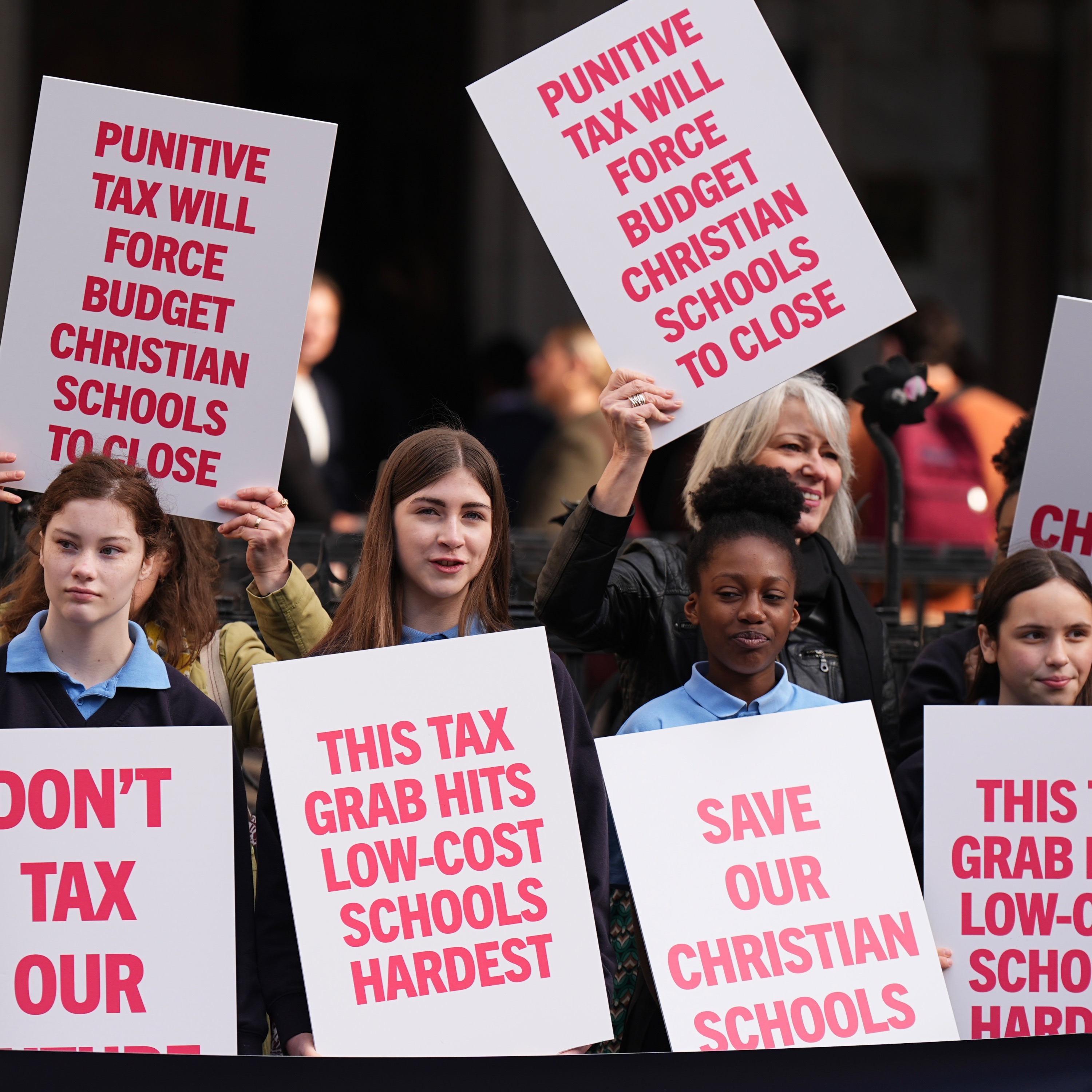
0:54But first, the High Court in London has today started hearing a legal challenge against Labour's policy to impose VAT on school fees. Here to update us on the latest is Tristan Kirk, courts correspondent at The Standard. Tristan, who is bringing this challenge and on what grounds? A challenge has been brought by a collection of independent schools, faith schools particularly, and pupils in different positions who challenge the legality of the policy, saying that they will be directly and adversely affected by what the government is choosing to do. Human rights are at the centre of this claim. It is said that all the pupils who have brought a claim and consequently their parents, they say that their human rights are being impacted by the government's policy, that they have a right to access the education that they particularly need, and the policy and the expected impact on fees for independent schools is essentially forcing them out of that particular educational establishment and therefore breaching their human rights.
2:09The claims are different in their nature depending on the individual students who brought them. Now they haven't been identified but their particular situations we can discuss. Some of the pupils who are bringing a claim say that they have special educational needs and they are placed in an independent school which addresses those needs and they say that if they are priced out of that school place, that there is nowhere equivalent and appropriate for them to go within the state sector in their catchment area. Some of the pupils who are bringing the claim are from a faith background, and they say that their needs are addressed by independent schools in a way that the state education system couldn't do.
2:55There are two Orthodox Jewish children who are part of the legal challenge who say that their particular school addresses their faith needs in a way that no other school could. And there's also a family who say they moved to the UK specifically to access an Islamic education for their daughter, and they are in relatively low paid jobs. And they say that if the price of going to the independent school is increased as a result of the VAT going up, then they won't be able to send her to that school and that is a disproportionate and unlawful impact on her educational needs. So there are a variety of claims that have been grouped together before the High Court to decide whether the government's policy is lawful and whether it should be maintained in its current form, whether it had taken into account the specific needs and positions of people such as the claimants.
3:49Now the legal system in the UK can be a notoriously slow process but this case has been given a fast-track hearing. Why is that? Well, I think it was recognised that if this claim was to be heard and to have an effect before the next school year started, when I think we can expect the price rises on independent school fees to come into effect, then it needed to be heard by the high courts in pretty quick fashion. The claim was launched the start of the year, and for it to be heard by the start of April is pretty unusual. It is a bit of time, but this is a claim with lots of different moving parts.
4:27There are lots of different claimants, there are different schools involved, and the government and several actual government departments have to come together to coordinate their response to it. So I think everybody recognised that this is a question that needed to be heard by the courts, and it needed to be heard in an appropriate time frame so that those parents who are looking to the next school year and where they're going to send their children can do so in an informed way. If they can't afford the fees, if they've got up, then they need to find other schools to send their children to. Not many of us get to step inside a high court.
5:01Can you just briefly explain the process that will be taking place over the next few days? Well, this claim is being dealt with in Court 4 in the Royal Court of Justice, which is traditionally the big court, if I can phrase it that way. It's where a lot of the most high-profile claims get dealt with. Senior judges sit on the bench and it's a larger than usual court because there are lots of different groups and people who are interested in this particular hearing. And so the claim will be heard over three days, Tuesday, Wednesday, Thursday. The claimants who are bringing this case, they will get to present their claim for judicial review through their lawyers, very experienced barristers.
5:42And then the government will get a chance to respond to that application. The government is resisting this claim. It says that the policy was well thought out and the impact is not so much that the policy has to be revisited. At the end of the three days, I think it's expected that the judges will reserve judgment, which means that they won't come to an immediate decision having heard three days of argument. And they will come back at a later date, probably not too far into the future, to tell everyone what they've decided. And so what are the implications if the challenge is successful and what would be the next steps?
6:20Well, that's a difficult question to answer in full because it very much depends on what the judges decide and how they determine each individual claim. So it's conceivable that one of the claims that's brought from one of the children is successful, is successfully argued that their needs have been impacted on. But then they could possibly come to the conclusion that all of the other claims fail. And that would mean that there'd have to be quite a careful consideration of what to do next to address the ruling. But looking at it in its simplest form, if the claim succeeds in full or in large parts, I think this will force the government to take their policy, go back to Parliament and to say, we got this wrong and we need to do it in a different way or potentially not do it at all.
7:14If the claims fail, if the government wins, then there is always the possibility of this going to the appeal courts and potentially all the way up to the Supreme Court if they can. So this may well be a drawn out saga if it goes that way. But if the government wins after these three days of hearings and then a ruling, then they will presumably say that this policy that we're pursuing is something that we're entitled to do and is something that we think is necessary for the provision of education in this country. Well, I'm sure there'll still be plenty more to talk about as and when the verdict is delivered.
7:49But Tristan, thank you very much for your time for now. No problem. Thank you very much. Let's go to a break. Coming up in part two, Sony Pictures reveals who will be stepping into the shoes of the Fab Four in their ambitious multi-movie project about the Beatles. We'll see you back here in just a moment.
8:20Welcome back. CinemaCon, the annual trade show for movie theatre owners, is taking place in Las Vegas this week. And one of the big news stories to come from the events so far has been the announcement of the cast who will play the Beatles in Sony Pictures' film series about the Fab Four. Martin Robinson is the Standards Head of Culture and joins us now to tell us more. So, Martin, can you talk us through the actors who will be taking on the parts of John, Paul, George and Ringo? Sure. So John is being played by Harris Dickinson, who people will know from Baby Girl with Nicole Kidman and Triangle of Sadness.
9:00Paul Mescal is playing Paul McCartney, who, of course, we know from Gladiator 2, Normal People, all that stuff. Barry Keegan is playing Ringo. We know him from Banshees of Innerition and various other things. And then perhaps the most unknown one is Joseph Quinn, who's nevertheless a pretty big star. He was in Stranger Things and is just in the new film Warfare, which is coming out next week, which is probably amazing. I think he's probably the new star to join that crop. There have been numerous documentaries and films about the Beatles on both the big and small screen over the years. What's going to be different about this project?
9:36So there's been a lot of documentaries about the Beatles through the years. Not too many sort of actual biopics and films about them, with the exception of John Lennon. And there's been a fair amount of films about him, including Nowhere Boy by Sam Taylor-Johnson. But generally, there hasn't been too much. I mean, The Beatles, let's not forget, also did films themselves. I mean, there's a lot of brilliant things that they did together, The Hard Day's Night, Help. So there's a lot of documents there, and they're a combination of biography and just wild, surrealist nonsense. But there's never been anything that's actually tried to capture them altogether.
10:11I mean, it's a bit of a unique one. And, you know, this isn't just one Beatles film, it's four telling the individual stories of each one. So it's an interesting take, that's for sure. It's going to be an ambitious project as well because they're planning on filming all four simultaneously, I believe. Yeah, I don't know how that's going to work. I mean, the poor production managers who have to manage all that stuff. I don't know. Well, I mean, it's going to be interesting how they combine the two. Presumably all of them are going to be in each other's films as well. You know, they will centre them around each character, but there's got to be a huge crossover.
10:40I mean, for instance, George Harrison. I mean, there's not that much backstory without the Beatles. He joined them so young, you know, like 15 years of age. So there's going to be, yeah, there's going to be huge crossover between them. So it makes sense to do them all together. I mean, yeah, that's a hell of an editing job there. So by the time the films are out in cinemas, it will be over 65 years since the Beatles released their first single. How do you think the storytelling will try and appeal to the younger generations who won't have grown up listening to the Beatles? Well, I think the cast is very deliberately about tapping into that.
11:10This is not the Beatles, you know, as they are now. Well, what's left of them? You know, or even middle-aged. This is very much them in their young sort of glory days. So, I mean, obviously these guys can play it to different ages and there's wonders they can do with makeup. But I think they're really hitting the kind of cool, sexy Beatles and that kind of period. So, yeah, it's going to be interesting to see how they do accelerate those things and really tap into the new audience. I think fundamentally the Beatles story is about triumphing over poverty difficulties they were post-war babies you know they're all on council estates they had very little money growing up and they found this amazing outlet in music so I think those kind of stories are well they're always resonant but I think now perhaps more than ever as particularly young people are finding the world quite a difficult place to be in I think this is really going to hit home on on that level What I'm hoping for, actually, is that it's got a lot of the humour of the Beatles and isn't too precious.
12:09So we want a nice message to come through, but I hope it is a lack as well. The films are going to be directed by Sir Sam Mendes. What do you think he'll bring to the table? He brings a lot of clout. He brings a lot of storytelling ability, a lot of flair. His films are renowned for being experimental and just being of a great, great quality. So, you know, we know that from American Beauty or 1917. 17 he's one of the big guns isn't he so it'll be interesting to see what he does yeah i mean he's not known for his humor i don't think particularly sam mendes whereas i feel like that's the bit that i want to come through more than anything else they were funny funny guys they were really influenced by the goons and uh spike milligan he really had that humor so i'm hoping that comes to the forefront but look you know sam mendes he knows what he's doing i'm sure these are going to be properly big event films.
13:01Well, Sony has described the project as the first bingeable theatrical experience. So can you tell us how and when they're planning to release the films? And do you think this concept is one that audiences will embrace? Yeah, it's an interesting one. So it's all going to be released, all four films are going to be released in April, 2028. It's unclear how that's going to work, whether they're all going to be released at the same time or whether they're going to be staggered over four weeks. but it's a it's kind of big ask for audiences i think because are you going to be in a situation where you're going to choose which beatles film to see you know is it imperative that you see all four i imagine there'll be a lot of people who complete it who wants to see everything but maybe you don't maybe you just go for the john film or you just stick with john paul maybe a bit of a ring go not too bothered about george i don't know it's going to be an interesting way of doing it it's quite ambitious it's quite a risk actually you know you can imagine that that's quite an outlay of time and money for people so you know it's not done on netflix or something you can just binge quite easily at home this is uh you've got to go out so i don't know it's it's a risk but i think again people do respond to big events people respond to the big asks i think and audiences get excited so i can fully imagine that everything will be sold out and i imagine the pressure will come as audience members and fans, unless you've seen all of them, then you haven't really done your job.
14:25So I'm sure it will do fantastically well. And as I said, probably the least sexy film in all that is the Joseph Quinn, George Harrison one, just because he's not so well known and George is perhaps not so well known as the others. But Joseph Quinn is a staggering new actor. And I think that actually that is the one that's going to be really fascinating. Especially because George, as a sort of human being, was also probably the most interesting one and went on this incredible spiritual journey, as it turned out. So anyway, they're all going to be great. And that's The Standard. For all the latest news, head to standard.co.uk.
15:06And please do drop us a line at podcasts at standard.co.uk. This podcast returns tomorrow at 4pm. We'll see you then.
15:27I'll see you next time.
A three day hearing has commenced at London’s High Court as pupils, their parents and a collection of independent and faith schools appeal against Labour’s policy to impose VAT on school fees.
In this episode, Tristan Kirk, the Court Correspondent for The Standard outlines who is bringing the challenge, explains why the hearing has been fast-tracked, and sets out the potential implications of a successful verdict.
Plus, Sony Pictures has finally announced the cast for its biopic on The Beatles and the Standard’s Head of Culture, Martin Robinson, is here to give his views on the ambitious project and how the casting choices might be key to attracting new generations to the story of one of the biggest influences in British music.
Hosted on Acast. See acast.com/privacy for more information.


